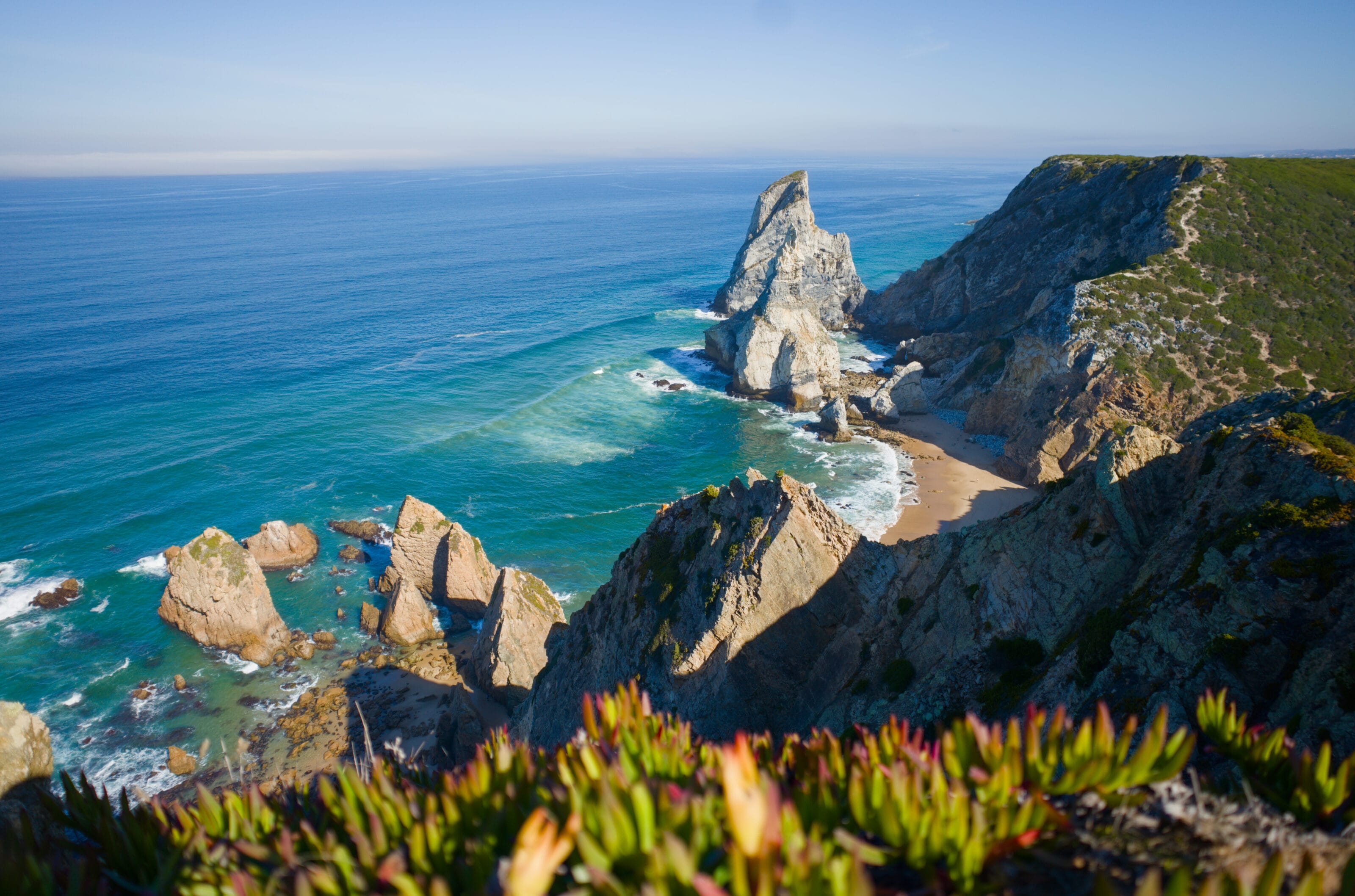
We continue our road trip along the Portuguese coast, and this time we’re taking you not far from Lisbon towards Cascais and the superb hike from Cabo Roca to Ursa Beach. We originally came here to see the castles of Sintra… But as you’ll see in this article, our plans changed once again at the last minute, haha.
Ok, let’s dive more into this stunning region of Portugal!
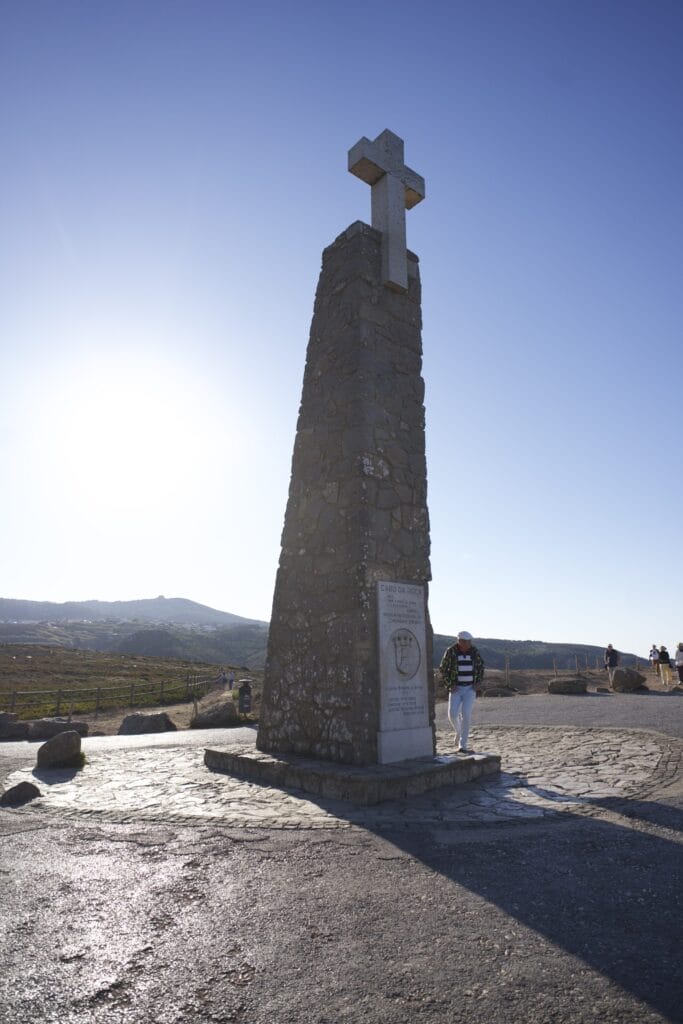
Cabo da Roca: at the edge of Europe (and almost the world)
There are places that sound a bit cliché on paper. “The westernmost point of continental Europe” could almost conjure up images of giant tourist signs and organized bus tours. And yet…
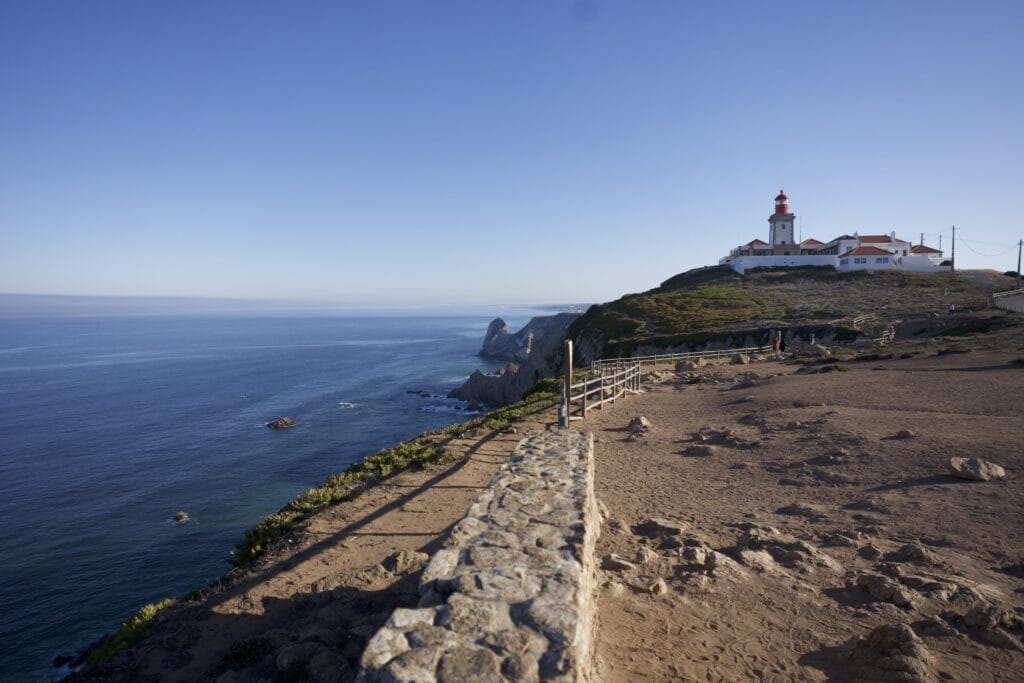
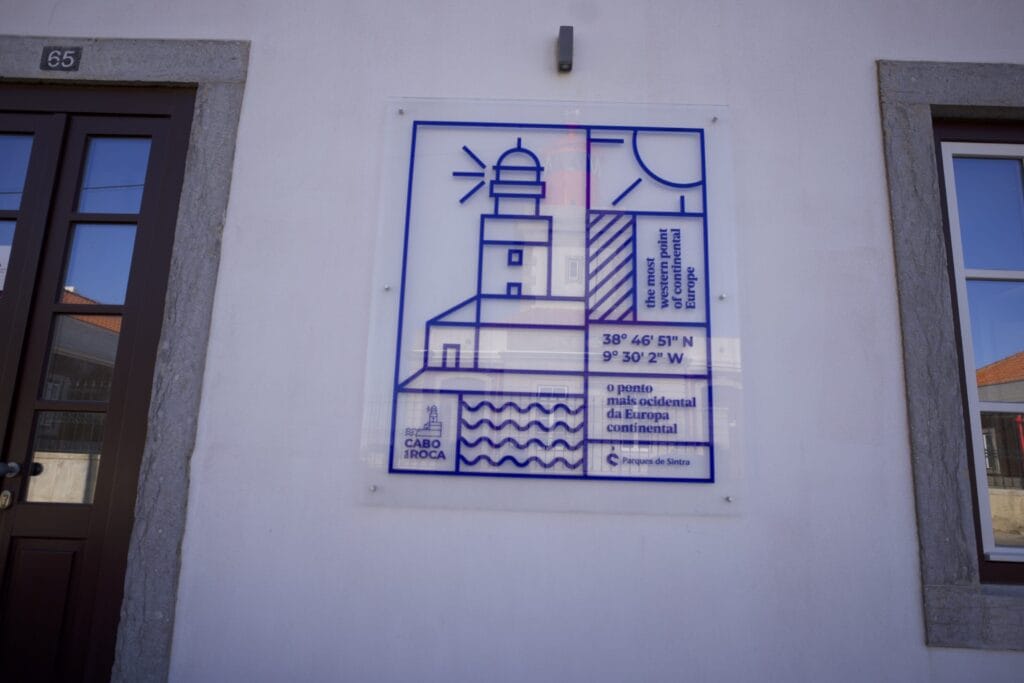
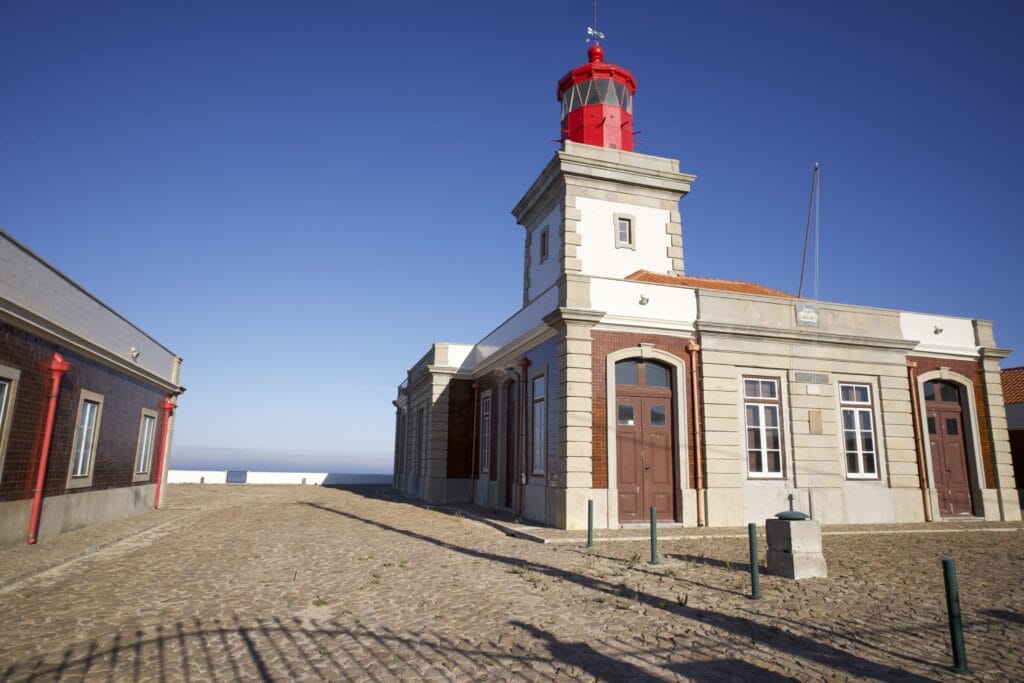
When you arrive at Cabo da Roca, you immediately understand why everyone makes the detour. Here, the land truly ends. In front of us, there is nothing. Just the Atlantic Ocean.
However, I should warn you that it is almost always windy here (and strong), and you can expect to be surrounded by other visitors. 😉 The place is relatively (very) touristy. It is an easy trip to make from Cascais, Lisbon, or Sintra (these three places being among the most touristy in Portugal). In short, our advice is to do as we did and come early in the morning!
Practical information
- Free parking in the immediate vicinity of the lighthouse
- Easily accessible from Cascais or Sintra
- Best times: early morning or late afternoon (for the light and to avoid crowds)
For us, Cabo da Roca wasn’t just a “quick stop.” It was the starting point for one of the most beautiful walks in the region… the one that descends to Praia da Ursa.
Walk to Praia de Ursa
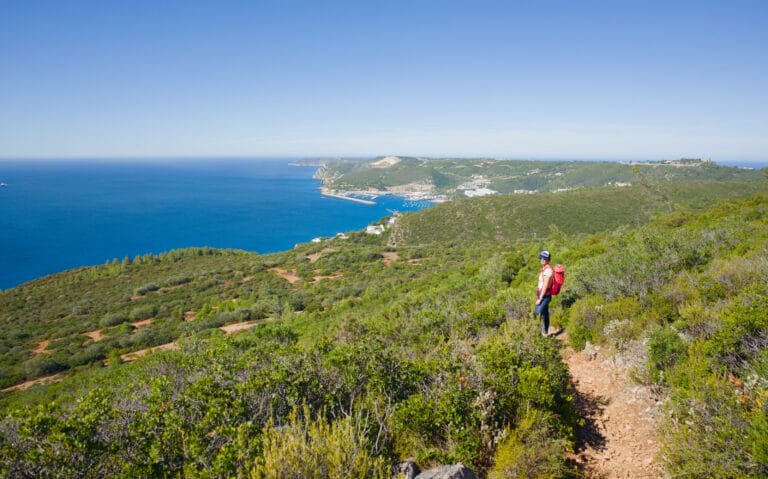
A few minutes’ walk from the parking lot, a small path branches off to the left of the cliffs. There are no large official signs or reassuring barriers. Just a trail in the dirt, carved out by the shoes of those who had the same good idea before you.
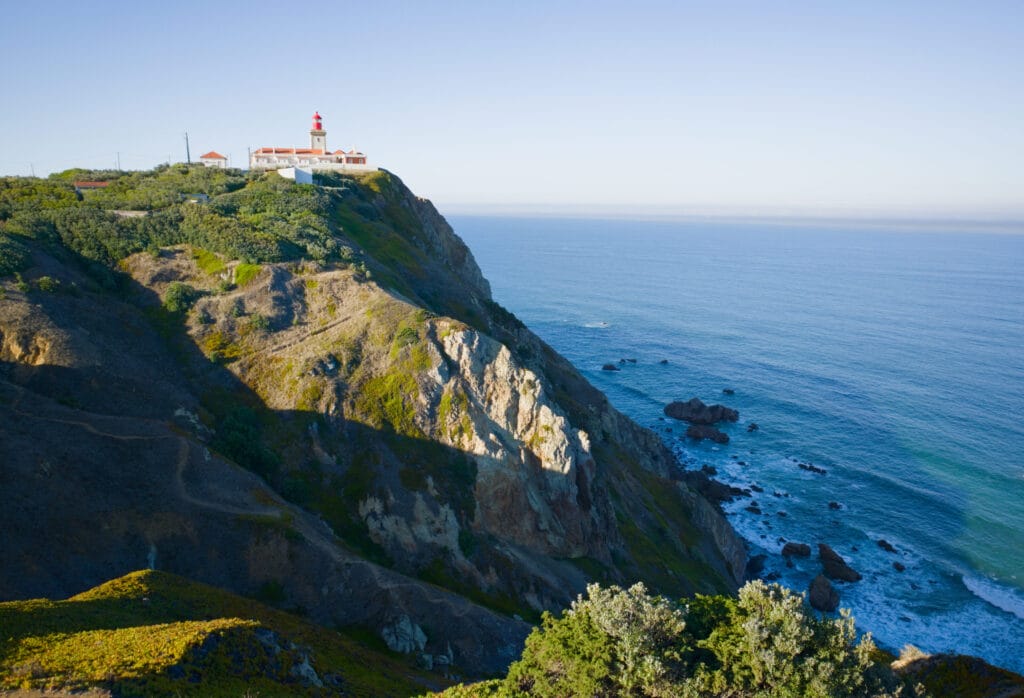
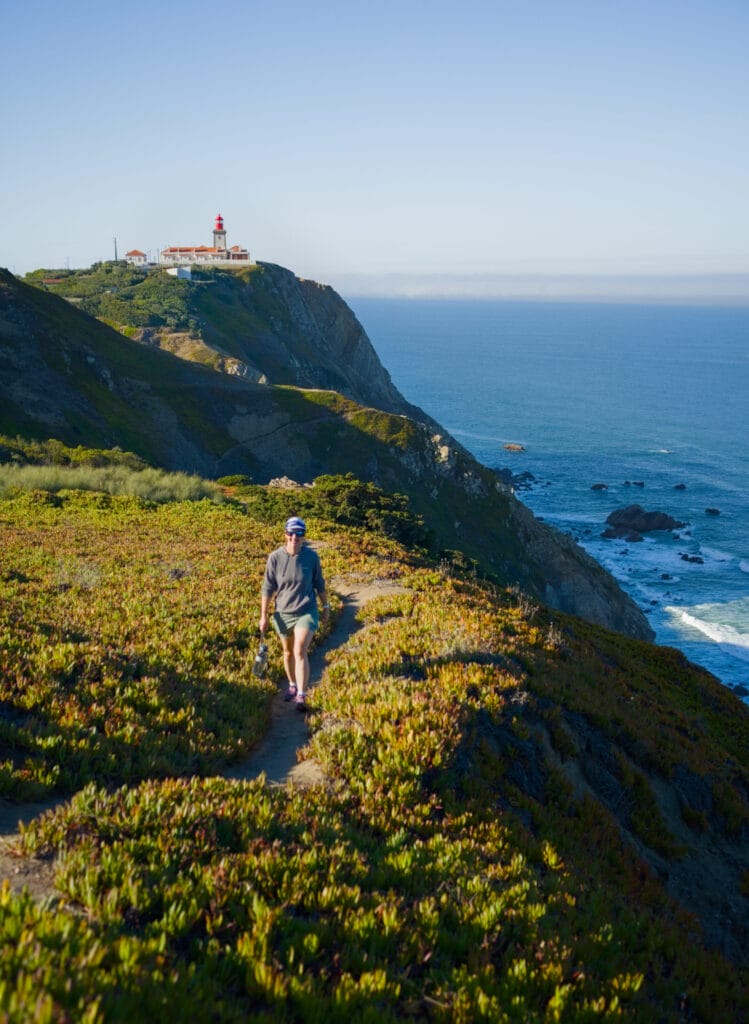
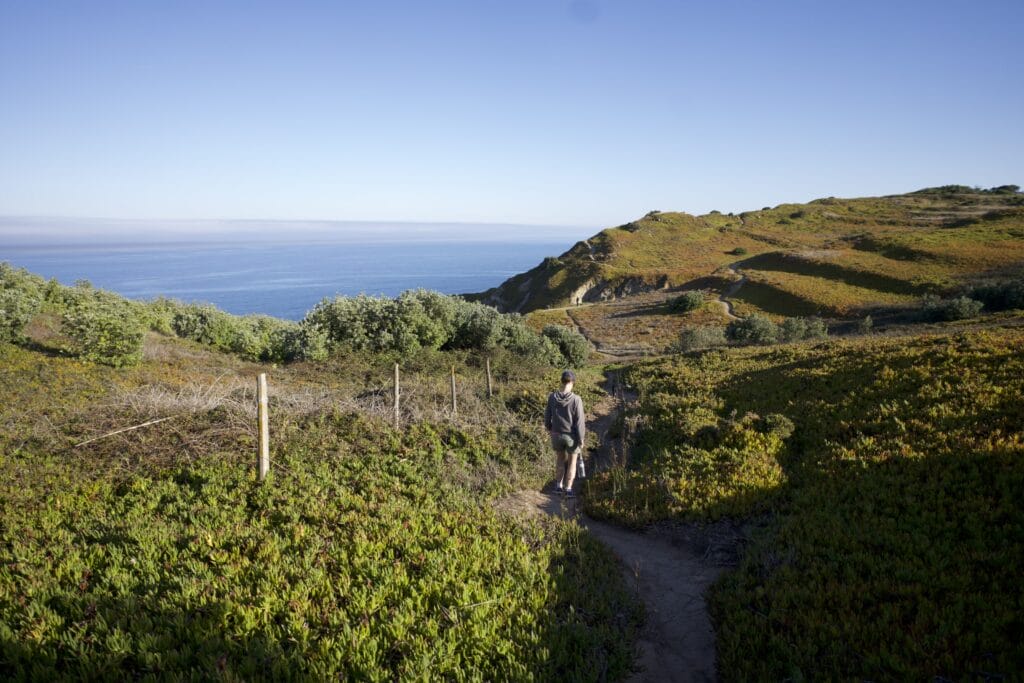
And very quickly… it goes downhill.
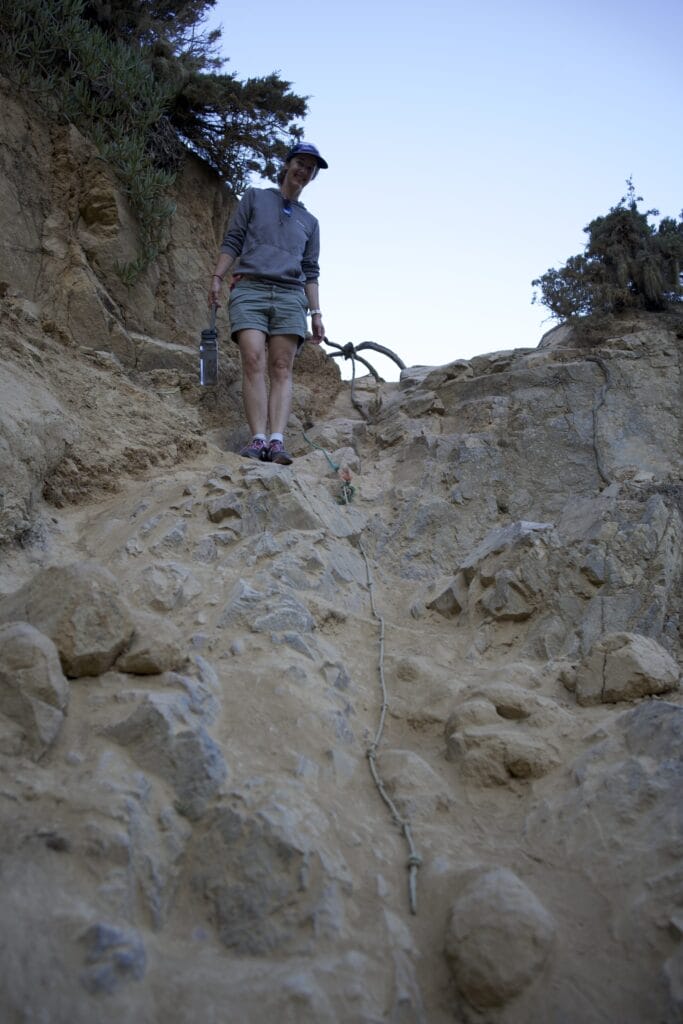
The hike to Praia da Ursa is not long. It takes about 30 to 40 minutes to reach the beach. But be careful, the slope is steep, the terrain is sometimes sandy, sometimes rocky, and some sections require a little caution. It’s not alpine or technical, but it’s definitely not a walk in flip-flops (we prefer to point that out 😅).
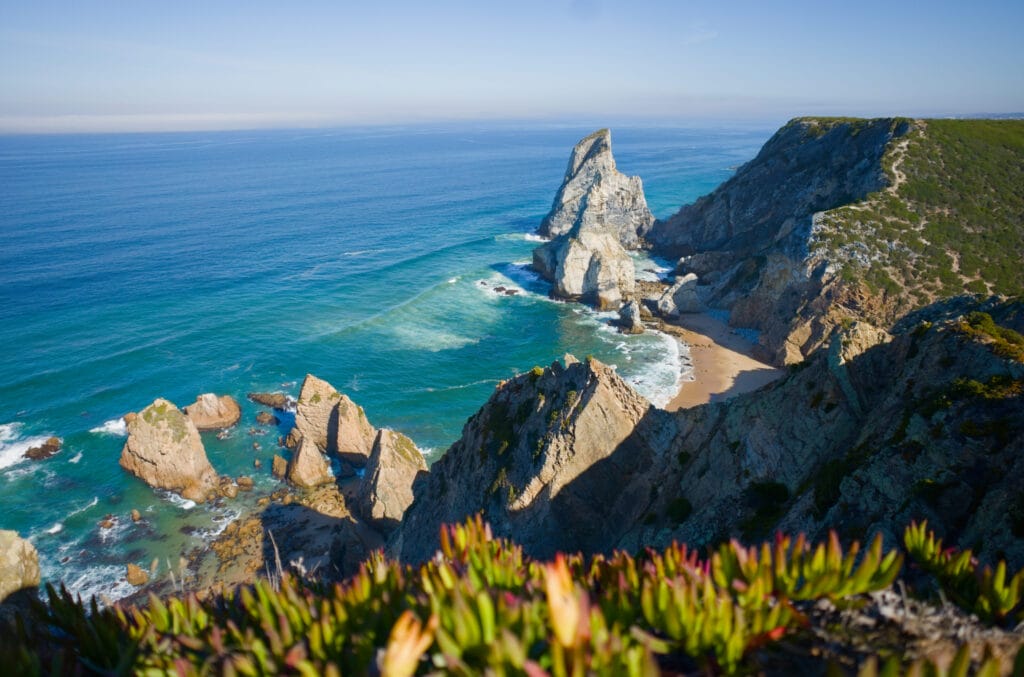
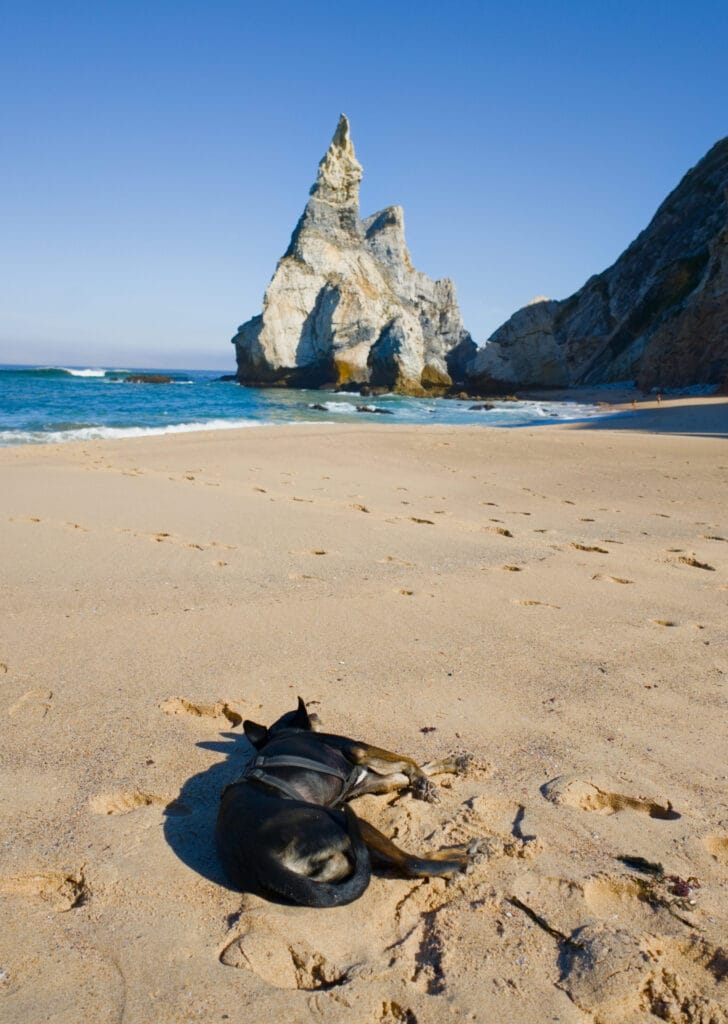
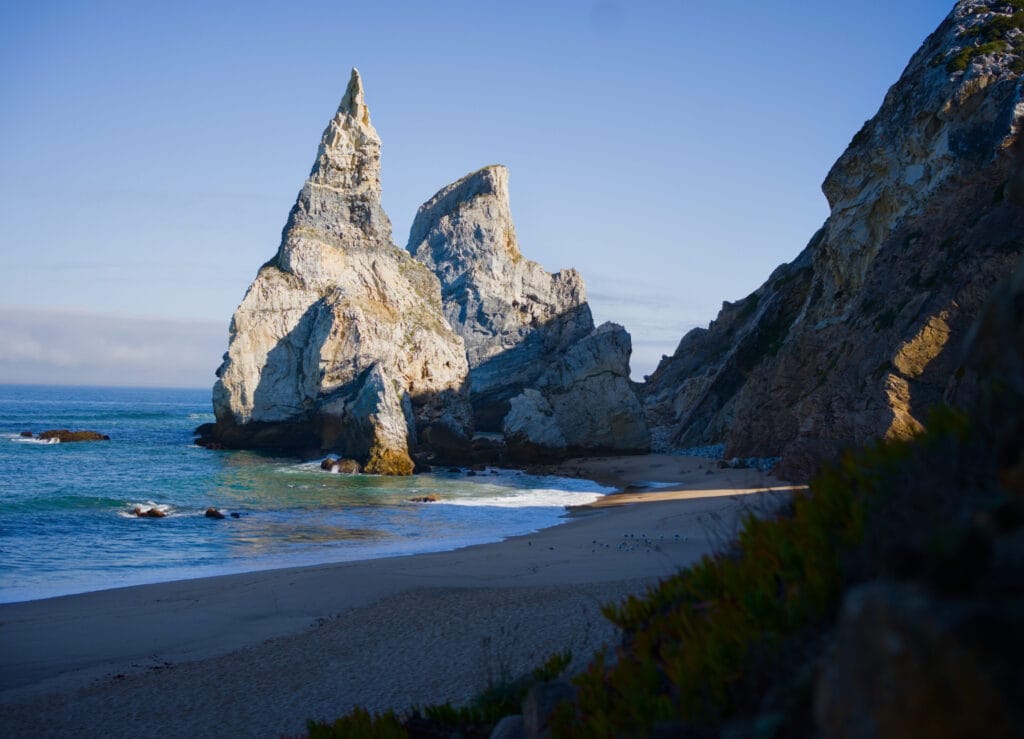
Once you reach the beach, it’s simply amazing!!! We read online that it can get a little crowded here in summer, but out of season it was super quiet! There were exactly three other people on the beach at the same time as us (and it’s really huge!)
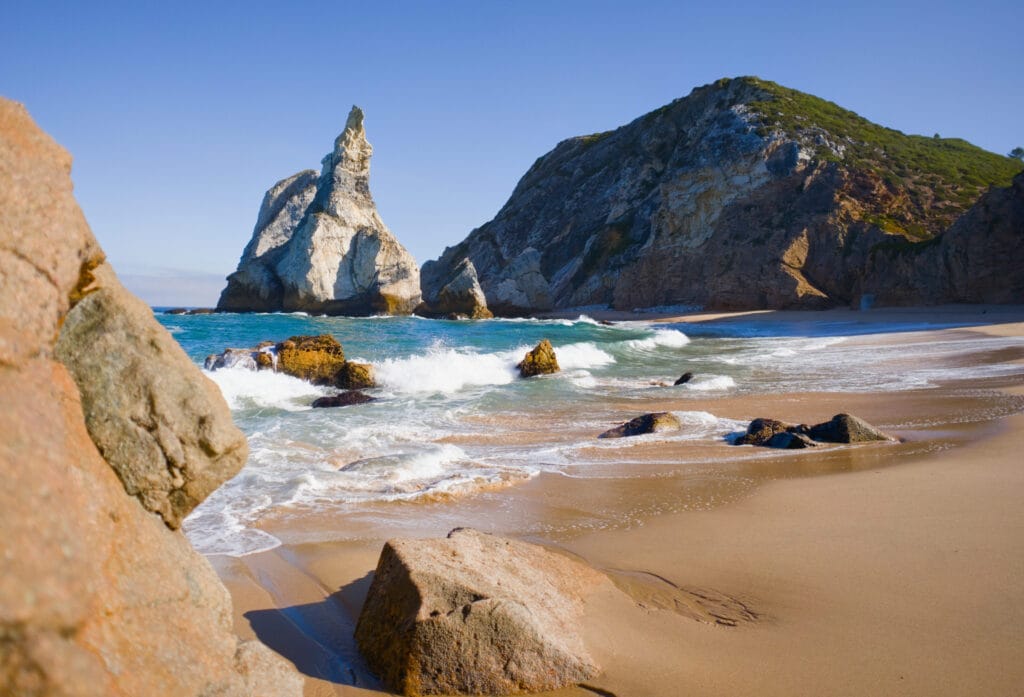
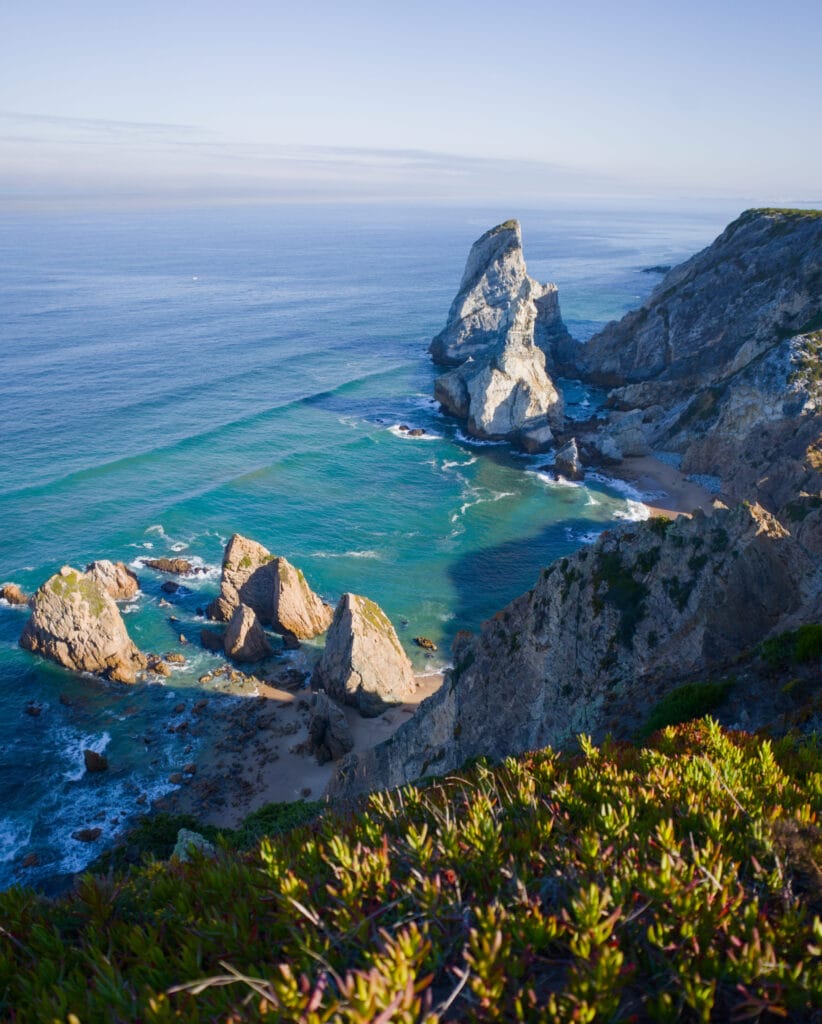
The beach is 100% wild and can only be accessed via this slightly exposed path, which admittedly limits the number of visitors. There are no bars, no deckchairs, and absolutely no infrastructure—in short, it’s a true little paradise, wild and unspoiled!
Once on the beach, there are two schools:
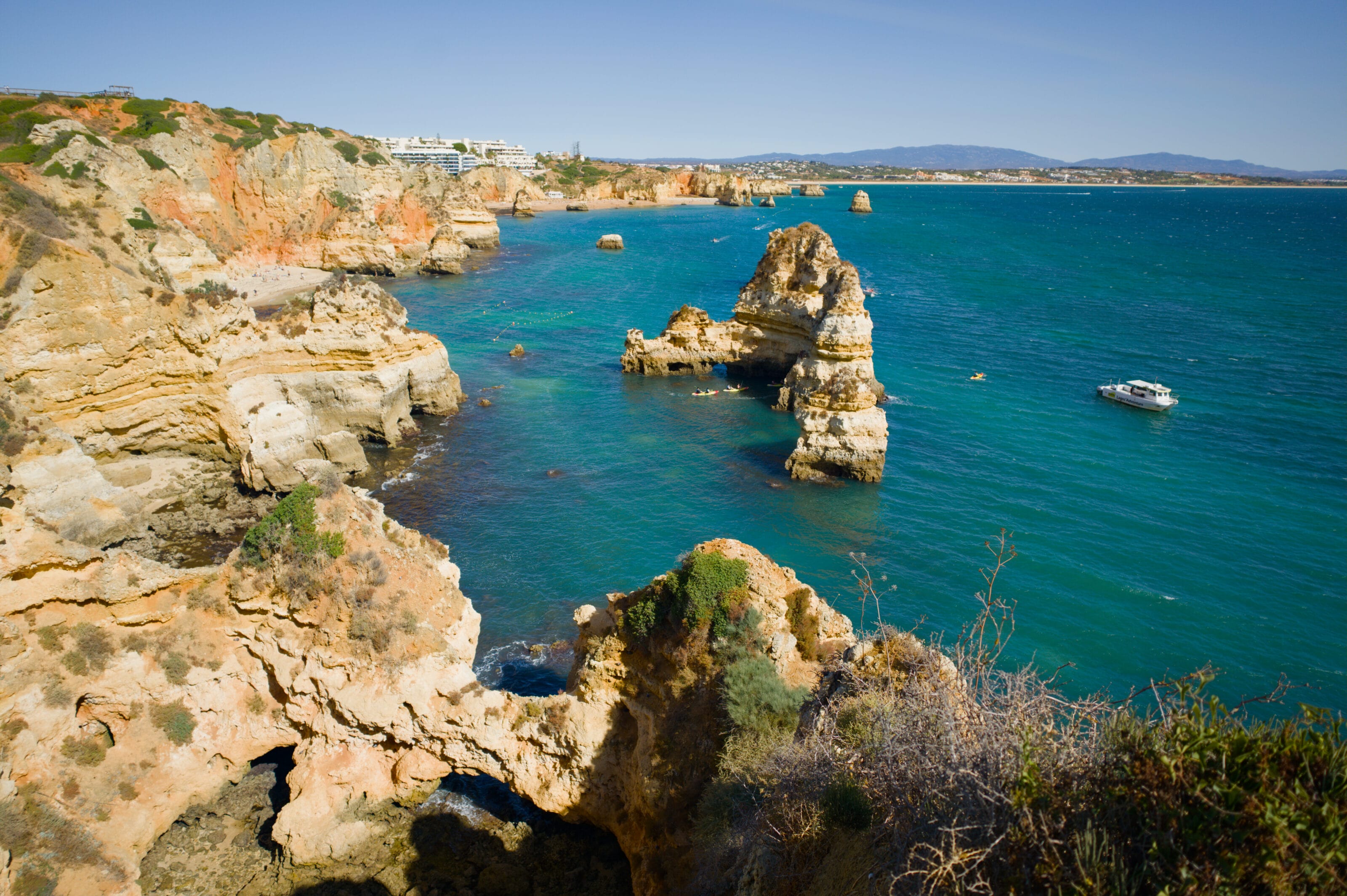
- The option of lazing around that I chose… Settling down on my sweater, I stayed on the beach admiring these impressive peaks that seem to rise out of the water.
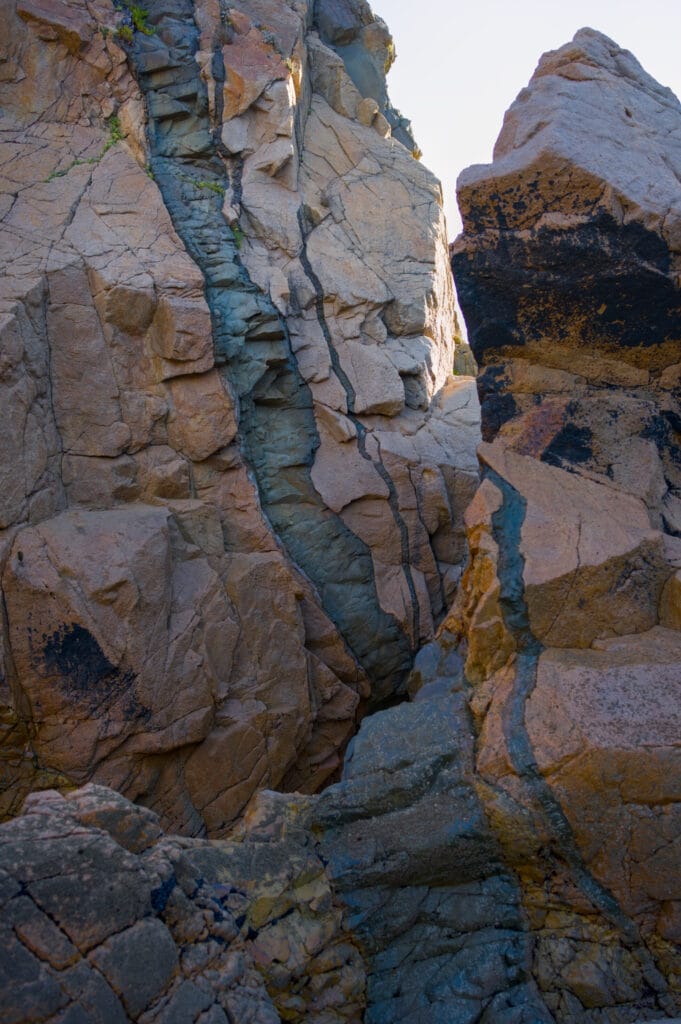
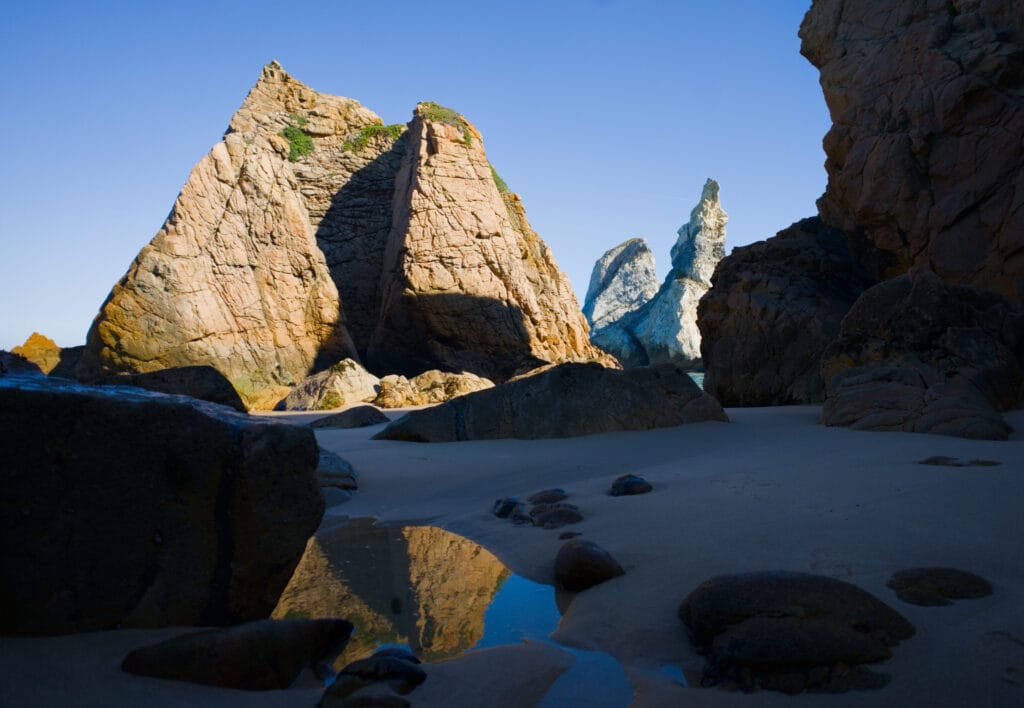
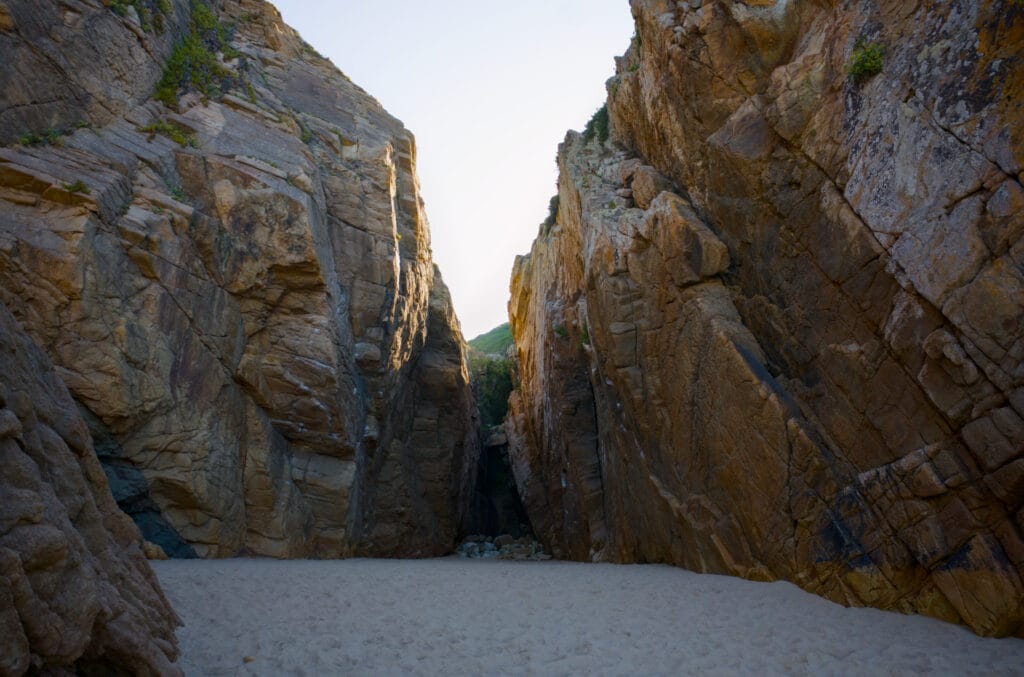
- The adventurous option: I’ll let you guess who chose this one in our couple. Benoit couldn’t even sit still for two minutes, he was so excited to explore every corner of the beach and see the different rocks up close.
Practical information for visiting Praia de Ursa
Praia de Ursa is about a 30-minute walk from the Cabo Roca lighthouse. The trail isn’t marked, but since it’s pretty well-trodden, you won’t have any trouble finding it. For this walk, we strongly recommend wearing sneakers rather than flip-flops. Some sections are quite slippery and steep (there are ropes in two places to help you climb up and down).
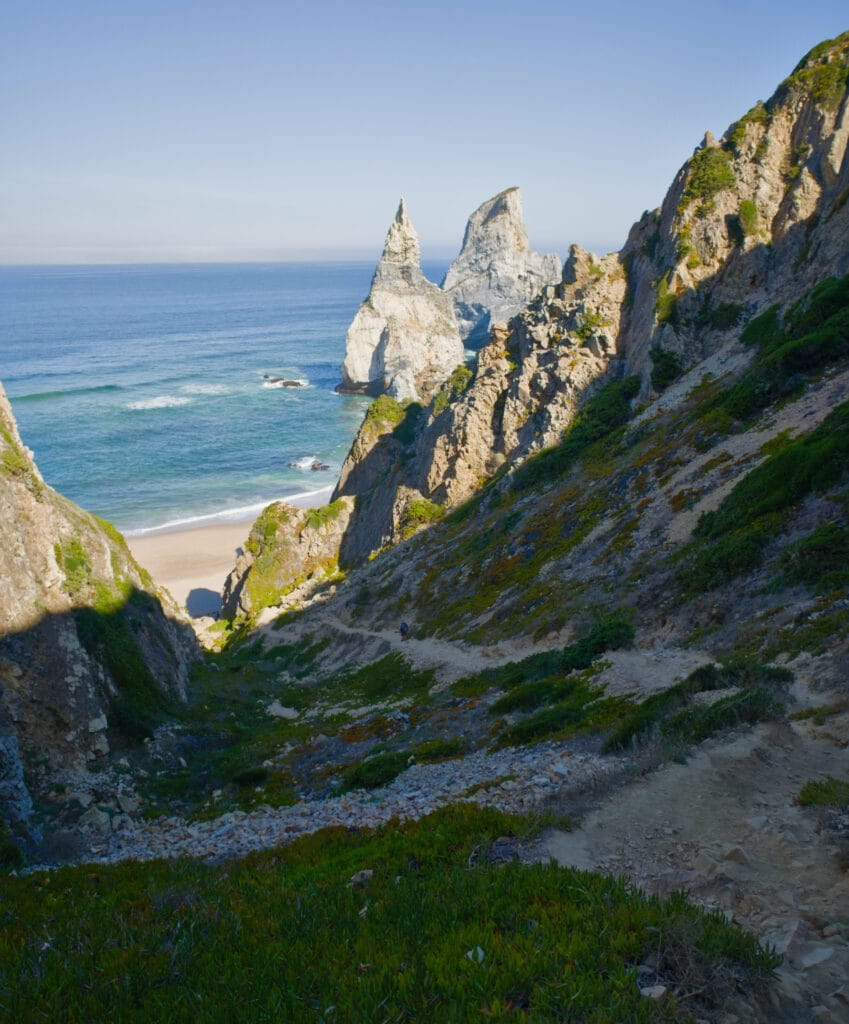
In total, the hike (there and back) is about 3 km long and there is a 160 m elevation drop (and then back up again).
Cascais: the elegant seaside resort on the Lisbon coast
After the wild cliffs of Cabo da Roca and the tranquil atmosphere of Praia da Ursa, the mood changed completely. We reached Cascais by following the EN247 road, which runs along much of the coast. Honestly, if you’re in the area, we highly recommend this route. The road winds between cliffs, beaches, and small viewpoints overlooking the Atlantic, the kind of route where you want to stop every five kilometers to look at the sea. We stopped at the Cabo Rasol lighthouse to eat our picnic before continuing on towards Cascais.
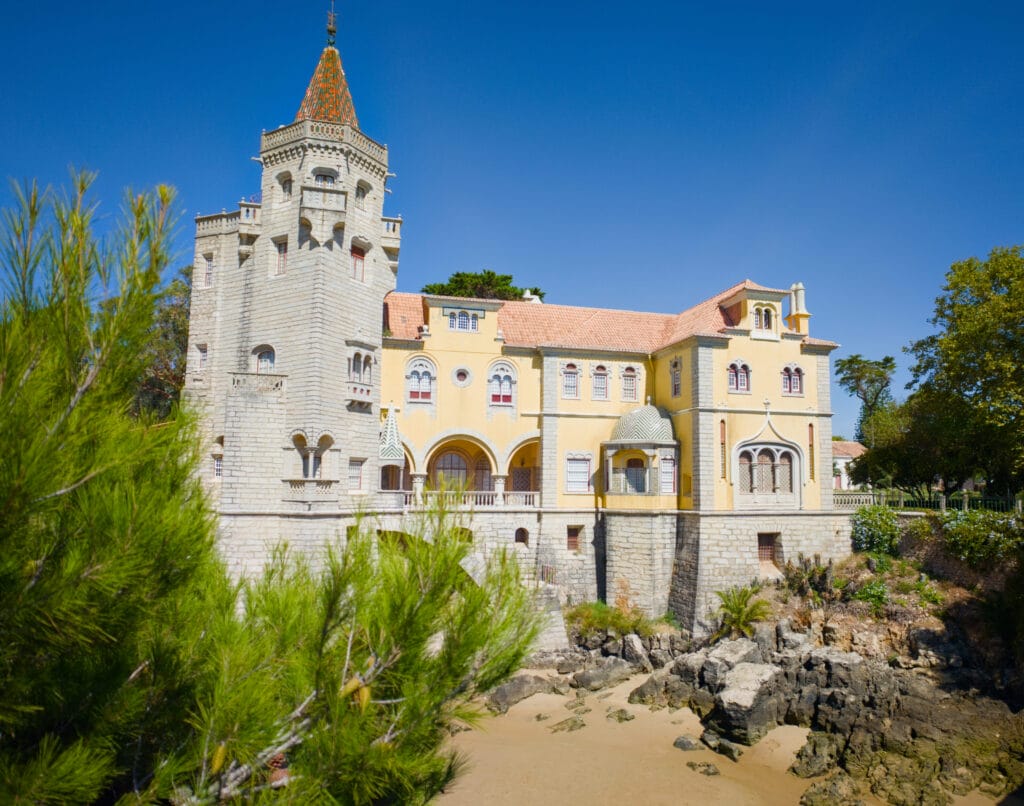
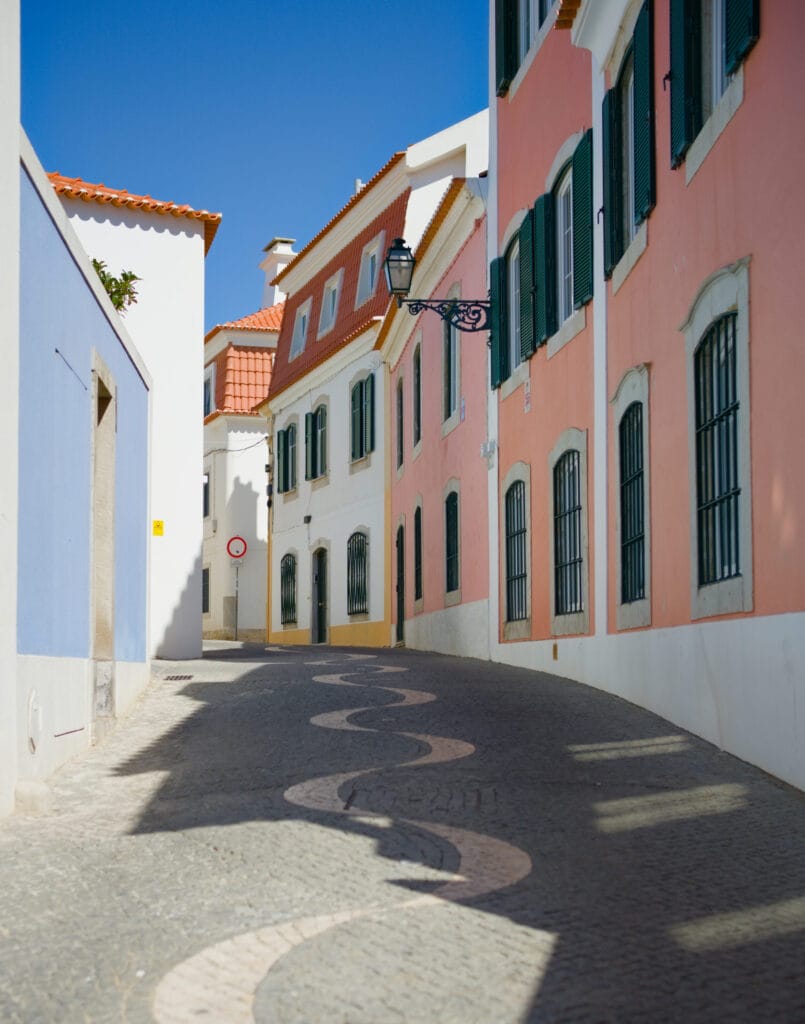
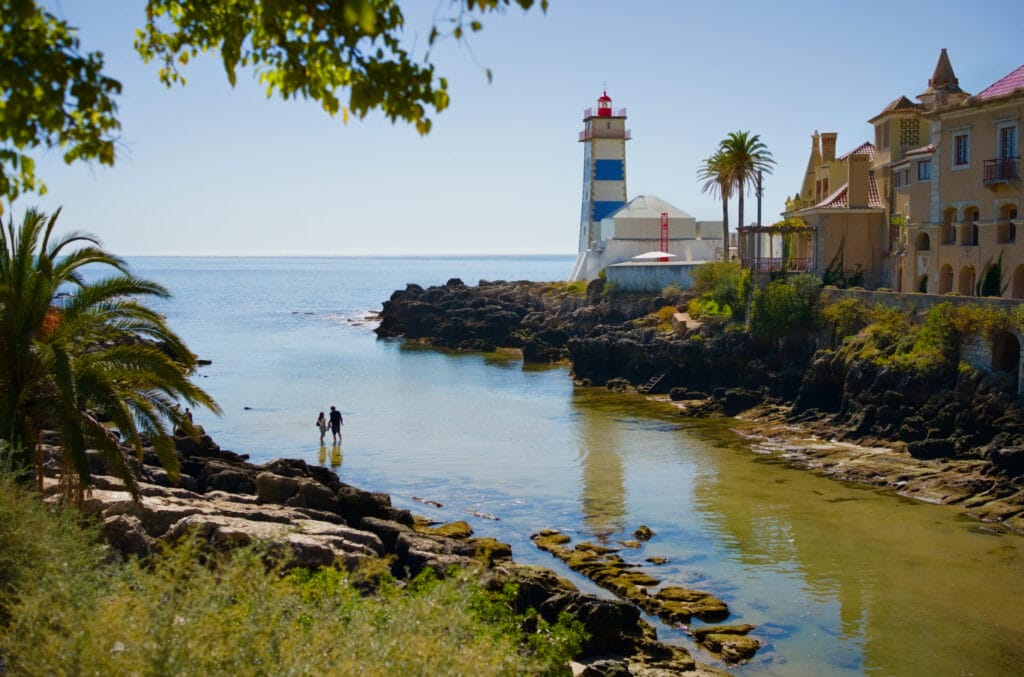
First impression: a small, somewhat chic seaside resort, with pastel-colored facades, boats in the marina, and lively terraces. We immediately had this somewhat unexpected feeling: a hint of Saint-Tropez, Portuguese style. The same kind of elegant yet relaxed atmosphere, with the sea always in the background.
Stroll through the city center and the harbor
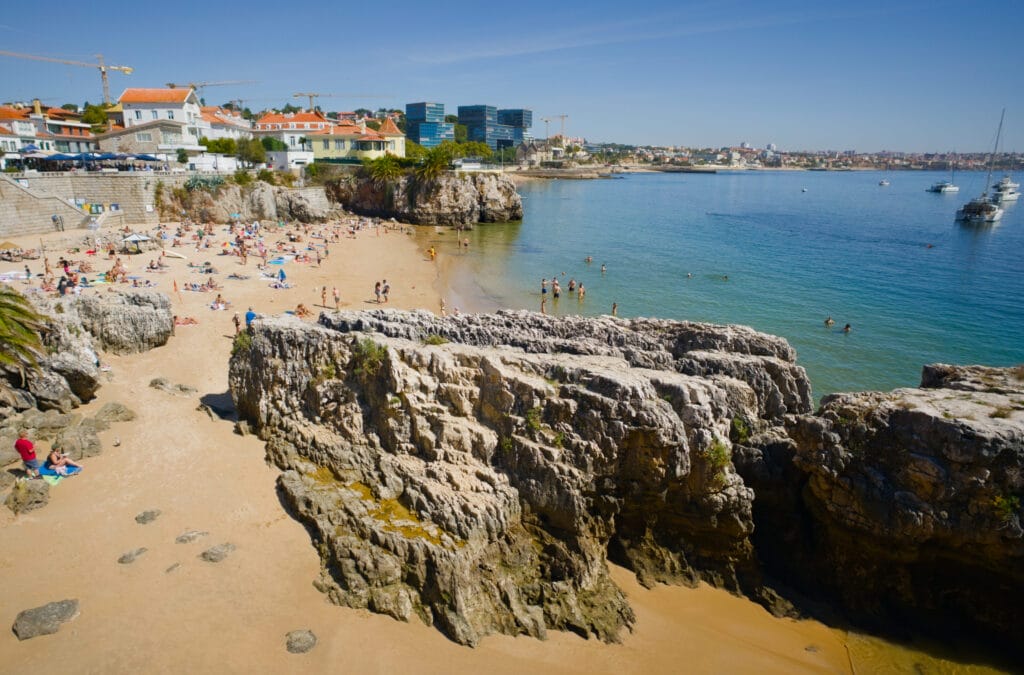
The historic center of Cascais is perfect for wandering around with no particular destination in mind. Cobbled streets, lively little squares, beaches right in town, and a pleasant promenade along the waterfront.
It’s easy to spend an hour or two just walking between:
- the port and marina
- small shopping streets
- urban beaches
- cafés and restaurants
In short, the perfect place to slow down a little after our hike.
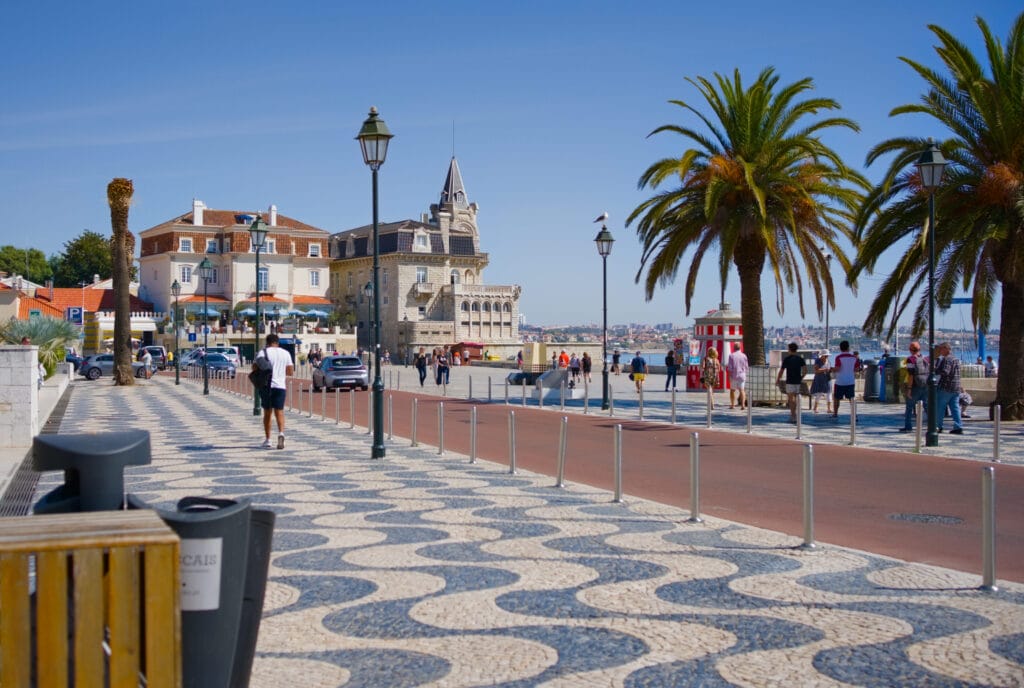
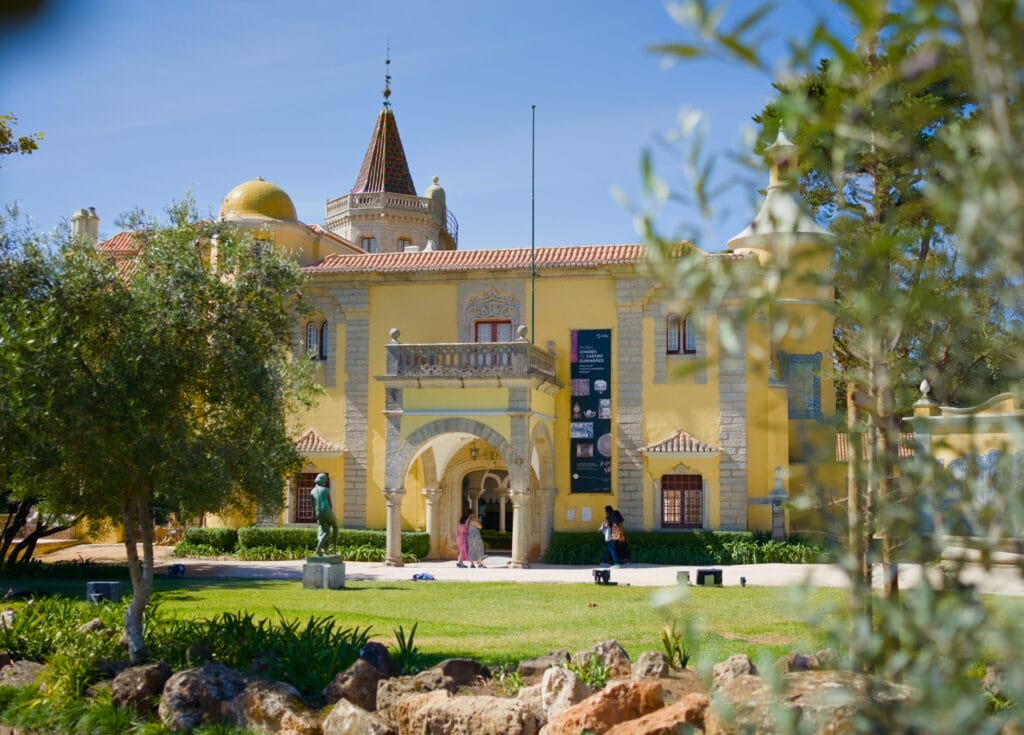
The unmissable ice cream break at Santini
And since every good seaside stroll deserves an ice cream… we stopped at Santini Cascais.
This Portuguese institution has been around since 1949 and is often cited as one of the best ice cream shops in Portugal. So as for whether it’s “the best in Portugal,” we can’t say for sure (we ate a lot of really good ice cream on this road trip), but it’s definitely an excellent ice cream shop!
Suffice to say that after the hike to Praia da Ursa, the ice cream tasted even better.
Cascais proved to be the perfect base for exploring the coast between Lisbon and Cabo da Roca: lively enough to enjoy the city, but also ideally located for quick trips to the cliffs, wild beaches, and even a few climbing spots.
Farol de Guia – The climbing spot in Cascais
The location is quite unlikely. In fact, we are really just a stone’s throw from the city center! On one side, there’s a pretty lighthouse perched on the cliffs, a restaurant, and a few walkers who have come to admire the view. On the other side, there are walls that plunge down into the Atlantic… with several equipped climbing routes. It’s not necessarily the most famous spot in Portugal, but it’s definitely a very nice place to climb in a rather unique setting.
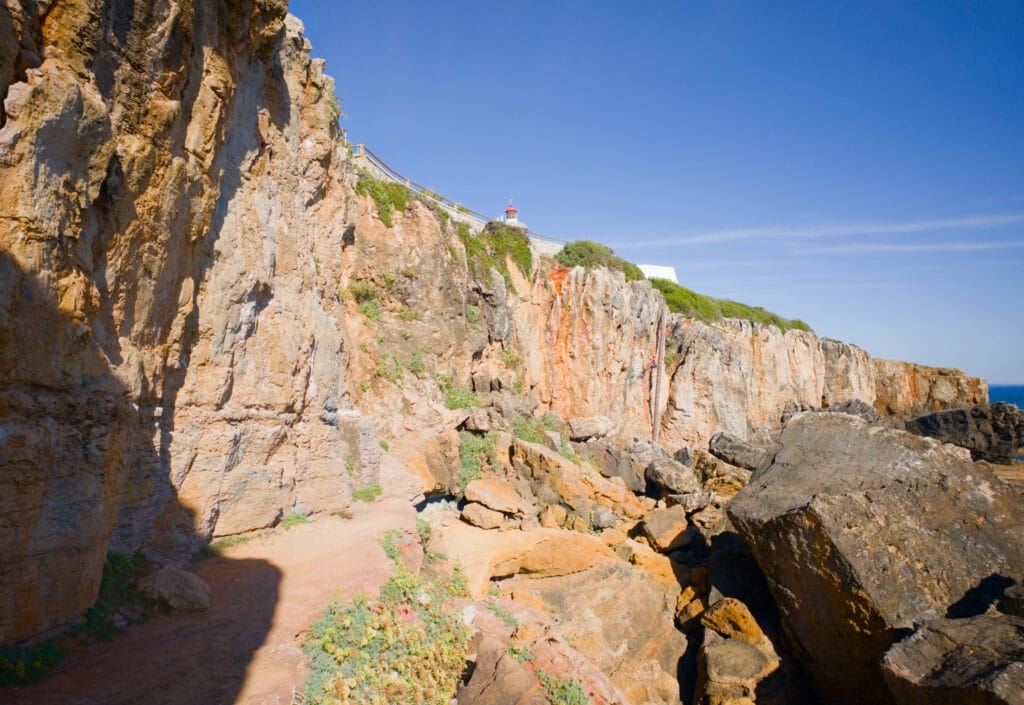
An easily accessible climbing spot
One of the big advantages of Farol da Guia is its accessibility. You can park near the lighthouse (there are plenty of free parking spaces along the main road), then reach the areas in a few minutes on foot along the cliffs. No need for a long walk: here, you’re practically at the side of the road.
Routes for different levels
The site offers several routes of varying lengths and difficulties. There are routes accessible to beginner and intermediate climbers (like us), but also some more challenging routes. What stands out most here is the atmosphere. We’re just a stone’s throw away from this slightly “posh” resort, but at the spot itself, there’s that ultra-chill vibe that often characterizes climbing spots. It’s worth noting that there are also climbing schools here, so when classes are in session, it can get crowded (an international school with about twenty children arrived right where we were, so needless to say, it was lively haha).
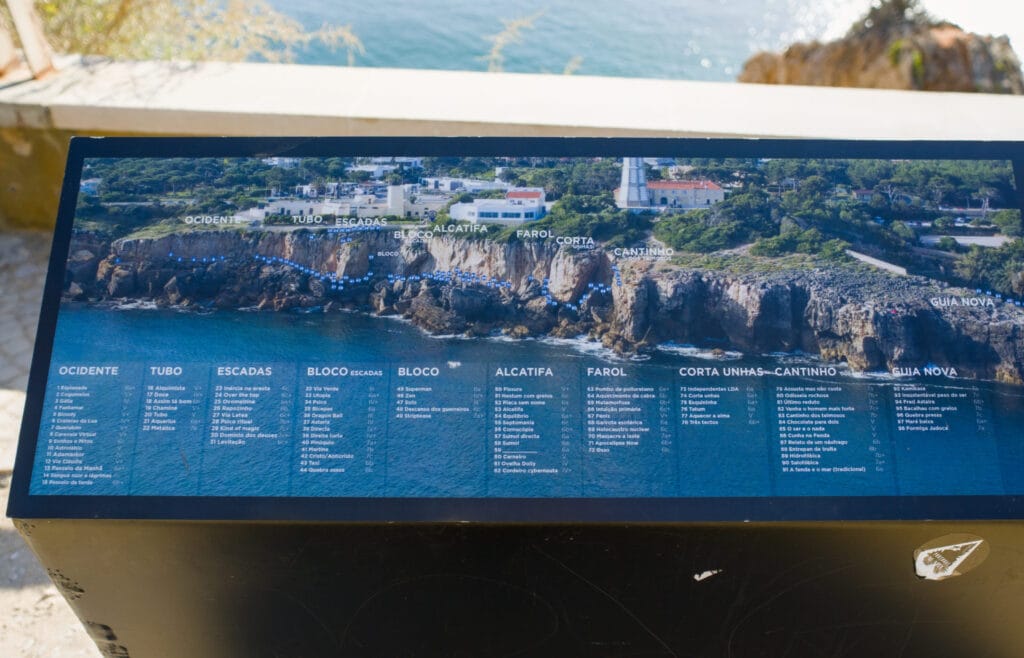
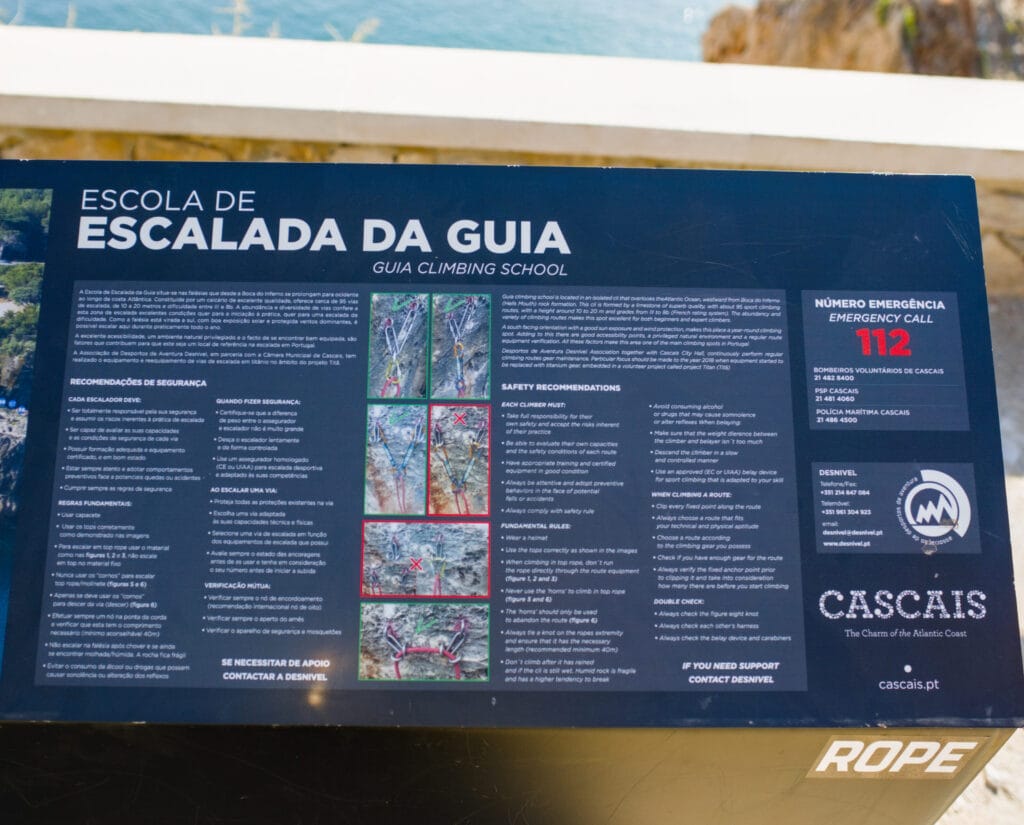
Climbing with the sound of the waves below, the view of the ocean and the cliffs stretching along the coast… it’s definitely a change from our little mountains. 😉
Visiting the region – practical information: car rental, accommodation, organized tours
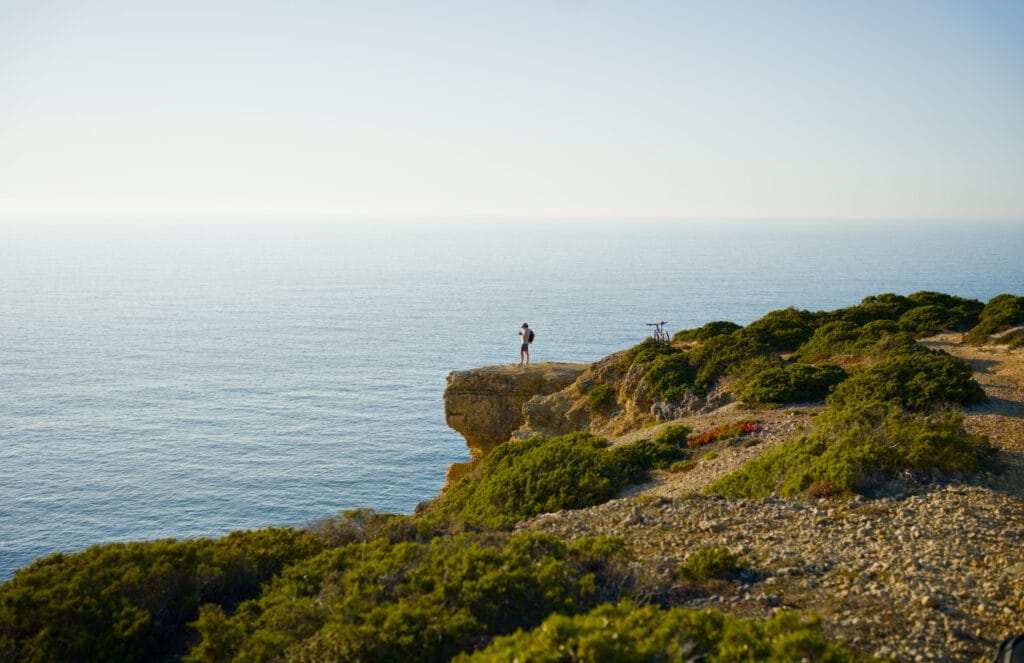
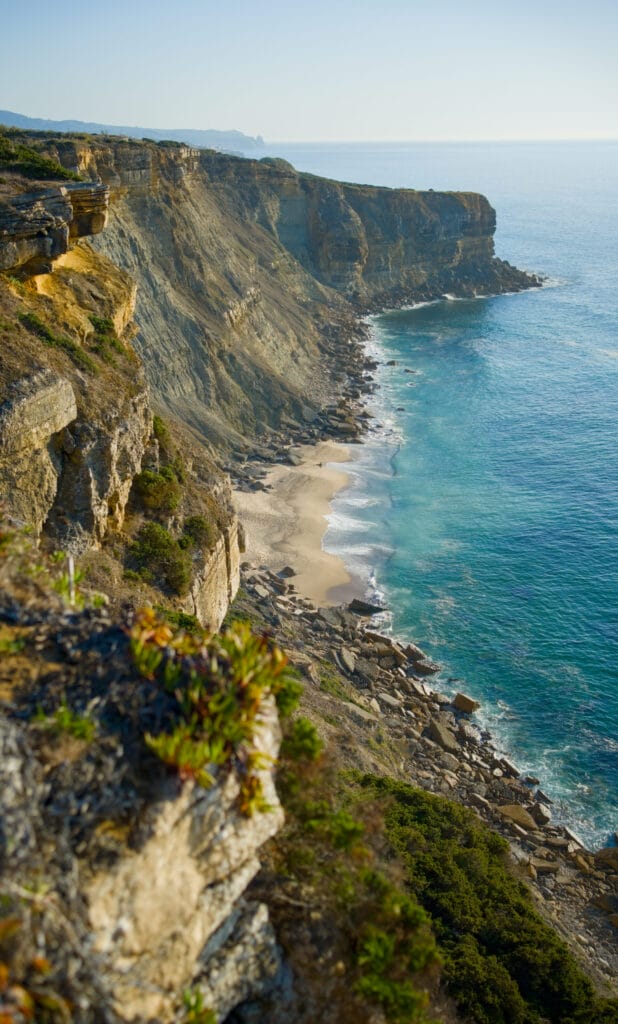
Before finishing this article, we thought we’d give you a quick overview of the practical aspects of this region. If, like us, you’re traveling in a van, you’ll probably notice that there aren’t many campsites or rest areas in this area (and not really any possibility of wild camping). In short, we drove around a bit and spent two nights at the Tojeira camper park (São João das Lampas on Park4Night). We paid €20 per night and, honestly, the place is great! There’s even a small swimming pool where you can cool off at the end of the day! Located not far from the coast, it’s also a great place to go for a walk at the end of the day:
If you don’t have a van, the best option is probably to stay in Cascais or Lisbon and then visit the different places from there. From Lisbon, it takes about 40 minutes to drive to Cascais and 50 minutes to Cabo da Roca. If you are staying in Cascais, Cabo de Roca is about 20 minutes away.
See hotels on the map below (you can move the map to the region of your choice):
For getting around, we recommend renting a car or checking out the tours organized on Getyourguide or Civitatis (for example, to visit Sintra, there are excellent deals that work out cheaper than renting a car and having to worry about parking).
Why didn’t we go to see Sintra and its palaces?
When talking about the Lisbon region, Sintra almost immediately comes up in every recommendation. And with good reason: between Palácio da Pena, Quinta da Regaleira, and Castelo dos Mouros, the region is brimming with palaces and spectacular sites. In short, on paper, it’s clearly a must-see in Portugal.
And yet… we didn’t go.
Traveling with a dog complicates logistics somewhat.
The main reason is quite simple: we were traveling with Winchy, our dog. However, most of Sintra’s iconic sites are palaces or gardens that charge admission, where dogs are generally not allowed. This meant we would have had to take turns visiting the different places, or leave the dog in the van (but given the heat, that didn’t seem like a viable option…).
Added to this is another small constraint: logistics. The palaces of Sintra are quite scattered across the hills, with many narrow roads, limited parking, and often large crowds. Between the queues, traveling between sites, and managing the dog, the day was likely to turn into a bit of an expedition.

Sintra probably deserves more time
The more we looked at what there was to see, the more we realized that a quick visit wouldn’t really do the place justice. Sintra seems to be a destination where it’s worth taking the time to visit several palaces, stroll through the gardens, and explore the hills and forests around the town. Trying to do everything in a few hours (and rushing back to see the dog) seemed a little frustrating in the end.
So we made a fairly simple decision: to leave Sintra for another trip. Instead, we focused on what we love most: the wild cliffs of Cabo da Roca, hiking to Praia da Ursa, rock climbing by the ocean, and leisurely strolls in Cascais.
And honestly, we didn’t regret it.
Sintra definitely remains on our list… but it will have to wait until next time, probably during a trip where the logistics will be a little simpler.
Save to Pinterest


Join the discussion