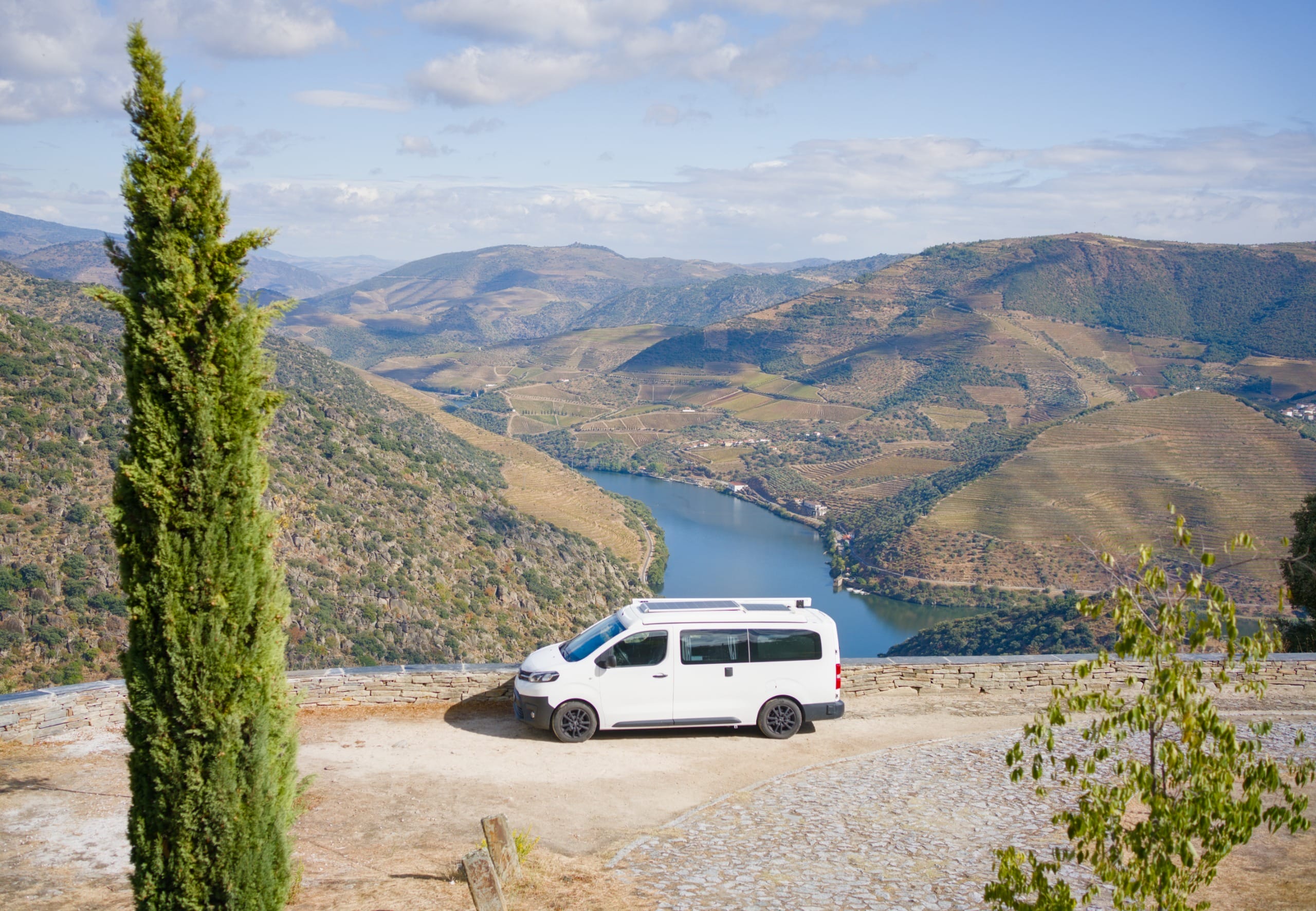
We’re continuing our road trip through Portugal with a region we were really looking forward to exploring: the Douro Valley! During our road trip through Spain, we’d driven through the Duero Valley (the Spanish side), but we hadn’t crossed the border due to a lack of time. In short, when we decided to drive up through Portugal toward Galicia, it was obvious that we would stop for a few days in this magnificent region known for its vineyards and landscapes.
- The Douro Valley at a Glance
- First stop (a bit of a letdown) in Lamego
- The São Salvador do Mundo Lookout Point
- Hiking in the Douro Valley
- Pinhão and its vineyards
- Discover the wines of the Douro Valley
- Where to Stay in the Douro Valley (Van Life & Accommodations)
- Explore the Douro Valley: Our interactive map
The Douro Valley at a Glance
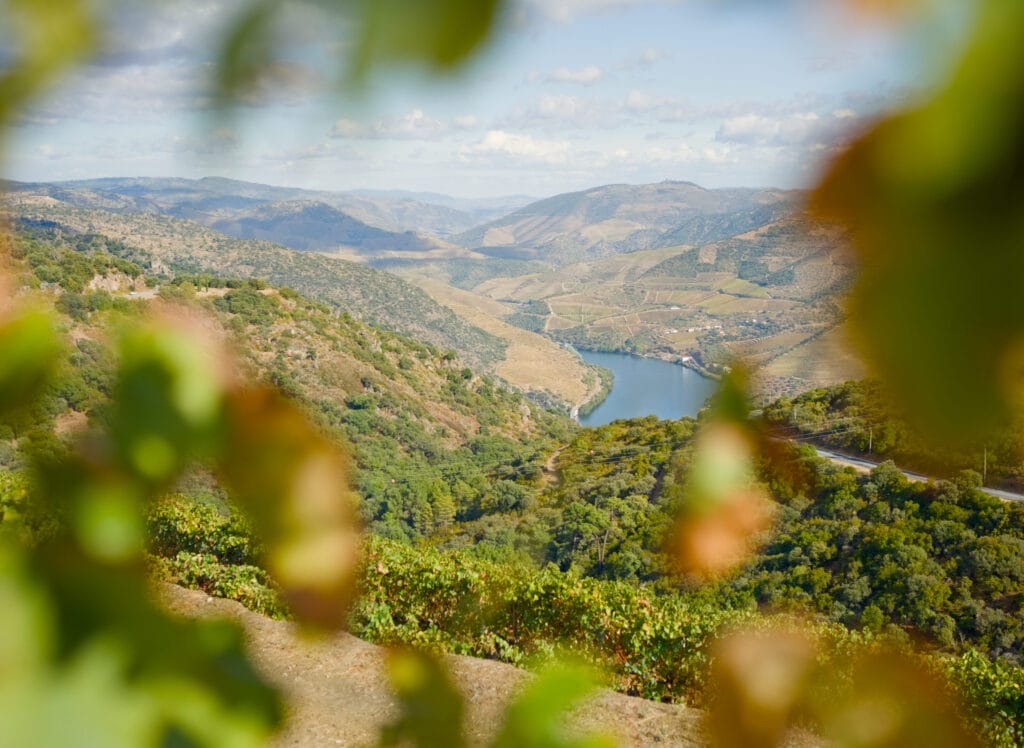
We thought we’d just make it a “nice little stopover”… but we ended up wanting to stay much longer than planned. Listed as a UNESCO World Heritage Site, the Douro Valley is often cited as one of Portugal’s most beautiful regions. I’ll admit, even though for us Swiss folks, the wild Atlantic coast remains a favorite, we have to admit that the Douro is the kind of region where we could easily have gotten hooked and stayed longer. 😉
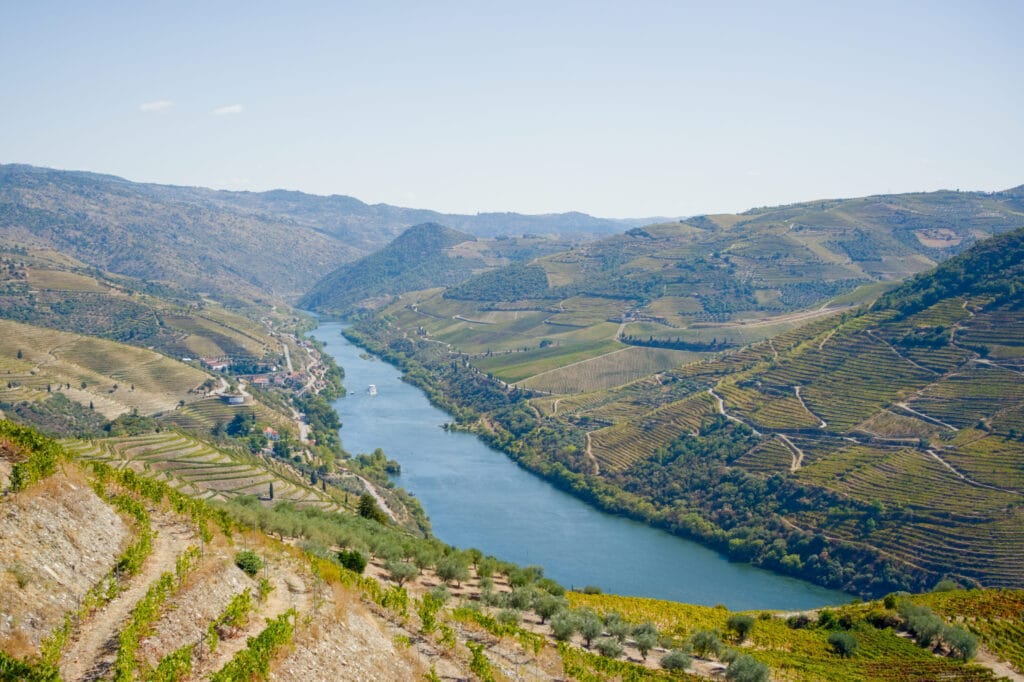
Actually, unlike other tourist destinations (because yes, the Douro is a tourist destination!), there isn’t really a single “must-see” here. The result? You really don’t feel like you’re surrounded by crowds. Because yes, the valley is truly vast, and there’s an almost endless number of small roads and breathtaking viewpoints, so it’s really easy to find yourself completely alone in the world.
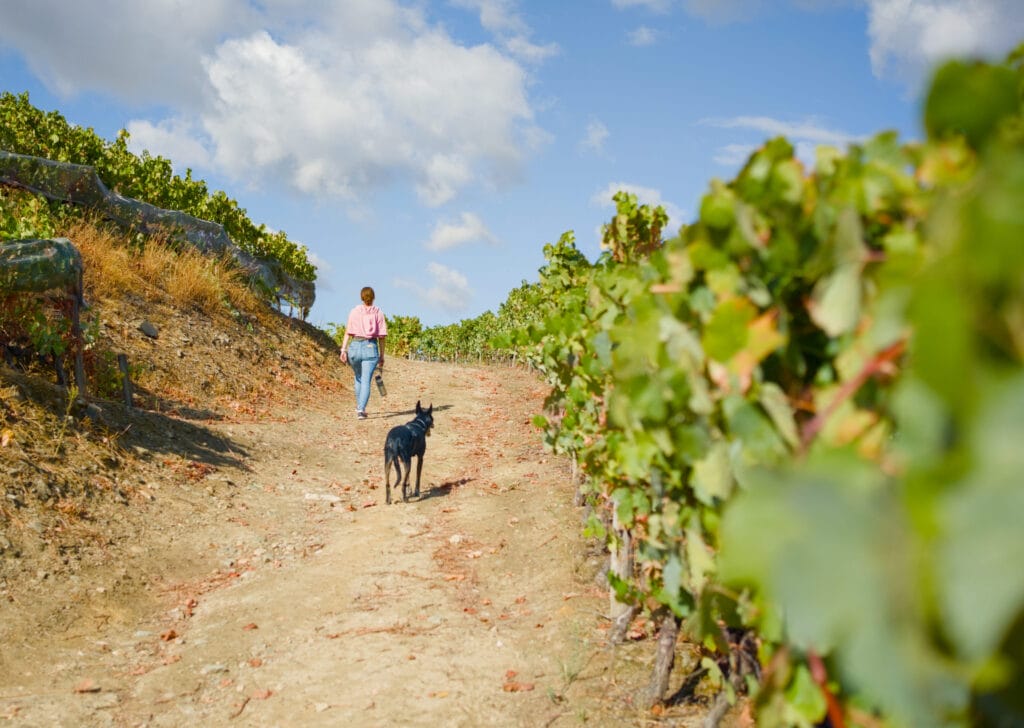
And then there’s the road trip aspect, which we absolutely loved. Honestly, the Douro is a hidden gem that’s perfect for exploring by car or van. We ended up completely winging our itinerary, randomly following backroads (sometimes Google Maps took us on some seriously wild detours down roads that were totally unsuitable, haha), and sleeping right in the middle of the vineyards… with some pretty incredible wake-up calls.
In fact, the region reminded us a bit of the Ribeira Sacra, that part of Galicia we love so much.
First stop (a bit of a letdown) in Lamego
Okay… the title might be a bit of an exaggeration… but let’s be honest, we weren’t exactly blown away by Lamego.
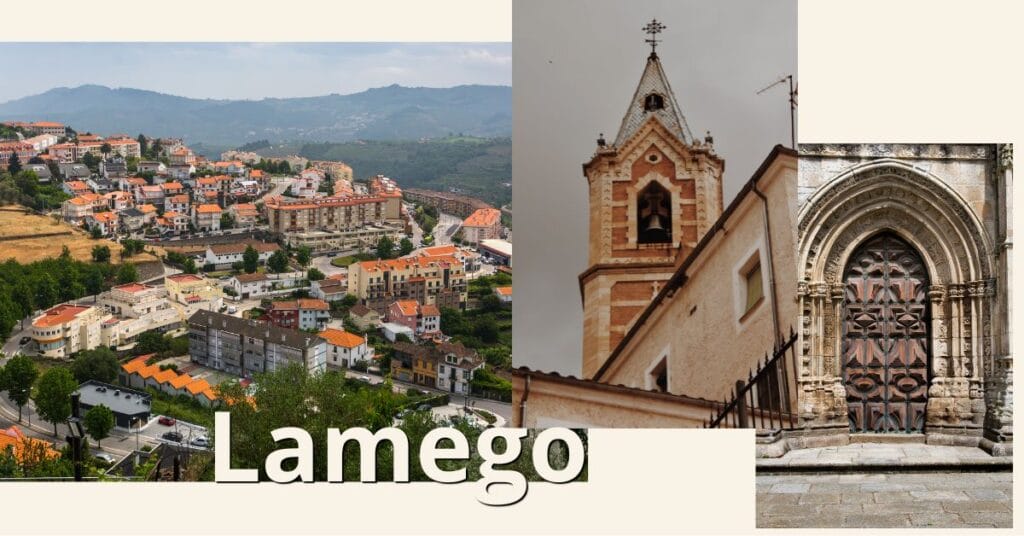
On paper, Lamego had everything we were looking for. A small historic town, a famous Baroque sanctuary, and an ideal location at the gateway to the Douro Valley… in short, it ticked quite a few boxes for a first stop.
But here’s the thing: sometimes, timing makes all the difference. The day we visited, it was raining, the sky was completely gray, and the atmosphere was honestly a bit gloomy. As a result, it was hard to really appreciate the charm of the place or picture ourselves living there. Even the famous sanctuary, which we’d imagined would be quite impressive, left us a bit underwhelmed under those conditions.
We definitely think Lamego probably deserves better than that, especially when the weather is nice. But for us, it wasn’t the love at first sight we’d hoped for; it was more of a quick stopover before moving on to landscapes that really did capture our hearts.
Lamego Campground
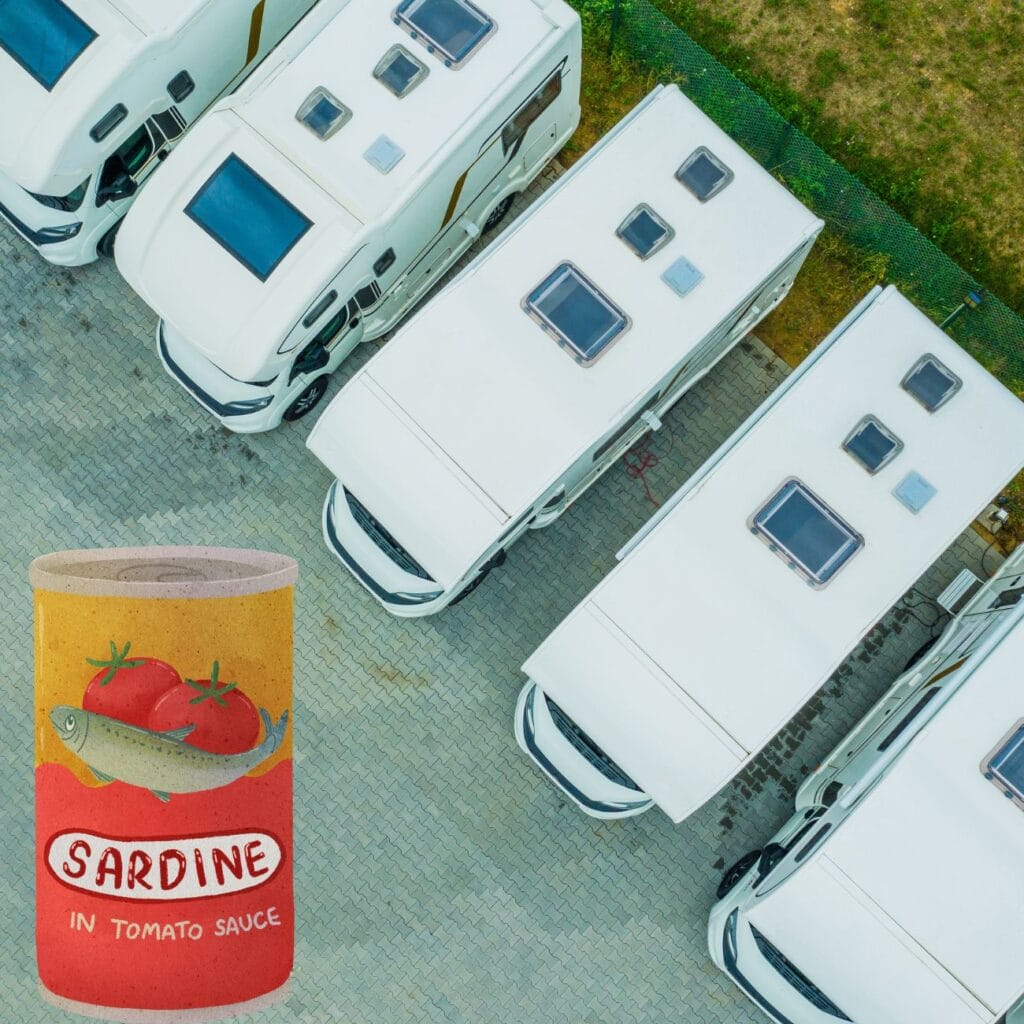
Note on accommodations: After arriving from Cascais, we spent our first night in Lamego. And since wild camping isn’t really an option in town, we naturally headed to the town’s campground. And it’s funny, because the Google reviews for this “campground” really made me laugh. Especially one that starts with a french song by Patrick Sebastien: “Ah qu’est qu’on est serré au fond de cette boîte, on chante les sardines, onhttps://www.alltrails.com/widget/trail/portugal/braganca/pr2-crz-trilho-do-senhor-da-boa-morte?u=m&sh=vf53ks
chante les sardines.” 🙂 Actually, I put quotes around the word “campground” because it’s probably one of the strangest campgrounds we’ve ever stayed at.
Let’s start with the positives:
- Perfectly located just a stone’s throw from downtown and the sanctuary
- Some sites offer a nice view of the city
- The staff is very friendly, and the little bar on the square is nice
- The bathrooms and showers are spotless (I mean, seriously! They’re so clean, it feels just like home!)
But… there’s a big catch! Actually, the campground seems to be set up in what looks like a former hotel. There are a few rooms for rent, and the hotel parking lot has been turned into a campground. Their website says there are 15 sites… I think it would be comfortable (and really nice) if there were actually 15 vehicles, but when we were there, there must have been closer to 30 vans and RVs, and we were really crammed in (we had to agree on a departure order in the morning because it was so tight!). And well… at €30 a night, it was also by far the most expensive stop on our trip to Portugal. 😉
The Shrine of Nossa Senhora dos Remédios
It’s hard to miss the Sanctuary of Nossa Senhora dos Remédios, which is clearly Lamego’s main attraction.
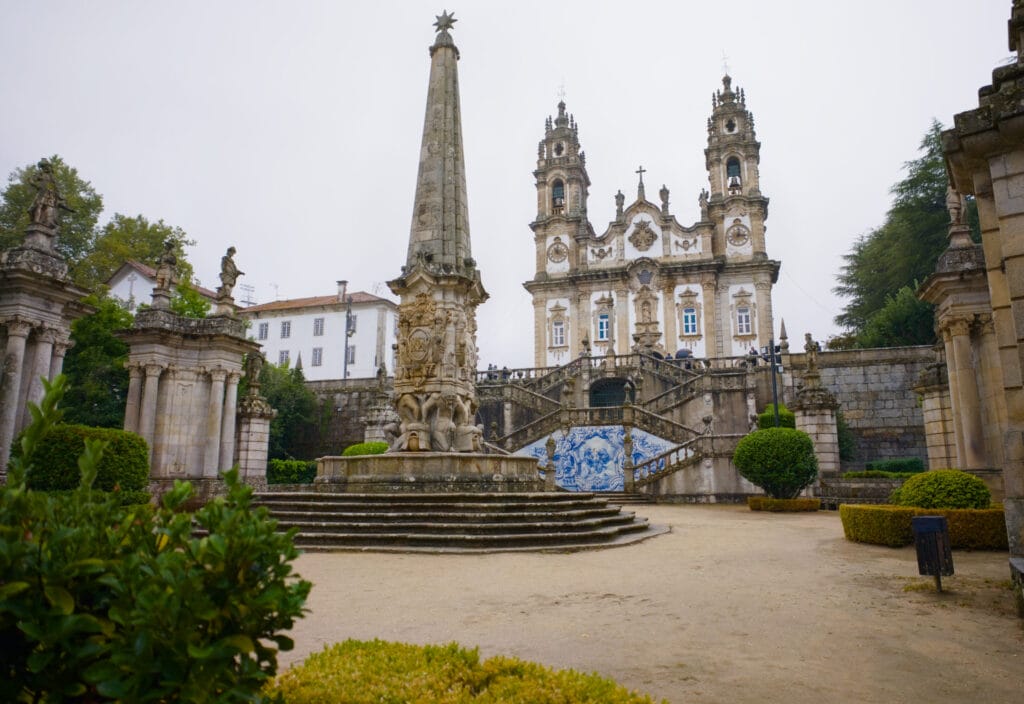
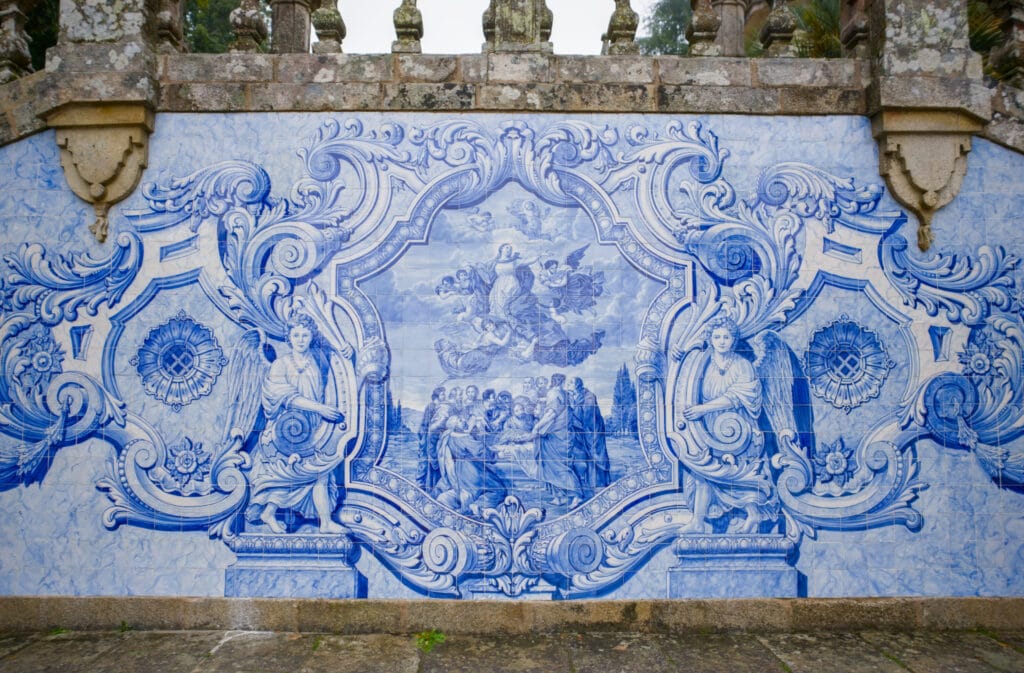
Perched high above the city, it is best known for its massive Baroque staircase decorated with azulejos. In photos (and on a sunny day), the place looks truly impressive, and it’s easy to see why it attracts so many visitors. That said, in the pouring rain and fog, I’d say its charm was a tad more subdued.
To get there, you have to climb about 600 steps spread across several levels, adorned with fountains, statues, and azulejos. The climb is gradual, with various decorated landings, which makes it less monotonous than it seems (at least… when it’s not raining 😅).

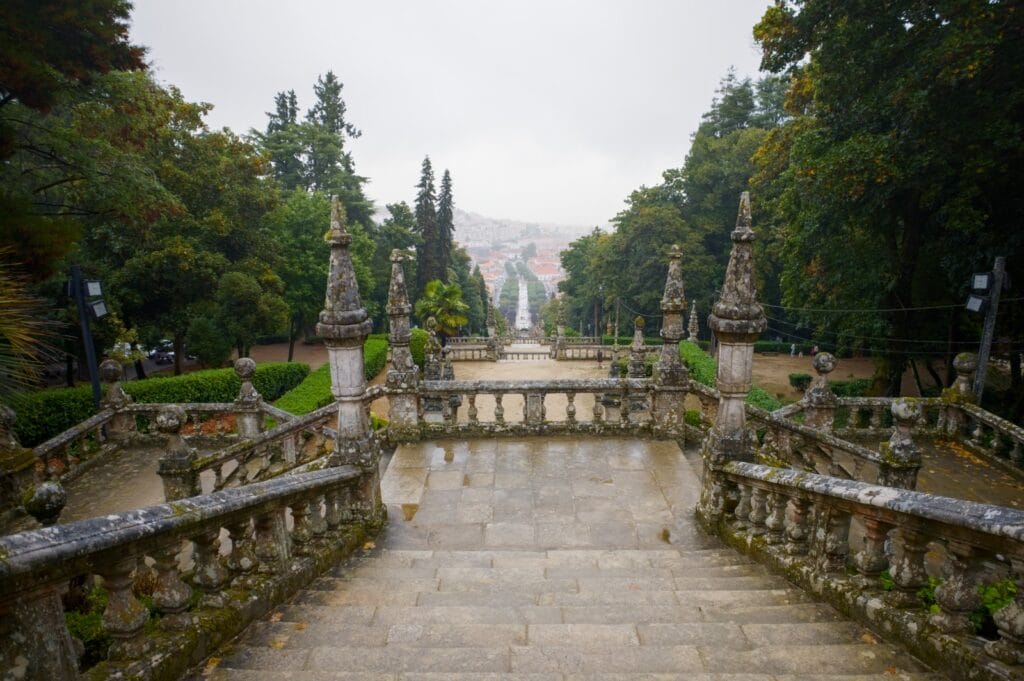
Up top, the sanctuary itself is very pretty. It has a façade typical of Portuguese Baroque architecture, and the view from the summit is, apparently, spectacular—something we unfortunately couldn’t verify because of the fog, haha.
The São Salvador do Mundo Lookout Point
We left Lamego in the rain and decided to make the most of the day by doing some shopping and then riding as far as we could toward the east, where the weather looked better. And I have to admit, our timing was pretty good… The sky started to clear up just as we began riding along the N222, the beautiful road that runs alongside the Douro.
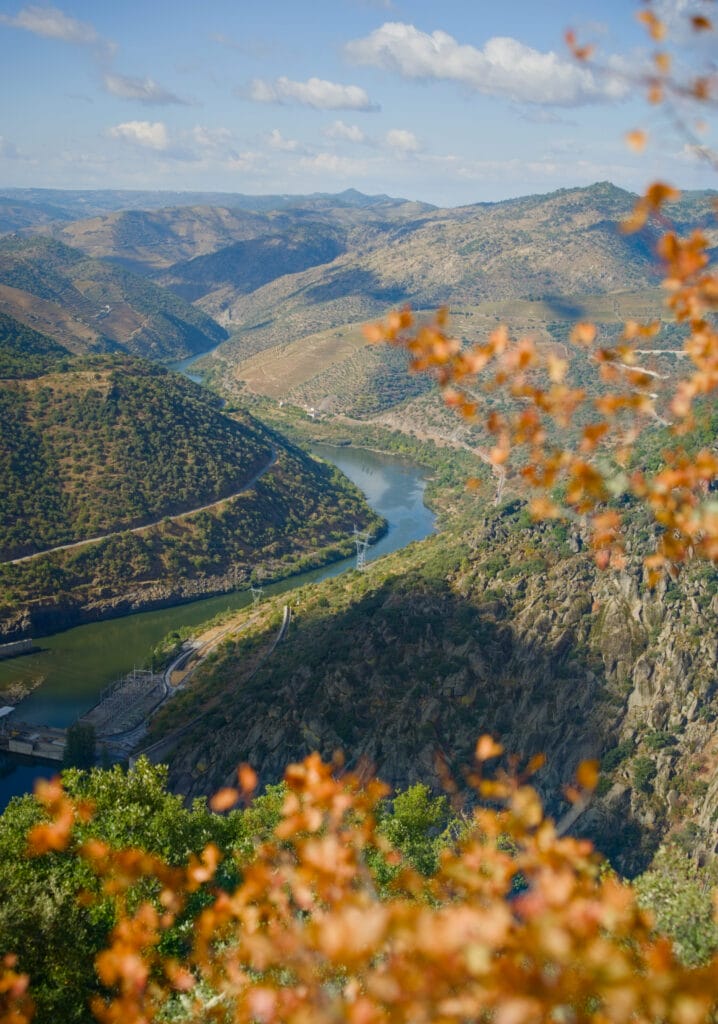
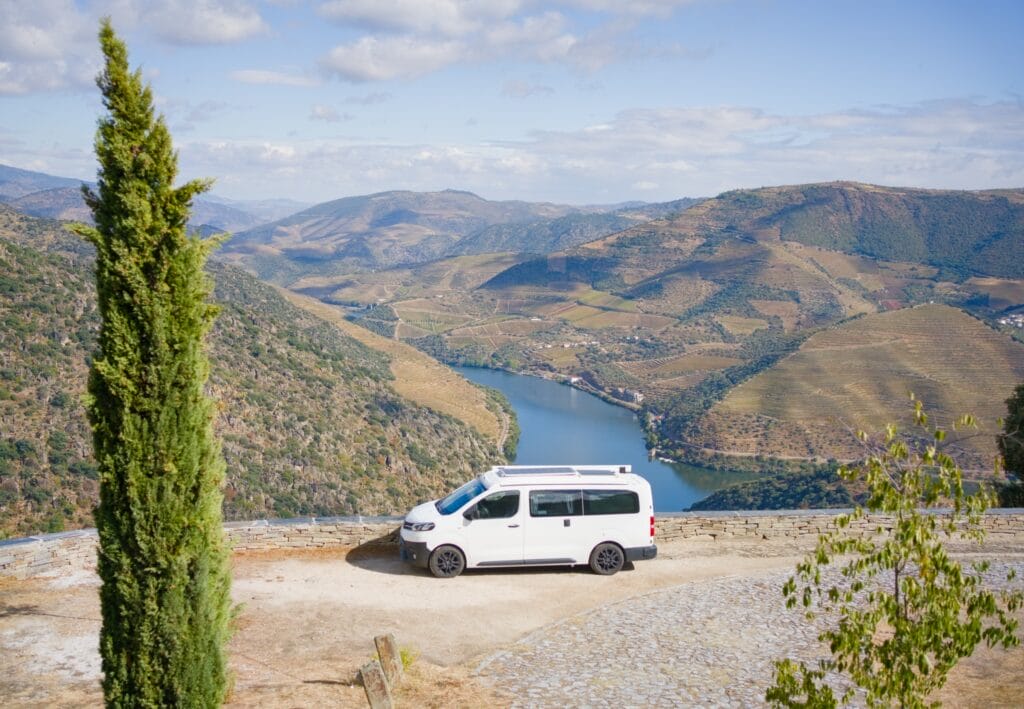
Our goal for the evening was the Sao Salvador do Mundo viewpoint. We’d found the spot on Park4Night and wanted to arrive early so we’d have enough time to find another spot in case this one didn’t seem ideal. When traveling by van, it’s really important to follow the rules and not “cause a disturbance.” The rules regarding wild camping in Portugal have become much more relaxed, and it’s now permitted to spend the night in your vehicle (without setting up a table or chairs) as long as you’re not in a protected area. During our visit, the viewpoint seemed like the perfect spot—we were completely alone, with not a single house in sight. A small wall served as our table for the evening, and let’s just say, it was one of the best views of our road trip for happy hour.
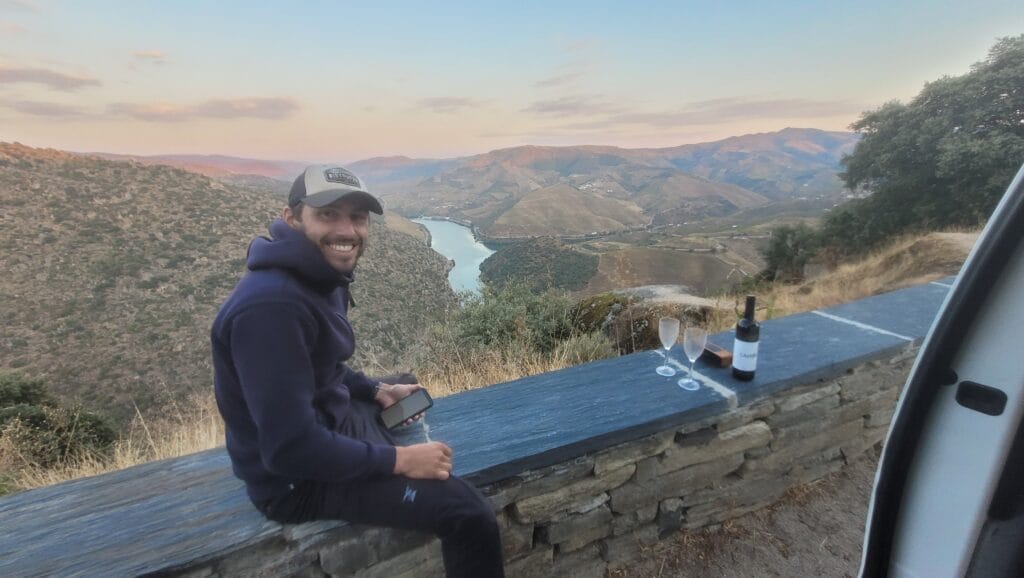
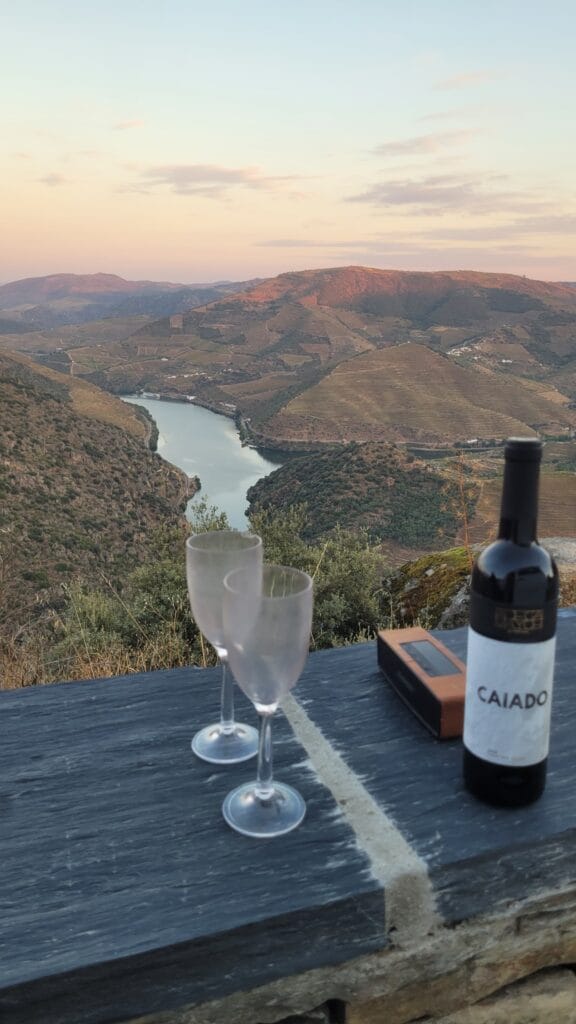
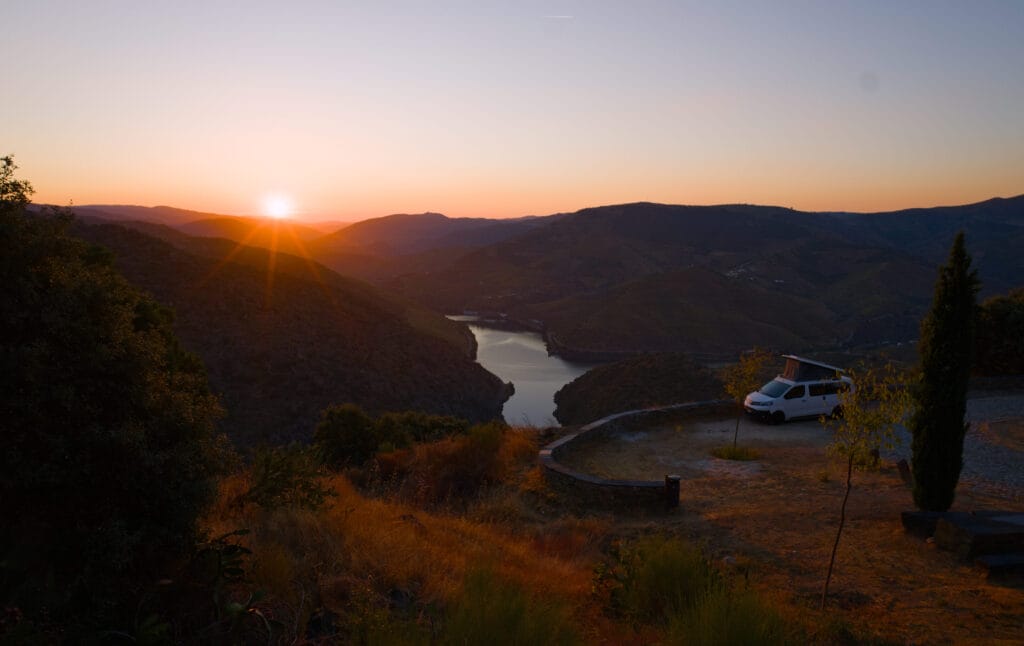
Please note, however, that while this lookout is accessible to vans, the area is too narrow for motorhomes (you’ll need to park in the large parking lot next to the chapel (and the public restrooms) and walk the last few meters).
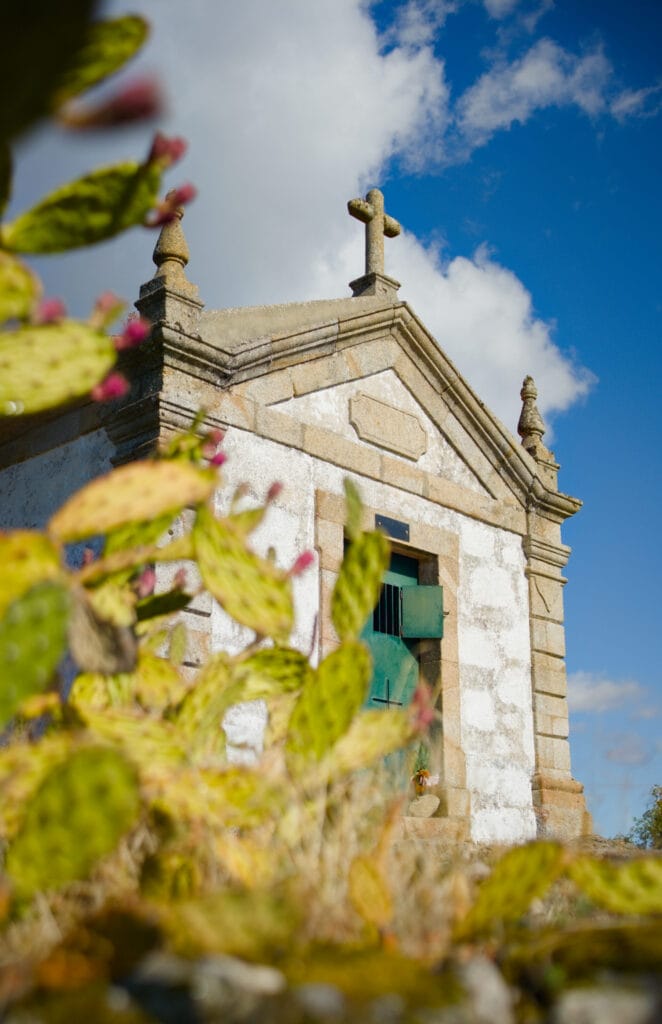
Here are a few photos from our walk around the lookout point once the sun finally decided to come out.
Hiking in the Douro Valley
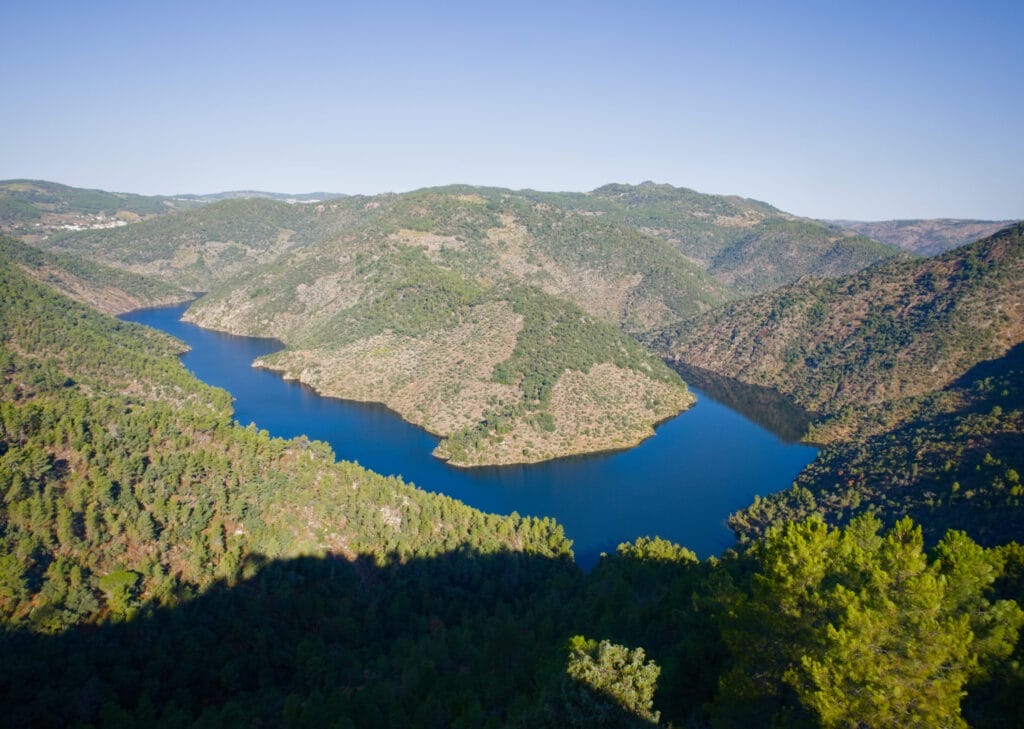
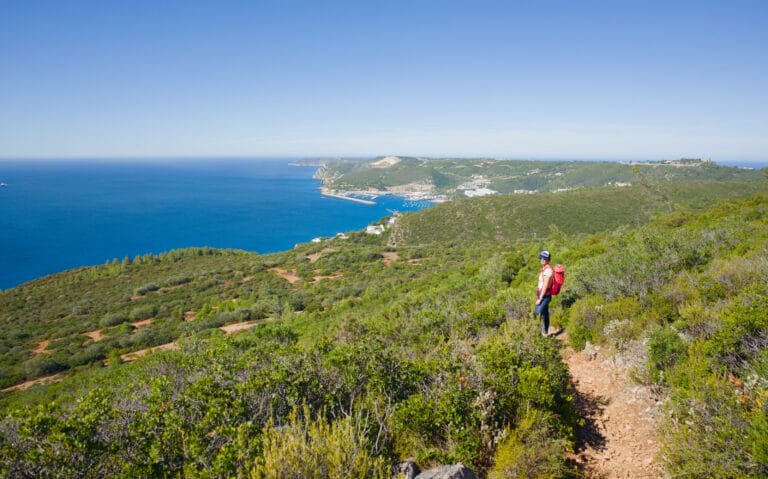
The next morning, the weather was perfect, so naturally we set out to do what we do best: go hiking! 🙂 There’s no shortage of options in the Douro Valley, but since we were short on time, we had to make some choices. We had several routes in mind, but in the end we settled on a lovely, varied trail starting from Castanheiro do Norte.
Hike in Castanheiro do Norte
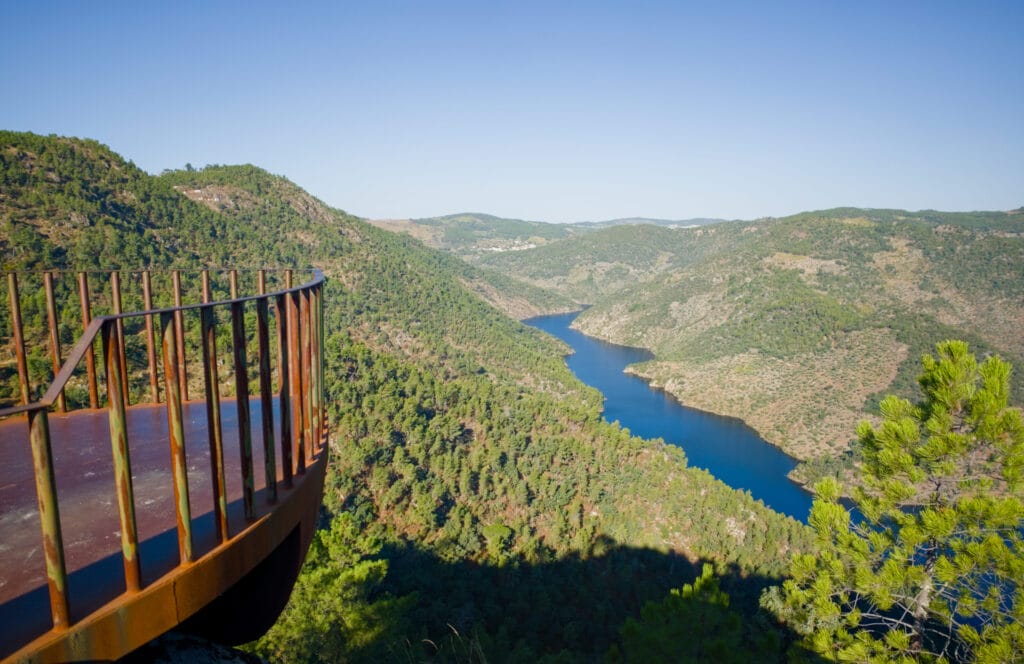
The route we took is about 10 km long, with an elevation gain of around 500 m. It’s not particularly technical, but there are quite a few ups and downs, so it’s best to be properly equipped. Overall, you should plan on about 3 to 3.5 hours of walking, taking the time to enjoy the scenery. The official signs say 4.5 hours, but I think that’s clearly a bit of an exaggeration (it took us 2.5 hours walking at a brisk pace). 😉
We chose this route because it offers quite a variety of landscapes, and most importantly, the hike starts at the magnificent Olhos do Tua viewpoint (we parked right at the viewpoint to begin the hike). The access road is pretty narrow, but it’s fine for a van. 😉 ) For larger vehicles, we recommend parking at the village entrance near the EN214.
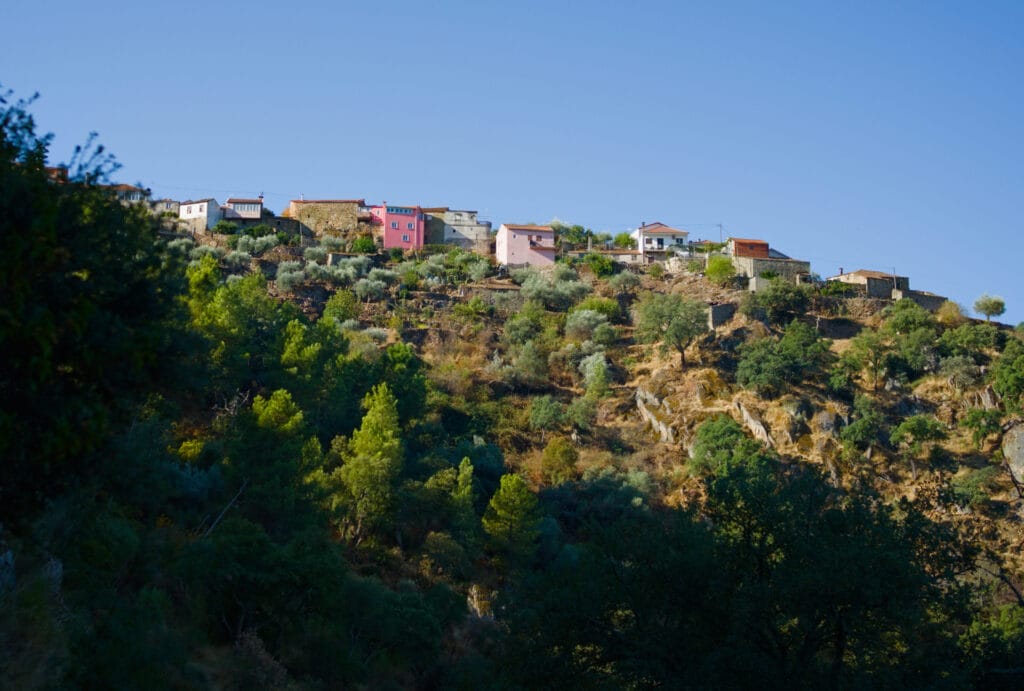
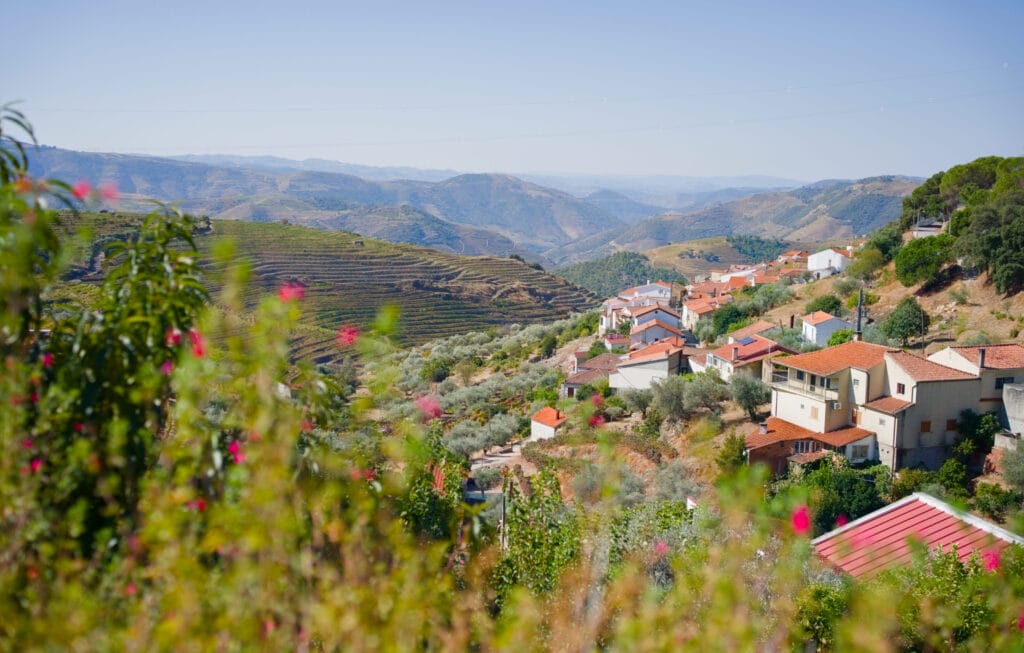
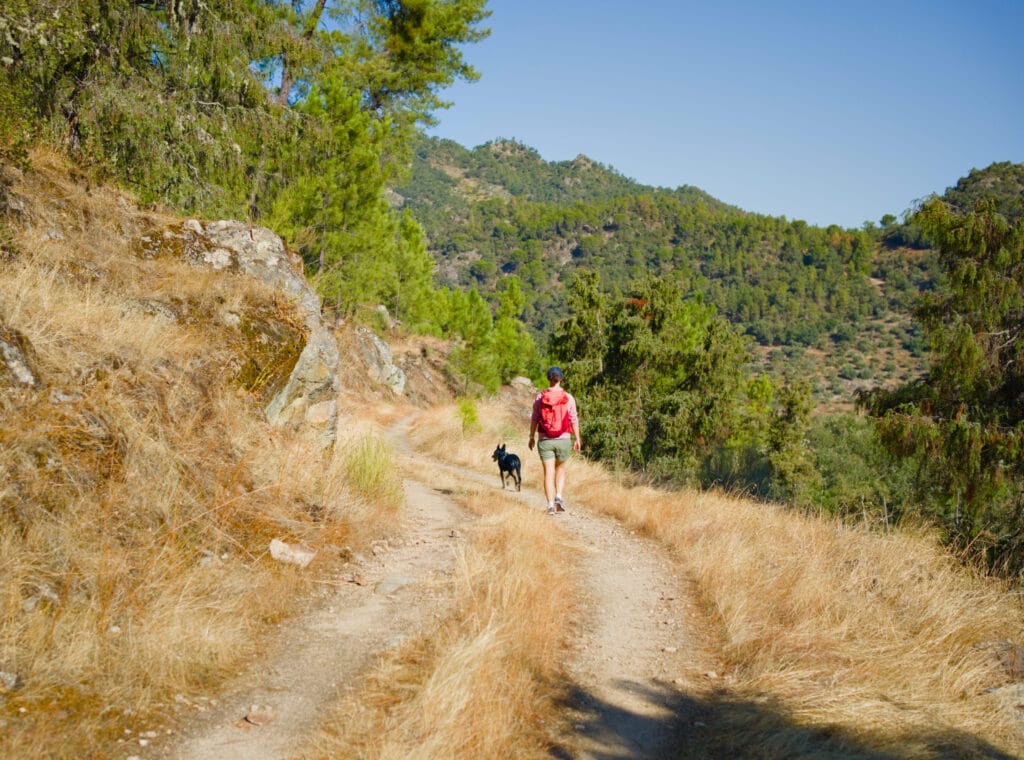
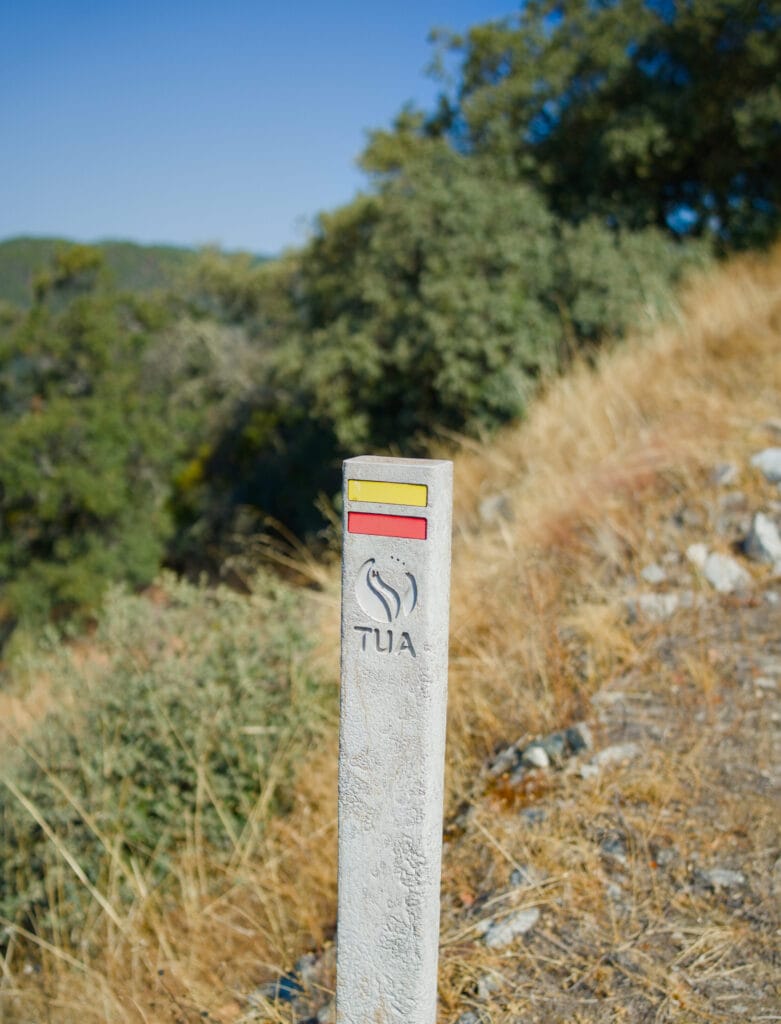
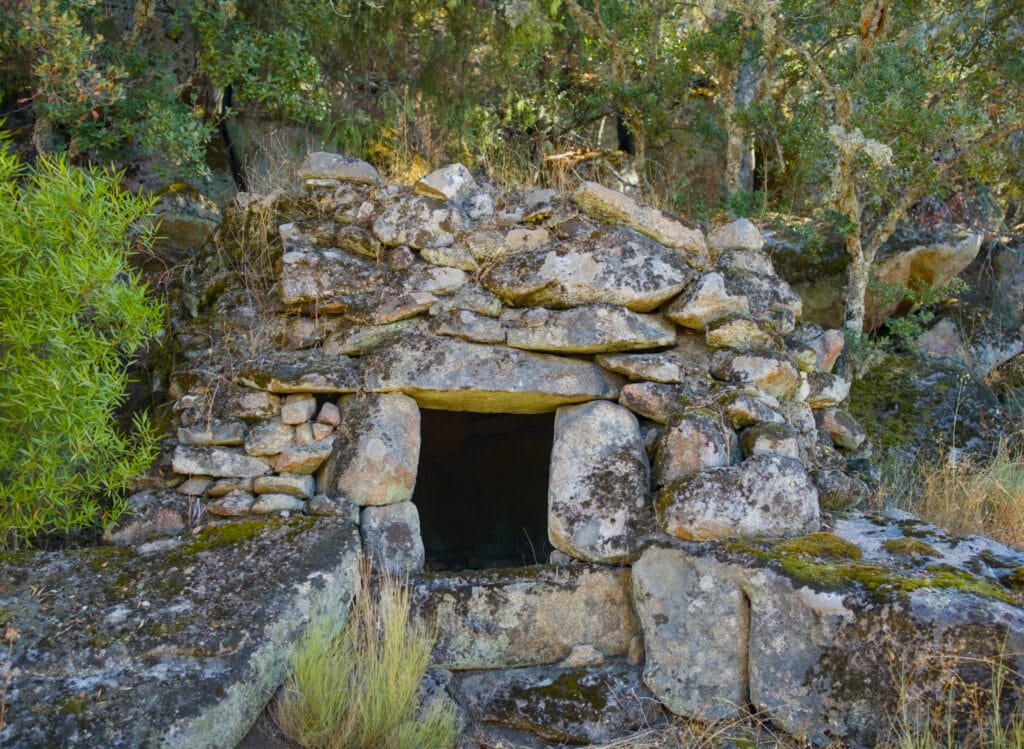
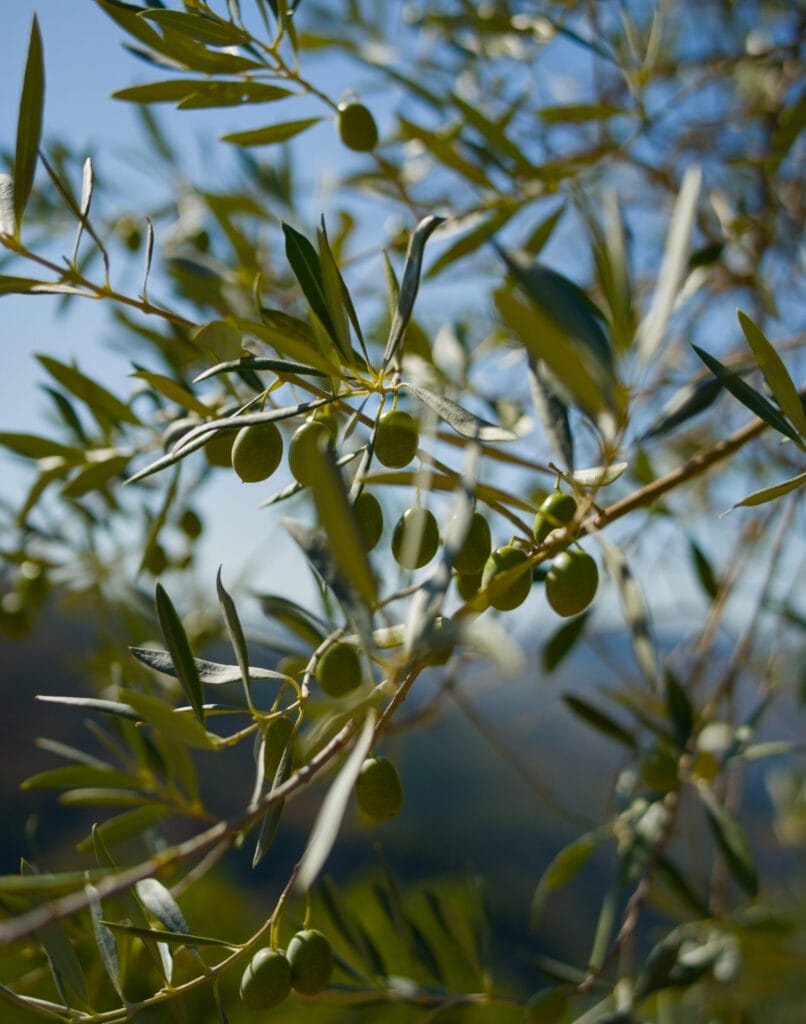
The trail alternates between small roads, dirt paths, and more rugged sections. It isn’t always very well marked, so we strongly recommend bringing a GPS track with you. But that’s also part of its charm: it’s a hike that’s still relatively off the beaten path, far from the crowds, where you can truly enjoy the tranquility of the Douro.
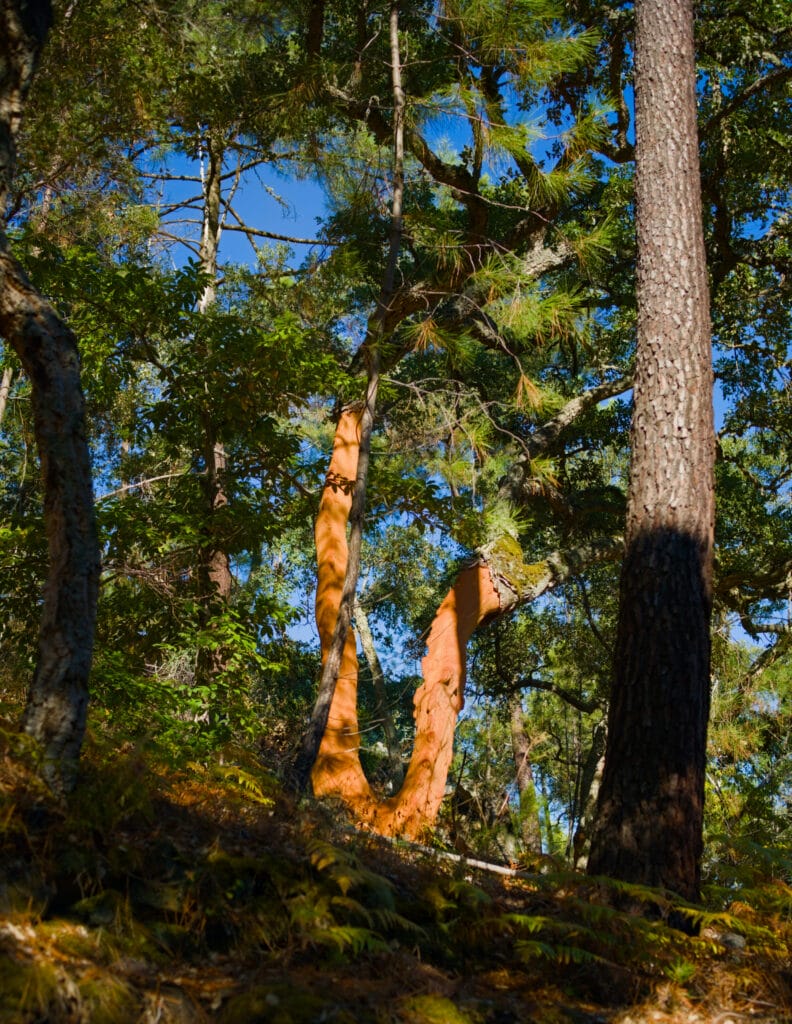

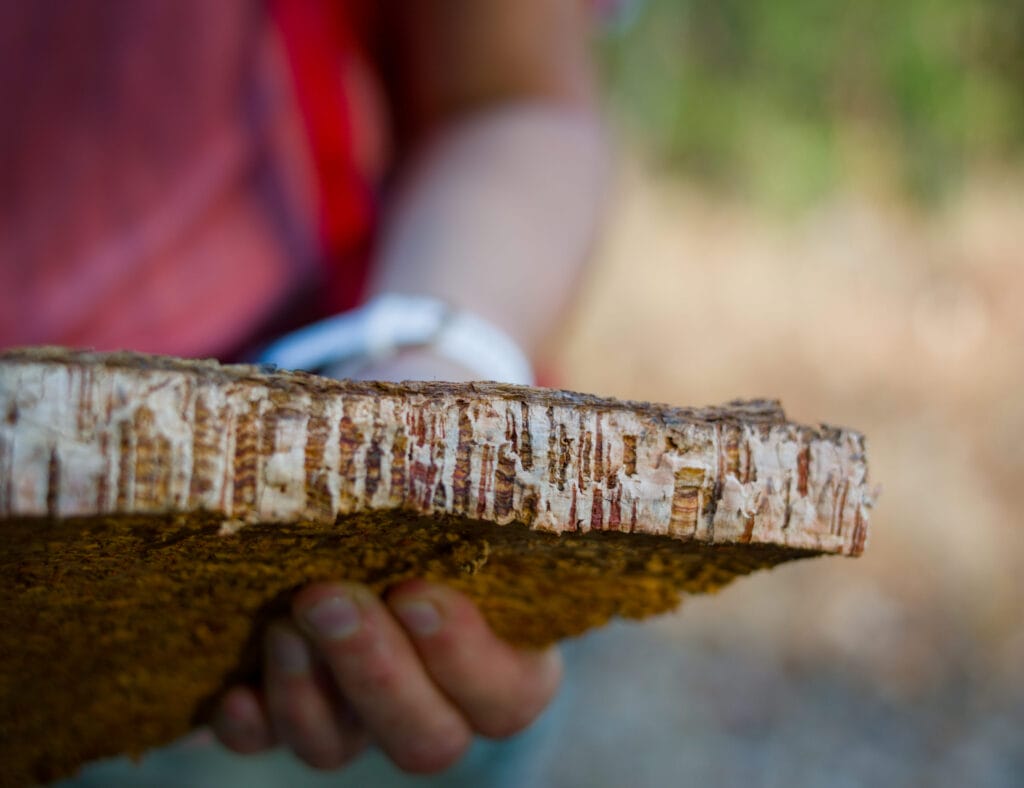
One thing that really stood out to us on this route were the cork oaks we passed along the way. With their thick trunks and partially stripped bark, they have a pretty unique look—almost a little strange if you’re not used to seeing them. In fact, this is where cork is harvested, by removing the bark without damaging the tree. It then grows back naturally (roughly every 9 to 12 years), making it a rather fascinating renewable resource.
Information about the hike:
- Start (and finish): Olhos do Tua Lookout Point
- Distance: approximately 10 km
- Elevation gain: approximately 500 meters
- Duration: 3 to 3.5 hours
Pinhão and its vineyards
After our hike, we went to the small town of Pinhão. We’d read online that most tours stopped there (and the name kept coming up in our searches). So who knows, but I think the towns and villages of the Douro and us just weren’t a good match. Haha, but seriously, I just think that in my mind, the Douro was all about those rolling landscapes crisscrossed by the river, not the villages or towns.
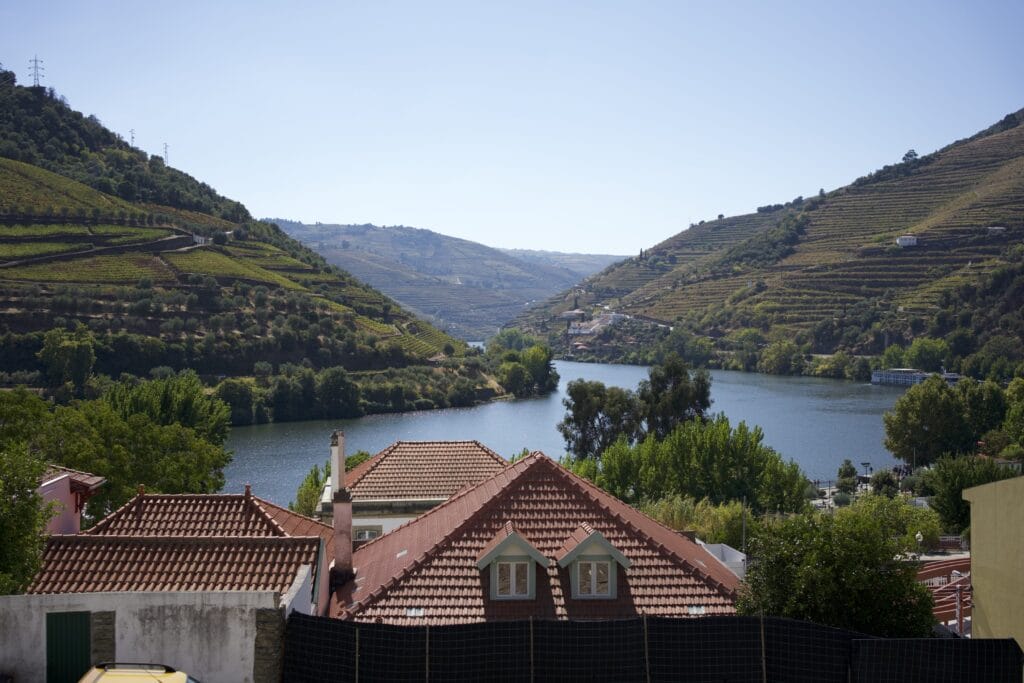
We spent about an hour in Pinhão and didn’t really get into it. But I think the place is best known for its train station. The walls are covered with beautiful azulejos (those typical Portuguese ceramic tiles), which depict life in the Douro Valley. You can see scenes of the grape harvest, wine being transported down the river, and all the work involved in making port.
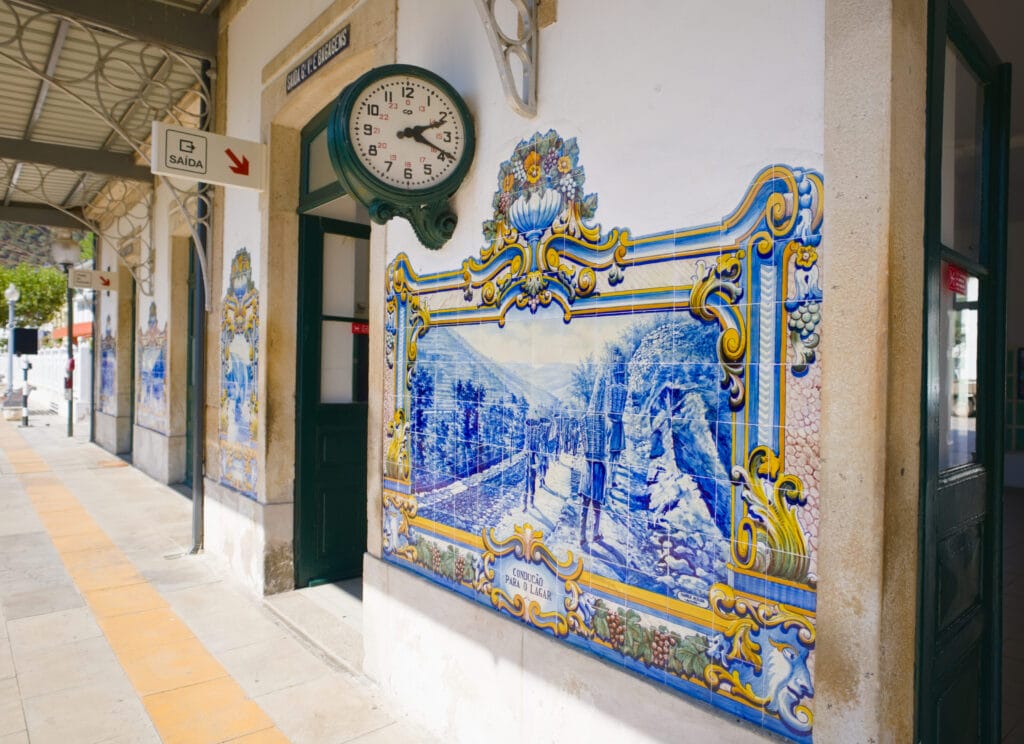
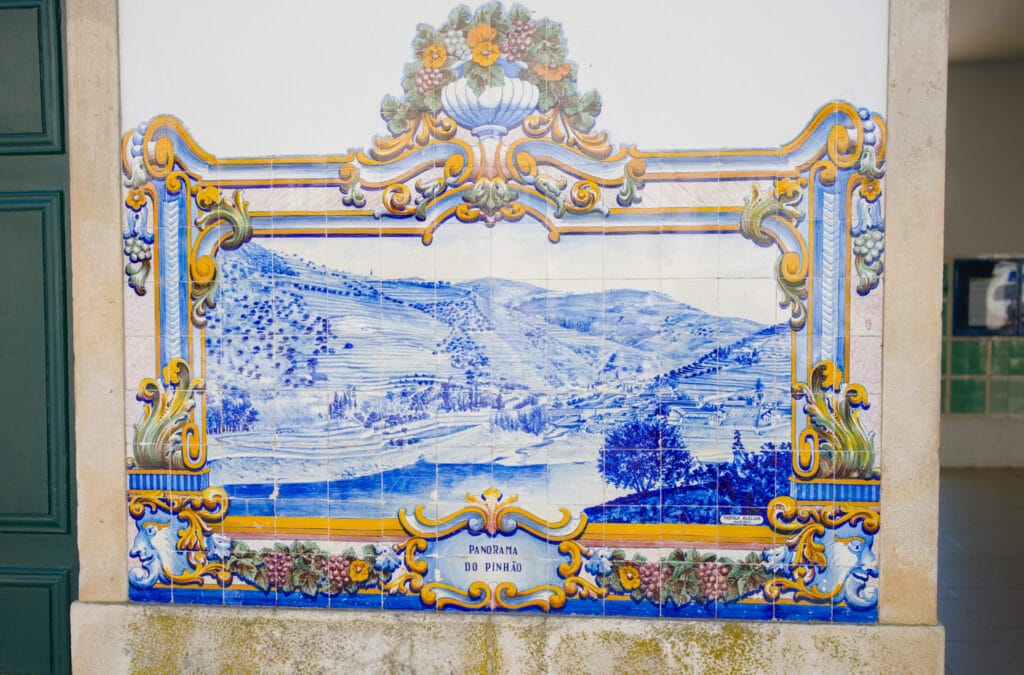
It doesn’t take long to visit, but it’s the kind of little detail you appreciate when traveling. That said, I’d say that if you’re in the area or planning a trip that takes you there, then sure, it’s worth a visit! But don’t go out of your way for two hours “just for that.”
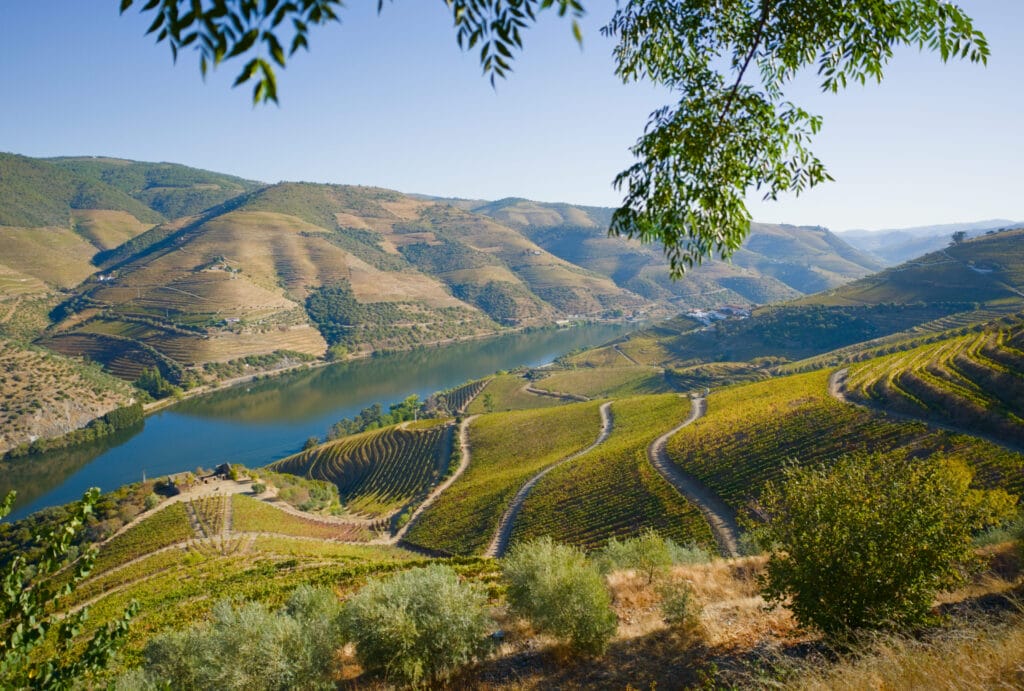
In the end, more than the train station, it was actually the roads surrounding the village that we liked the most. I couldn’t even tell you how many photo stops we made along the way, but it’s clearly the kind of scenery that makes you want to stop every five minutes.
Discover the wines of the Douro Valley
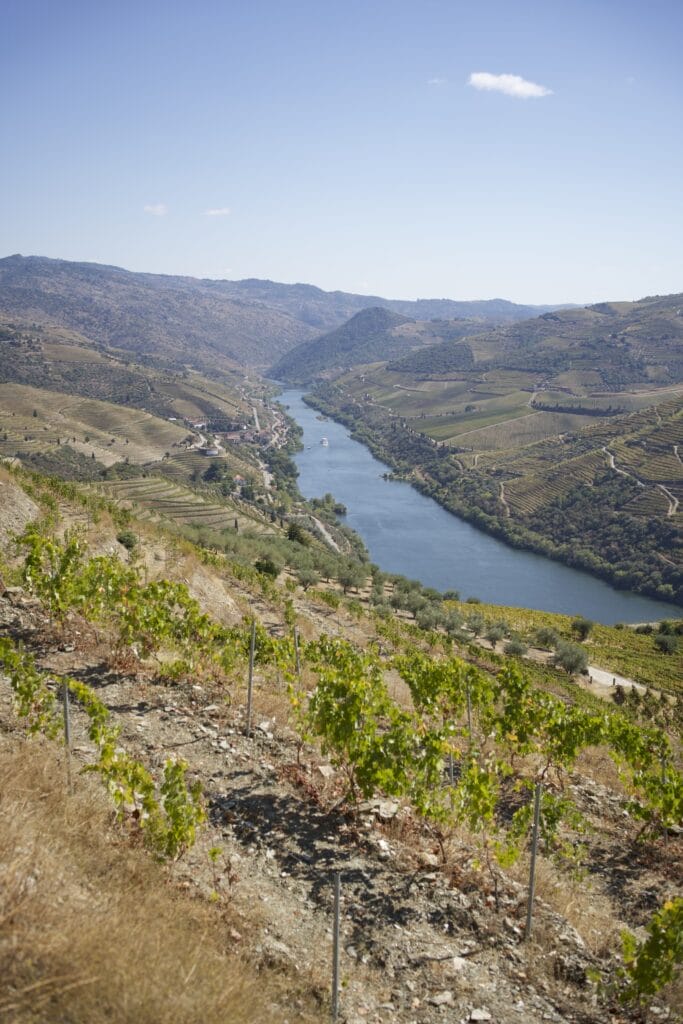
Visiting the Douro Valley is also a unique opportunity to discover Portuguese wines (and Port). After all, when you’re hiking through the vineyards, it’s nice to taste the wines too. 😉
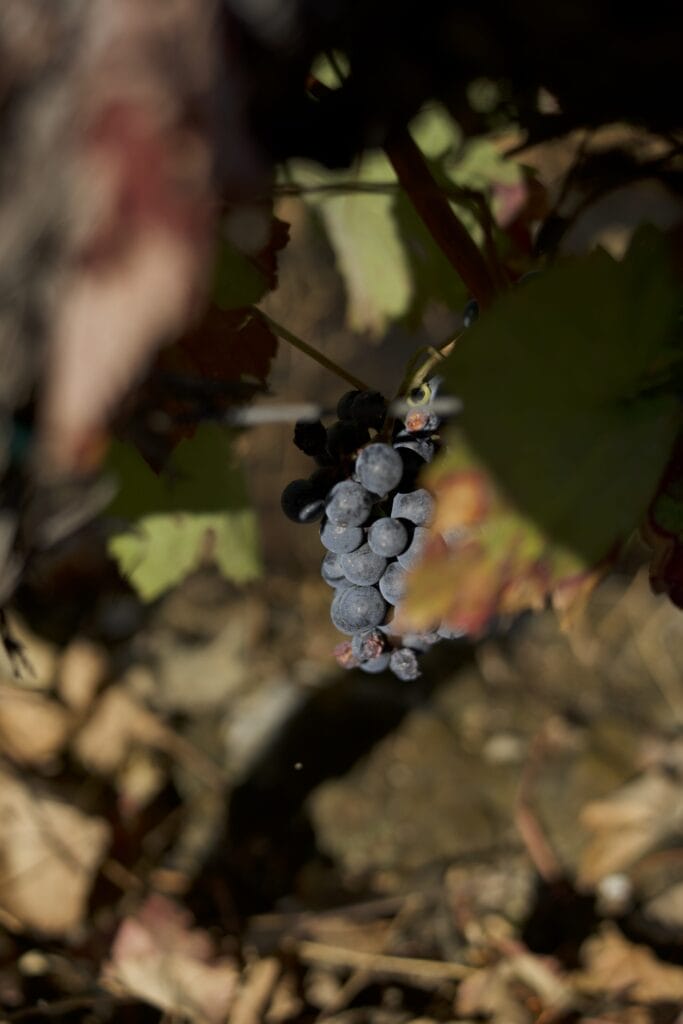
There are several ways to explore the “quintas” (Portuguese wineries), and it all depends on your travel style and budget. 😉 Some wineries offer wines for less than €10, while others… start at around €30 per bottle. It’s up to you to choose based on your preferences and budget. But don’t worry, we’re not just going to leave you with the simple advice to “do your research”—we’ll give you a little guidance based on the research we’ve done.
- Take an organized tour departing from Porto. You’ll find plenty of options on GetyourGuide or Civitatis. The advantage of this option is that you get to visit several wineries, have a guide who can provide information, and, as a bonus, you don’t have to drive. 😉
- Come by train! This is the cheapest option, but it means you’ll be limited to the Quintas near Pinhão or Peso da Régua (the two towns connected by train). Here are a few examples of wineries within walking distance: Quinta do Bomfim, Quinta do Noval, Quinta do Vallado.
- Explore on your own (you can also rent a car in Porto). This is the most “flexible” option, allowing you to visit the wineries of your choice. In total, there are over a hundred Quintas in the Douro Valley, ranging from tiny family-run operations—which may not be open to the public without a reservation—to massive estates owned by large corporations. A few Quintas to explore: Quinta de la Rosa, Quinta do Crasto (a more premium experience), Quinta do Monte Travesso (more on this below), Quinta do Tedo (our favorite—the estate from which we brought back several bottles for home)
For those interested in the historical side of Douro wine, we’ve heard great things about the wine museum in Peso da Régua.
Where to Stay in the Douro Valley (Van Life & Accommodations)
The Douro region is often visited on day trips from Porto, but honestly, it’s a region that’s well worth spending a little extra time in. I think the length of your stay will depend largely on how much you want to hike and explore the wineries. As for us, we decided to spend 3 days and 2 nights there, and it was absolutely perfect!
If, like us, you’re traveling in a van, you’ll have no trouble finding places to spend the night (the best way to do this is to check Park4Night, but also to just go for a drive. You often come across great spots that aren’t listed anywhere when you go for a little drive.)
If you’re looking for a place to live, you basically have two options:
- Stay in one of the small towns like Pinhão or Peso da Régua and explore the surrounding area from there
- Rent a place to stay right in the middle of the vineyards or at a quinta (many wineries also offer guest rooms, which is really great for enjoying a wine tasting right on the premises!)
Below is a map of available accommodations. Feel free to enter your dates and price range to compare the different options.
Overnight stay in a van at Quinta do Monte Travesso
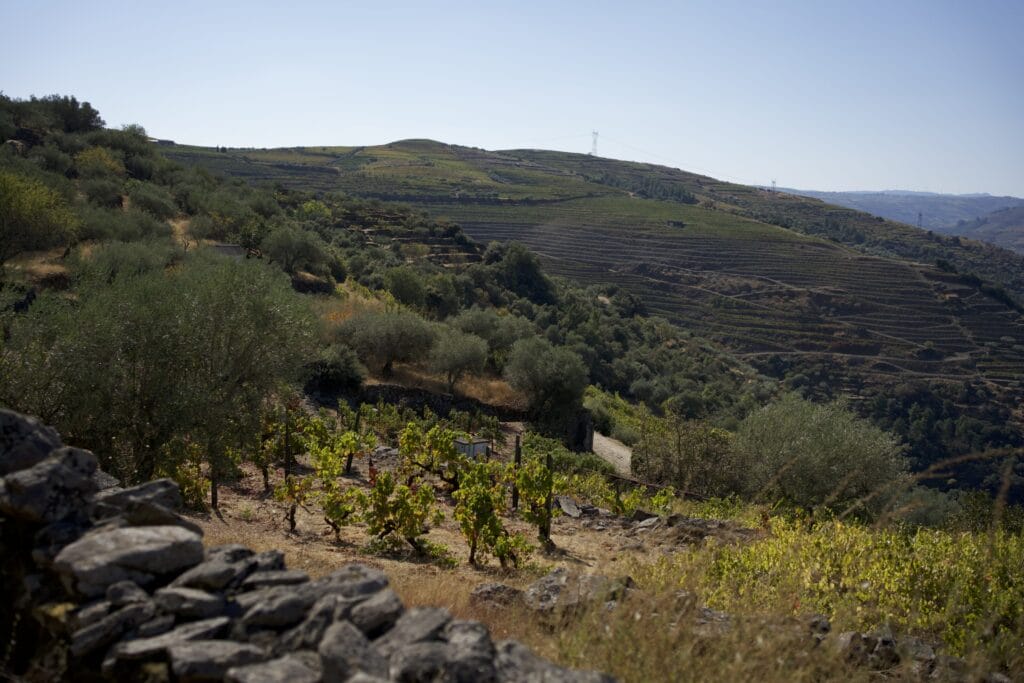
If there’s one thing we really love about traveling in a van, it’s spending the night on farms. It’s fairly common for farms to welcome campervans. Sometimes there’s a small nominal fee to pay, and sometimes it’s 100% free (though it’s obviously appreciated if you buy products offered by the farmer). It was while searching for a quinta that welcomes campervans that we stumbled upon Quinta do Monte Travesso. Honestly, this place is absolutely idyllic, and we’ve rarely received such a warm welcome.
Unfortunately, we didn’t think to take any photos of the site and the facilities, but you’ll just have to take our word for it when we say it’s absolutely perfect! There are even free restrooms and showers available.
Our only regret? We arrived just a little late, and the tasting of the day (which was also free) was already fully booked. But don’t worry—we just bought some wine (along with two bottles of their excellent olive oil!) and enjoyed a tasting amidst the vineyards. Honestly, we recommend it 200%! Check out their website
Explore the Douro Valley: Our interactive map
To wrap up this article, we’ve included a map showing all the places mentioned here, plus a few bonus recommendations. We hope this article helps you plan your trip, and if you have any comments or questions, feel free to leave us a comment!
This article contains affiliate links to AllTrails, Getyourguide, Civitatis, and Booking. What does that mean? It means that if you decide to use our links, we’ll earn a small commission. Of course, you won’t pay any extra by using our links, but you’ll be helping us create free, independent, and regularly updated content. Thank you for your support.



Join the discussion