When Benoit and I were planning our road trip through Norway, we each had a list of “must-sees” that we didn’t want to miss. Of course, we’d both jotted down quite a few hikes, but right at the top of my list was also: Seeing puffins. There are jokes online about how people, once they hit their thirties or forties, start to like birds… well, yes, just so you know, we’re now part of that club, hahaha
But seriously, puffins are definitely one of those animals whose faces instantly make me want to smile. That list also includes llamas, quokkas, and capybaras. But then again, since we were in Norway, we had a much better chance of running into a puffin than a quokka. 😉
Introduction to the Puffin and Its Habitat
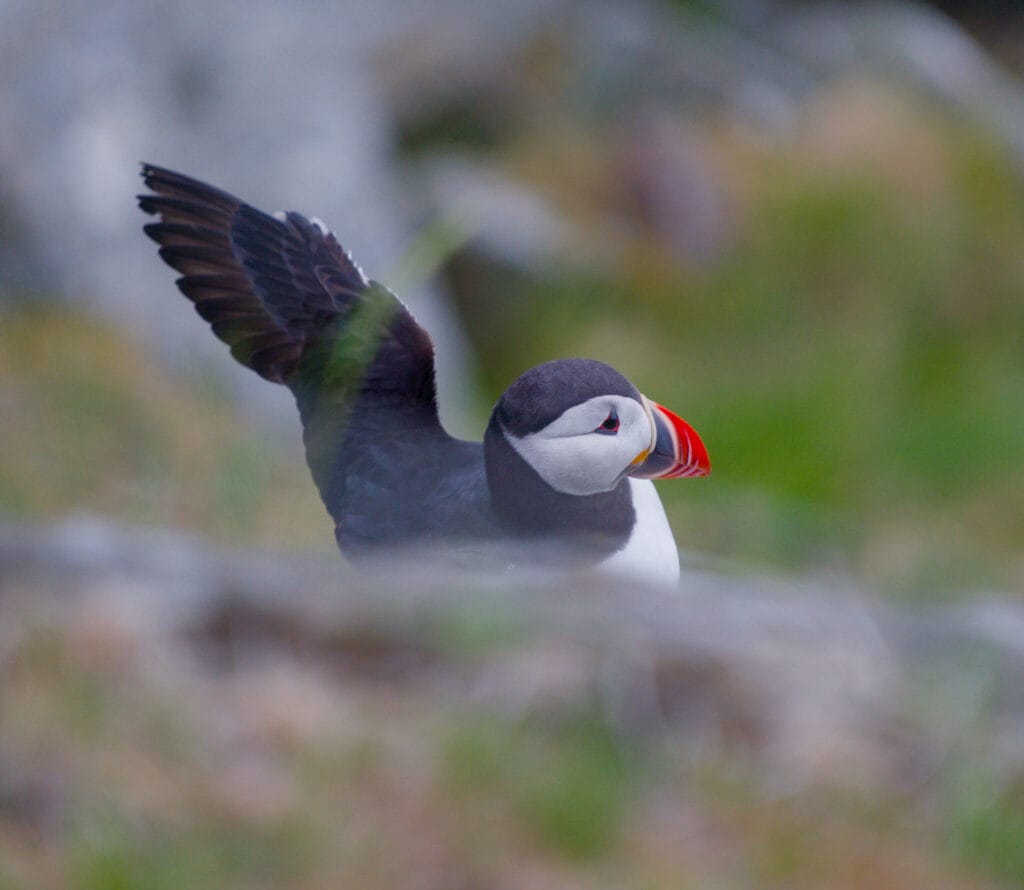
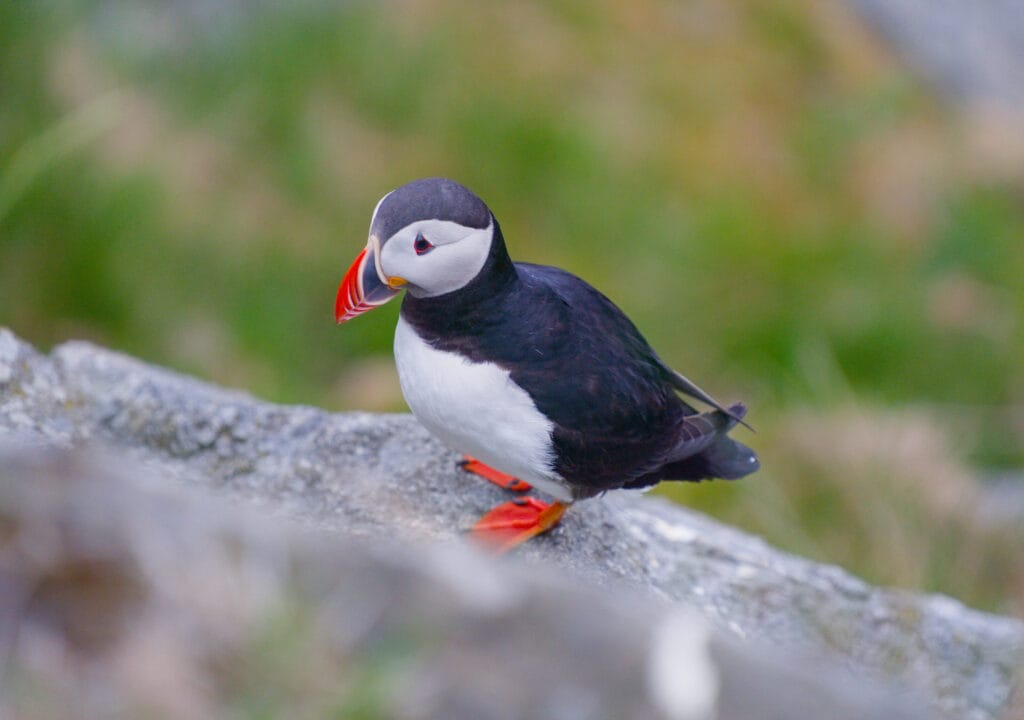
With its colorful beak and slightly clumsy gait on land, the puffin is one of the most endearing birds in the Northern Hemisphere. They’re sometimes called the “clowns of the sea” or the “parrots of the sea,” and honestly, I totally get why! They’re seriously hilarious to watch!
A small bird built for life on the high seas
Although we mostly see them when they’re nesting on the cliffs, puffins actually spend the vast majority of their lives at sea. It’s not always well known, but they are excellent swimmers and divers, and they use their wings like flippers to chase small fish underwater, sometimes to depths of several dozen meters.
By the way, I recommend watching this short BBC Earth documentary to see them in action underwater:
On land, however, they seem much less at ease. Their gait is rather hesitant, and their little hops make them look particularly funny!
Faithful Couples
One of the most touching aspects of puffins’ lives is their fidelity. They are generally monogamous and often reunite with the same mate year after year. After spending the winter apart on the open sea, they almost always return to the same colony to be reunited.
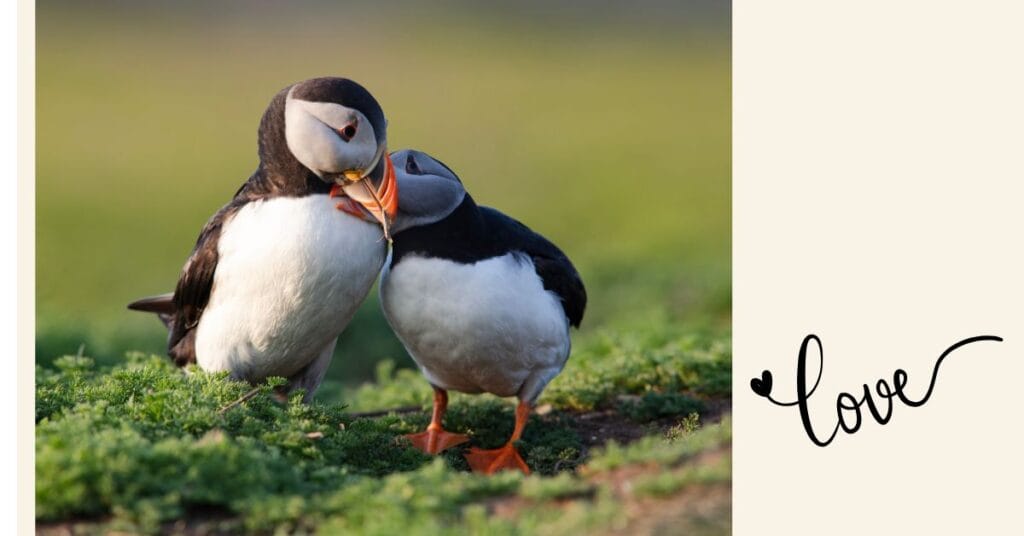
The pair frequently reuses the same burrow, which they maintain together before welcoming a single chick. Both parents then share the tasks: incubating the egg, protecting the nest, and feeding the chick.
Particularly devoted parents
Puffins are also famous for their ability to carry several fish at once. They do this when they return to their burrows to feed their chicks. Unfortunately, when we visited, the eggs hadn’t hatched yet, so we didn’t get to see it with our own eyes.
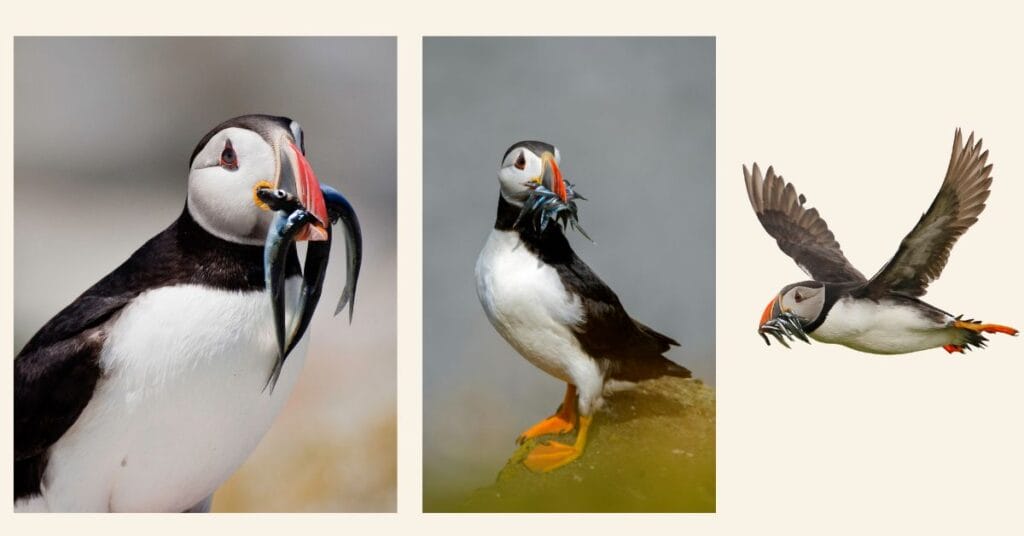
Apparently, it’s not uncommon to see them return to the nest with a veritable “garland” of sand eels or small herring in their beaks. It’s an impressive technique that allows them to feed their chicks effectively.
Where can you see puffins in Norway?
In Norway, puffins can be seen at several locations along the west coast as well as in the far north of the country. Here is a short list (ranked by puffin population size):
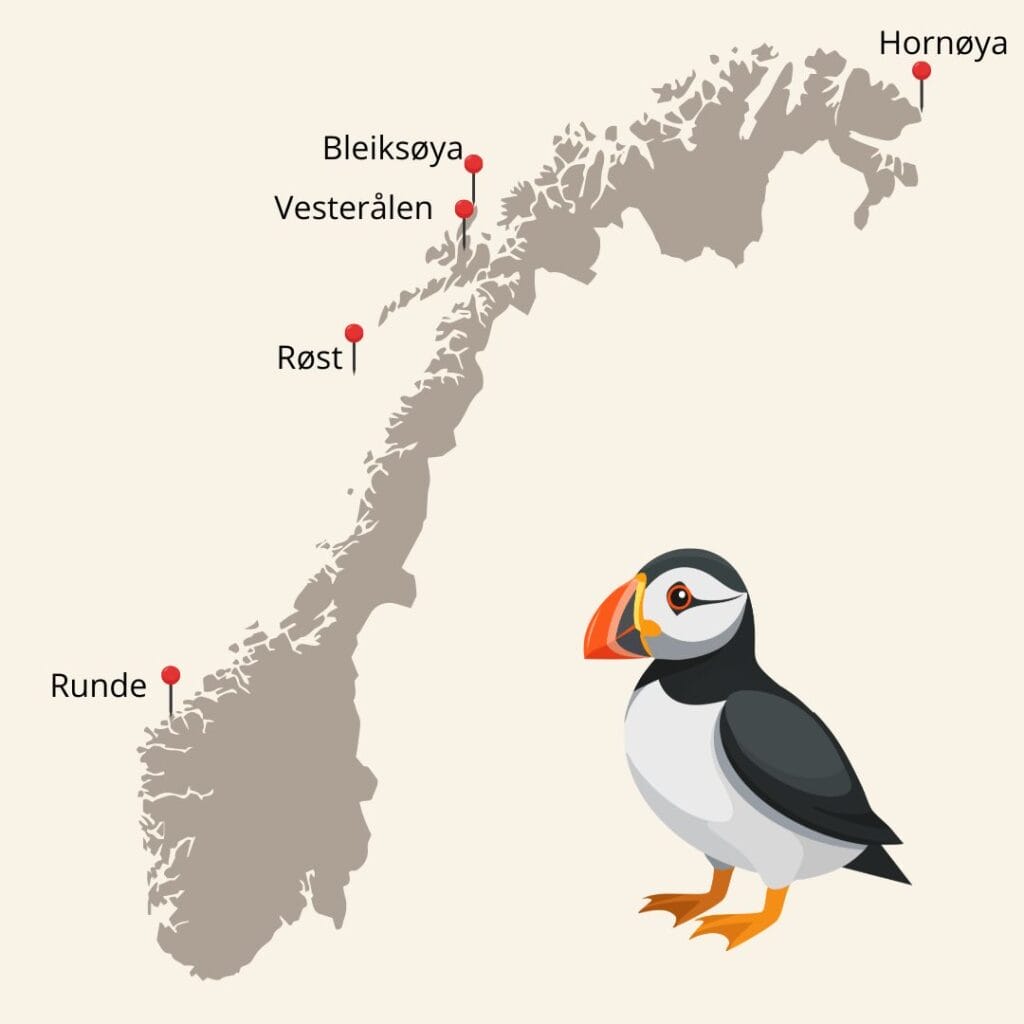
The Røst Archipelago: This is by far the place in Norway with the largest colony. Depending on the year, between 250,000 and 300,000 pairs come to nest here. But be aware, Røst is a very remote area south of the Lofoten Islands (about 100 km from the coast). To get there, you’ll need to take a ferry from Bodø or Moskenes. Once on the island, it’s recommended that you take a boat tour to get a better view of the birds on the cliffs.
The Vesterålen Islands / Bleiksøya: Located off the coast of Bleik, the island of Bleiksøya is home to approximately 80,000 breeding pairs. But be warned: landing on the island is strictly prohibited, so you’ll have to content yourself with observing them from the boat.
Runde: Runde Island is the southernmost place to see puffins in Norway. It’s easy to get to, and you can easily explore it on foot. In terms of population, the numbers obviously vary from year to year, but roughly speaking, there are about 30,000 to 35,000 breeding pairs here. We’ll give you more details about this island later in the post, since this is where we were able to see the puffins.
Hornøya: Located in Finnmark, this small island is known for its puffin colonies. In total, there are about 10,000 pairs, but considering that the island is only 0.4 km², this makes it a great place to explore. Until 2025, it was possible to visit the island on a day trip independently by simply taking a boat from Vardo. However, since 2026, the area has been designated a protected zone, and it is now mandatory to visit with an official guide or through an accredited agency.
Keep in mind, however, that as mentioned, some places can only be reached by sea and therefore require a special excursion. Runde is currently the most easily accessible place if you want to go on your own and explore a bit.
Elsewhere in the world, the best-known sites are: Witless Bay (in Canada) with nearly 500,000 breeding pairs, Látrabjarg (in Iceland) with about 300,000 breeding pairs, and Mykines (in the Faroe Islands) with nearly 100,000 pairs.
Fun fact: You can also spot them in France—specifically at Les Sept-Îles in Brittany. But I should warn you—you’ll need a keen eye, since there are only about fifty pairs. 😉
Our Hike on the Island of Runde
Departure from the campground toward the Runde Lighthouse
We arrived in Runde in the afternoon, took advantage of the campground’s Wi-Fi to get some work done, and around 5 p.m. we set off on our walk for the day. It’s too early to hope to see any puffins, but we wanted to make a quick detour to the island’s lighthouse.
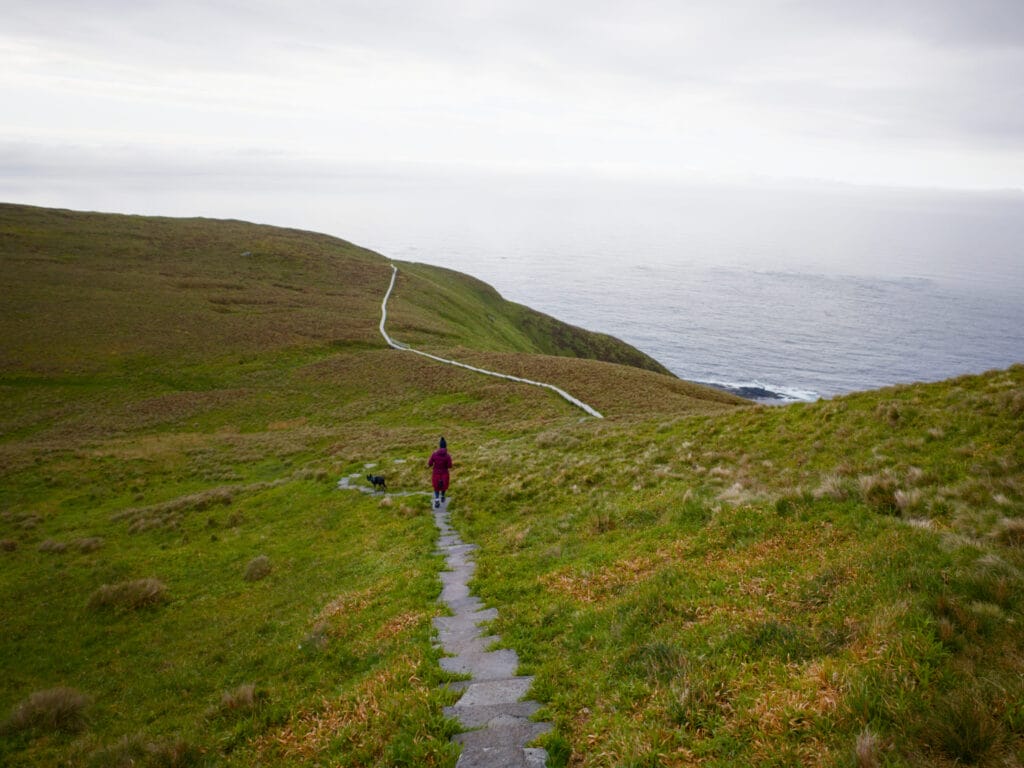
The hike starts right next to the campground, and we begin by heading up toward Lundeura on the wide, perfectly maintained trail. As is often the case in Norway, they clearly aren’t fans of switchback trails here… the path climbs “straight up” for the first 100 meters of elevation gain. 🙂 There are no particular difficulties to note, but we’d like to warn you that it’s steep.
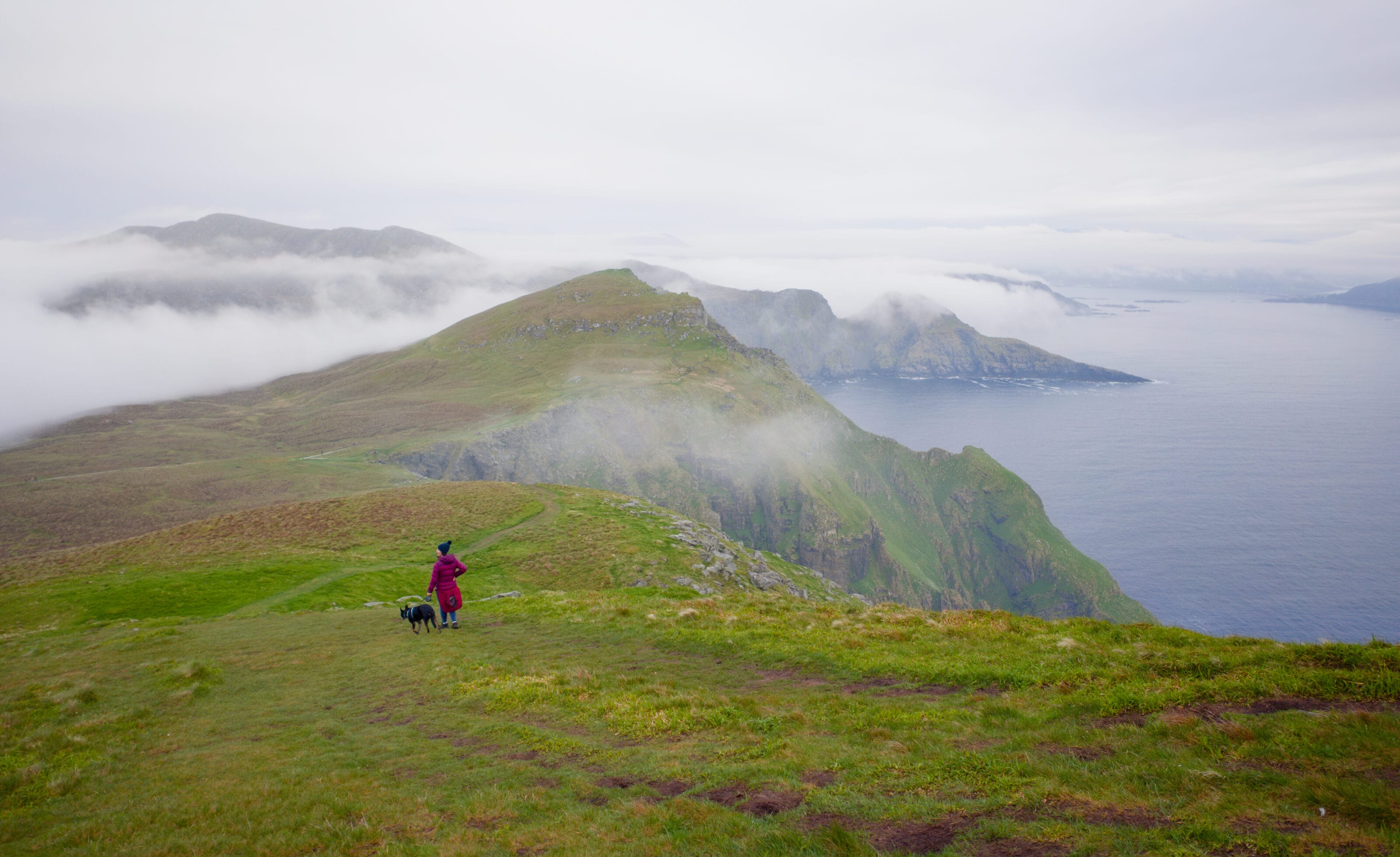
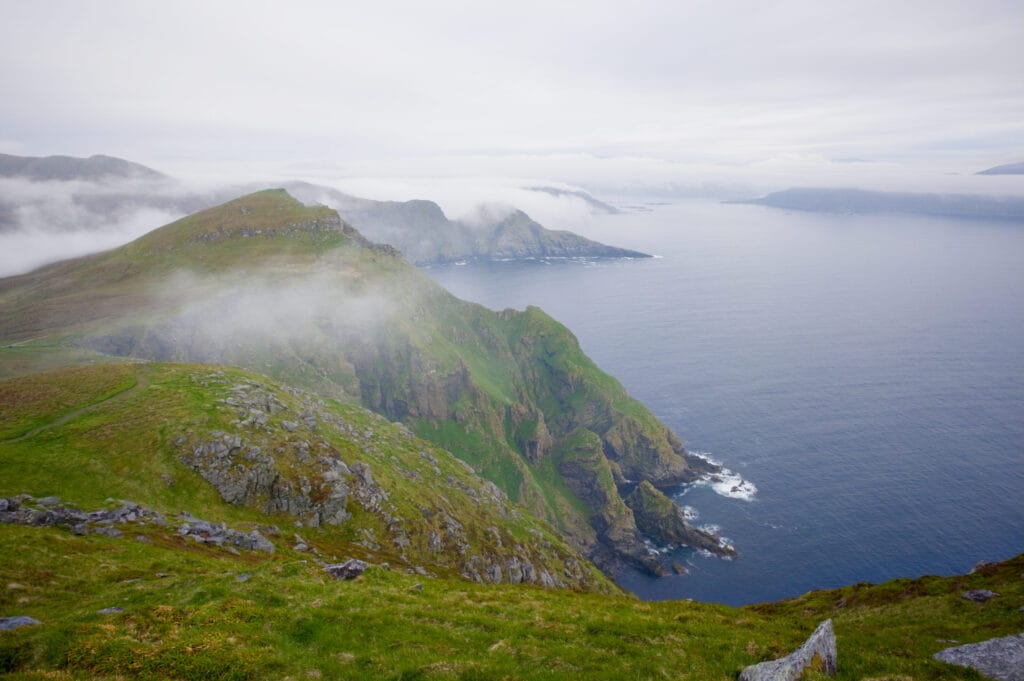
At the first intersection, we decide to turn right toward the lighthouse at the very tip of the island. The scenery here is truly magnificent! There’s absolutely nothing as far as the eye can see except for the perfectly maintained trail with wooden walkways and stone slabs. It’s really nice to be able to walk through such “swampy” terrain while keeping your feet dry thanks to the various structures.
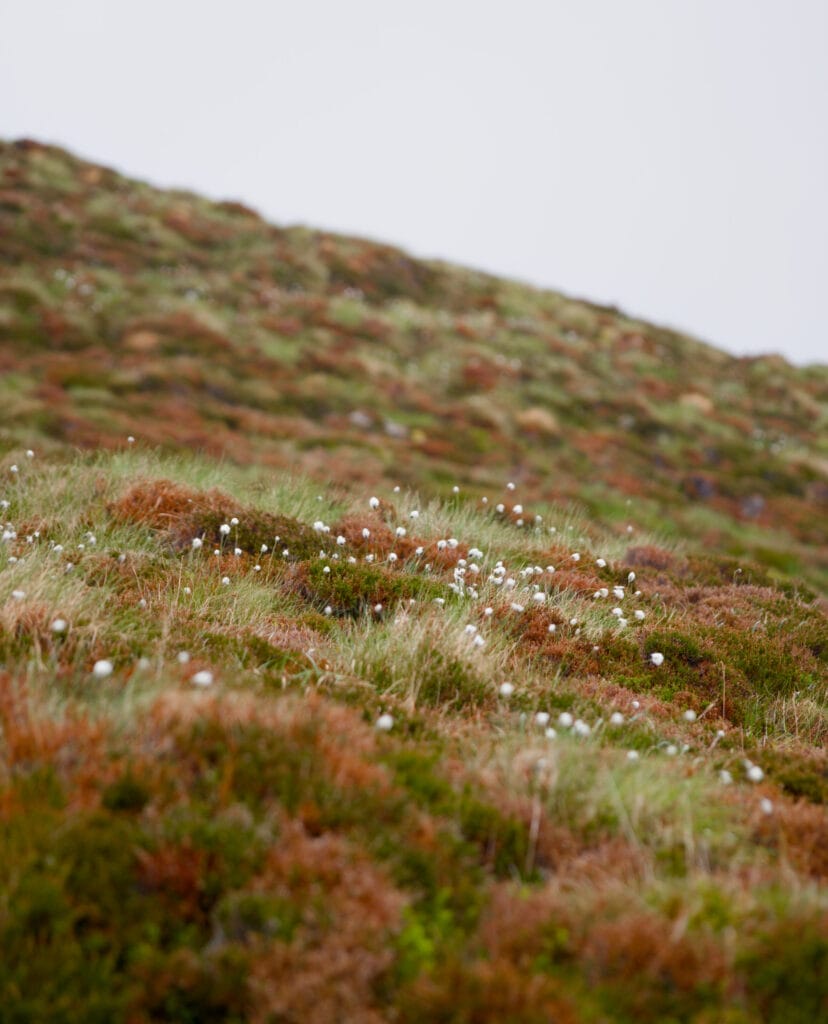
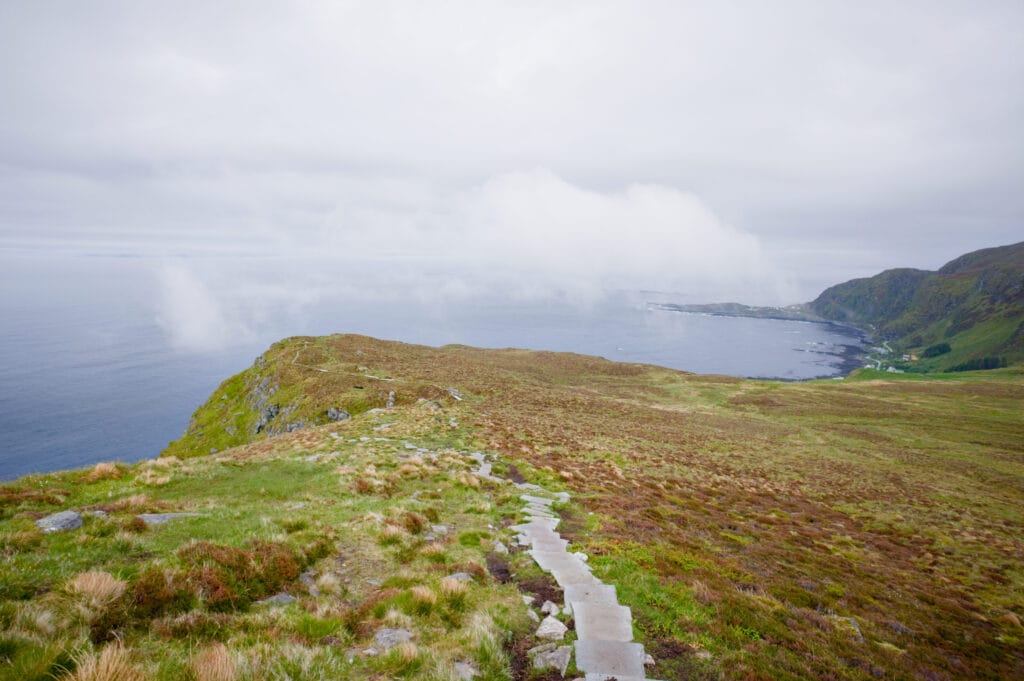
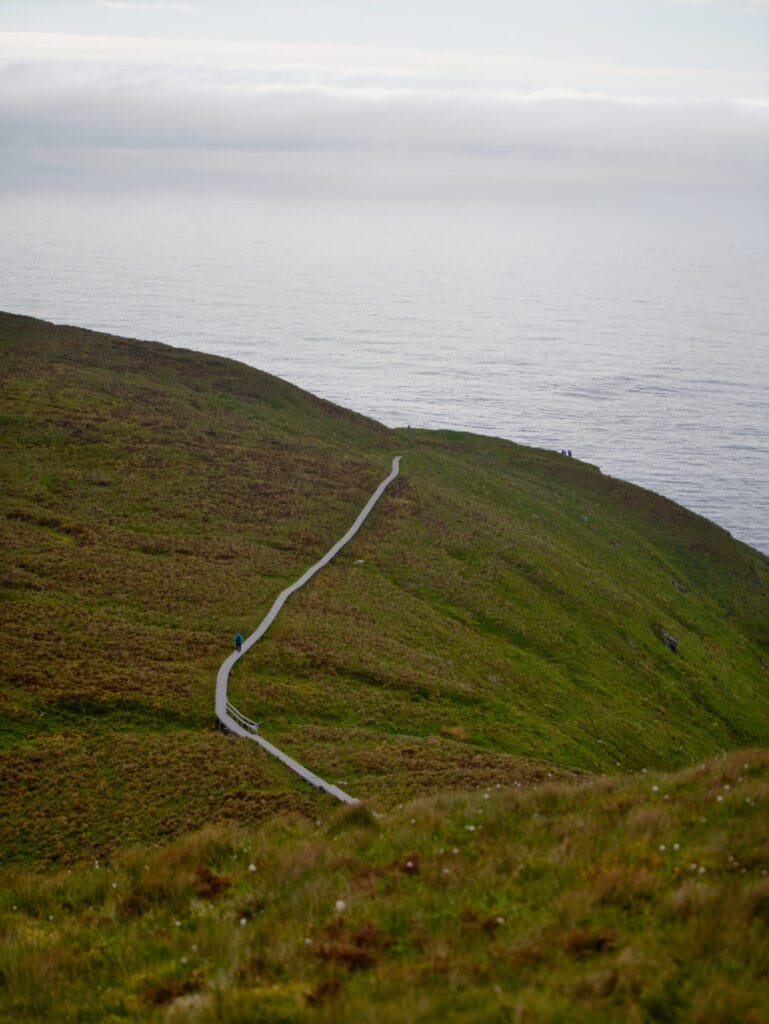
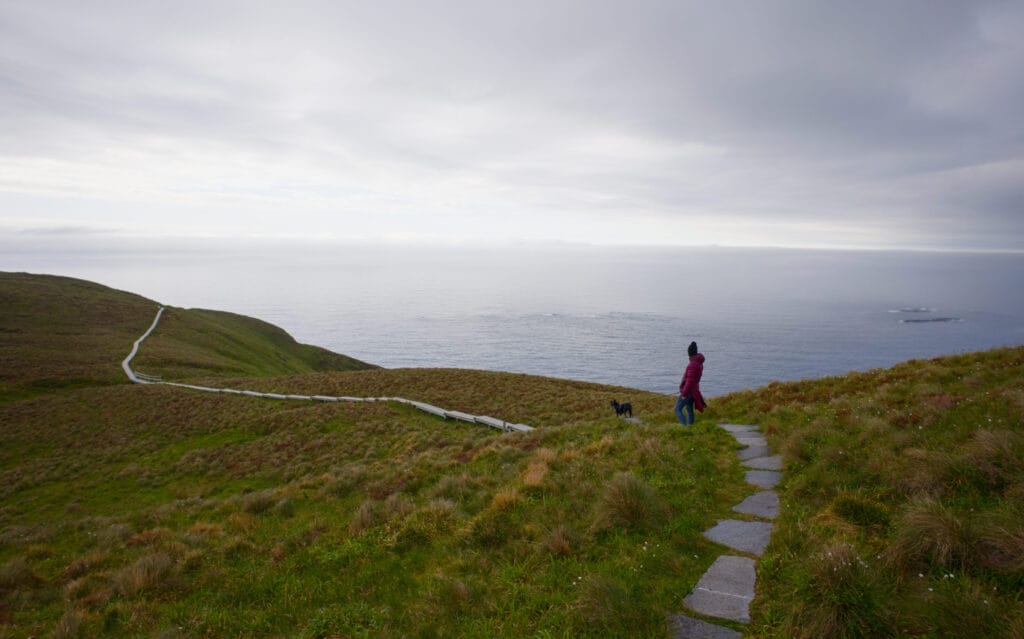
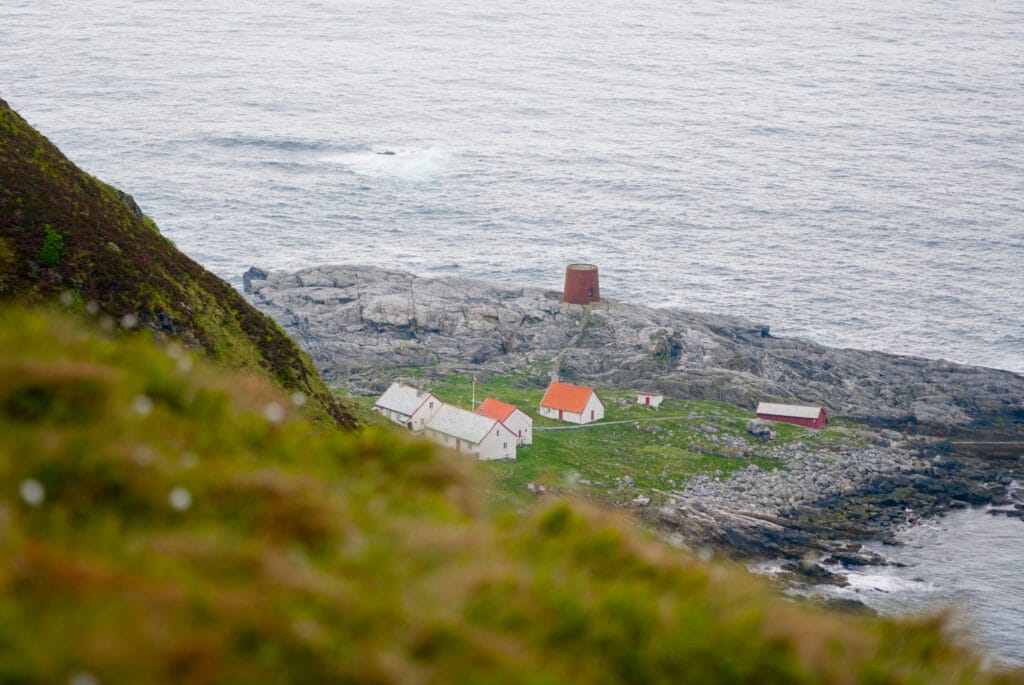
When we visited, the weather wasn’t exactly great, but we were relatively lucky to avoid the heavy downpours. That said, the wind often blows (and very strongly) on Runde, so it’s always best to pack warm clothes. The campgrounds and parking lots are located on the more sheltered side of the island, which can give a slightly misleading impression of the weather… When in doubt, always bring one more layer than you think you’ll need. 😉
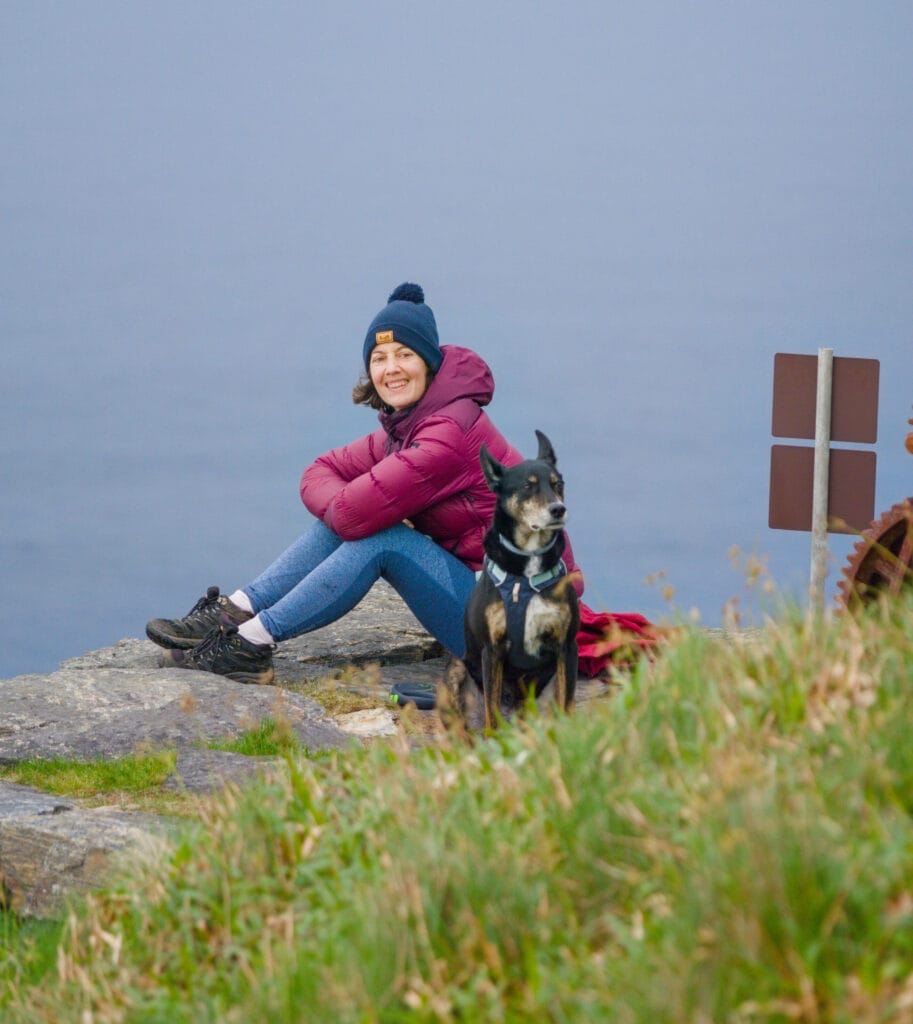
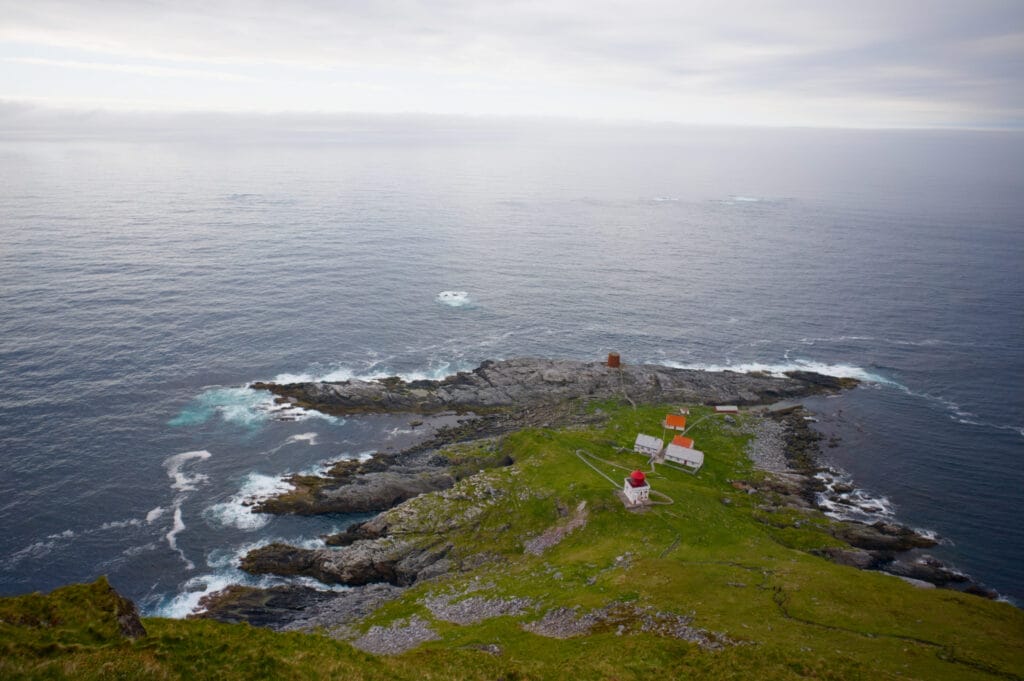
Once we reached the top of the hill above the lighthouse, we took advantage of a small ledge to admire the lighthouse from above. We briefly considered going down to see the lighthouse up close, but let’s be honest… the setting around the lighthouse is stunning, but the lighthouse itself isn’t all that impressive. So we decided to save ourselves that extra bit of the climb and settled for the view from above.
The View from Raudenipa and Rundebranden
From the headland above the lighthouse, the trail continues toward Raudenipa. This area is known for its colonies of Havsule. In French, the bird is called the Fou de Bassan, and it is the largest seabird in the North Atlantic. Males can reach 1 m in length and weigh up to 3.6 kg. Like the puffin, it is a bird that lives primarily on the open sea and returns to land only during the breeding season (roughly from early April to late July).
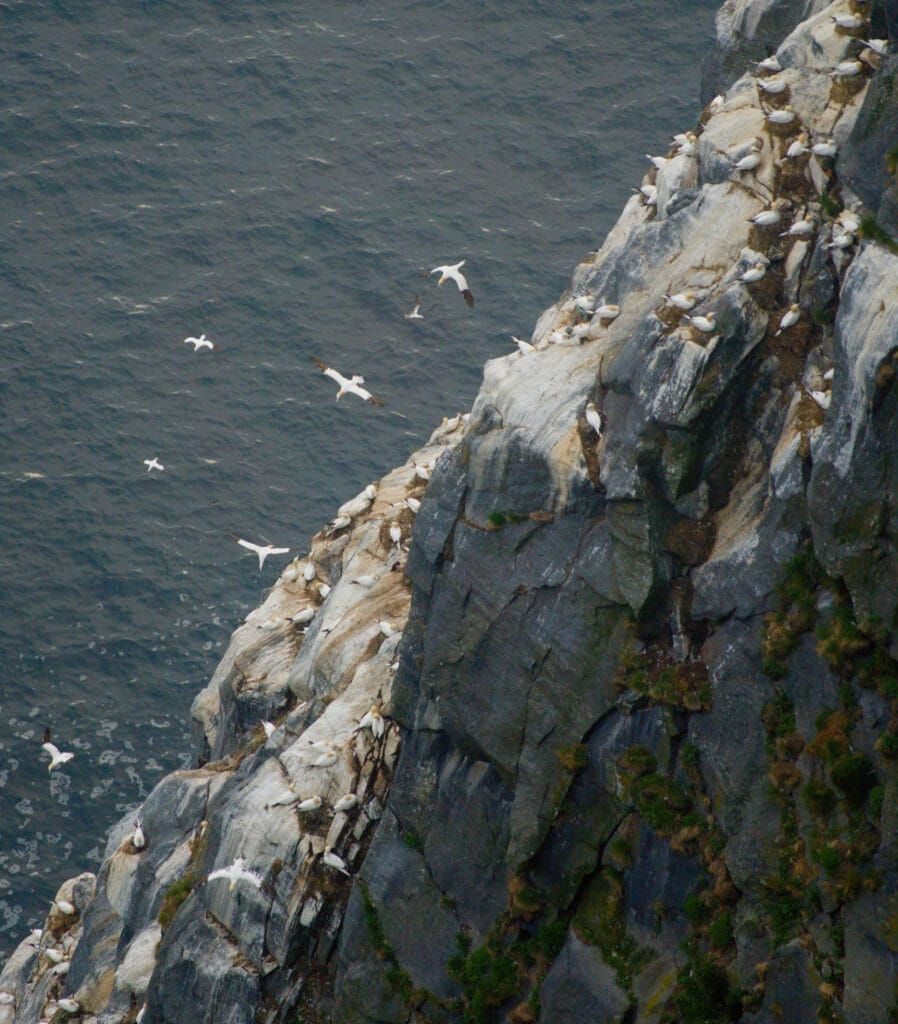
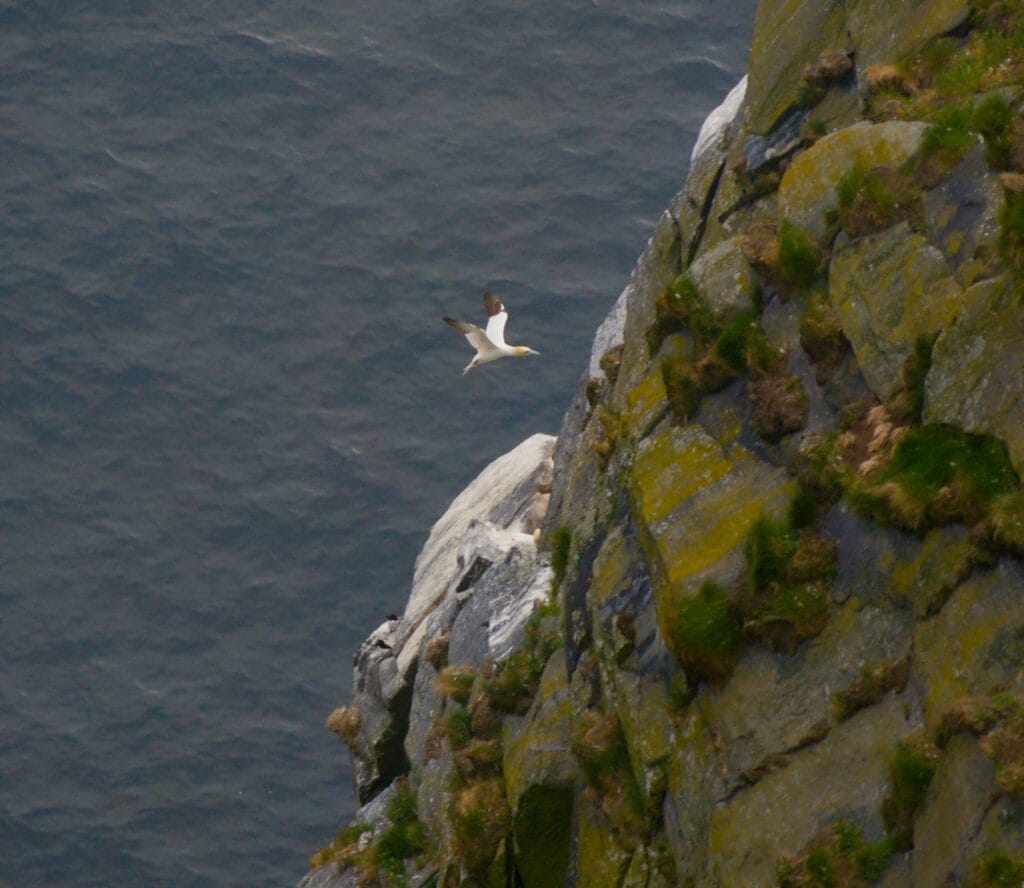
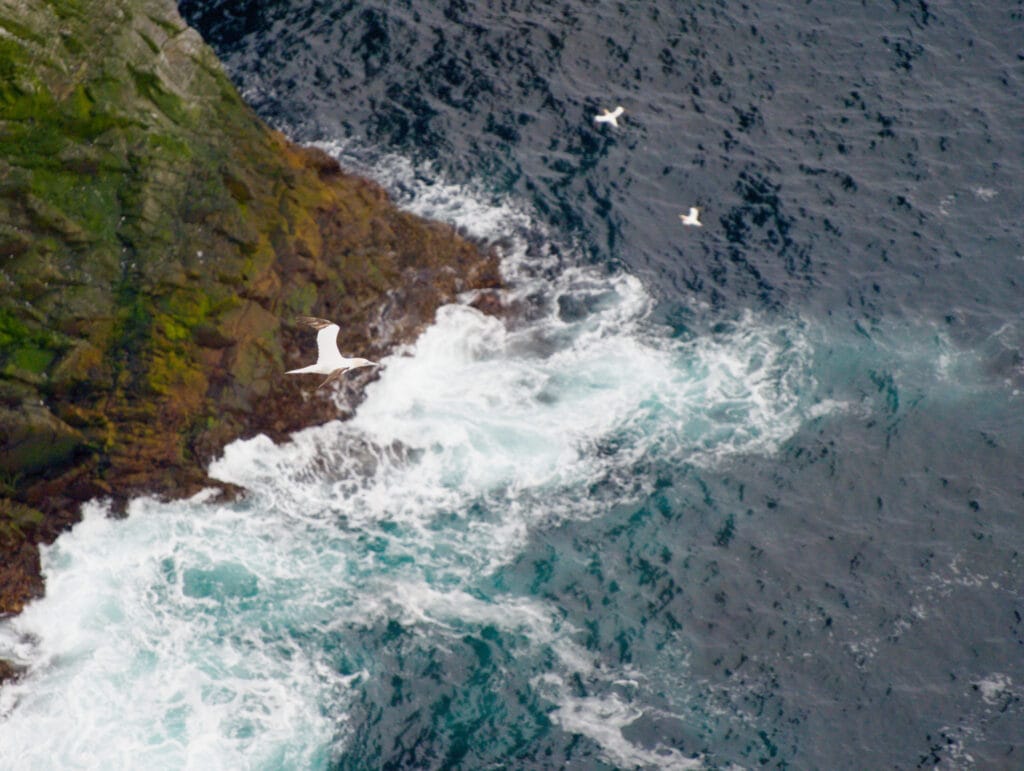
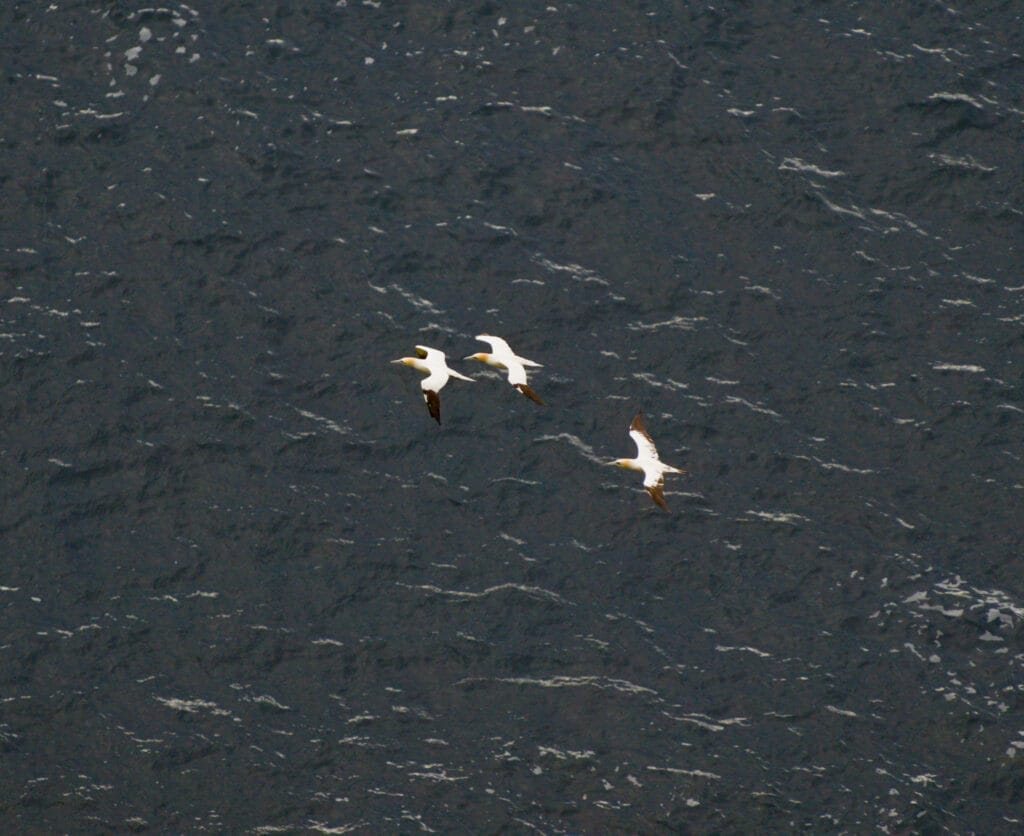
We came here to see the puffins, and we were also very impressed by these huge colonies. On the cliffs of Rundebranden, there are nearly 3,000 nesting pairs, and if you sit for a moment to watch them, it’s incredibly fascinating to see the almost constant dance of birds as they head out to sea to hunt for fish and return to their nests.
Raudenipa is also known for its eagles. Unfortunately, we didn’t see any during our walk, but if you come to the area, be sure to keep an eye out. 😉
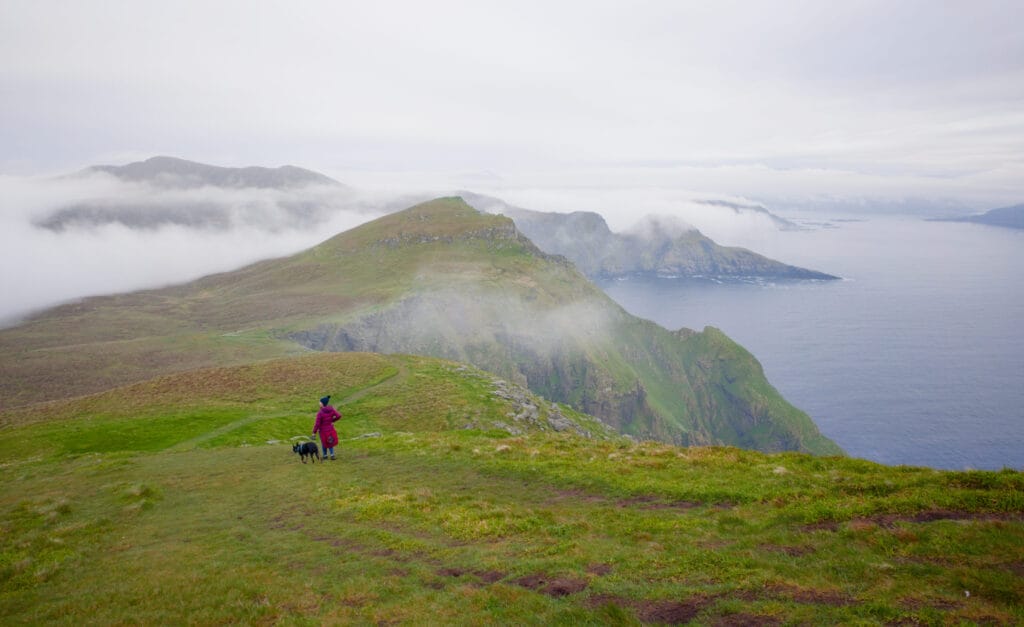
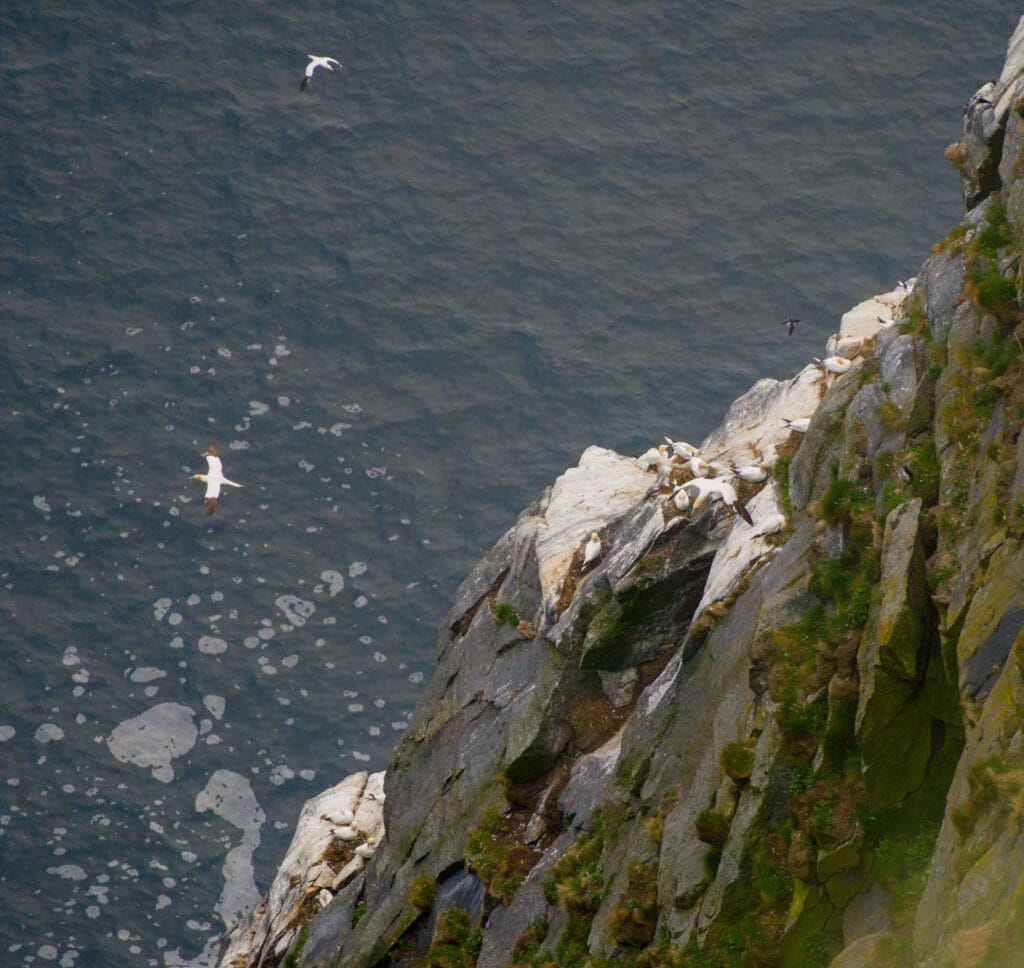
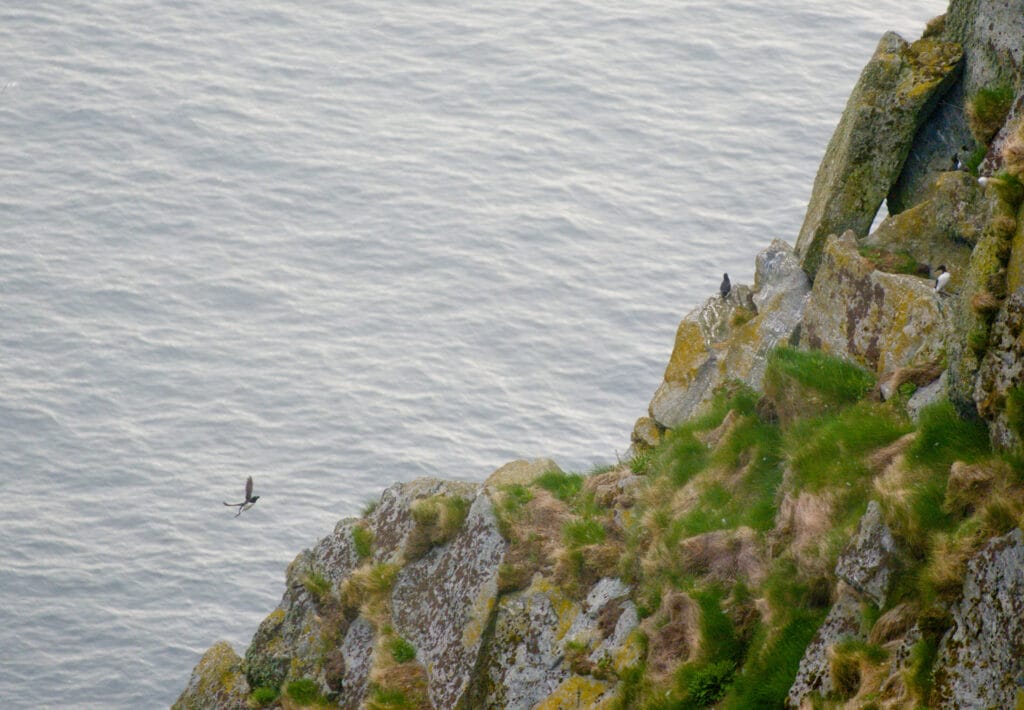
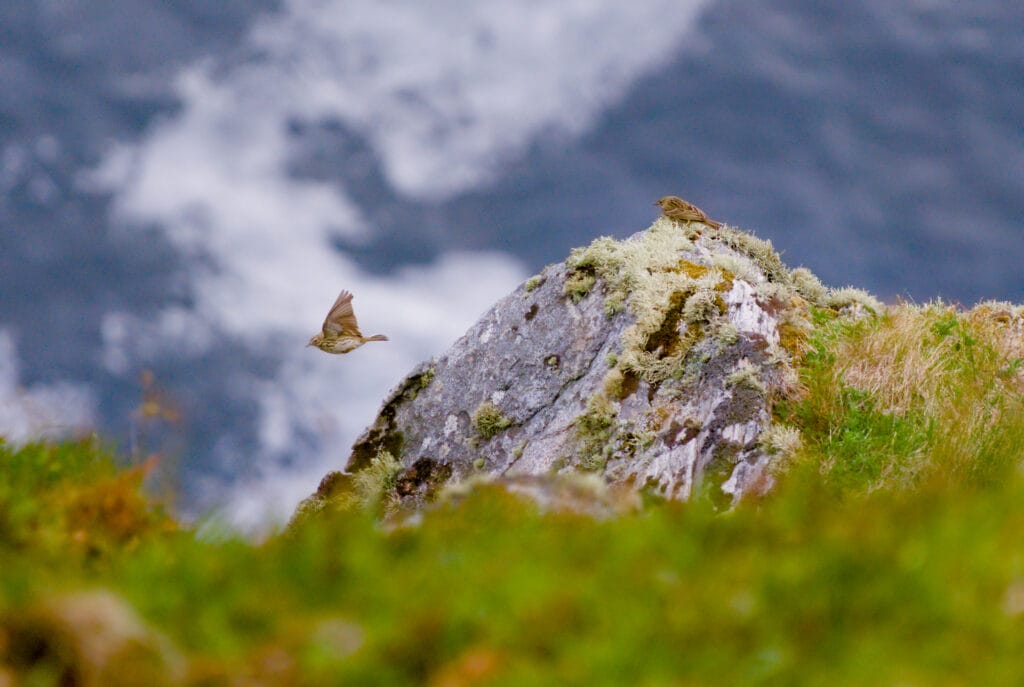
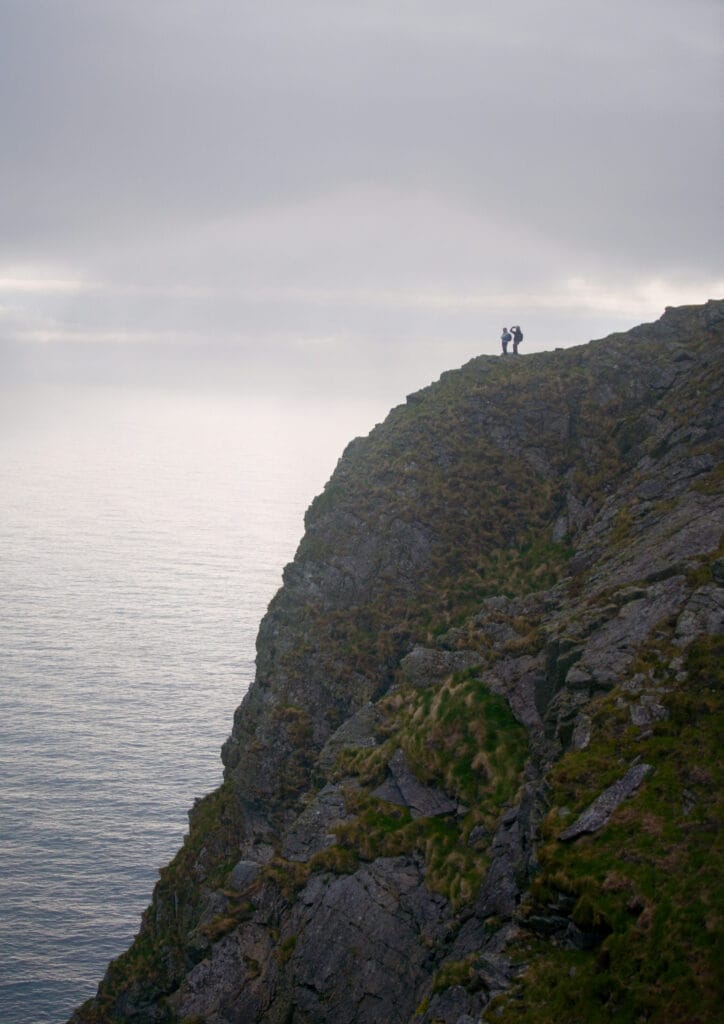
From Raudenpia, it’s about 1.5 km to Lundeura. This section of the hike is the least “developed”—by which I mean there are no more wooden walkways and fewer stone slabs on the ground. That’s not a problem at all, but just be aware that if the weather is damp, this is probably where you might get your feet a little wet if you don’t have waterproof shoes. 😉 But personally, I really loved this part of the hike! You’re practically on the cliffside the whole time, and one spectacular view follows another. We also spotted many other birds. Given our limited bird-watching skills, it’ll be hard for us to identify them, but that doesn’t take away from the charm of the hike.
Puffins at the Lundeura Lookout
We quickly arrived in Lundeura, and to be perfectly honest, there was little doubt that we had reached the “puffin spot.” While we’d maybe passed about fifteen people during the rest of the walk, we suddenly found ourselves in a place where there must have easily been a hundred people. 😉
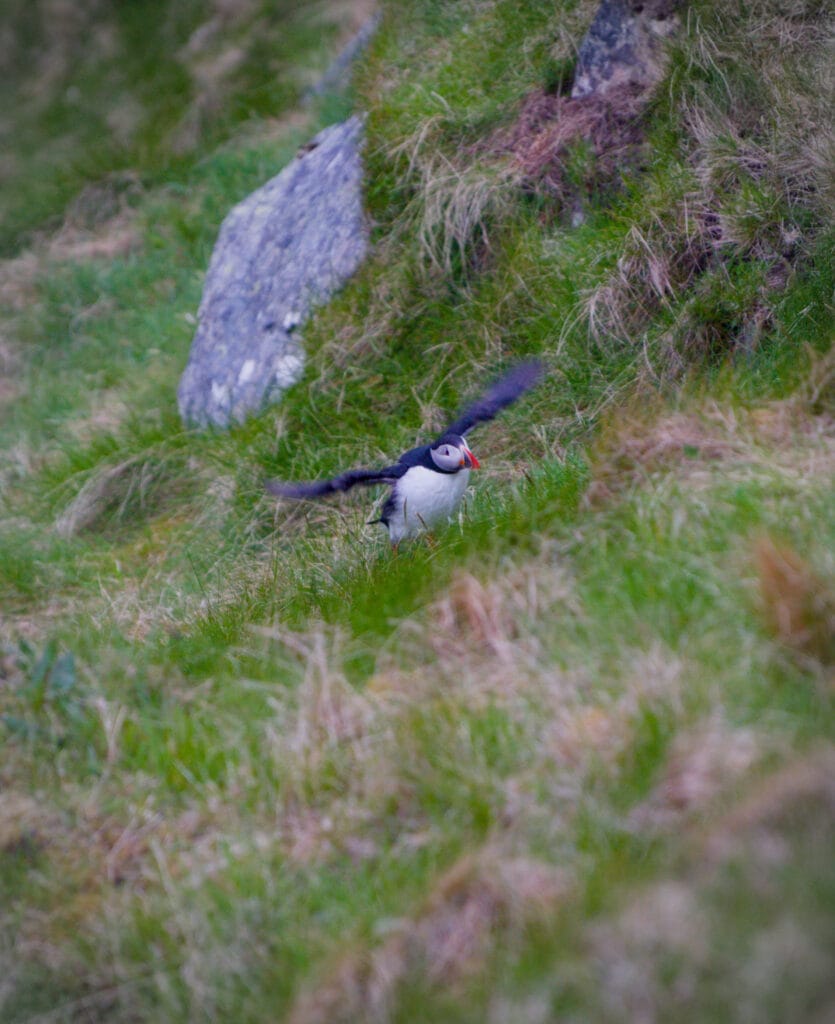
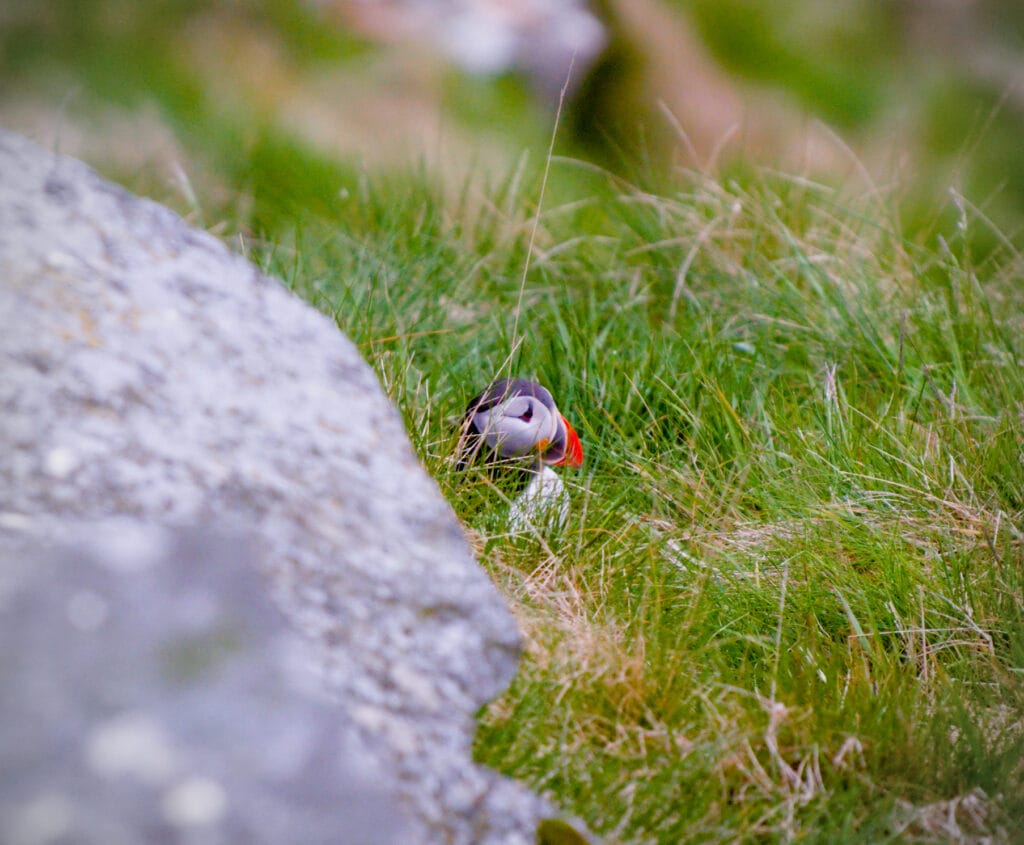
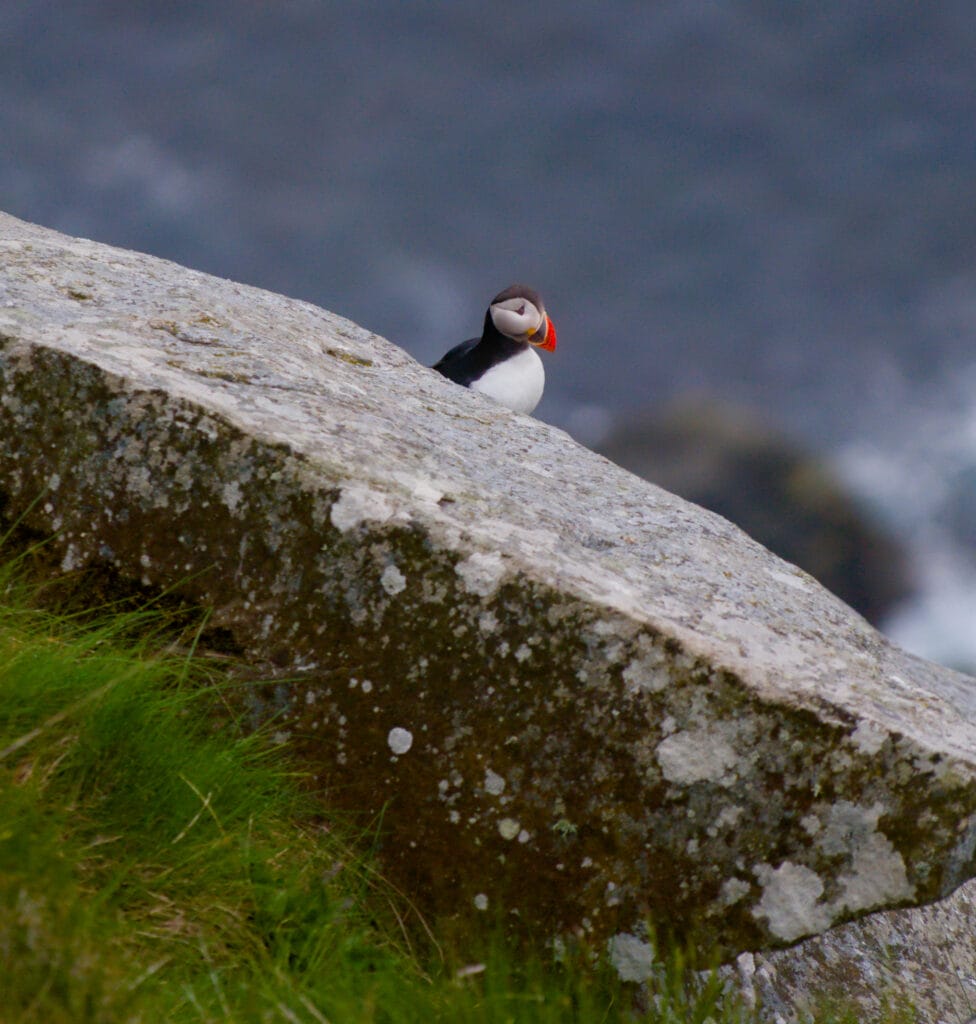
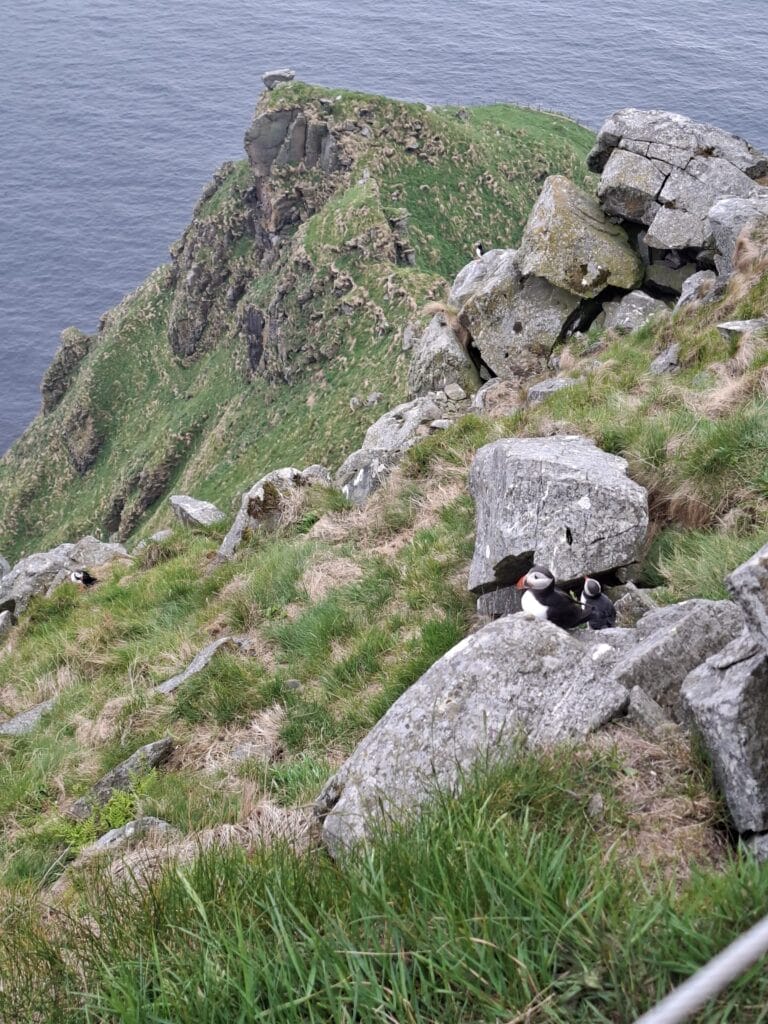
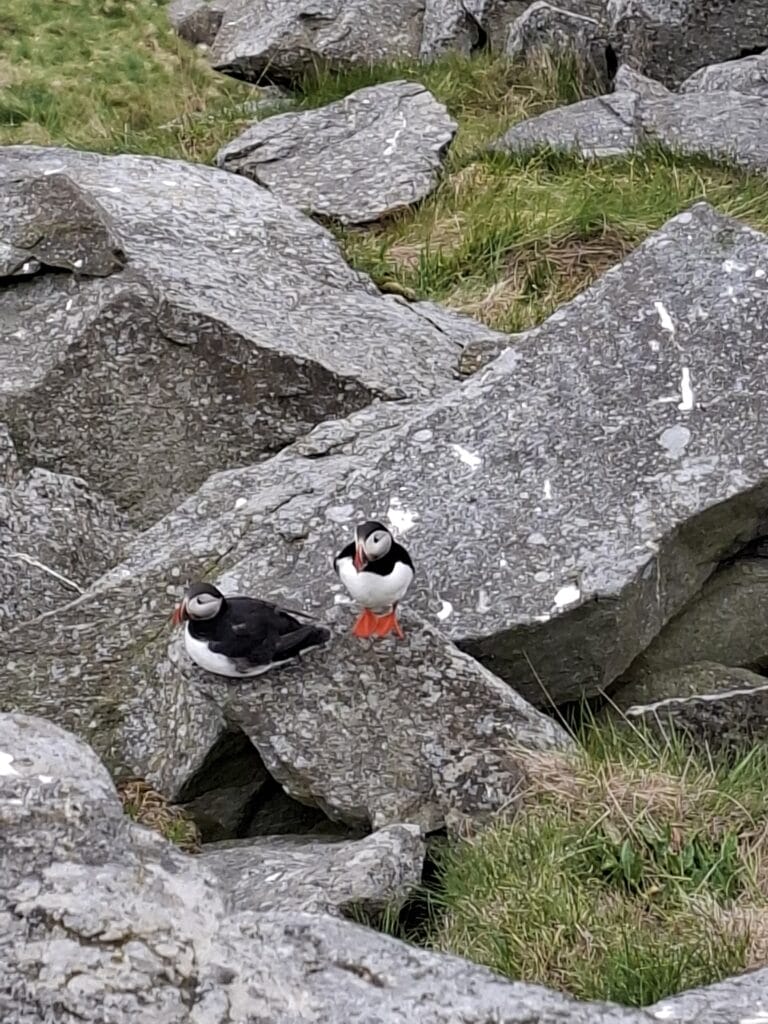
Right from the start, we spotted the first puffins (just before the “official” viewpoint). I don’t know why, but deep down I was secretly hoping to see some—though I never imagined we’d see so many. It would be hard for me to tell you exactly how many puffins there are there, but clearly hundreds (if not more). While some puffins have their nests relatively “far away,” others, on the other hand, clearly come to perch just a few meters from us.
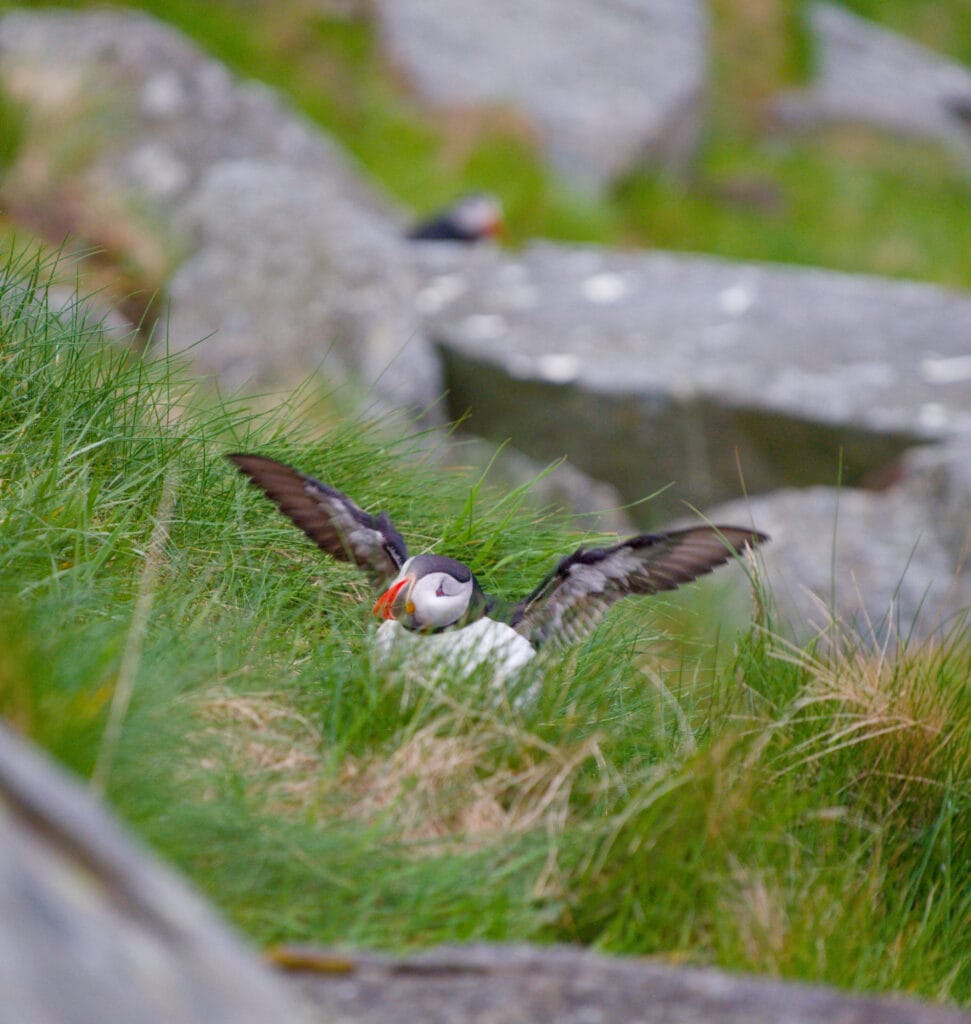
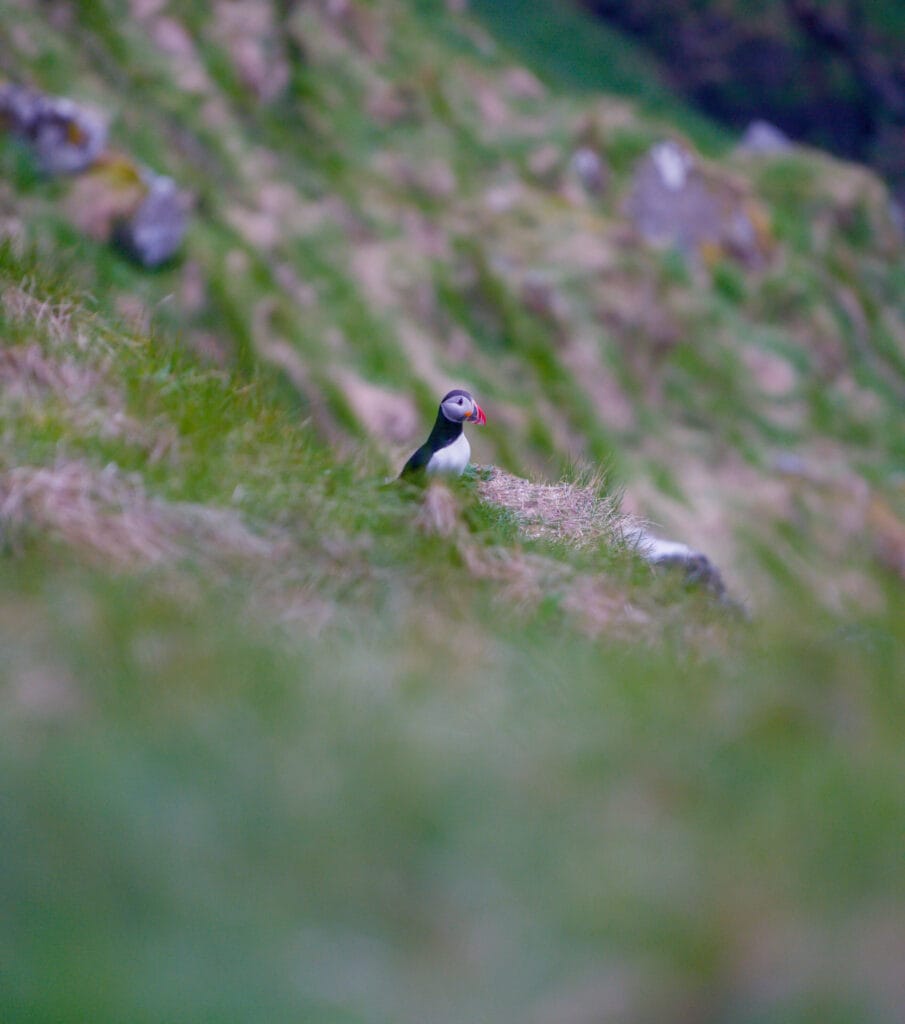
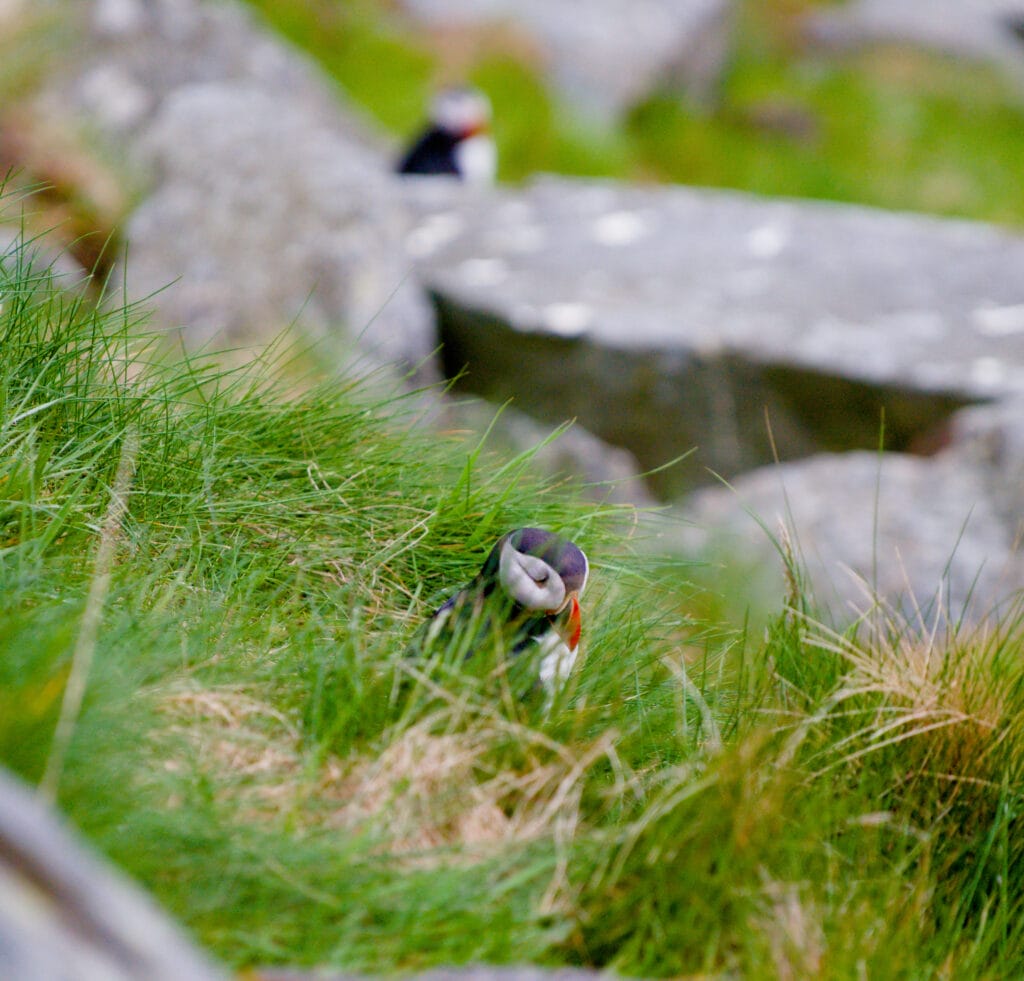
Instead of running around all over the place, I decided to sit in a quiet corner and simply watch these little sea clowns come and go. Their way of walking and their little faces are truly adorable, and it’s clearly a moment of pure joy that feels as if it’s suspended in time.
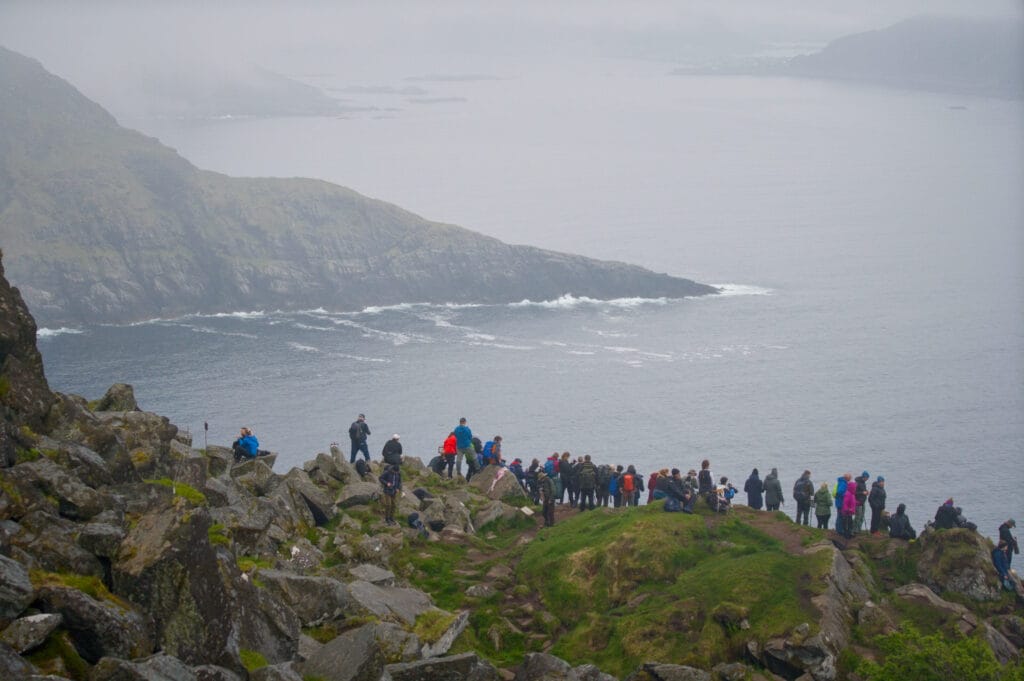
That said, I do want to clarify one thing… Some people really are “special cases.” As I said before, I sat a little off to the side, because in the most “popular” spots, some people are literally elbowing their way through just to get as close as possible to the puffins to get “THE shot.” Let’s be honest for a minute: with a smartphone in hand, no one’s going to win a National Geographic award for their shot, so there’s no point in “pushing.” There are hundreds of puffins, and if you’re a little patient, you’re almost guaranteed to see them up close.
In short, my advice would be to find a comfortable rock to sit on and then enjoy watching them “in peace and quiet.”
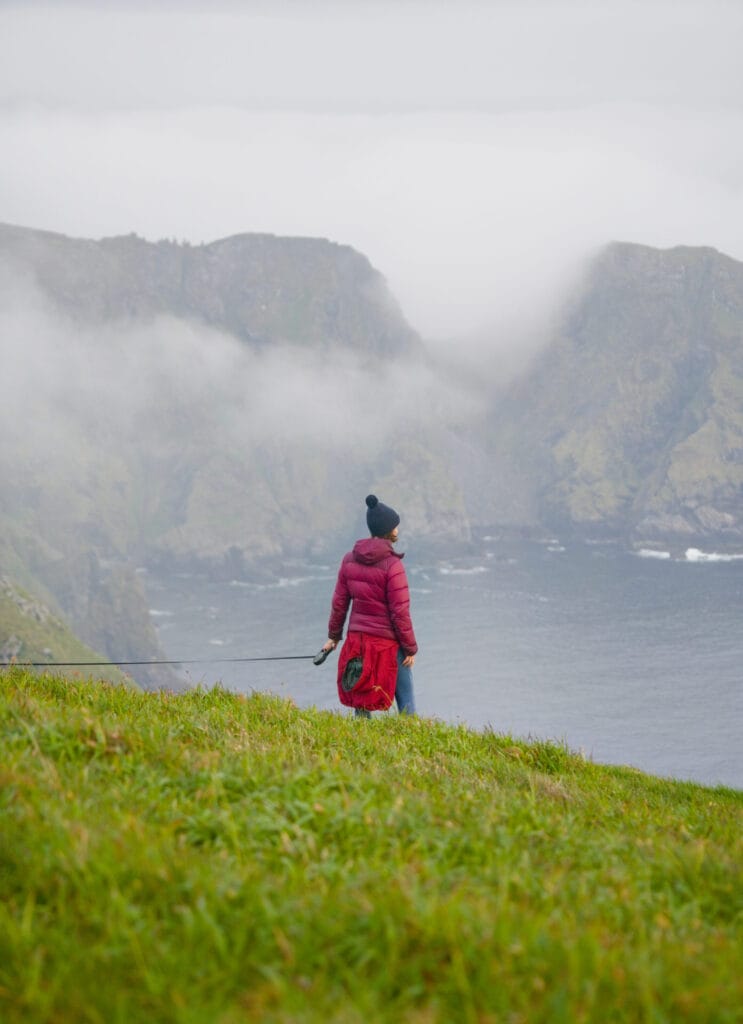
Because, yes, the puffins didn’t seem particularly shy, but there’s no doubt that nesting next to 300 people who are talking loudly and jostling each other probably isn’t the most pleasant experience. Oh, and this may seem obvious (though apparently not to everyone): if you have a dog, make sure it’s on a leash and doesn’t have a predatory instinct!
Back to the campground
After watching the puffins, we headed back toward the campground, choosing the most direct route this time. The trail is really well marked, wide, and well-maintained. It took us about twenty minutes to get back to our van and enjoy the rest of the evening nice and warm inside.
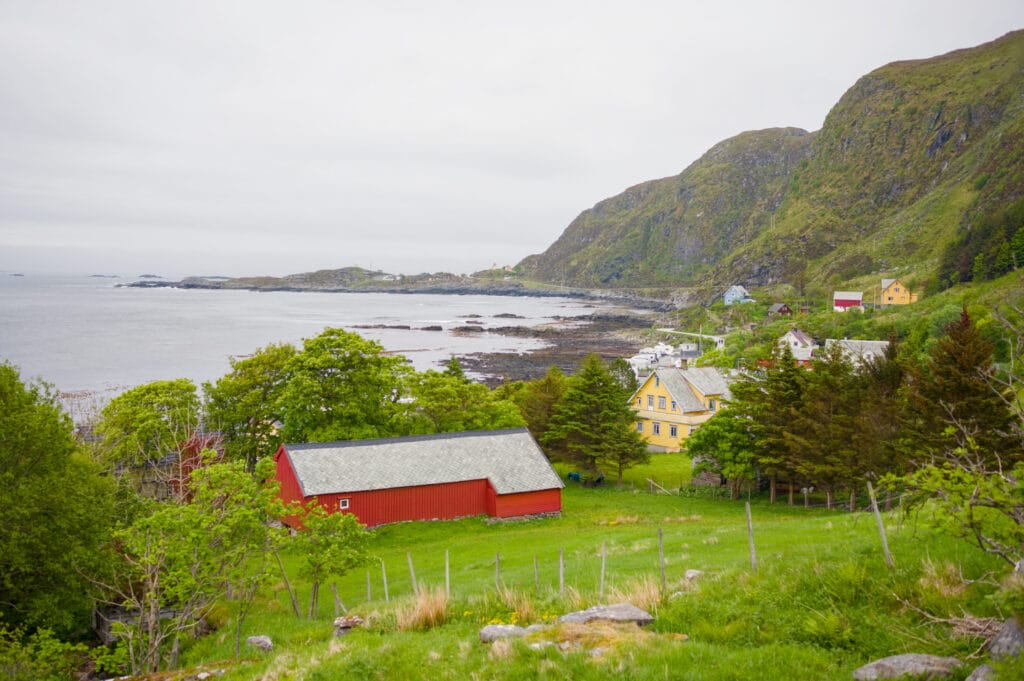
Be careful, though—although the trail is wide, it’s relatively steep in places. For us, who are used to hiking in the mountains, this wasn’t a problem at all, but we passed several people for whom the descent seemed difficult because of the slope. When it’s this steep, it’s often best to “let go” and move more quickly by taking small steps while keeping your weight shifted forward. If you have knee problems or aren’t comfortable walking downhill, it might be helpful to bring a pair of hiking poles to assist you.
Map and Practical Information
Below, you’ll find the route we took. We first headed toward the lighthouse before returning to the Lundeura overlook to see the puffins around 8:00 p.m. In total, the loop is about 6.5 km long with 460 meters of elevation gain. It takes about 3 hours to complete the loop. These times are on the generous side, but you’ll want to stop often to watch the different birds. 😉
Note: We strongly recommend bringing extra layers. The wind can blow strongly in the northern part of the island, and the wind chill can drop drastically if the sun goes behind the clouds or if the wind picks up. We had packed a down jacket and a hat (in late May), and after an hour of watching the puffins, we were glad to start walking again to warm up. 😉

During our trip to Norway, we used an eSIM from Airalo to get mobile data. We’ll tell you more about it in this article.
The links in this article are affiliate links, which means we earn a small commission if you click through them. However, by using the promo code “NOVOMONDE,” you’ll get 15% off your first e-SIM.
Our tips for (almost guaranteed) puffin sightings at Runde
Runde is a great place to see puffins. Every year, nearly 30,000 pairs come to nest on a small rocky outcrop on the island, and it’s really easy to come and watch them.
To see the puffins, you really need to come at the right time. But when is the right time, you might ask?
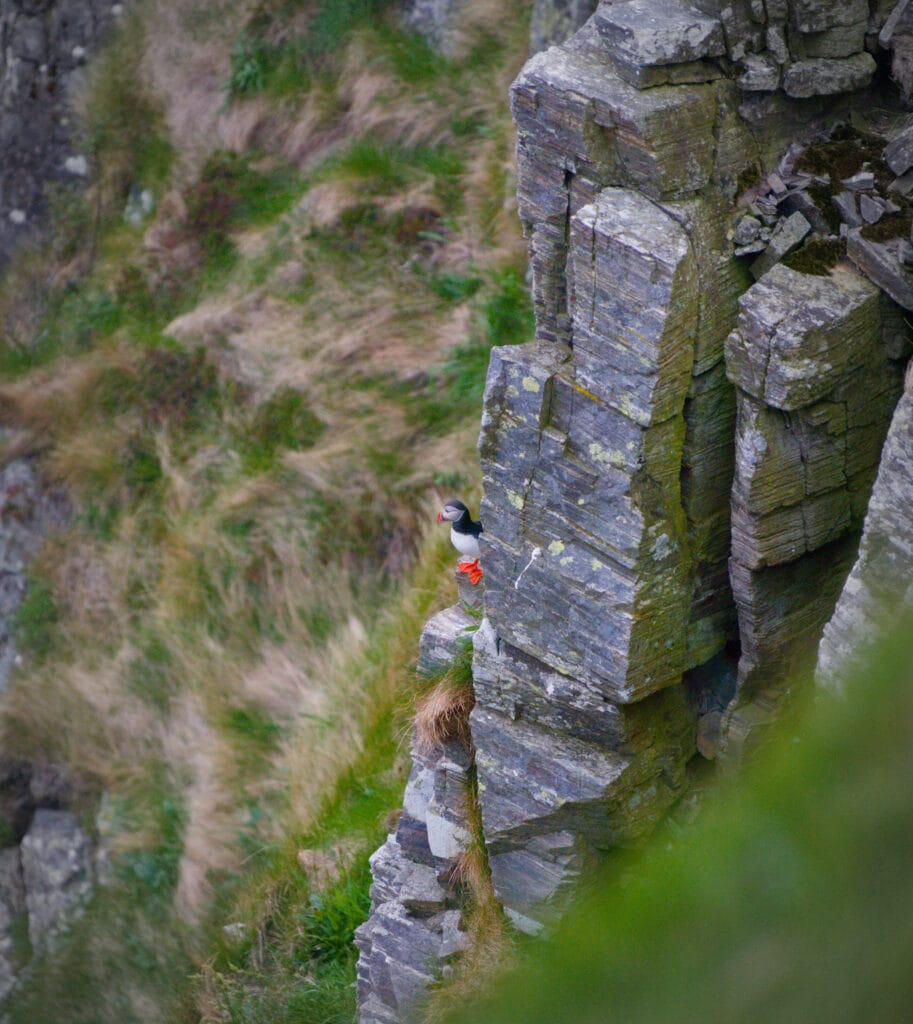
Season: The puffin is a seabird and comes ashore almost exclusively to nest and feed its young until they are ready to fly. Puffins generally arrive on the island around late April and can be seen there until about mid-August.
The eggs are laid at the start of the “season” and are incubated for about 40 days. This means that in May (when we were there), the adults spend a lot of time motionless in their burrows or right in front of them. You won’t see them flying around constantly with fish in their beaks just yet.
June–July: This is the time when the chicks have hatched but are not yet able to fly. It is during this period that the adults are most active, making numerous trips back and forth to feed their young by bringing them fish in their beaks.
Schedules: Puffins spend a good part of their day out on the open sea. If you take the tour in the middle of the day, you’ll have little chance of seeing them (or far fewer). It’s really at the end of the day (around 8 p.m.) that they’re most active around their burrows and feed their chicks, and that’s clearly the best time to observe them.
As for us, we left the campground around 4:30 p.m. and decided to take a loop around the island before arriving at the puffin rock around 7:00 p.m. The timing was perfect! Around 9:00 p.m., we headed back down because we were starting to get a little cold, but the birds were clearly still very active. 😉
I’d like to take a moment to remind you that it’s absolutely essential to respect the puffins’ habitat and not to “disturb” them any more than necessary. I’ll admit, given the massive influx of people, I was a bit skeptical about the long-term viability of these viewing spots. Don’t get me wrong—we’re part of that crowd, too, by coming here. But after seeing it for myself, I’m wondering about the future of this situation. Infrastructure is in place (barriers, observation points), and generally speaking, it seemed like the birds weren’t particularly bothered by the presence of humans. But then again, the numbers speak for themselves… In 1970, the island had about 100,000 breeding pairs; there were still 50,000 pairs in 2010, compared to 30,000 in 2026.
The decline is mainly attributed to the dwindling numbers of their primary prey, such as sand eels, as well as to rising sea temperatures, but I wonder if, in the long run, they might not prefer to find new places where they can nest “in peace.” Only time will tell, but in the meantime, let’s respect the barriers and observation zones.
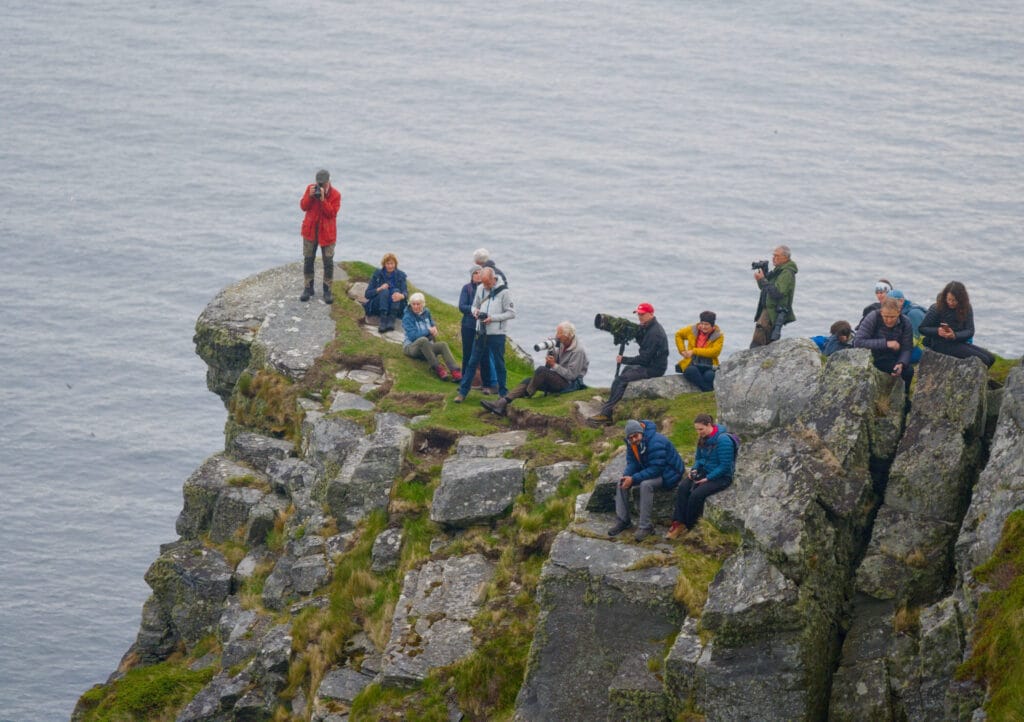
Photography Equipment
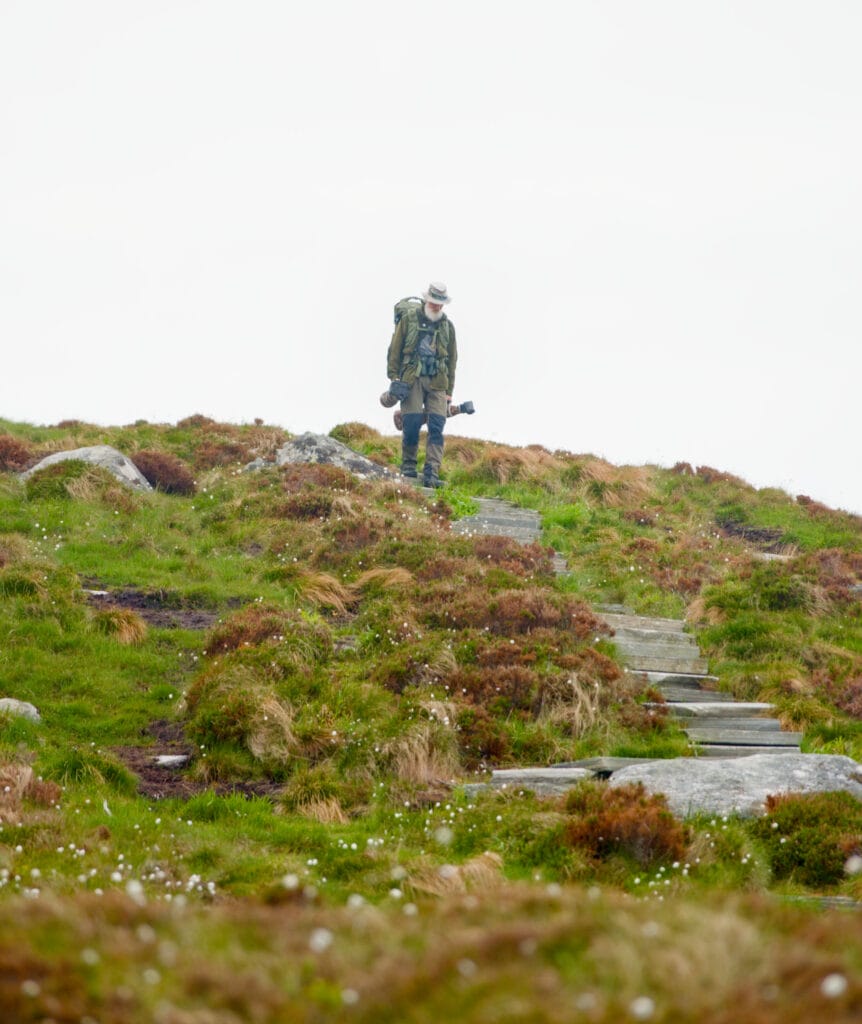
We’re far from being wildlife photographers, and we certainly didn’t have the “right” equipment to capture the various birds in detail. Clearly, Runde is a place where many amateur and experienced photographers gather, and we have to admit, we were quite impressed by the size of some of the telephoto lenses people bring along on their hikes.
As for us, we had our usual gear: the Sony A7 III and three lenses (a 70-200, a 40mm, and a 15mm). To see the details of our gear, you can take a look here.
For precision wildlife photography, it’s definitely best to have a good lens. It’s hard to say exactly what gear people were using, but clearly some of them had 600mm lenses or even longer!
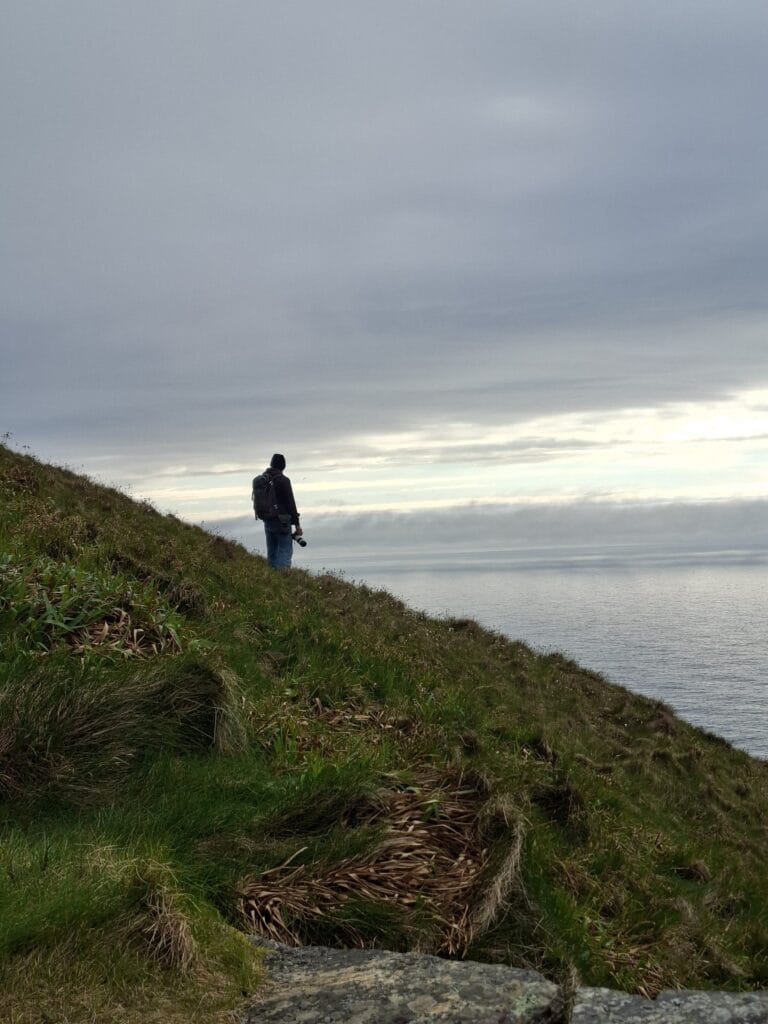
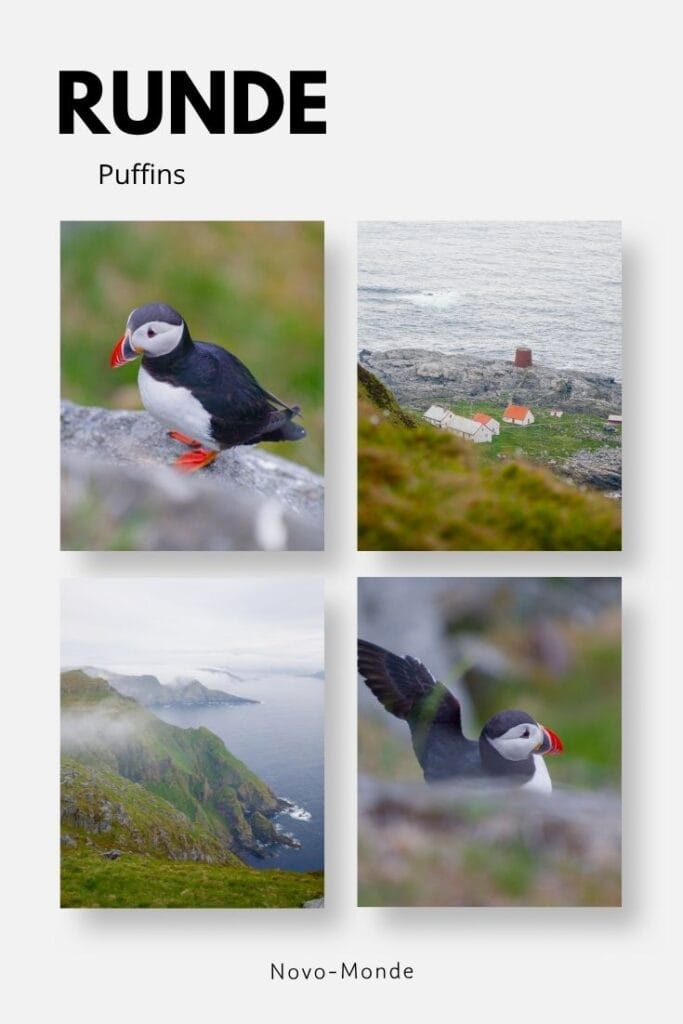
But the phone also lets you capture a few memories (especially of the puffins, which you can see from relatively close up). To give you an idea, here are a few photos I took with my smartphone:
Staying in Runde (or nearby)
As you’ve read above, to maximize your chances of seeing puffins, it’s clearly better to plan to take a walk on the island in the evening rather than in the middle of the day. For this reason, it might be convenient to stay overnight nearby.
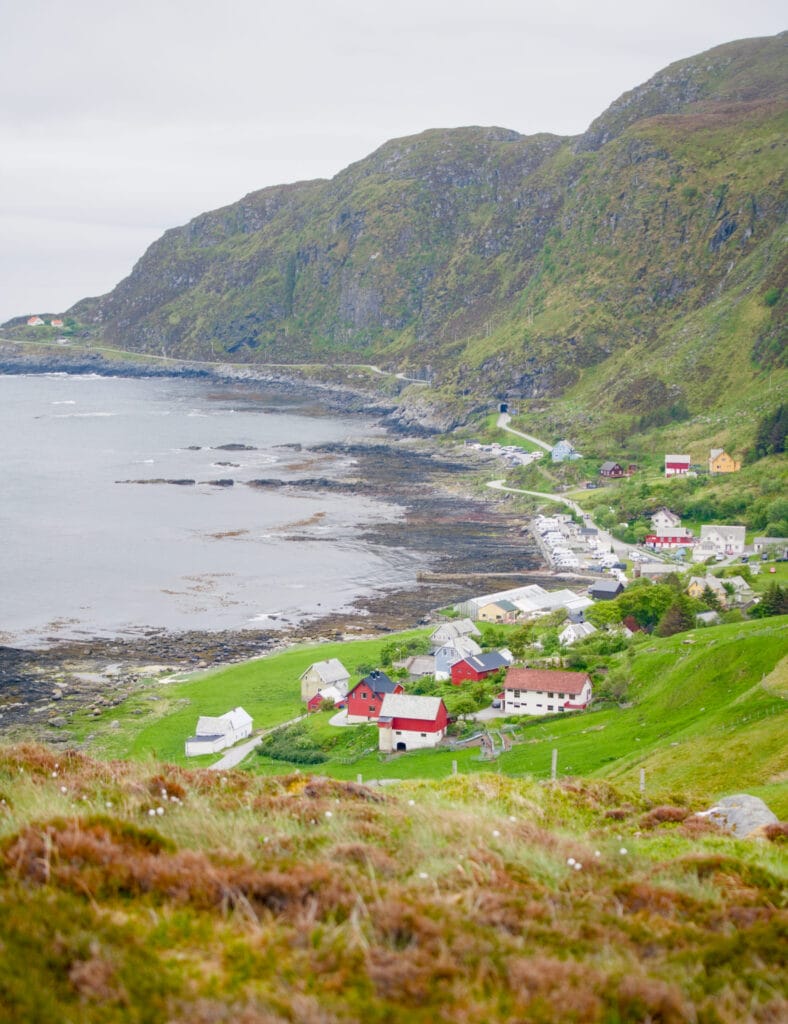
If, like us, you’re traveling in your own vehicle, it’s important to note that wild camping is prohibited on the island of Runde (it’s a nature reserve). But if you’d like to camp in the wild, you’ll find several spots on the larger islands or on the mainland.
As for us, we decided to spend the night at the small campground located right at the foot of the trail. We paid 345 NOK for a site without electricity. The campground itself isn’t what I’d call amazing, but its location definitely makes it worth staying for one or two nights (it’s not exactly the kind of place you’d come to stay for a week unless you’re a real bird enthusiast and want to spend several days in a row there).
Be aware, however: the campground really isn’t very big (if you squeeze in, there are maybe 40 sites). The campground doesn’t take reservations and operates on a first-come, first-served basis. In short, we recommend arriving around midday to secure a spot. This advice obviously applies during puffin-watching season (roughly late April through early August. The rest of the year is probably quieter). We got the impression that the vast majority of people stay only one night, so there’s a high turnover of campsites every day.
For more “traditional” accommodations, you’ll find a few rental options on the island. The campground where we stayed also offers a few basic cabins. To make a reservation, you’ll need to go directly to their website. (The cabins start at 480 NOK per night.) Alternatively, the trip can also be made fairly easily from the surrounding area. We’ve included a map of available accommodations near Runde above (feel free to zoom out a bit to see more options).
A Quick Tour of Ålesund
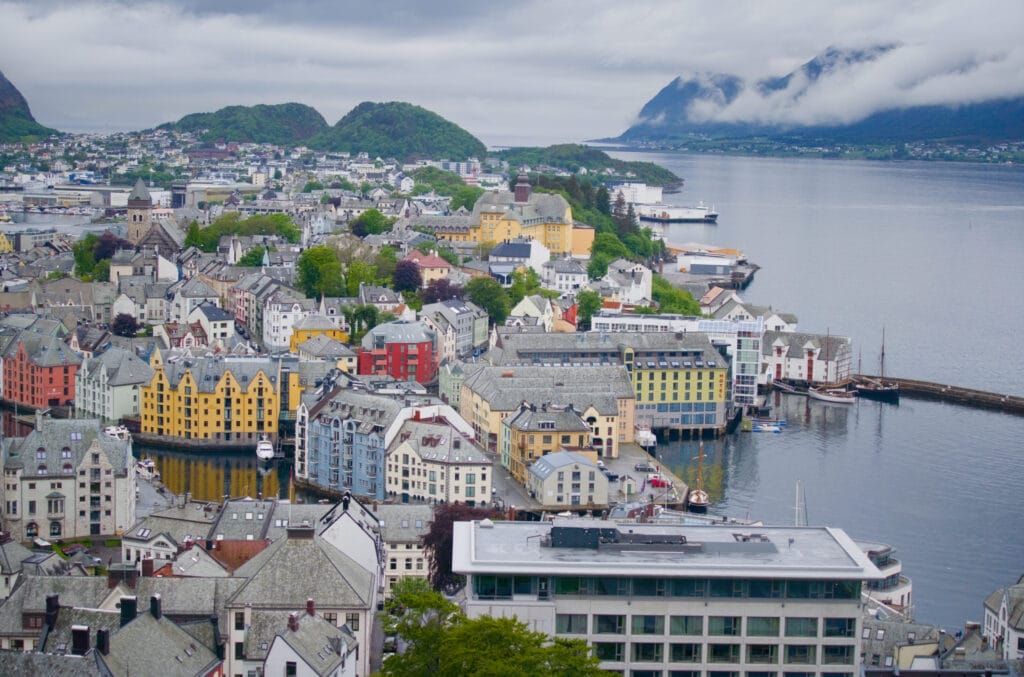
After our visit to Runde, we headed back up toward Ålesund. It turned out to be the only “city” we visited during our nearly 7-week trip to Norway. 😉 It wasn’t really planned that way, but let’s just say that with the logistics of the van, the cost of parking, and our dog—who isn’t particularly fond of cities—it ended up working out perfectly for us.
Alesund is a small town that’s really easy to get to in a campervan, and best of all, you can explore the whole place on foot. We only stayed for one day (and one night), but we really enjoyed this little stop, so we thought we’d share our recommendations with you in case you’re passing through Alesund before or after Runde.
Hike up to the Byrampen overlook
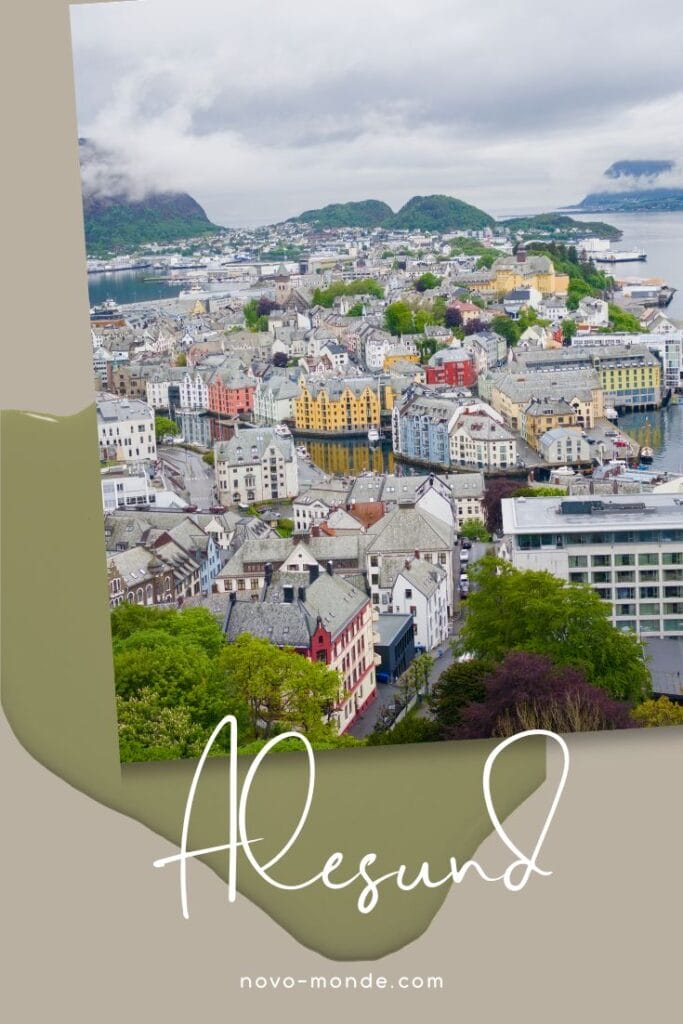
Our decision to come to Ålesund was mainly motivated by the idea of grabbing a bite to eat at a restaurant, but also to admire the view from Byrampen. The climb to the lookout point isn’t very long (you reach it by taking a series of stairs starting from the park below.)
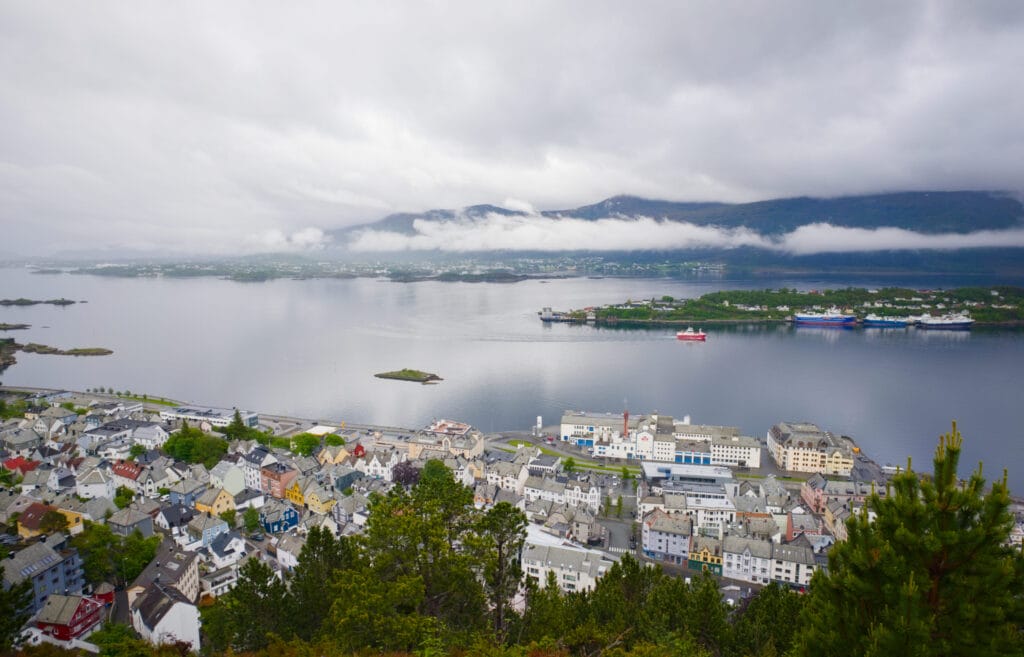
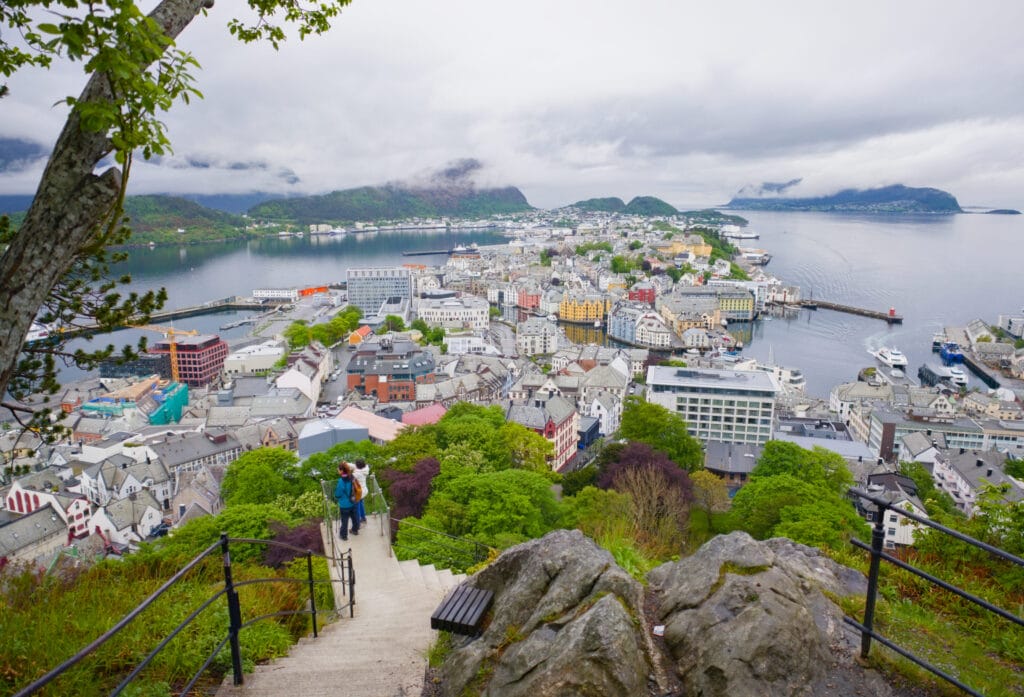
What we especially loved here was the contrast between the colorful town below and the wild landscapes all around. Depending on the weather, the atmosphere changes completely: under bright sunshine, the waters take on incredible hues, while clouds add that dramatic touch so typical of Norwegian landscapes. If you’re passing through Ålesund and enjoy even a little bit of hiking, Byrampen is definitely worth adding to your itinerary.
As for the “practical” side of things, the climb is short but steep. It takes about 1 hour to complete the loop shown below.
Strolling through the harbor of Ålesund
After visiting the lookout point, we headed back down to downtown and stopped for pizza at Nonna Lina. Their pizzas are truly excellent, even if the Norwegian prices are definitely a bit steep… To give you an idea, the meal came to €68 for the two of us, and we only had one pizza each plus a drink (non-alcoholic). No appetizer, no dessert… But from what we saw, those prices are pretty standard.
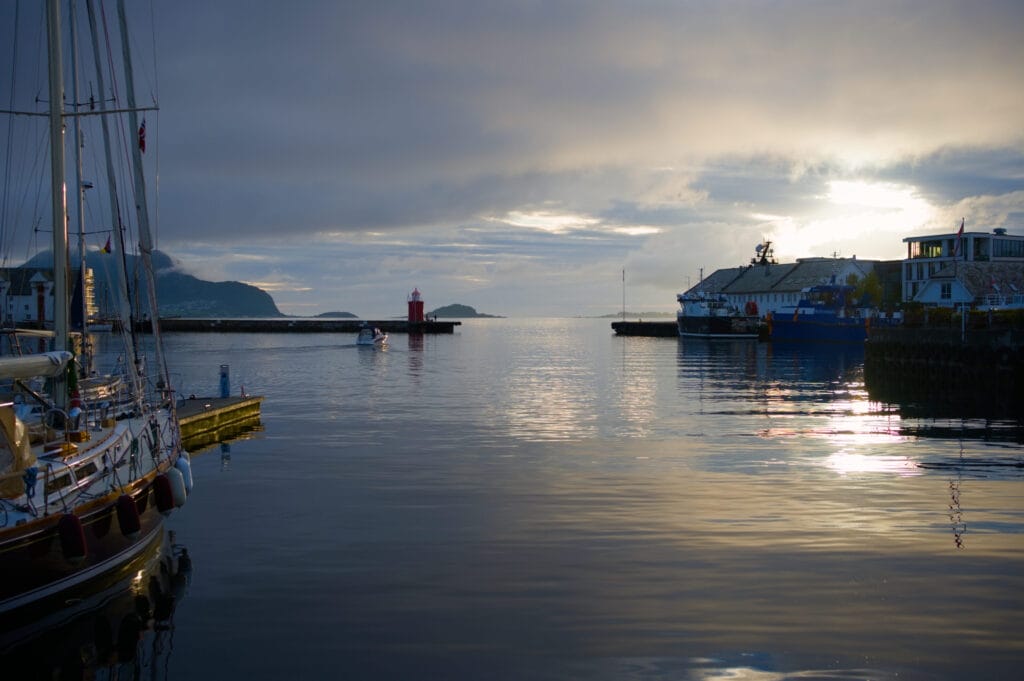
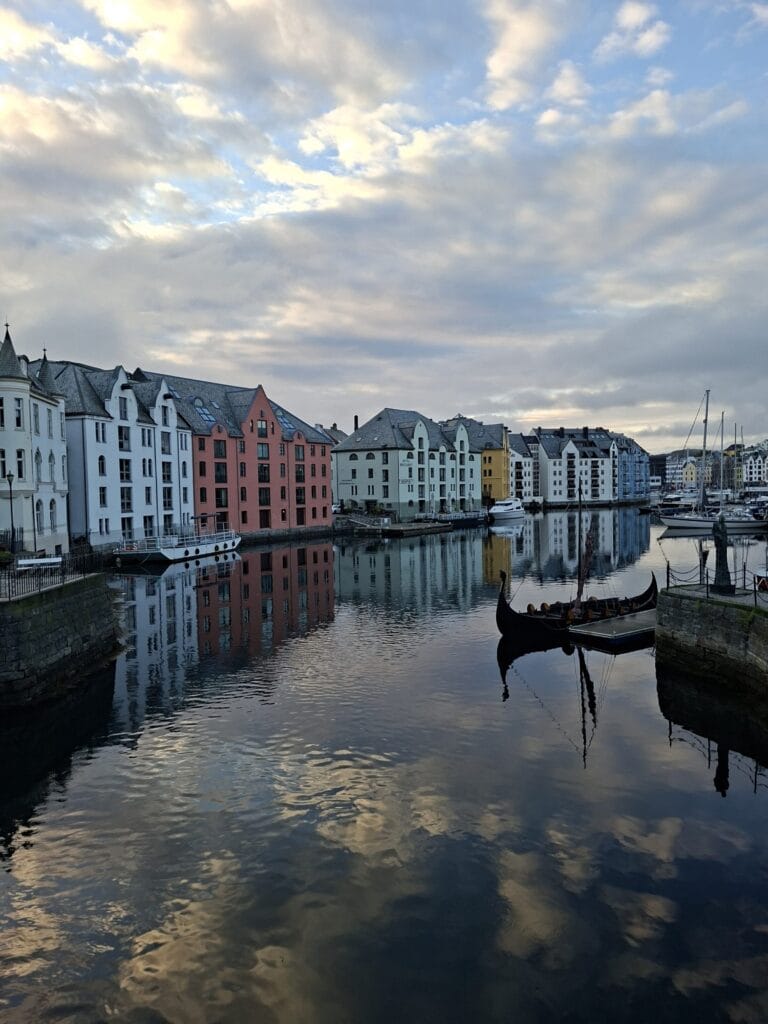
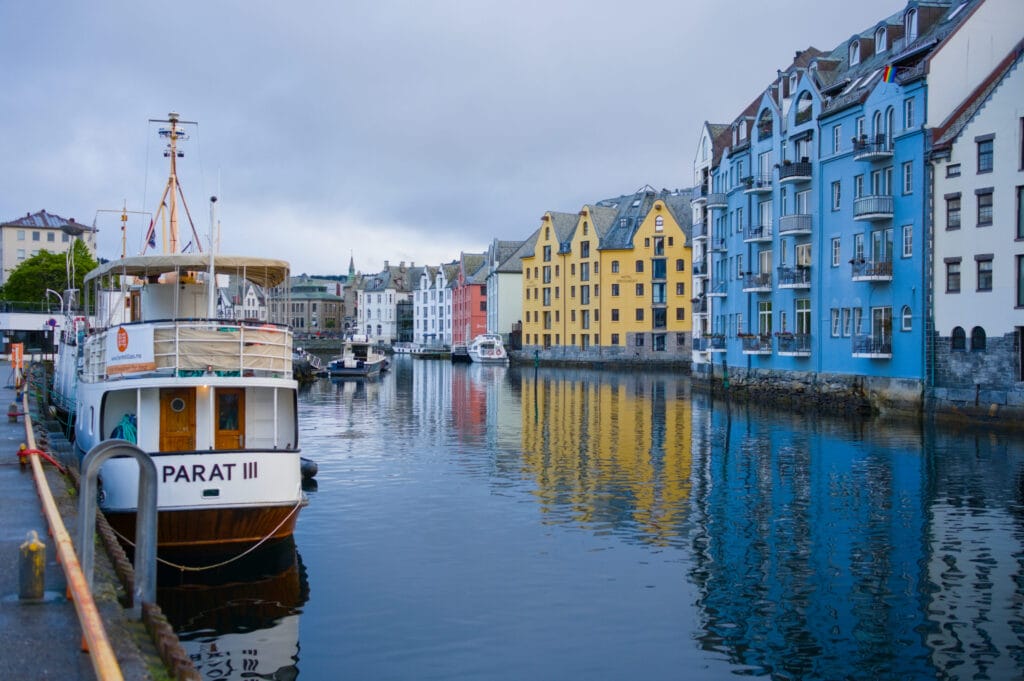
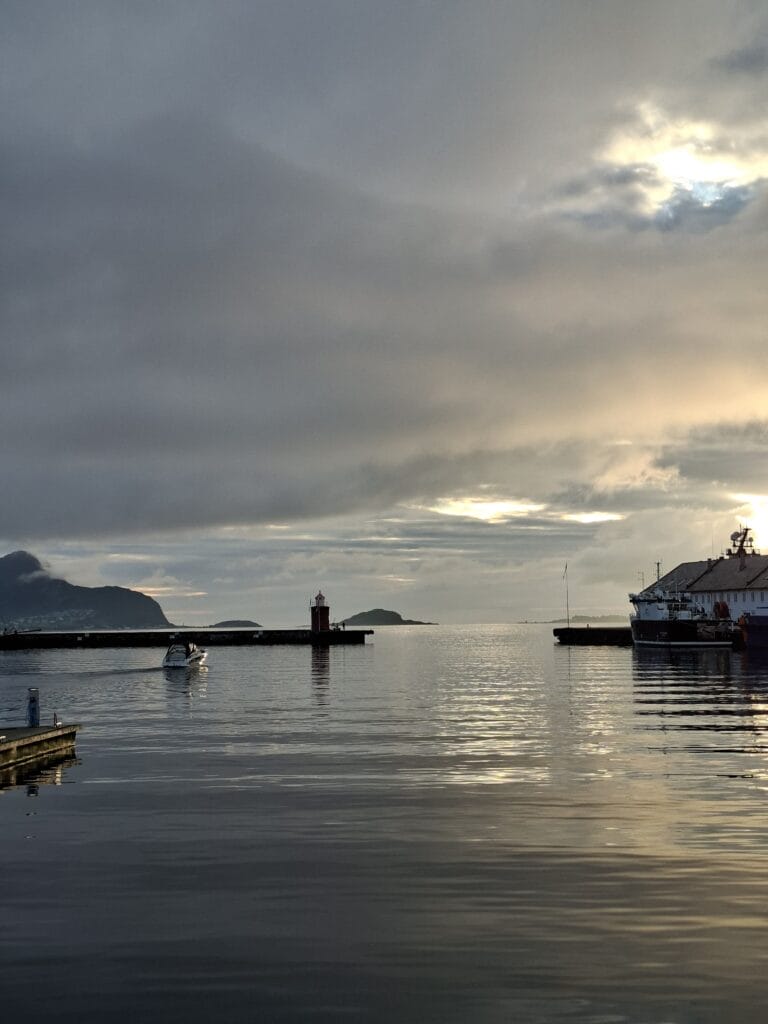
After lunch, we went for a walk around the harbor area. Ålesund is undoubtedly one of the most beautiful cities in Norway. In fact, the city is relatively “new” because it was partially rebuilt after the terrible fire of 1904, which destroyed nearly 850 homes in the city center. The city was rebuilt in just a few years in the Jugendstil (Art Nouveau) style, which gives it a truly unique character today.
The Alesund Campground / Camper Park
If, like us, you’re traveling in a camper van, the easiest option is definitely to go to the Camper Park, which is just a stone’s throw from downtown (that’s where we stayed) Parking costs 375 NOK for 24 hours (about 34€) and includes electricity as well as access to restrooms and showers. You pay by card at the kiosk, and your ticket includes the code for the restrooms. I wouldn’t go so far as to say it’s very glamorous (it’s just a big parking lot), but the location is really great for exploring the city! In short, I wouldn’t spend my whole vacation there, but for one night, it’s perfect! 😉
Well, that’s all for today. I hope you enjoyed this article, and please feel free to ask any questions in the comments or let us know about any updates you think might be relevant.
See you soon!
Pin on Pinterest

Join the discussion