After spending a month on the island of Menorca, we’d like to share our thoughts with you if you’re considering this destination for your next digital nomad adventure.
Welcome to our page all about the gorgeous little island of Menorca, in the Balearics. We spent 5 wonderful weeks here, and we're sharing everything we learned to help you plan your own trip to Menorca and make the most of its stunning beaches.
This page brings together all the practical info you'll need to prepare your trip. At the end, you'll also find links to our blog posts, which dive deeper into things to see and do. Feel free to share this guide with anyone who might find it useful, and if you're heading to Menorca soon, we simply wish you a wonderful holiday!
Further down this page, you'll find all our Menorca articles listed in chronological order. If you'd rather browse them on a map, you can open it below and pick the article that matches where you're headed.
Before we get into the practical stuff, let us introduce you to Menorca and, more importantly, why we ended up settling here for 5 weeks.
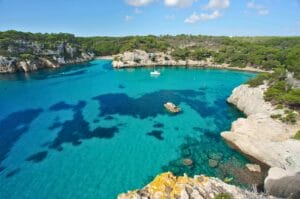
Menorca is a small Balearic island, with an area of barely 700 km². Far less known and far less crowded than its neighbors Mallorca and Ibiza, it has, over the years, become a favorite for anyone who loves nature, beautiful landscapes, and places that still feel untouched. Tourism took off across the Balearics back in the 1960s, but from the very start, Menorca made a point of protecting its landscapes; for instance, by refusing to build major roads along the coast.
Honestly, though, we won't pretend our choice of Menorca was some grand plan. We'd originally set our sights on Tenerife (spoiler: we did eventually make it to the Canaries, twice). The problem was that flights were painfully expensive when we were searching. So we turned to Skyscanner, found a great deal, and that was that. Menorca it was! We barely knew anything about the island. We knew roughly where it was, and we knew Mallorca and Ibiza felt too touristy for our taste, but that was about it. A quick Google Images search later, and we booked the trip almost on a whim!
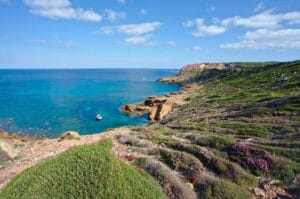
To help you plan your own Menorca itinerary, here are our blog posts:
We were only there between October and November, but after plenty of conversations with locals, the consensus is pretty clear.
November to April is the deep off-season. Prices hit rock bottom, but the island really slows down. That means most of the touristy villages (think Fornells, Cala Morell, or Binibèquer) are completely deserted. Everything's shut, and you can only really get around by car, since public transport runs less often and far fewer restaurants and bars stay open (though a handful do). The climate is milder than in Switzerland, but winters here are still cool, expect 12–15°C during the day. If you're someone who loves peace and quiet plus a good hike, this season can actually be lovely, even if swimming is pretty much off the table (unless you happen to have Finnish blood!).
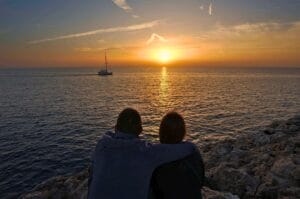
High season runs from June to August. With summer holidays in full swing, these are by far the hottest and liveliest months on the island. Parties, restaurants, activities of every kind, this is when Menorca really comes alive. The sun is out almost every day, the beaches fill up (though still nowhere near as packed as on neighboring islands), and, of course, prices for accommodation and car rentals shoot up accordingly. We're generally not huge fans of high season — we suspect it'd feel a bit too crowded for us, even though Menorca stays noticeably calmer than Mallorca or Ibiza.
Shoulder season stretches from April to June, and from early September through late October. In our eyes, spring and autumn are simply the best times to visit Menorca. Restaurants and shops are open, temperatures are pleasant (20–25°C), prices are reasonable, and crowds are minimal. Beaches are practically empty, though for swimming, aim for September or October rather than spring, since the sea is still pretty chilly earlier in the year. In October, the water temperature was around 22°C when we visited. These four shoulder-season months are also ideal for hikers tackling the Camí de Cavalls, since the temperatures are far more forgiving for walking than in the height of summer.
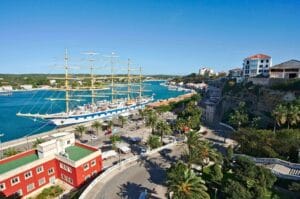
Menorca has just one airport, located near Port Mahón (Maó), on the southeastern side of the island. Don't worry too much about where you'll be staying. Wherever it is, you'll be within an hour's drive of the airport. That's how small this island really is! Even Ciutadella, roughly on the opposite side of the island, is less than 45 minutes away.
Several airlines fly into Menorca, but Vueling is generally the cheapest option. We flew with them via Barcelona, and it was a smooth experience. To compare prices across airlines and find the best deal, we always recommend Skyscanner. Just enter your preferred departure airport and start comparing.
Notes:
This article contains affiliate links to partner sites. When you use our links to book accommodation, a car, or an activity, you don’t pay anything extra, but we get a small commission. This helps us to offer you free, independent, and ad-free content. Thank you for your support!
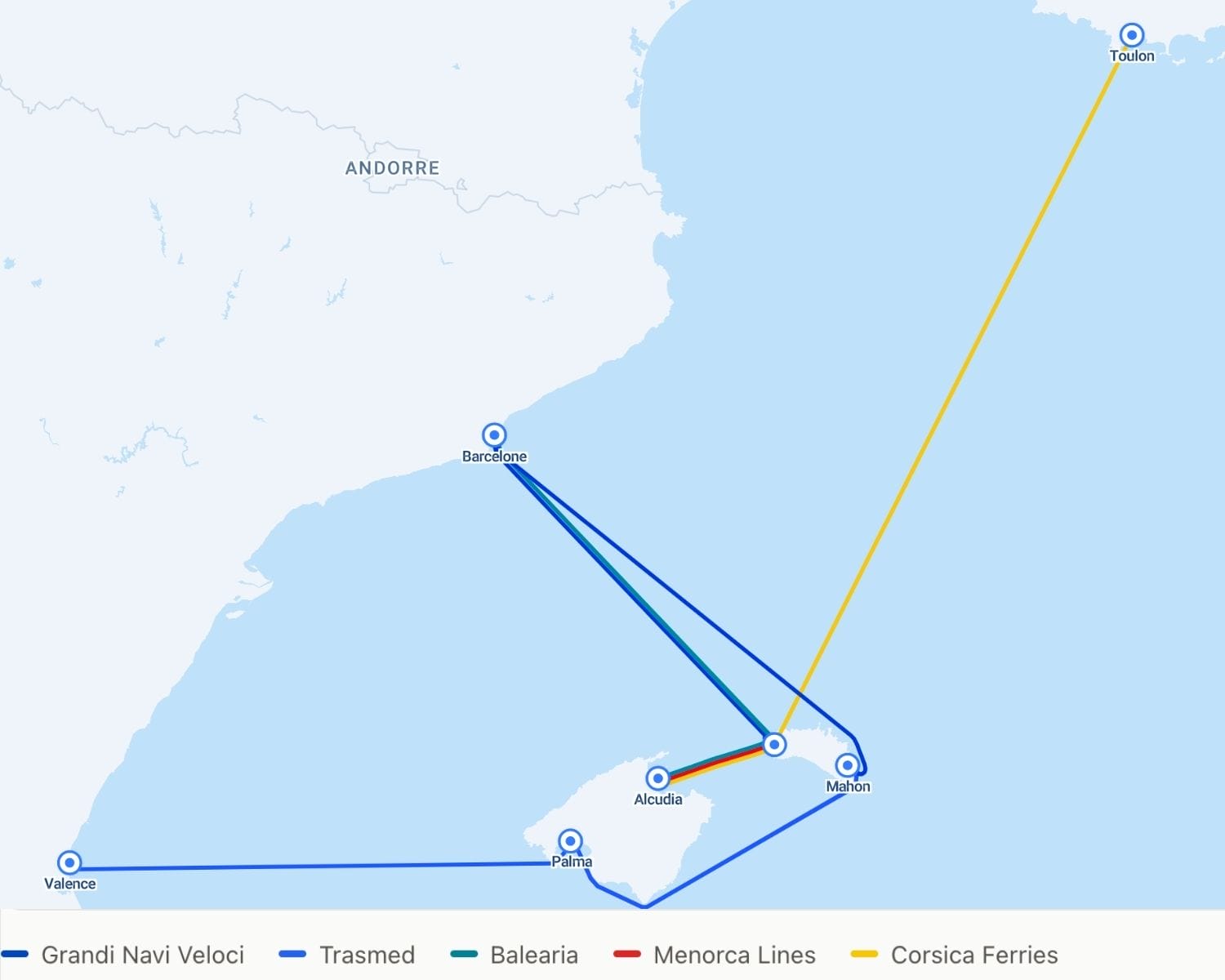
By boat, you can sail from Toulon, Mallorca (Alcúdia or Palma), Valencia, or Barcelona. In Menorca, you'll arrive either in Ciutadella (west) or Mahón (east). Five ferry companies cover these routes: Baleària, Corsica Ferries, Trasmed, Menorca Lines, and Grandi Navi Veloci. Here's a quick map showing which company covers which route.
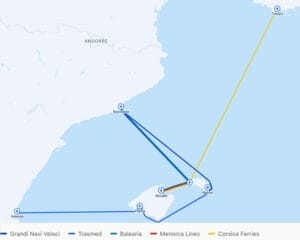
All the ferry companies run several crossings a week. The journey takes about 1h15 between Menorca and Mallorca, 9 hours from Barcelona, and 14–15 hours from Valencia or Toulon. Prices for a one-way ticket range from €28 to €150, and you've got a good chance of finding discounts if you shop around online. Our tip: book directly through the ferry companies' own websites rather than a third-party platform, it'll usually be cheaper.
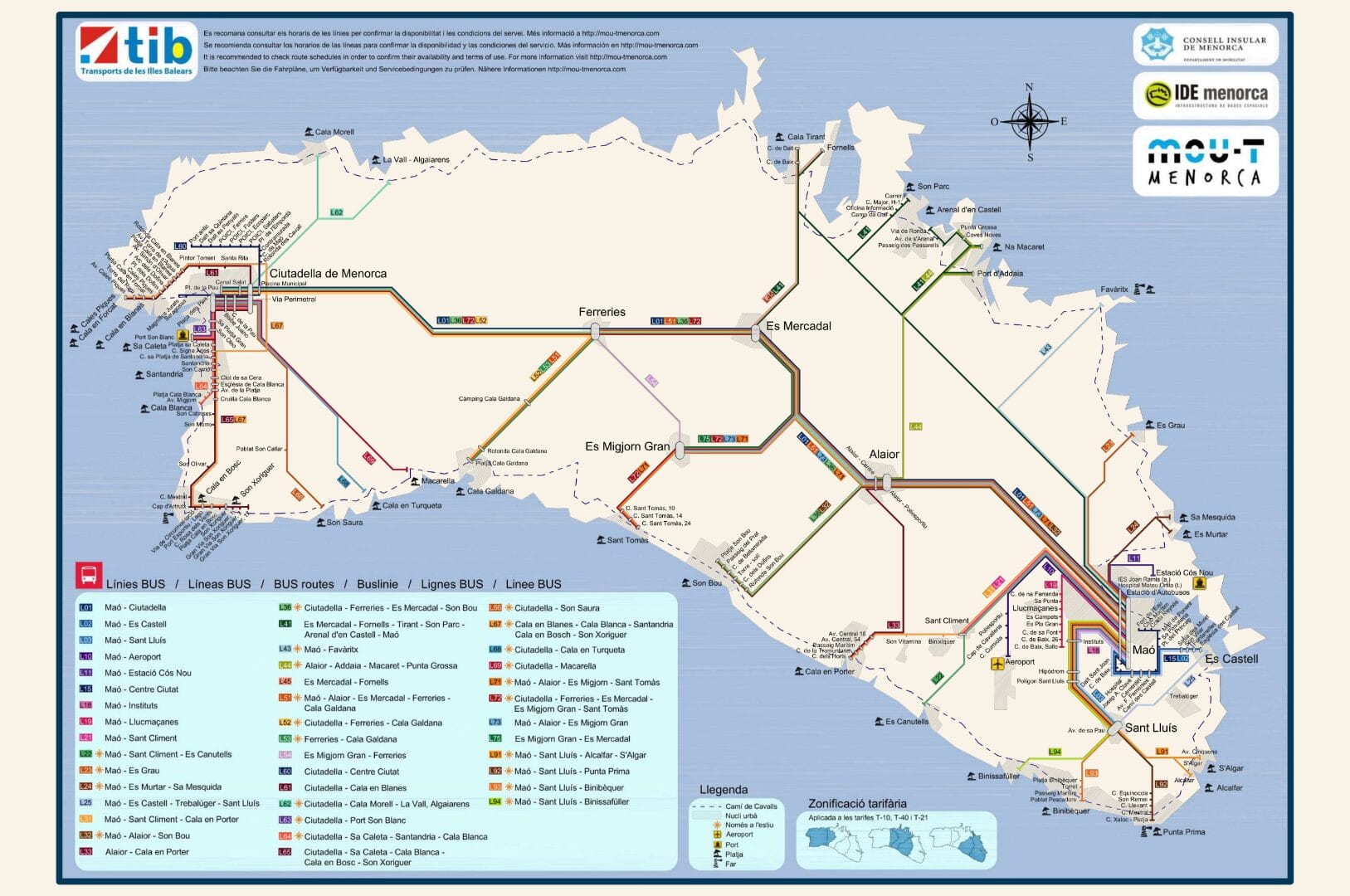
Honestly, the island is pretty well served by public transport. That said, a few spots are only reachable by car, or on foot!
Before arriving, we'd read on a forum that getting around Menorca by bus was basically a lost cause. Irregular service, hard-to-find schedules, villages with no connections at all, and so on. That kind of warning rarely stops us, so naturally, we put it to the test.
Verdict: yes, it works! There are just a few things worth knowing. Buses run very frequently in high season (June to August) and reasonably often in shoulder season (April–May and September–October). From November to April, though, things get sparse: only the main routes keep running.
The system isn't the most intuitive, mainly because there are three separate bus companies, each with its own website, routes, and schedules. We've broken them down below. Aside from Google Maps, we couldn't find a single site that combines all three companies to plan a route from point A to point B — you have to check each company's schedule manually. The one exception is Mou-t Menorca (the website), which lists all the lines and timetables in one place. Good news: connections between companies tend to work well.
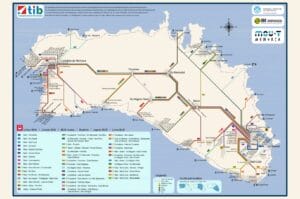

To find a bus, you should visit the websites corresponding to your destination:
Example: To get from Ciutadella to Fornells, we took TMSA's line 01 to Es Mercadal, then switched to Auto Fornells' line L41 to reach Fornells.
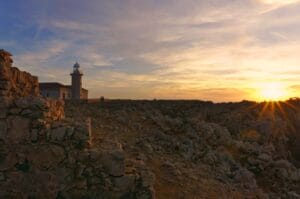
Since Menorca is an island, chances are you'll arrive by plane (though the ferry is an option too).
To Mao
The cheapest way to reach Maó from the airport is the Torres public bus. Line L10 departs right outside the airport and takes you straight to Maó's bus station downtown for €2.80 (cash only, paid to the driver). Buses run roughly every 30 minutes between 6 a.m. and midnight. Check the schedule online.
To Ciutadella
There's no direct line from the airport to Ciutadella. You'll need to take line L10 into downtown Maó, then switch to TMSA's line 01 or 14 (the yellow and red buses). Line 14 is the express option: direct, but not very frequent, with just 6 departures a day running between 6:45 a.m. and 5 p.m., taking about 50 minutes. Line 10 isn't direct but runs more often, takes around an hour, and operates from 6:45 a.m. to 11 p.m. (8 a.m.–9:30 p.m. on weekends). The ticket costs €5.75 either way.
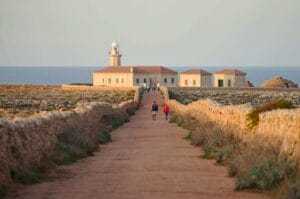
Honestly, we hadn't really planned on renting a car. But traveling in the off-season has its trade-offs. Starting November 1st, all the "tourist season" buses stop running for the year, so we looked into renting a car to make the most of our final days.
Happy surprise: renting a car in Menorca is genuinely cheap. A quick online search turned up a rental for under €30 for two days, cheaper than the bus would've cost us for the same trip!
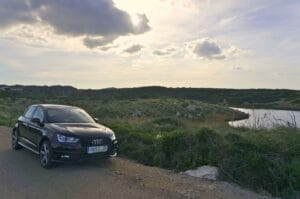
We really enjoyed the freedom of driving for those two days. That said, we're still bus people at heart, especially for day hikes, since it saves you the hassle of doubling back to pick up the car. But if you want to see as much as possible in a short amount of time, a car really is the way to go.
For all the details, check out our full guide to renting a car in Menorca.
Another option for travelers who love the feeling of the wind in their hair, a motorbike is a great way to tour the island. You’ll find rental agencies just about everywhere. It will cost you about 20 euros per day.
We didn't try this ourselves, but Menorca is exactly the kind of place where a campervan trip would be a dream! Since we now have our own van and go on road trips regularly, we would have explored the island that way ;).
To find a camper, we recommend Yescapa, a peer-to-peer rental platform with all the necessary insurance included. Vans start at around €50 a day.
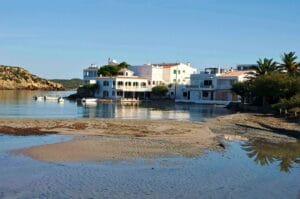
Choosing where to stay in Menorca really comes down to location. Broadly speaking, you've got three options:
We chose Ciutadella for our stay, and we loved it. Maó has plenty of charm too, but Ciutadella has the sunset on its side ;). Evening drinks there feel pretty special.
Budget-wise, there's something for everyone. If you've got a bit more to spend (or you're traveling as a group of 3 or 4), it's worth checking out Ferrer Skyline in Ciutadella. Apartments run between €55 and €100 a night, with 1 or 2 bedrooms. We actually toured a few, half-hoping to negotiate a monthly rate. The apartments are absolutely stunning, and once you factor in having a kitchen to cook in, the price starts to feel very reasonable.
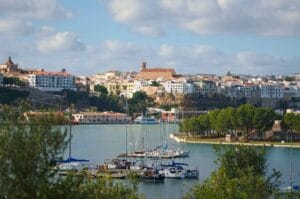
Menorca has several beach resorts where hardly any locals actually live, but you'll find plenty of hotels. We're not huge fans of this type of place ourselves, though we get the appeal. These resorts tend to sit close to gorgeous turquoise-water beaches and coves, and they're full of fairly touristy restaurants serving burgers and fish and chips. That said, the value for money is often better than in town. For example, when we first arrived, we booked a room in Cala en Blanes for two nights while looking for an apartment. For the same price as a hotel room in one of the main towns, we got a small apartment with a kitchen and a pool. Really hard to complain about that.
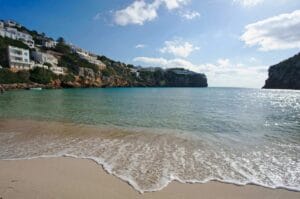
The best-known resorts are Cala Blanca, Cala en Blanes, Cala Morell, Cala en Bosc, Arenal d'en Castell, and Cala en Porter. Of all of them, we found Cala en Porter to have the most charm by far. Cala en Blanes, on the other hand, wasn't really our thing. It felt a bit kitschy, with more English and German food on offer than Spanish. It's a fine budget base, but if you don't want to feel like you've left Spain entirely, it's worth setting aside a little extra to explore the rest of the island during the day.
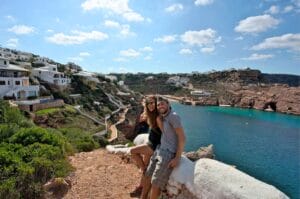
Your last option is to rent a house, or finca, as they're called in Spain. Some are tucked away inland for a fully immersive nature stay with acres of land as far as the eye can see, while others sit right on the coast.
This is a lovely choice if you're traveling with family or friends and craving some peace and quiet. Just know that having a car is pretty much essential. Public transport works well on the island, but stops are limited to towns and tourist resorts. We've put together all our tips for renting a car in Menorca.
You can also use the map further down the page to search for accommodation in a specific part of the island. It includes both hotels and vacation rentals. We'd suggest using the date and price filters to narrow things down.
Just a heads-up: camping in Menorca is strictly forbidden. Sleeping in a tent or under the stars can get you a fine of anywhere between €30 and €3,000, since Menorca is a protected biosphere reserve. That said, you might spot the occasional camper or hiker bivouacking on the beaches, most likely tackling the Camí de Cavalls, since accommodation isn't always available at every stage of the trail. Away from the villages, things are quiet, and it's probably easy to find a secluded spot to pitch a tent for the night; whether you want to risk it is up to you. Officially, though, it's not allowed.
Everyone's travel budget looks different, but here's what we actually spent during our 5 weeks in Menorca. The figures below are daily averages for two people — so if you'd rather think per person, that works out to about €26 a day each.
| Expense | Average daily budget |
|---|---|
| Accommodation | €23 |
| Transport | €3.8 |
| Restaurants | €6,7 |
| Groceries/supermarket | €17 |
| Activities/extras | €1 |
Notes:
For a full breakdown, check out our dedicated article on our Menorca budget.
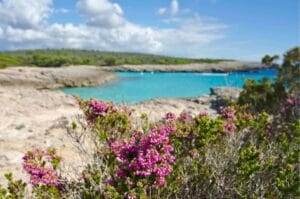
After spending a month on the island of Menorca, we’d like to share our thoughts with you if you’re considering this destination for your next digital nomad adventure.
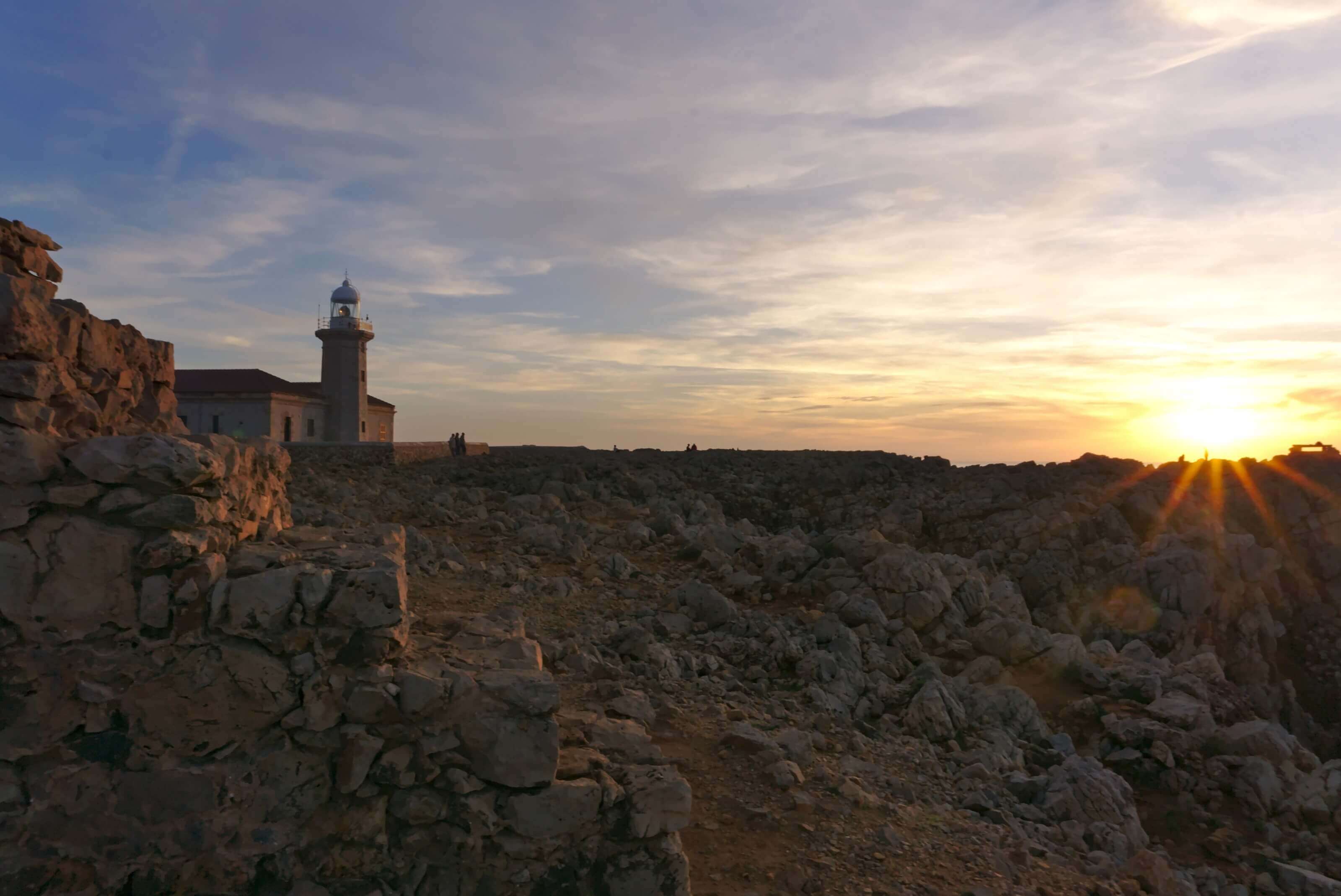
Here is our detailed budget to help you plan your expenses for your next vacation in Menorca.
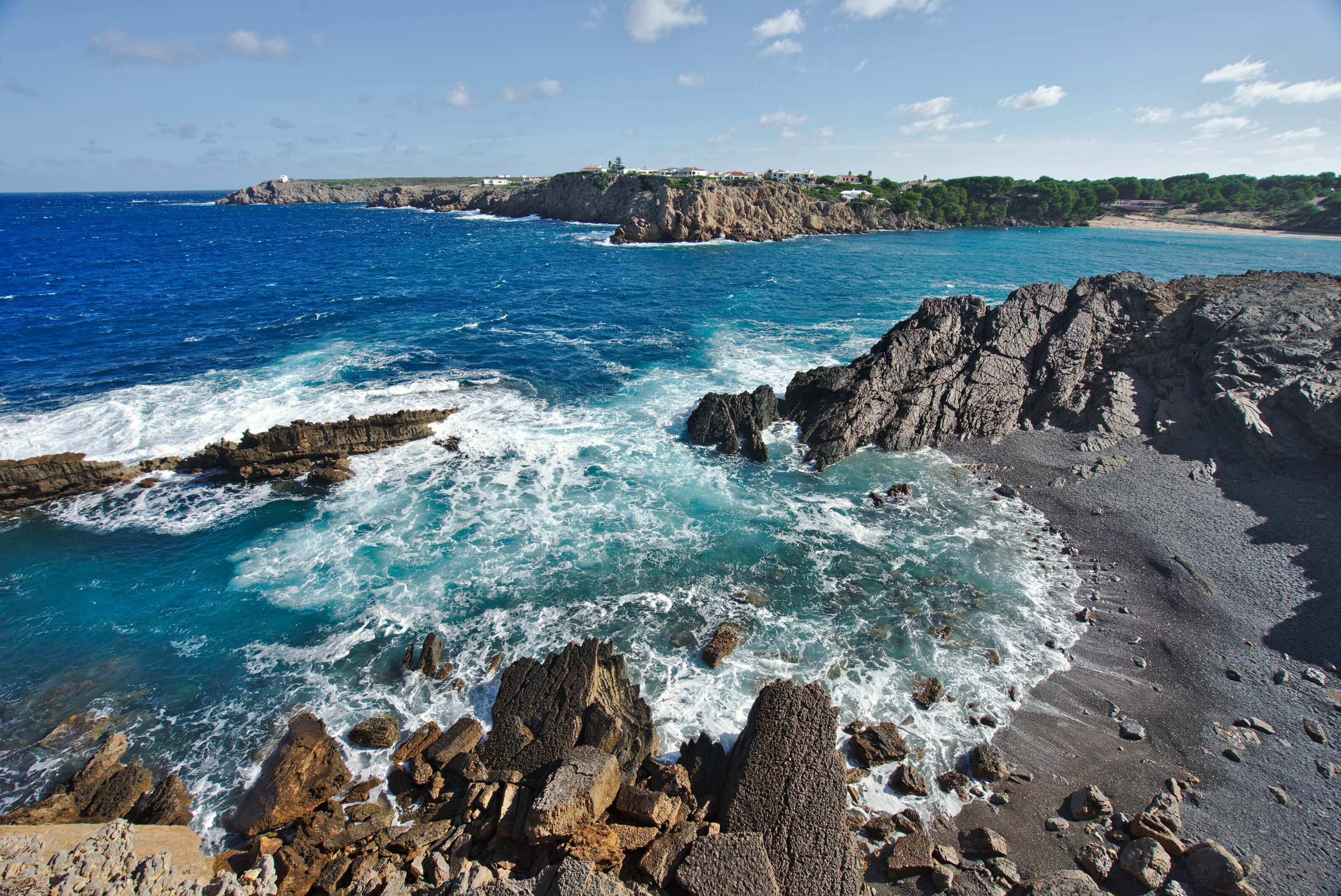
The best way to explore Menorca is to rent a car for 2–3 days. Here are some ideas to help you plan your road trip around the island.
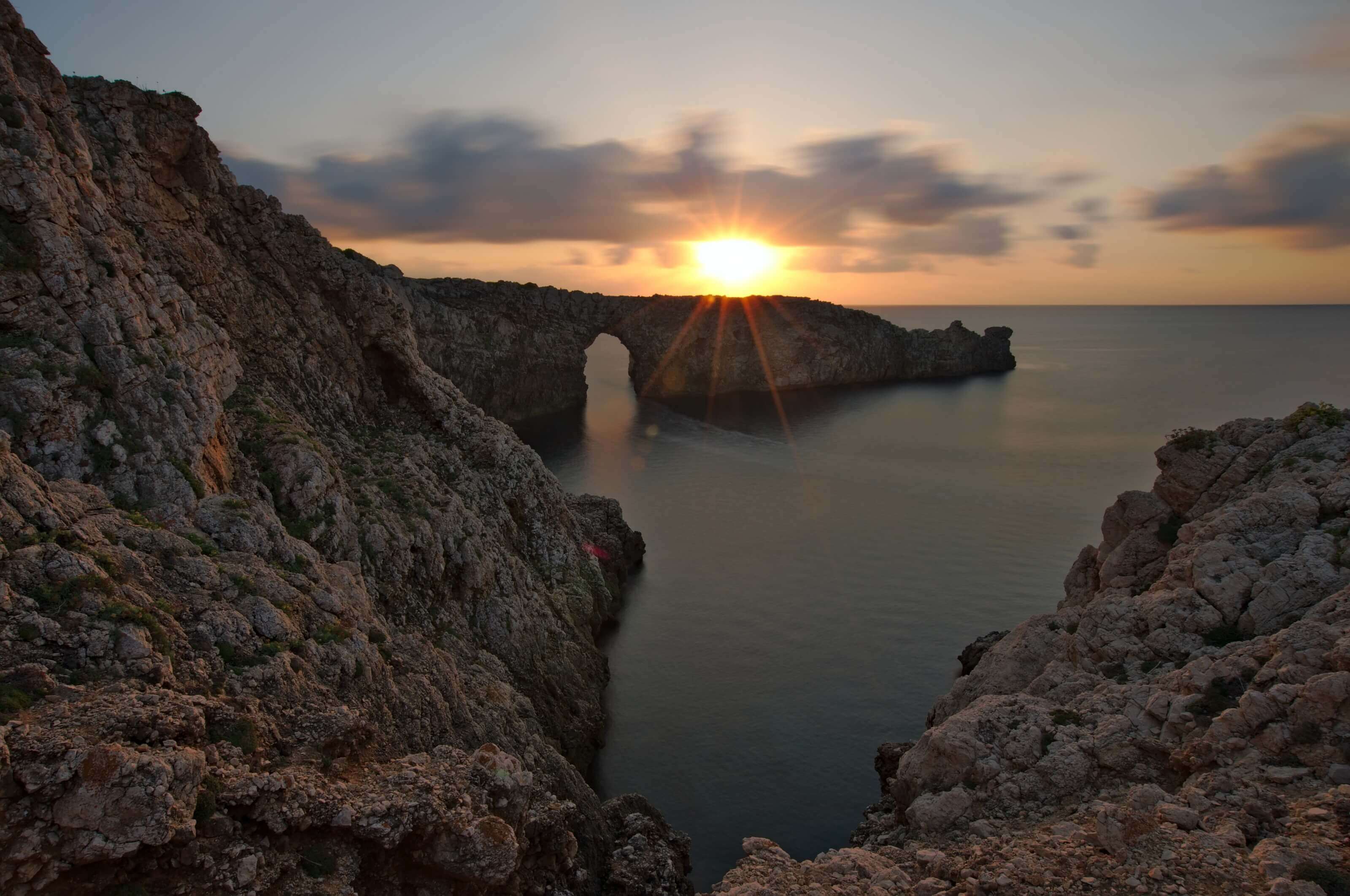
We’d like to share this beautiful route with you, running between Algaiarens (La Vall) and Cala Morell along the Cami de Cavalls.
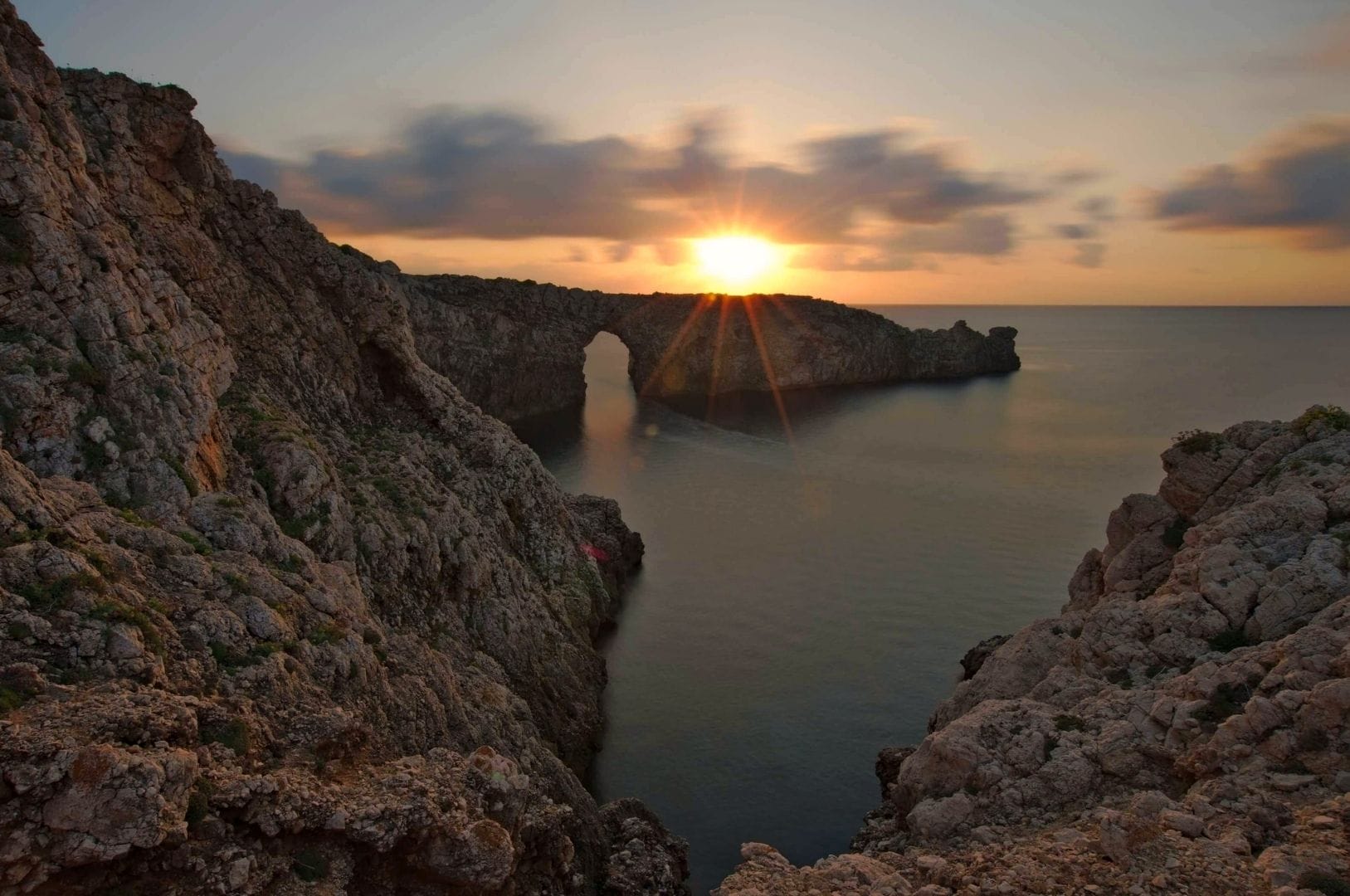
Menorca has no shortage of places to enjoy a beautiful sunset! Here’s our selection :).
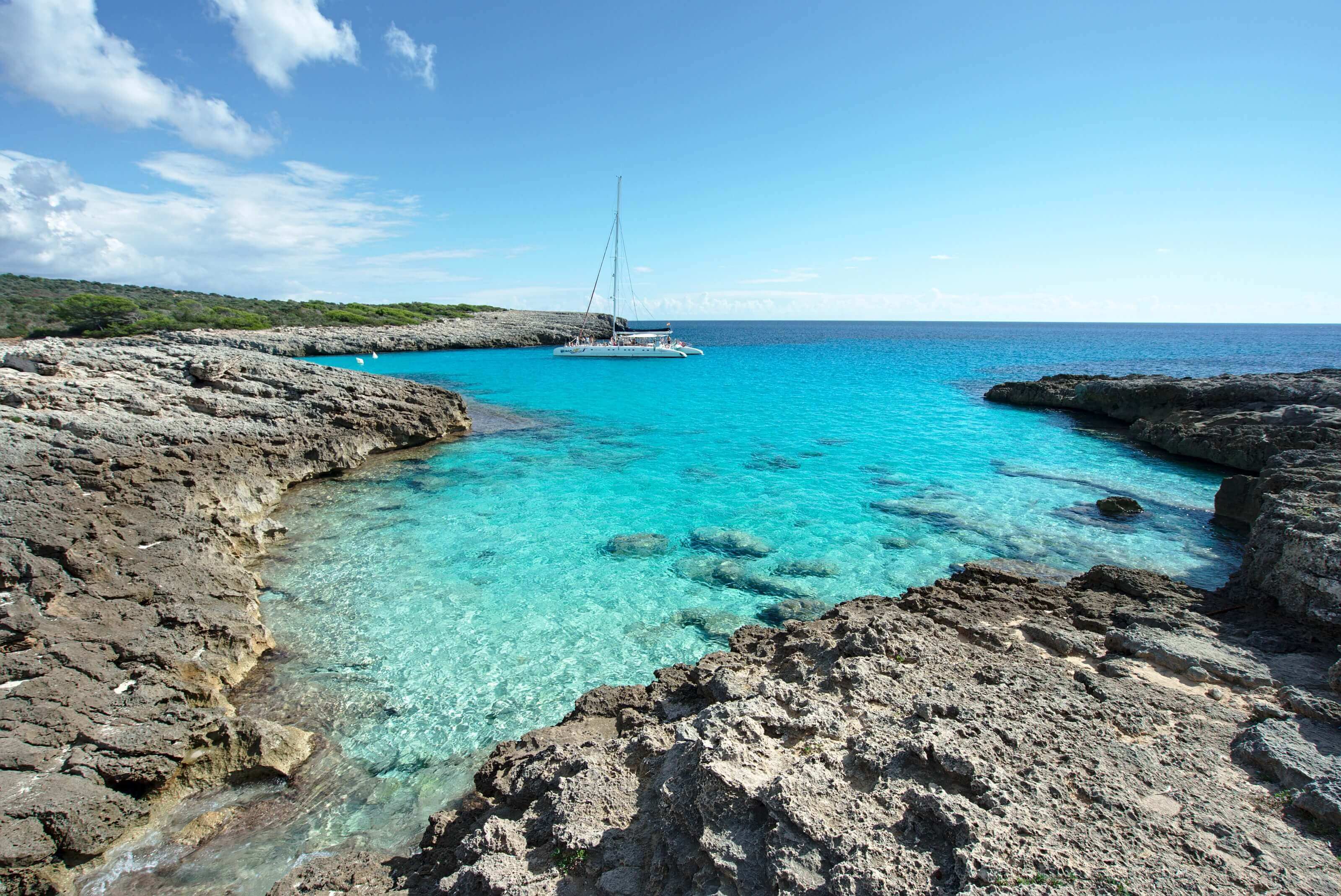
The most beautiful beaches on Minorca are tucked along its southern coast. Join us for a one-day hike along the GR 223 to discover these stunning coves!