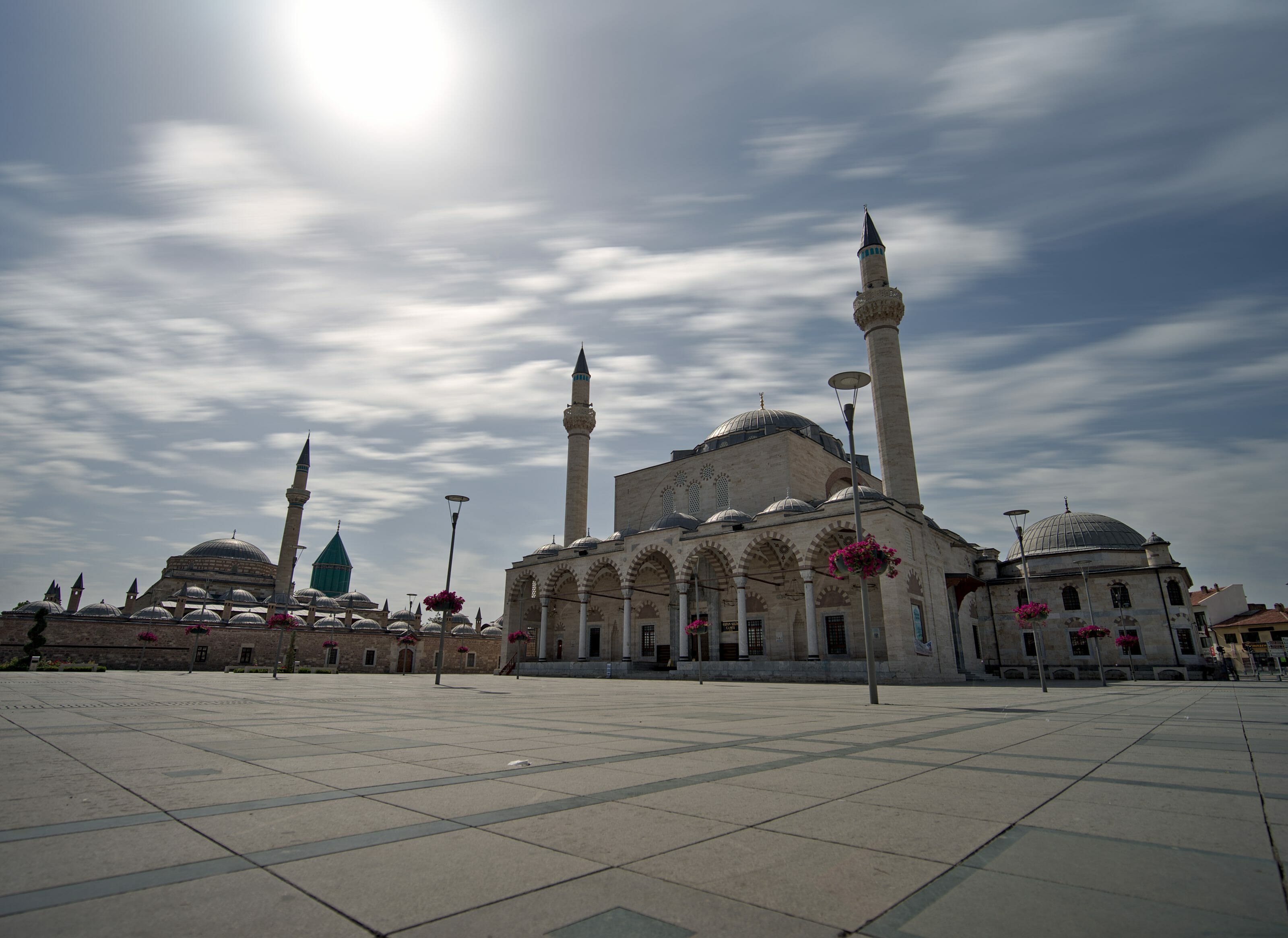
Another stop on our trip to Turkey and this time we take you to a less well-known (or at least less visited) city: Konya.
To be honest, before we started backpacking in Turkey we had never heard of Konya before. However, the city still has more than 2 million inhabitants and is relatively known throughout the world as the place where the tomb of Jalal ud Din Rumi, more often called Mevlana, is located and who is the founding father of the order of the whirling dervishes.
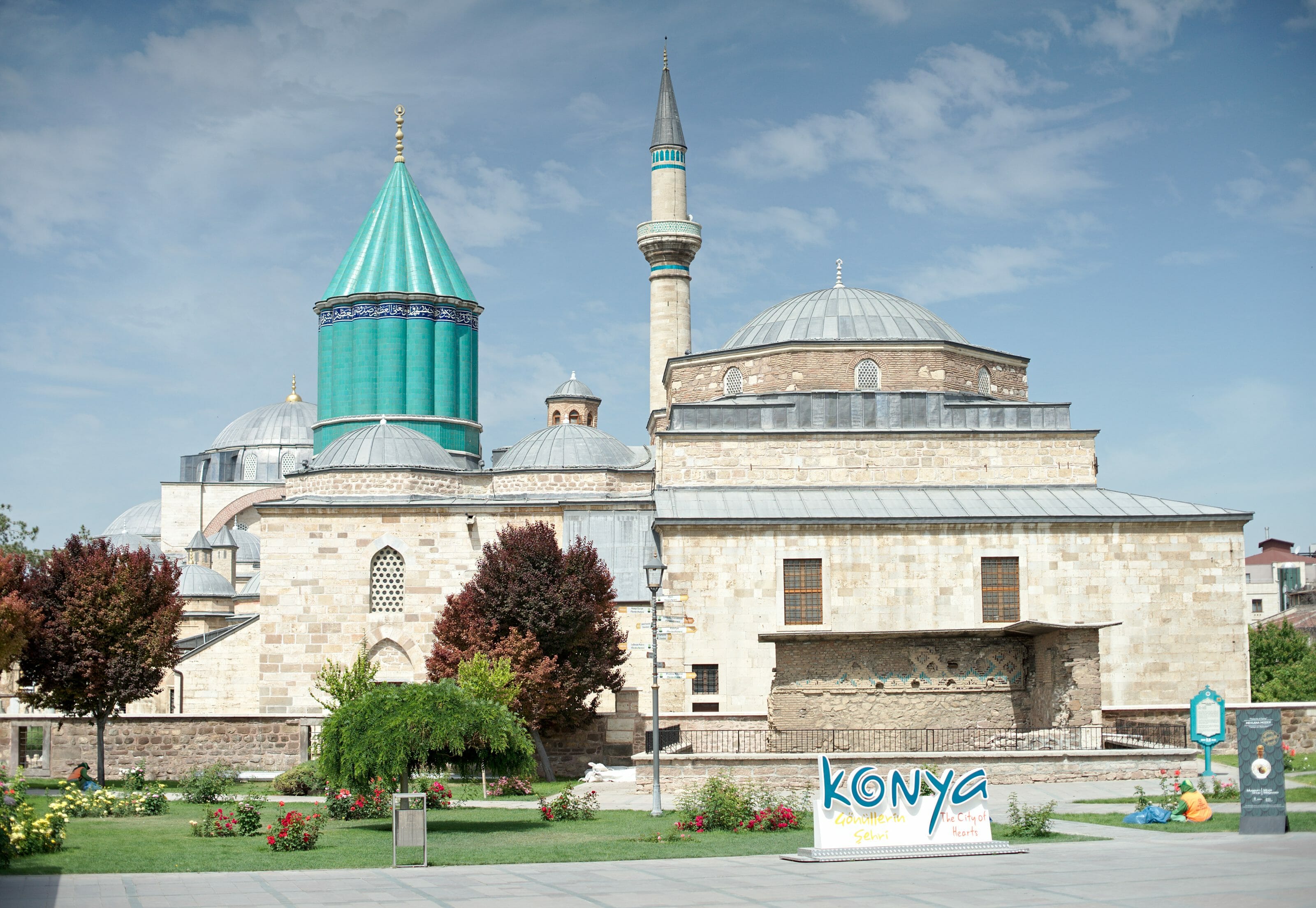
In this article we will tell you about the city, things to see and do but also some ideas for excursions to do around Konya. Of course, we will also tell you more about the Dervishes and how to go to a free dance demostration. At the end we will give you our impressions after coming to Konya in the middle of Ramadan.
Things to do in Konya
Visit the Mevlana Museum
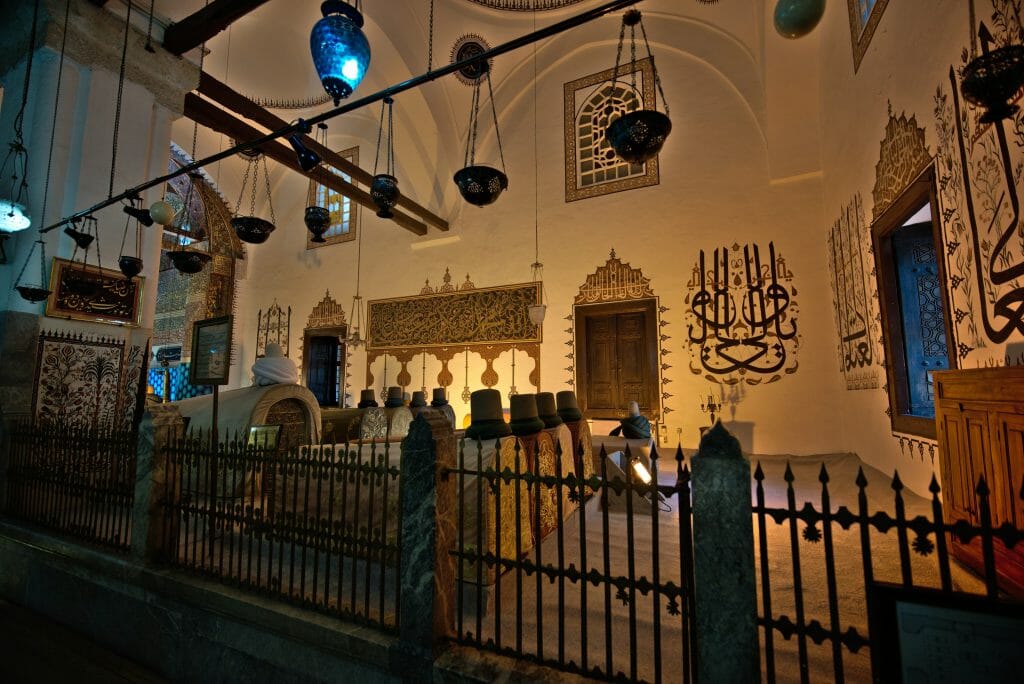
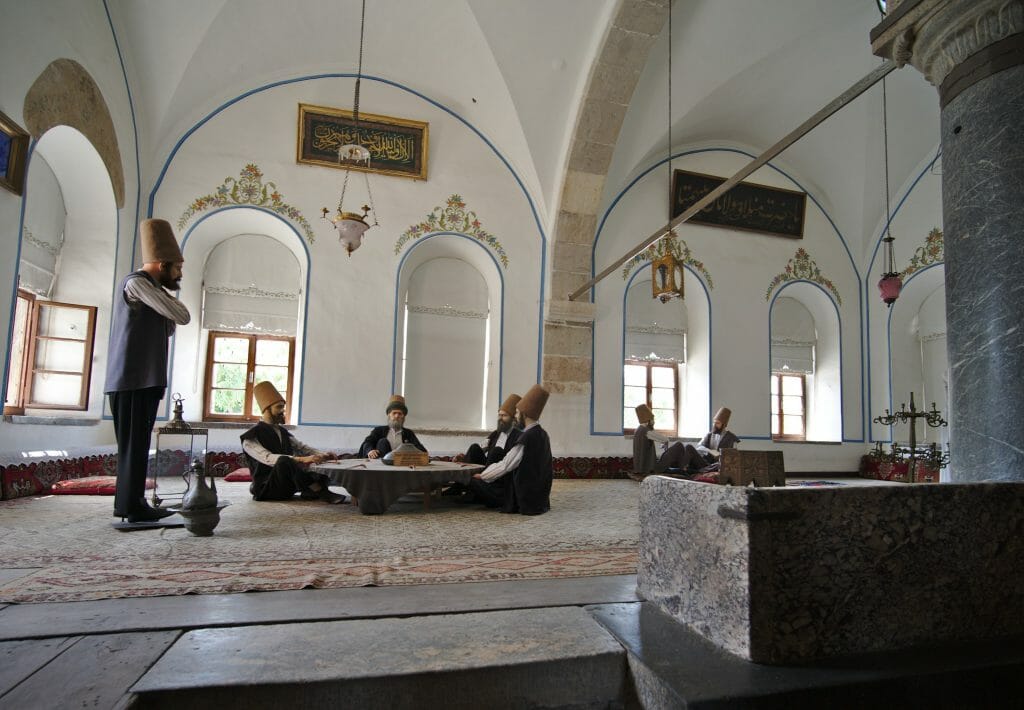
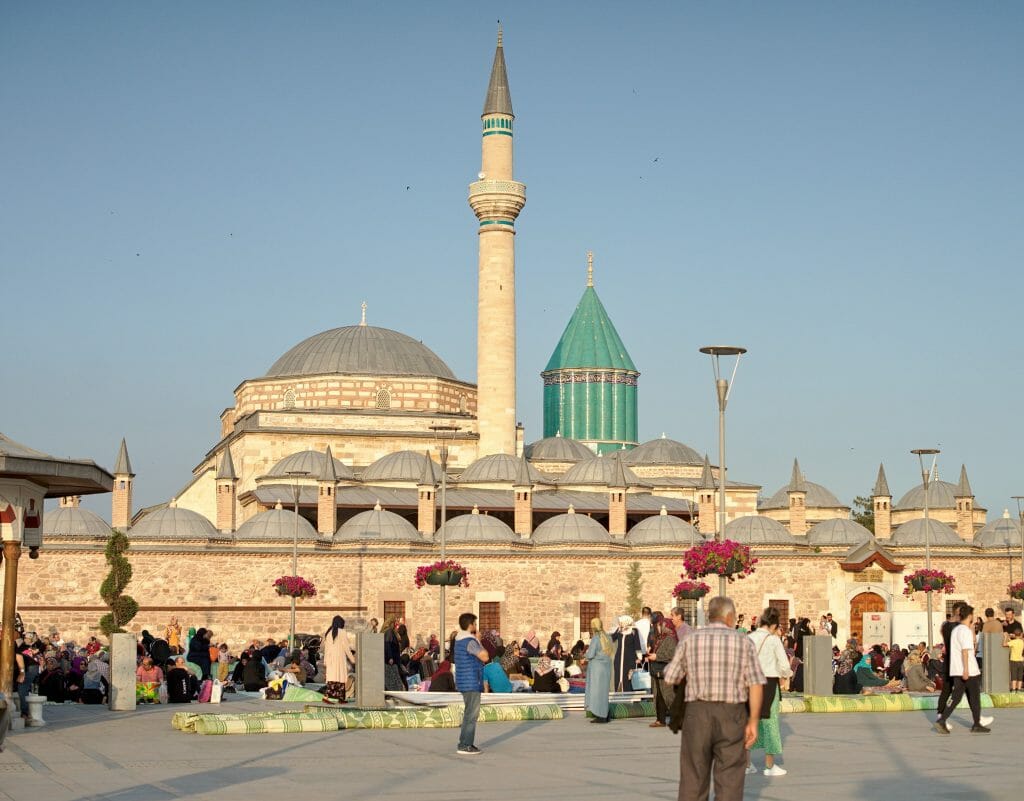
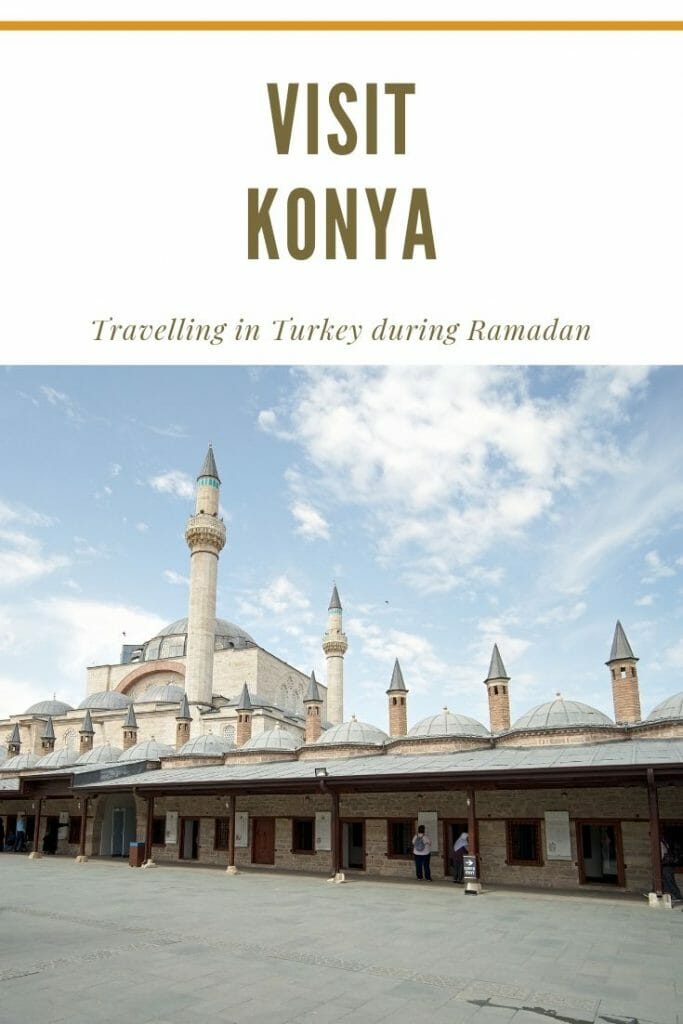
This is Konya’s most famous museum. In fact, it is more like a museum and a mausoleum. It is here that Mevlana’s grave is located and this makes it a very popular place of pilgrimage. We will admit that we regretted the lack of explanations about Mevlana’s life, but we saw that there were audio-guides. In our opinion it is a good idea to take them (even if we won’t be able to tell you what they say, because unfortunately the rental counter was closed during our visit).
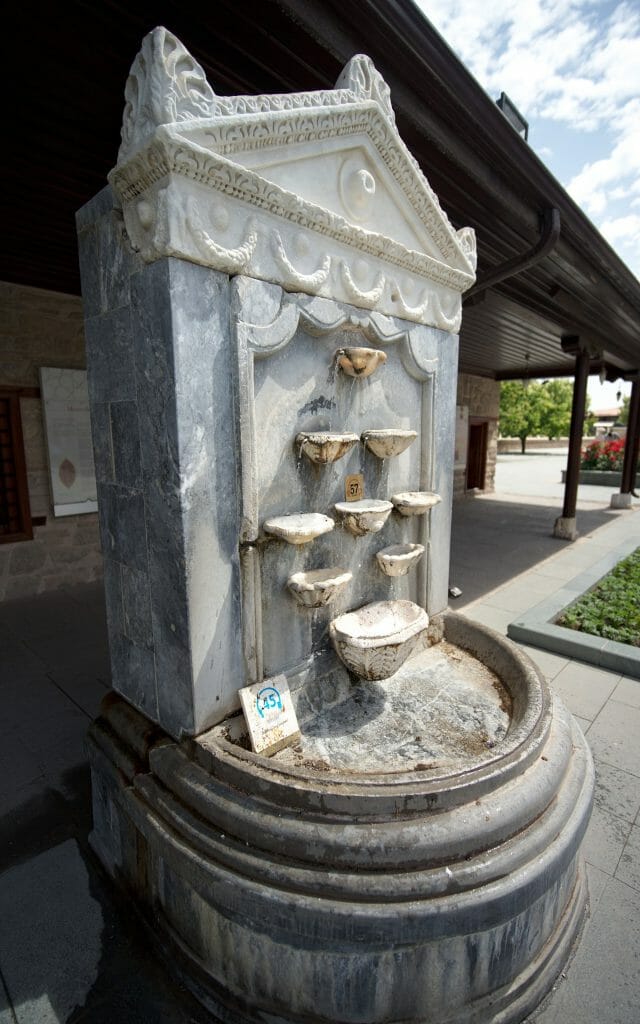
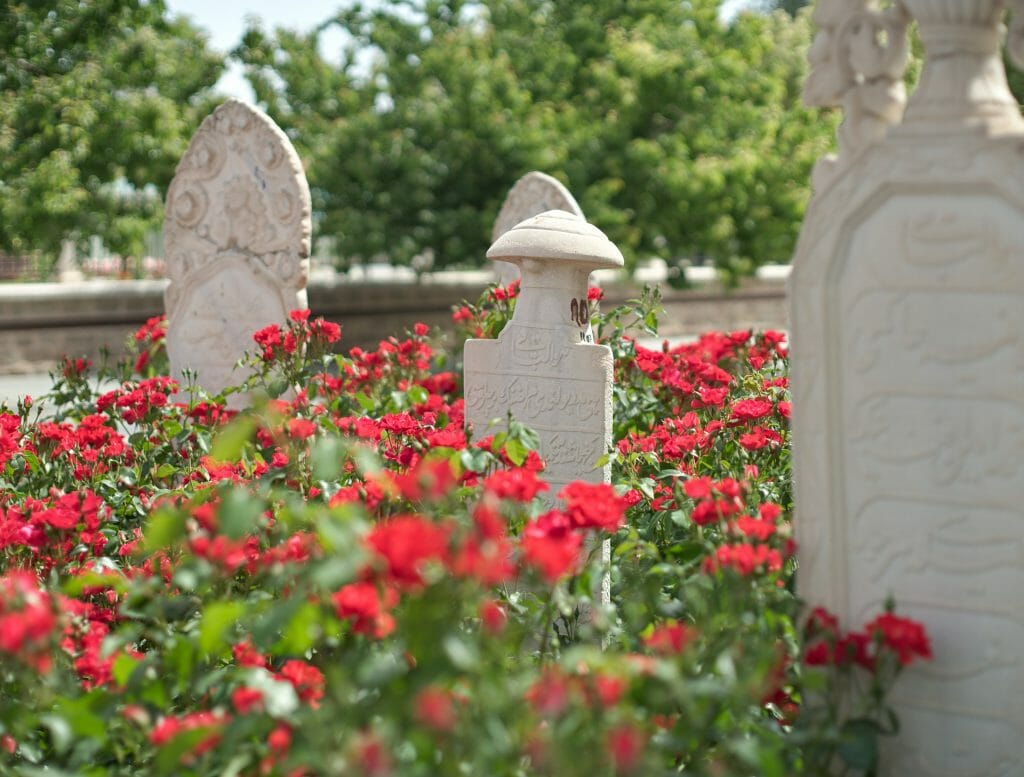
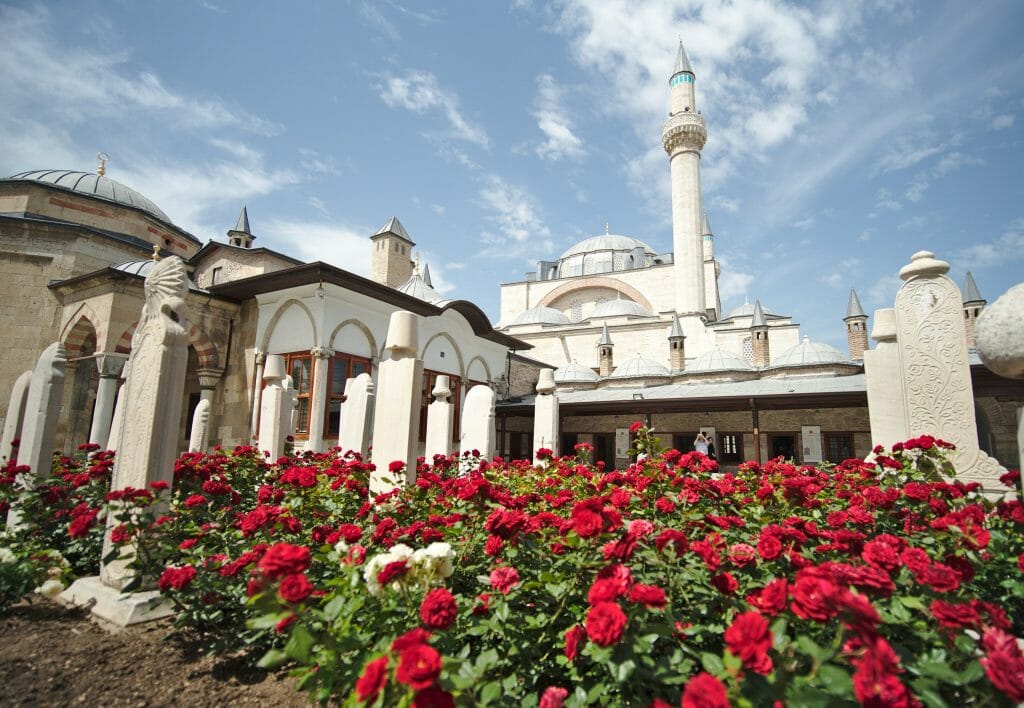
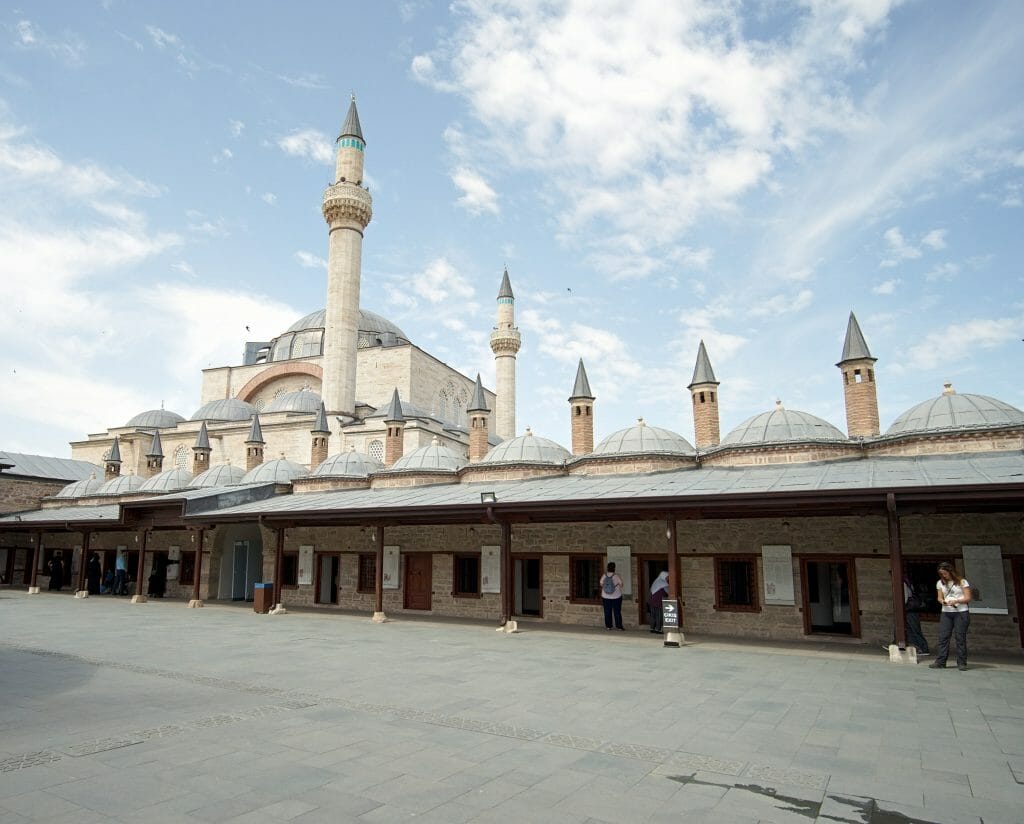
The setting of the museum is absolutely sumptuous, and even if as non-Muslims we probably did not grasp the full spiritual importance of this place, we still greatly appreciated the very pleasant atmosphere that prevails there, a place that breathes tranquility.
Admission to the site is free.
Get on top of Alaaddin Hill
It’s a small artificial hill in the heart of the city. From its summit you have a nice view of Konya but if you come here it is mainly to enjoy the very relaxed atmosphere that prevails there. This is probably the only place in Konya where we met young couples sitting side by side in the grass. At the top of the hill is also a very beautiful mosque that houses a mausoleum of the Seljuq dynasty.
Stroll in the Kultur park at night
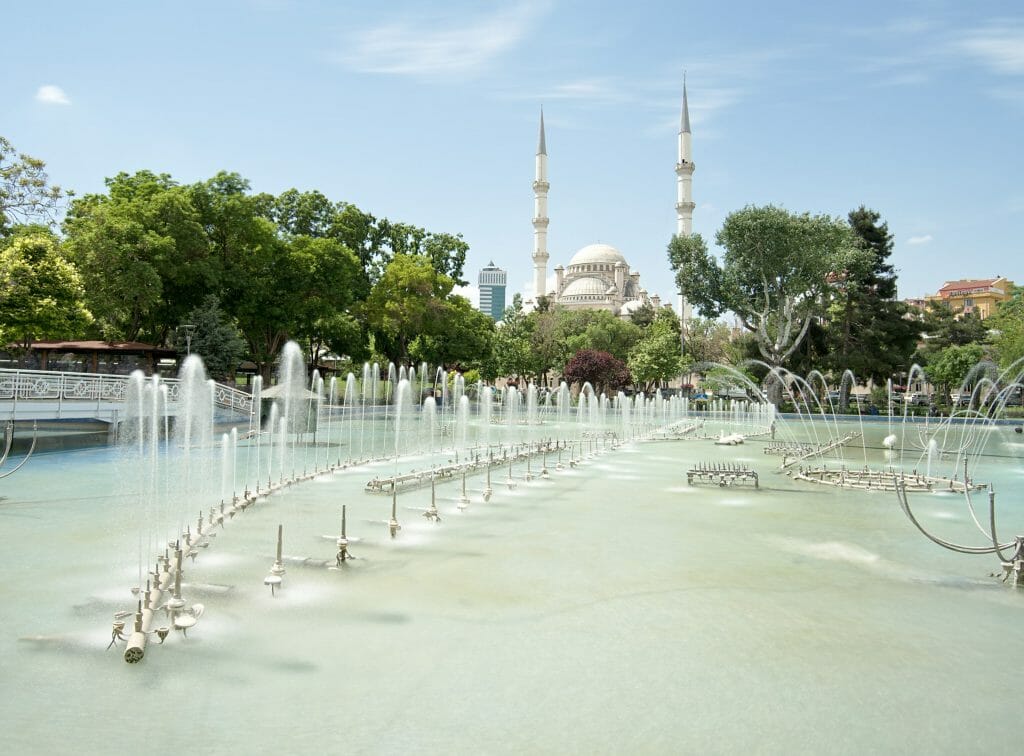
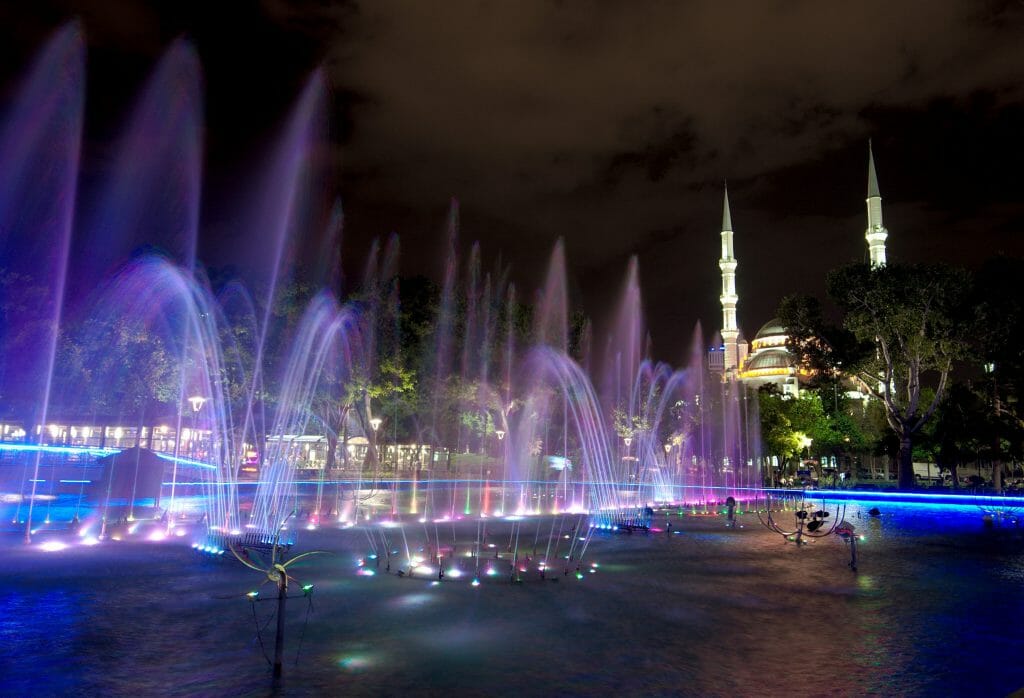
Kultur Park is a small green space just behind Alaaddin Hill. Nice during the day, it was especially at nightfall that we found it the most charming. The view of the Haciveyiszade Mosque from the illuminated fountain is very pretty. Certainly the coloured neon lights are a bit kitschy, but the show is nice. When the muezzins start making the call to prayer the atmosphere is even more incredible.
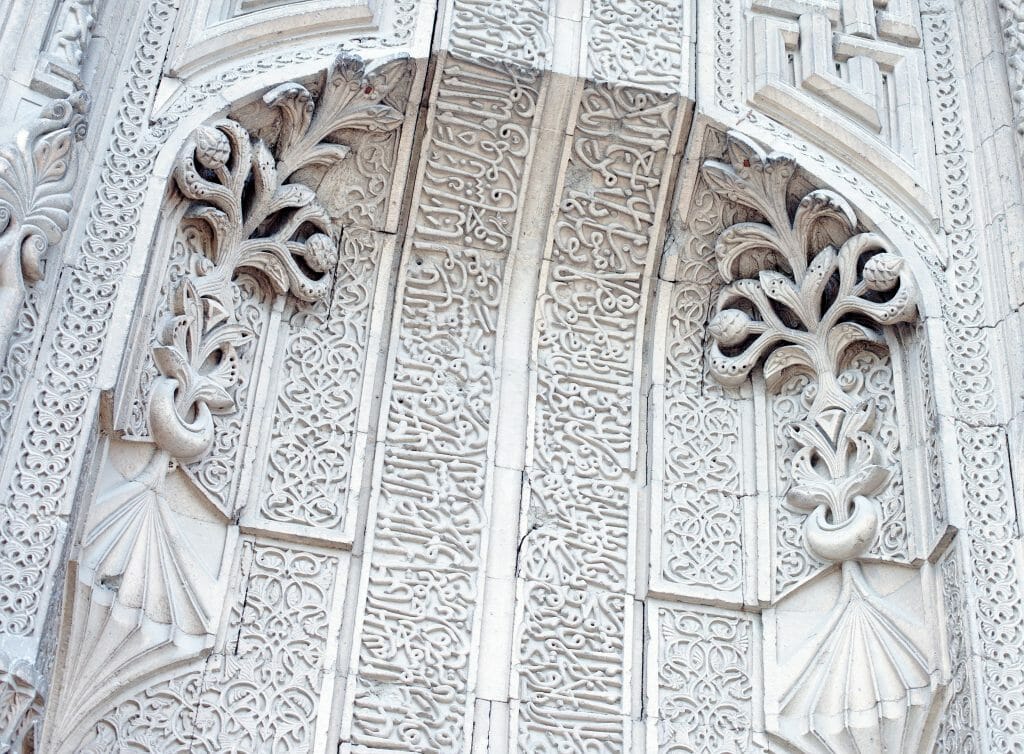
Mersa Ince Minareli – The sculpture and wood museum in Konya
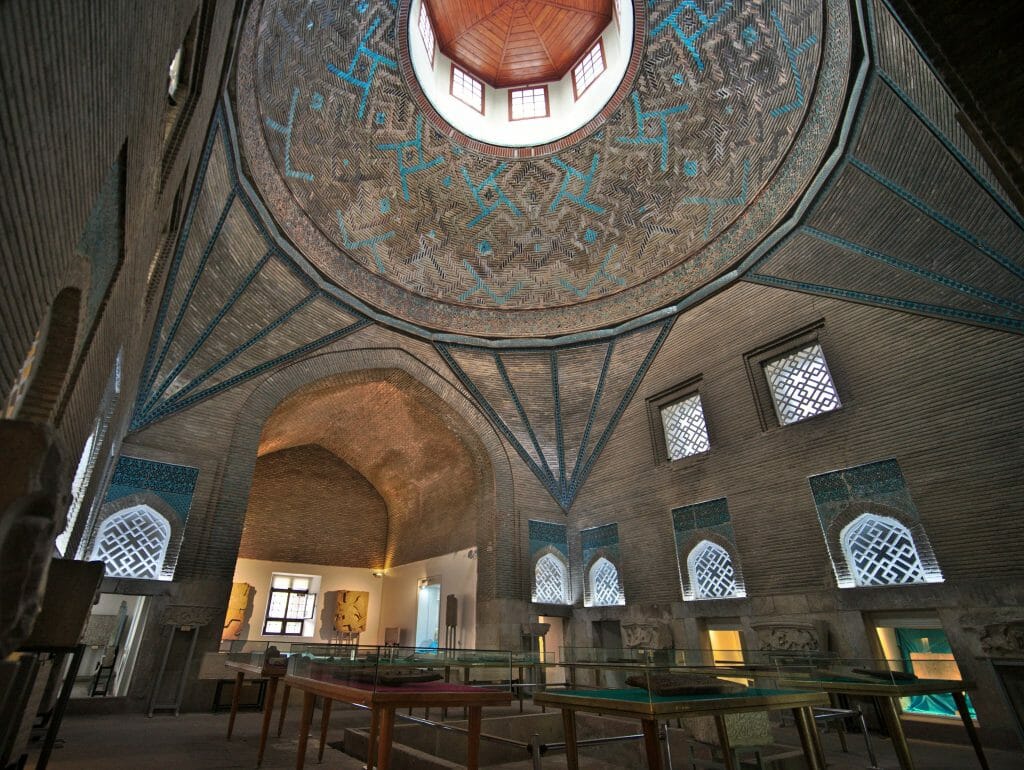
I admit that in principle a sculpture and wood museum is not necessarily the first thing I would go to. However, I recommend it more than highly! Why? So on the one hand the sculptures are magnificent but above all: the building is just incredible!!!!! Built in 663 this building is simply unique and worth a visit on its own!
Admission fee: 6 TL (less than 1 euro)
Visit the Atatürk House (or not)
As much as we enjoyed our visit to the Atatürk Museum in Izmir, so much so in Konya we found that this visit was of relatively little interest… The museum is not really well done and the explanations are poor. Atatürk has never lived in Konya, but he has been there 13 times. The museum mentions his visits and cites some of the speeches he made during his time here. Afterwards, the visit is free, so there’s no harm in taking a look, but don’t expect a crazy museum. 😉
Sircali Madrasa
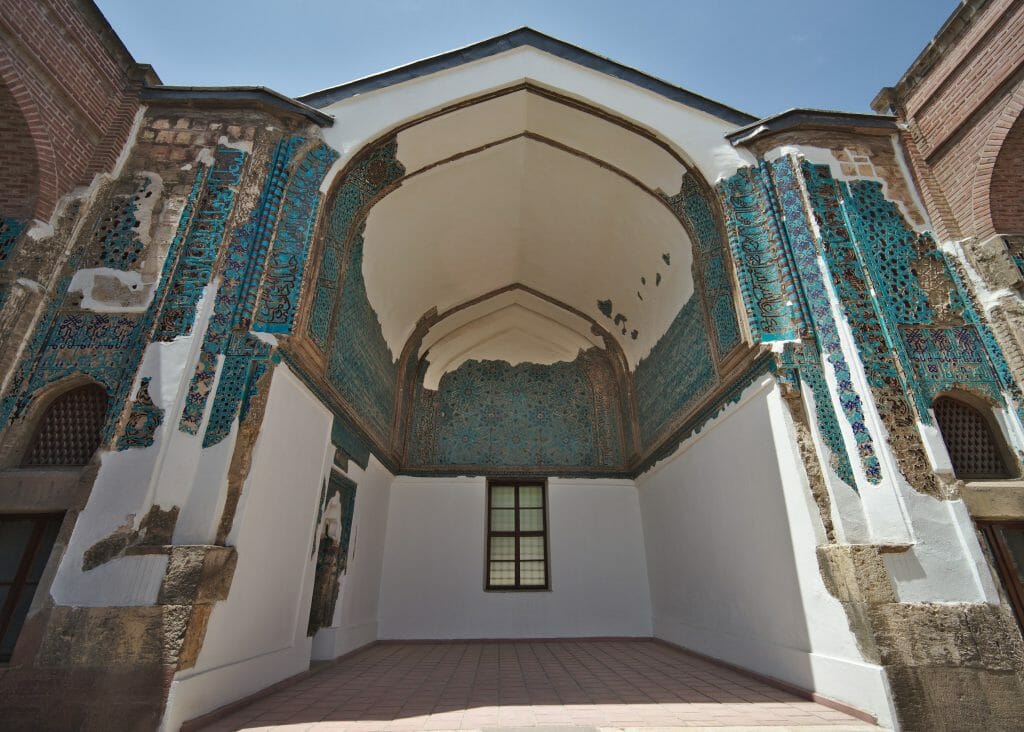
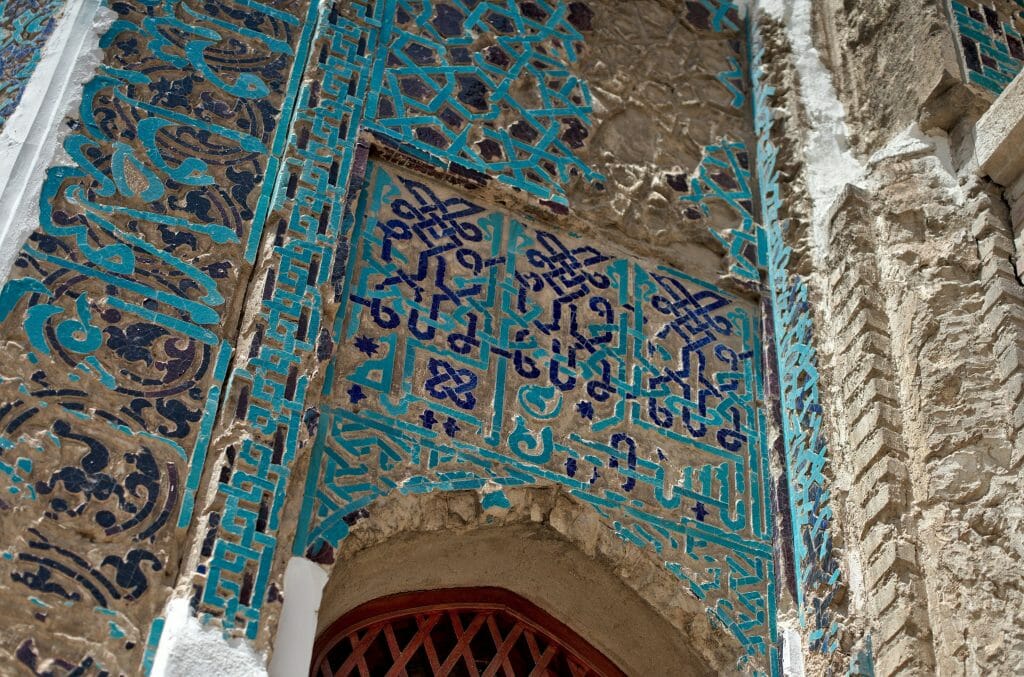
This is an old open-air “school” for the study of Islam that was built in 1242. This place is best known for its Iwan (the architectural element with a vaulted room overlooking a rectangular facade). Decorated with numerous mosaics, the building is still relatively well preserved (if its age is taken into account). This is not a museum, but the place is open and you can enter to admire the architecture!
Stroll in the Bedesten Bazaar
The Bazaars are often quite unique places in Turkey. The one in Istanbul is the best known, but it is also by far the most popular tourist destination. In Konya, it’s a total contrast! 40 streets, more than 2500 shops and absolutely 100% local.
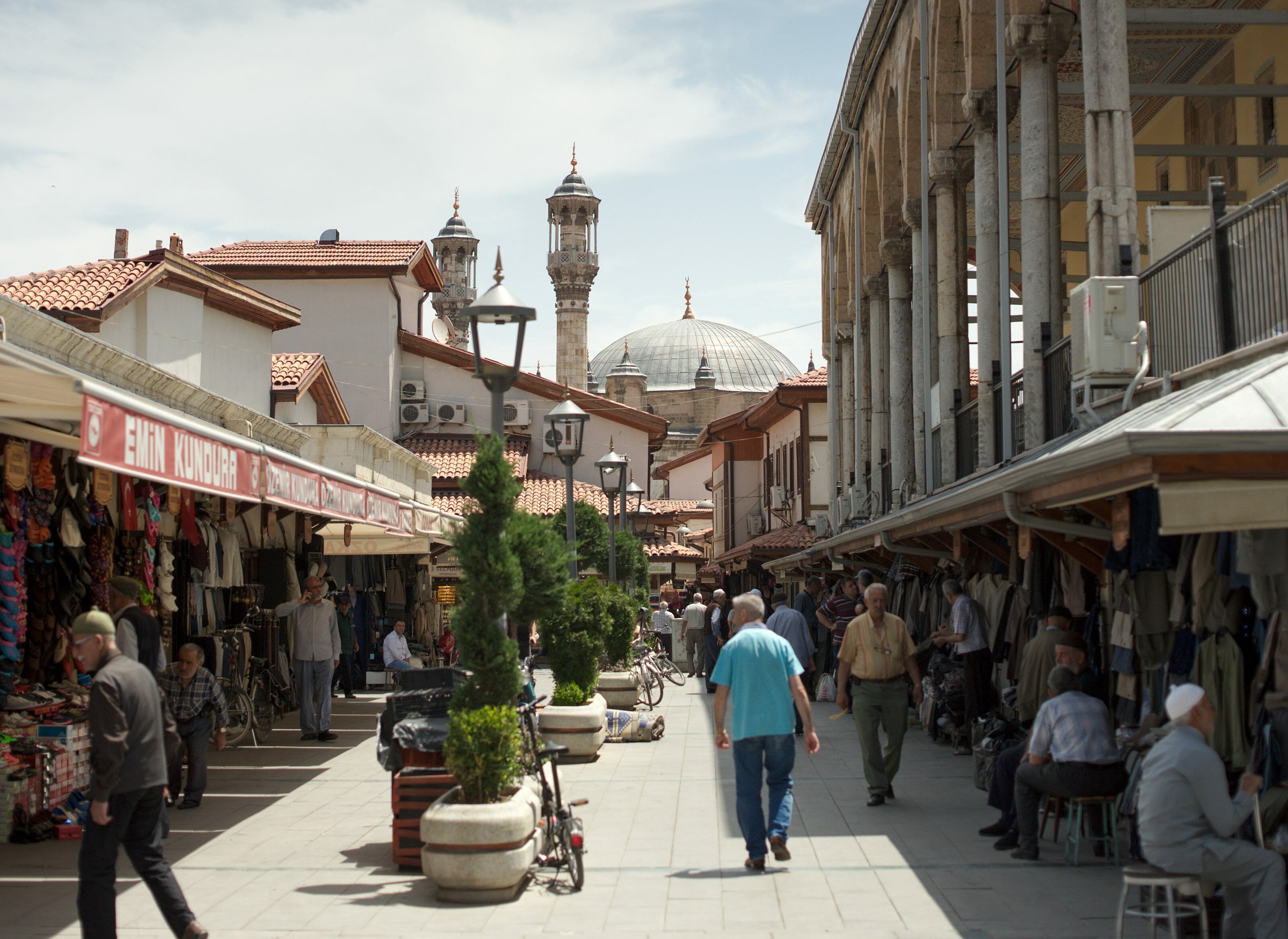
We were there during Ramadan, which means that everything related to food was very limited during the day, but it’s really very nice to walk around. And since it’s not touristic at all, the salesmen are not insistent at all. It is also within the walls of this bazaar that there are two of the most beautiful mosques in the city, which we will tell you about in a few lines.
Visit the most beautiful mosques in Konya
According to statistics Konya is the city in Turkey with the most mosques. The exact number varies according to the reports, but there are apparently more than 3000!!!!!
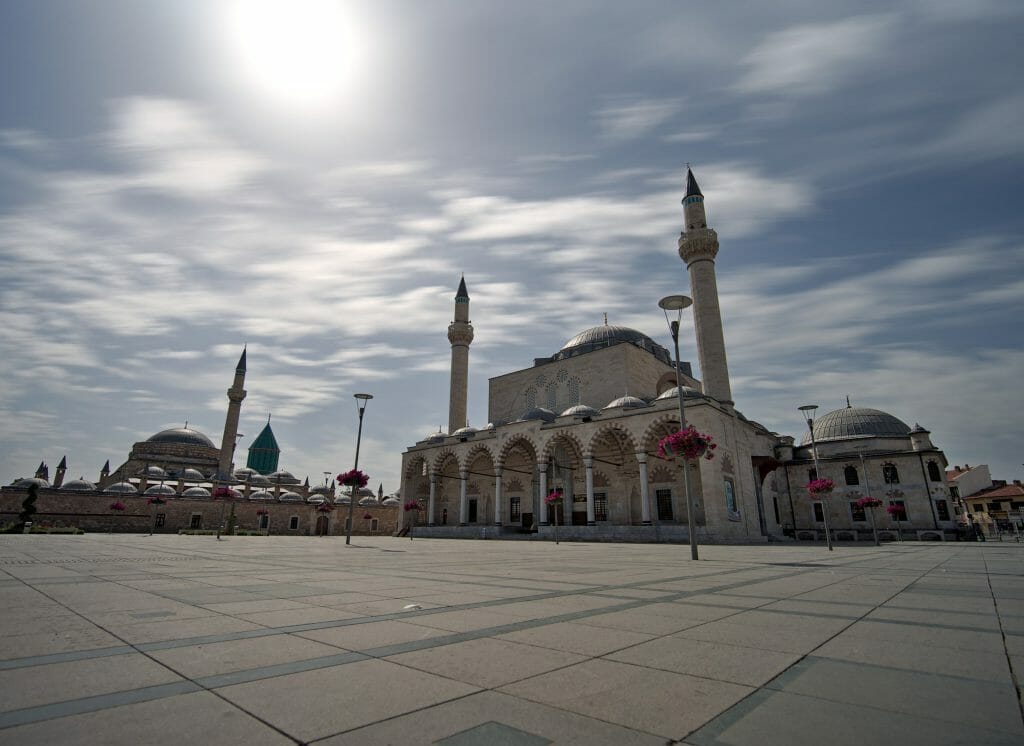
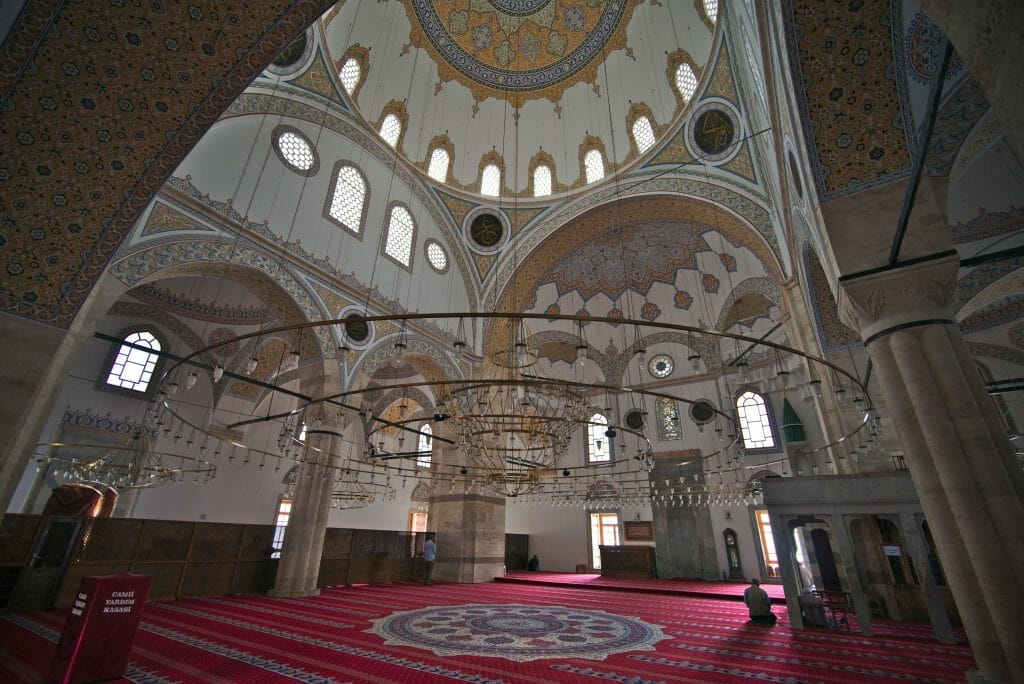
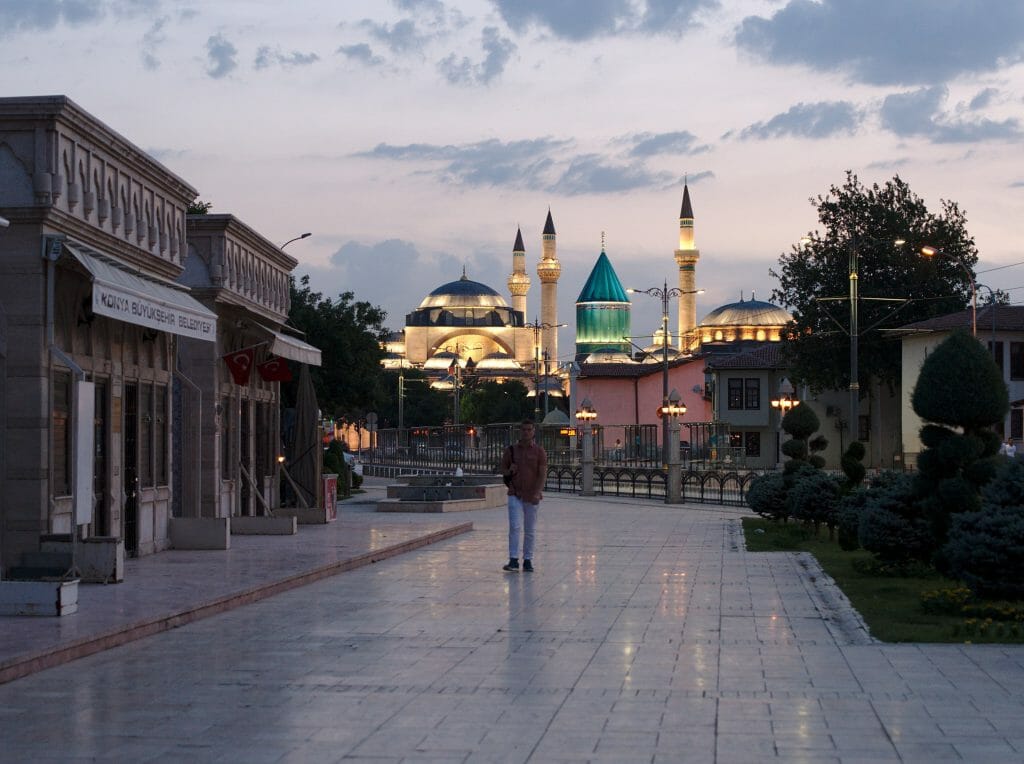
Needless to say, we have by far not seen them all, but if we had to make a list of mosques that are worth a look and that are within walking distance from the centre then our list would look like this:
- Alaeddin mosque
- Kapu (or Kapi) mosque
- Aziziye mosque
- Selimiye mosque
- Serafeddin mosque
- Haciveyiszade mosque
Attend a Turkish dance demonstration
Konya is the place where the order of whirling dervishes was founded, so it would be a real shame to come by here and not see a demonstration! But I will talk about it in more detail in the next paragraph!
Konya’s whirling dervishes
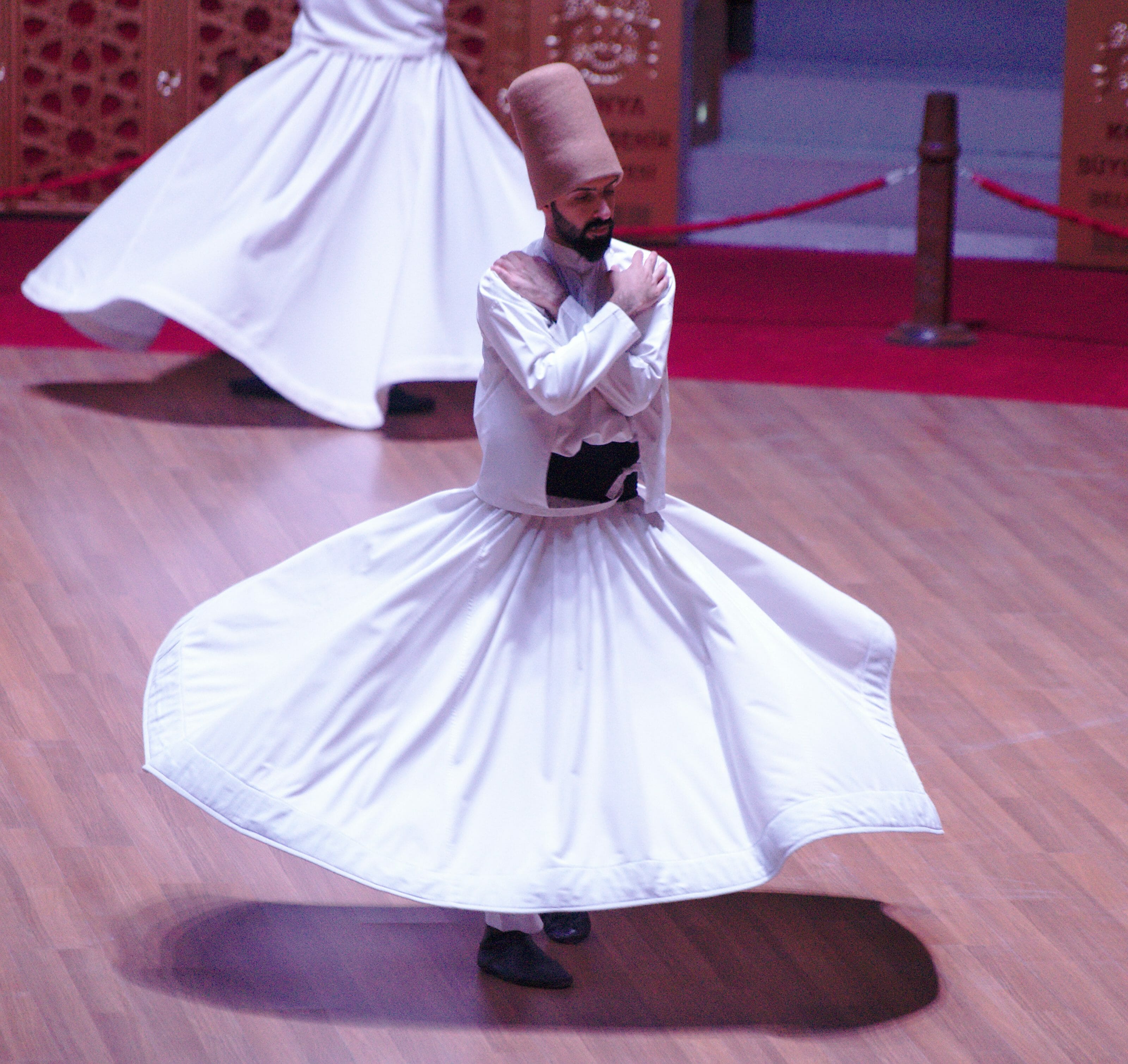
You have probably already seen pictures of these men dancing as they turn while wearing large white dresses. But do you know why they do that? Personally, I admit that I had no idea before I came to Konya! I thought quite naively that it was a traditional Turkish dance that was done for tourists. But in reality, the whirling dervishes are a whole part of the history of Sufism, a spiritual movement dating back to the 8th century and which is part of the Muslim religion.
It was during the Ottoman Empire that Jalal al-Din Rumi founded the Mevlevi order in Konya. Over the years, this dance has spread to Egypt and the Balkans.
In Turkey, the history of the dervishes is a little peculiar, because when Atatürk declared the country secular in 1925 the samas (the name given to the dervishes’ dances) were banned. It is only since the 1950s that they have been authorized again.
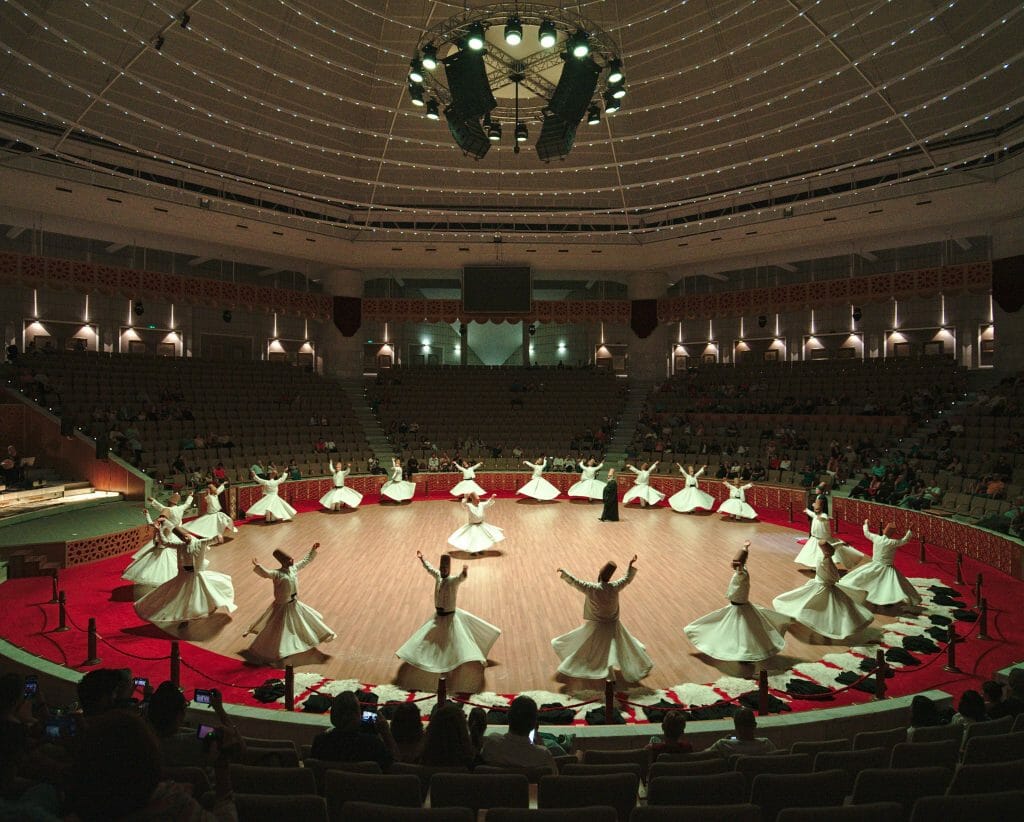
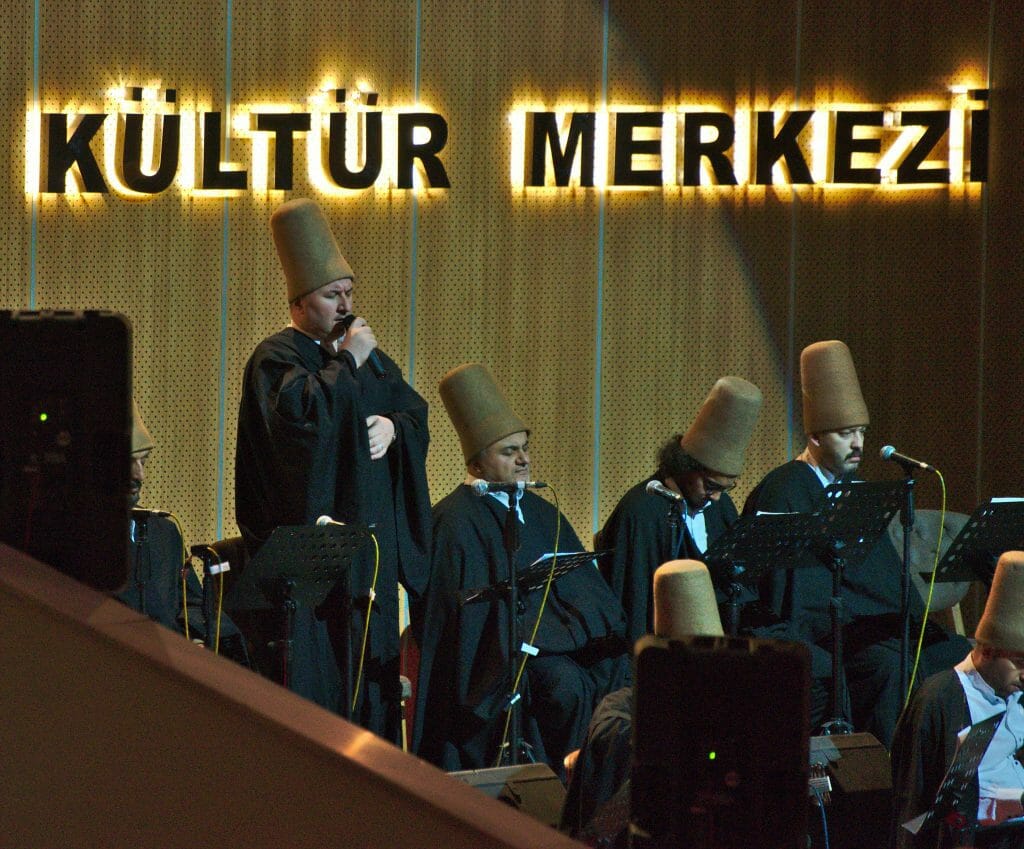
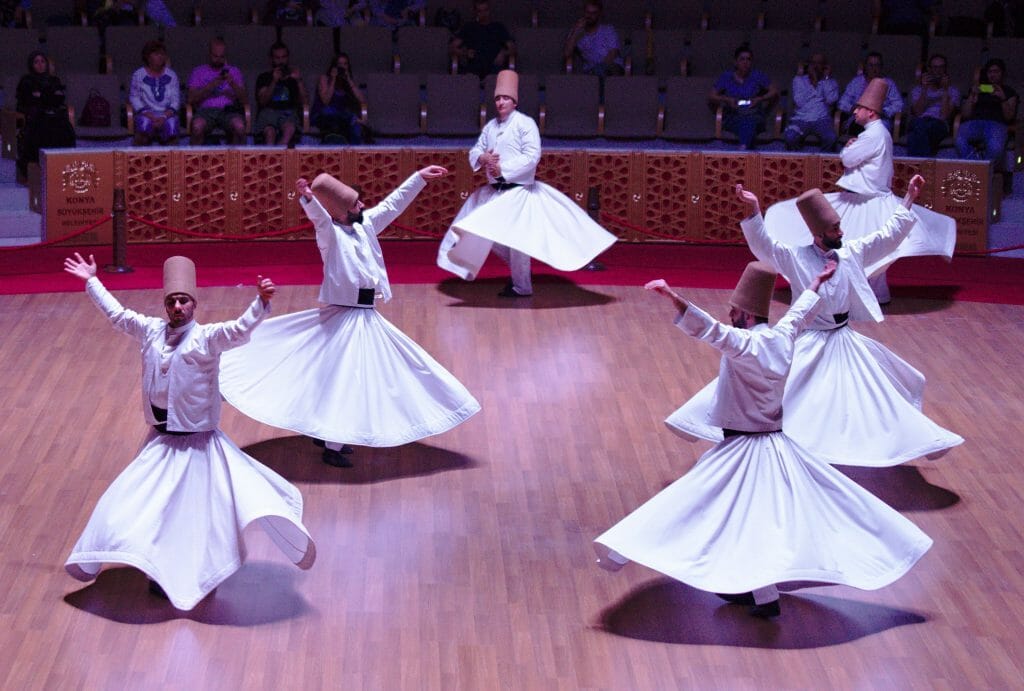
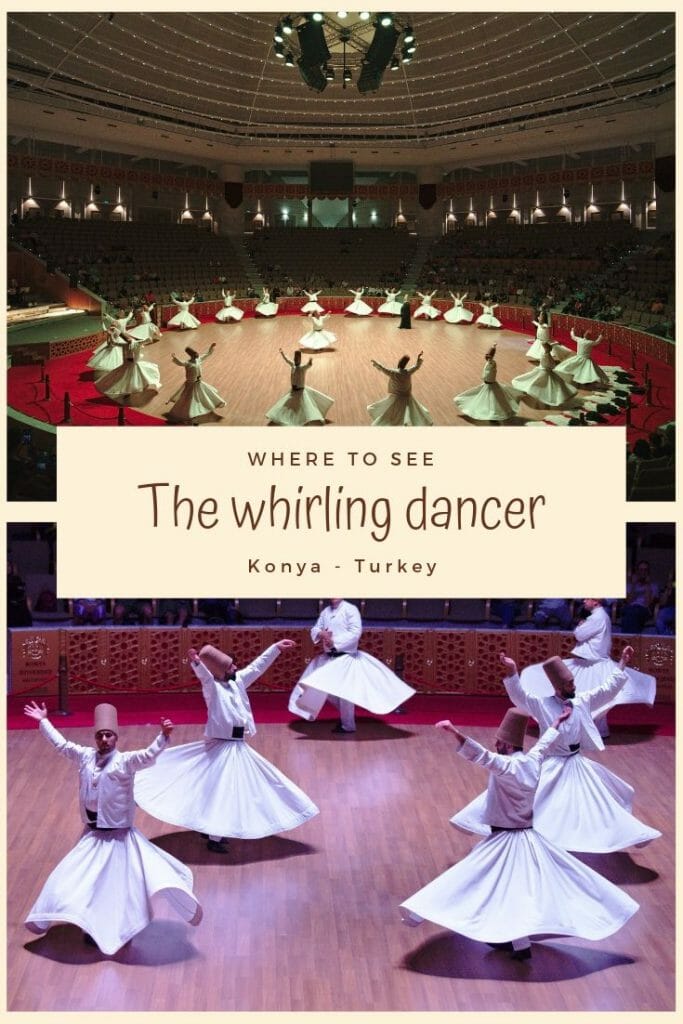
The idea of this dance? The dancers make turns on themselves by going faster and faster under the guidance of the shaik (spiritual master), accompanied by traditional instruments and songs/prayers. The objective of this dance is to reach a form of trance and thus get closer to God.
There are currently demonstrations for tourists in Istanbul, but Konya still has the strongest culture.
Good Tip
In Konya it is possible to attend a free demonstration of Sema every Saturday evening. Unless I’m mistaken, the ceremony is normally held at 7:00 p. m. During our visit, it was held at 9:30 pm because we were in the middle of Ramadan. But if you plan to go, the best thing is to stop by the tourist office behind the Mevlana Museum, they will be able to tell you the times for the current week.
Location: Konya Cultural Centre (located about 500 metres after the Mevlana Museum, along Aslani Kisla Avenue)
Info: it is good to arrive about 1 hour before the start of the demonstration. There is apparently an explanation in English before the beginning (it did not take place on the day we were there…)
Duration: The Sema lasts about 1h-1h15
Getting around Konya
In Konya there are mainly 3 ways to get around:
- By tram: 2 lines cross the city
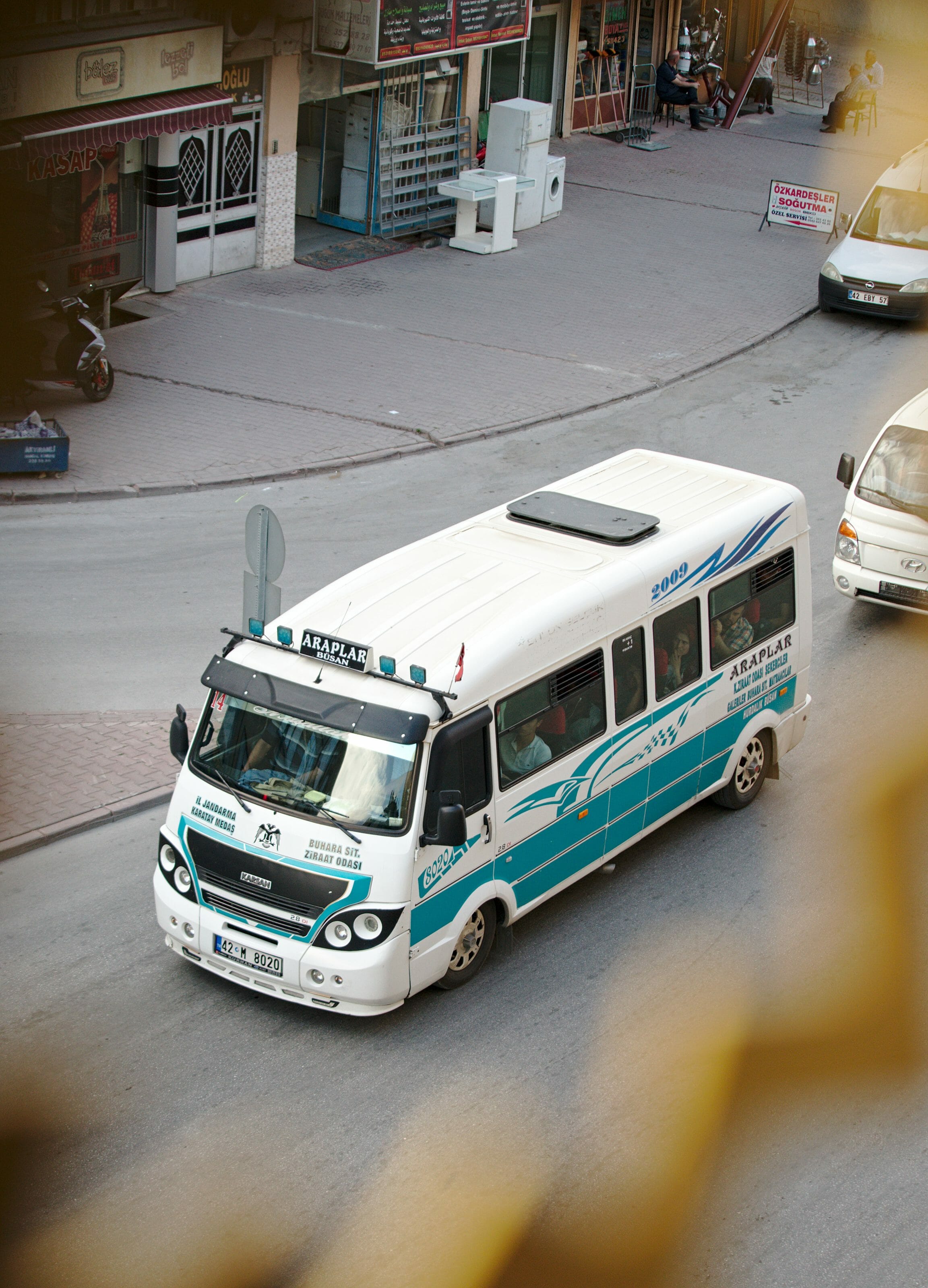
- By dolmus and bus: countless buses and minibuses criss-cross the city.
- on foot! By far the best way to explore the centre! Some days we travelled nearly 20km in the city alone 😉
The tram we used it only to come to the centre from the bus station which is quite a bit outside the city. It is by far the cheapest way to reach Konya’s centre. The trip costs 3 TL.
Good to know: to pay for your trip you can either pay by buying a transport card that you can recharge or pay directly with a contactless credit card. To pay with the credit card, simply place it on the terminal to unlock the security gate… It’s really very convenient (especially if you arrive in the evening and the ticket offices are already closed).
For large buses it is the same system: transport card or contactless credit card.
In dolmus (minibus), payment is made directly in cash to the driver.
Where to stay in Konya?
Before arriving in Konya we thought we were going to book a hotel because we knew we were going to arrive in the evening. When we went to the reservation site we were surprised to see that the prices of accommodation are really cheap compared to the rest of Turkey! In the end we decided to stay at the Nun Hotel, an ok hotel that had the advantage of being quite well placed. We paid 109 TL (about 16€) for a double room and breakfast buffet included… But to be fair, this hotel was nothing special… It looked much nicer on the pictures than in real life…. haha
You will really have no trouble finding something for every budget. We admit it, we even hesitated to go for the Hilton which was at 25€. 🙂 But I think the prices were particularly low during our visit because of Ramadan… It seems that this really corresponds to the low tourist season for the city.
Find a place to stay on the map below:
But if I had to give you any advice, it would probably be to take a hotel that is within walking distance of Mevlana or Alaaddin Square. Many beautiful hotels are located near the bus station or the Japanese garden, but it is actually really far from the main attractions of the city (and knowing which bus number to take is and will always remain a great mystery for us).
Daytrip to Sille, Konya
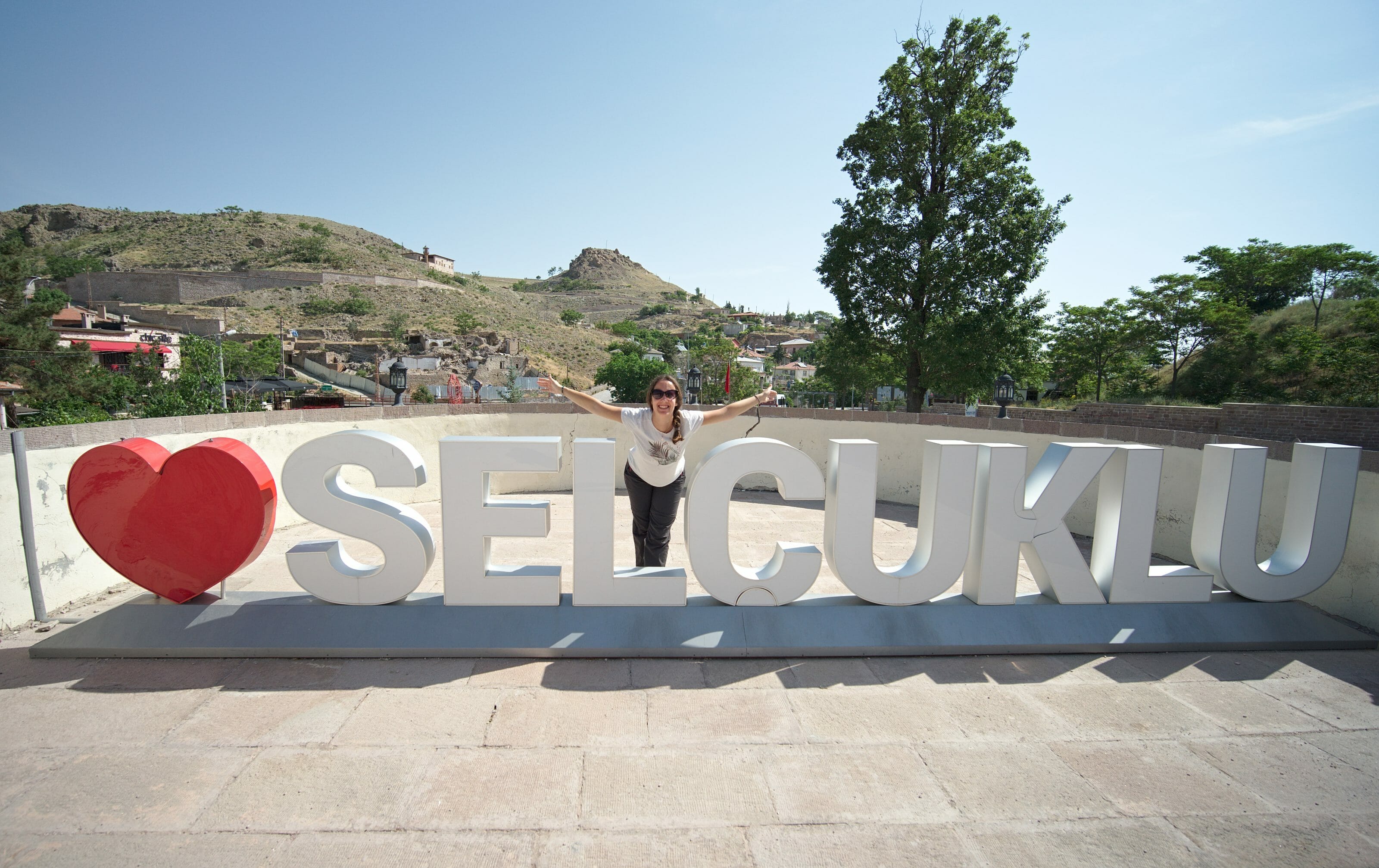
When we went to the Konya tourist office to ask for the schedules of the whirling dervishes, the lady at the reception had strongly advised us to go for a short daytrip to Sille if we had the time. According to her, Sille is “a small paradise in the mountains not far from the city”. It didn’t take much longer for us to decide to go there!
Getting to Sille
To get to Sille the easiest way is to take the bus. Bus Number 64 leaves north of Alaaddin Hill (more or less in front of the Technical University) and takes about 25 minutes to reach Sille. The trip costs about 3 TL (I say “about” because we paid with the contactless credit card and I’m not 100% sure I understood the price correctly, but it’s around this);)
Sille: a village erbuilt for tourism
With the description made by the lady of the tourist office we were very excited to see this little paradise of greenery perched above Konya. Strangely enough, as the bus approached the destination, the more we were disappointed.
Our idea was to start the visit with the artifical lake above Sille for a short walk and then to go down to the village by a hiking trail indicated on Maps.me.
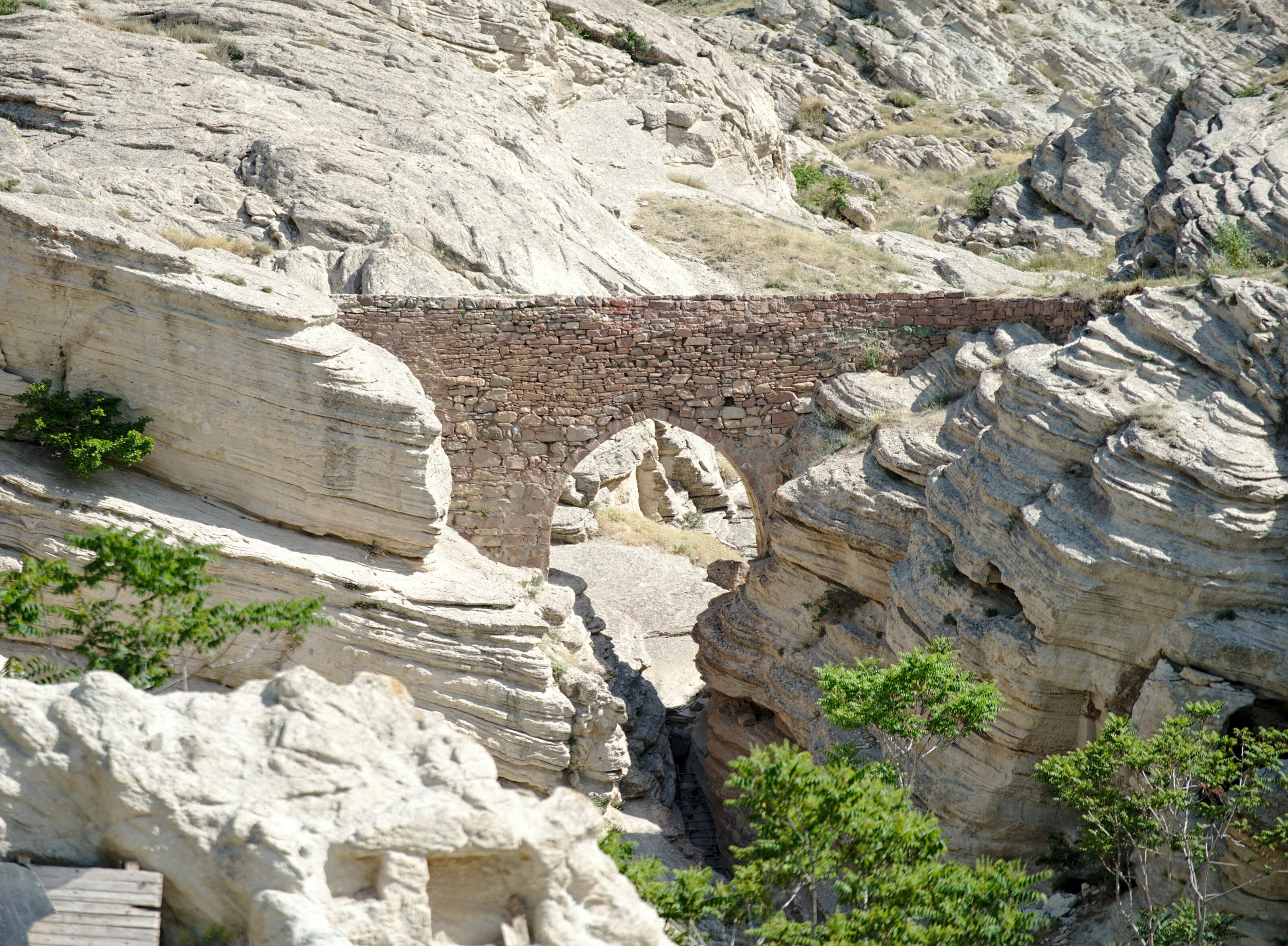
Ignoring what we could see through the bus window, we arrived at the very top of Sille, just next to the artificial lake. We got off the bus and head for the lake.
Let me tell you a little bit about our monumental fail:
1) As soon as we get off the bus we arrive at a guarded entrance to the lake. The guard tells us that the lake only opens at 2pm…. Since when do lakes and trails have schedules? We don’t know, but in Sille apparently yes…
2) Not dismantled, we think we’ll follow the path back down to Sille. The problem? we never found this path and we had to decide to follow the road…
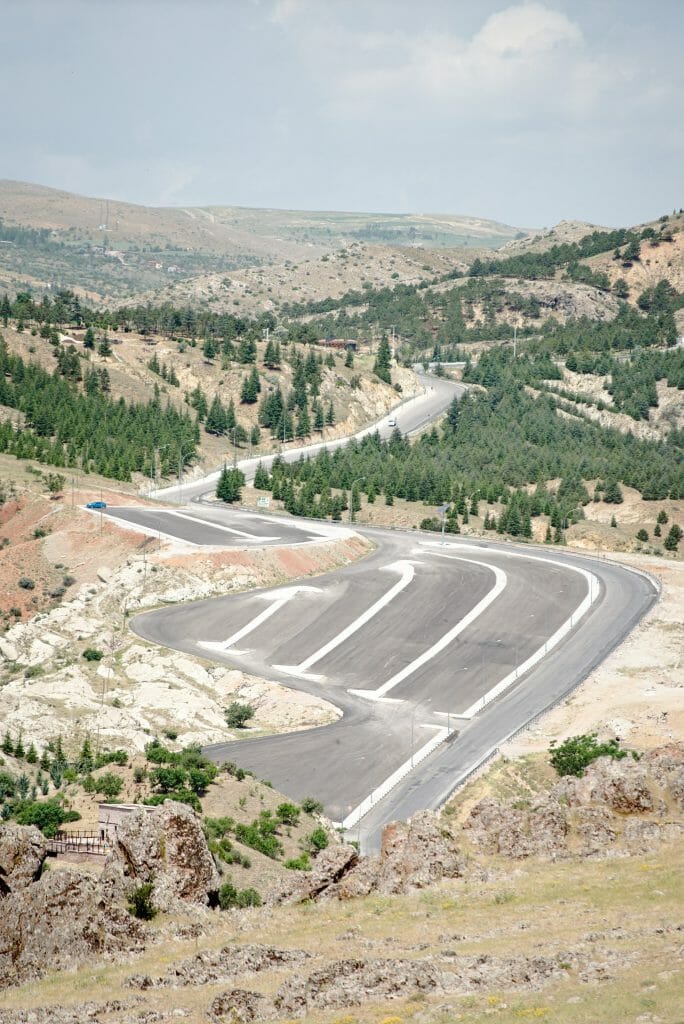
3) Once past a huge car park that looks like an airport runway (and totally deserted) we arrive at the village
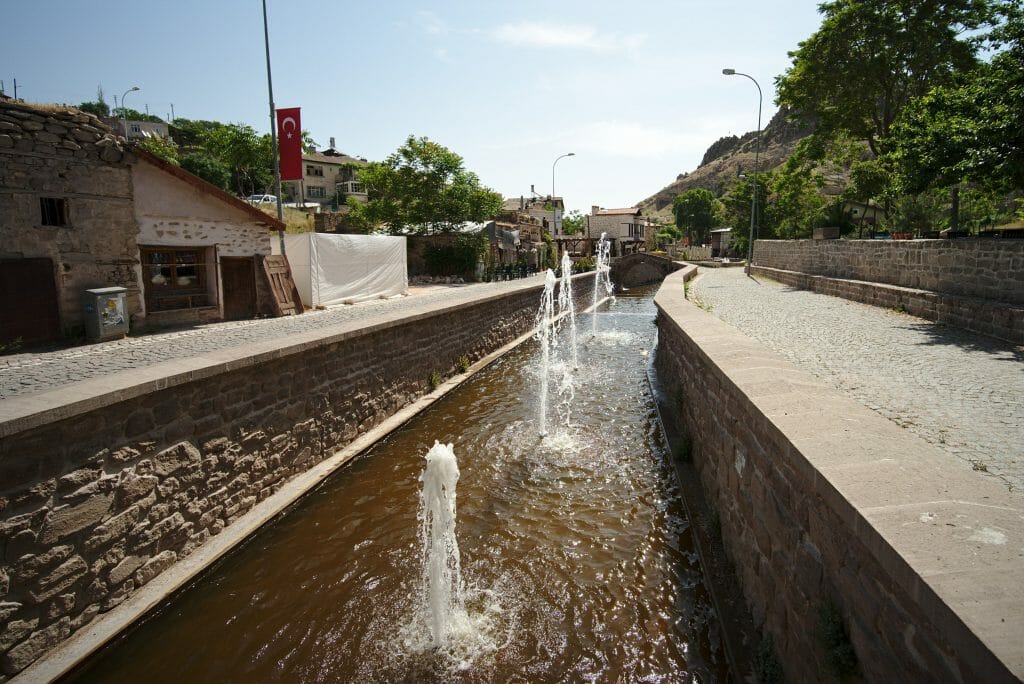
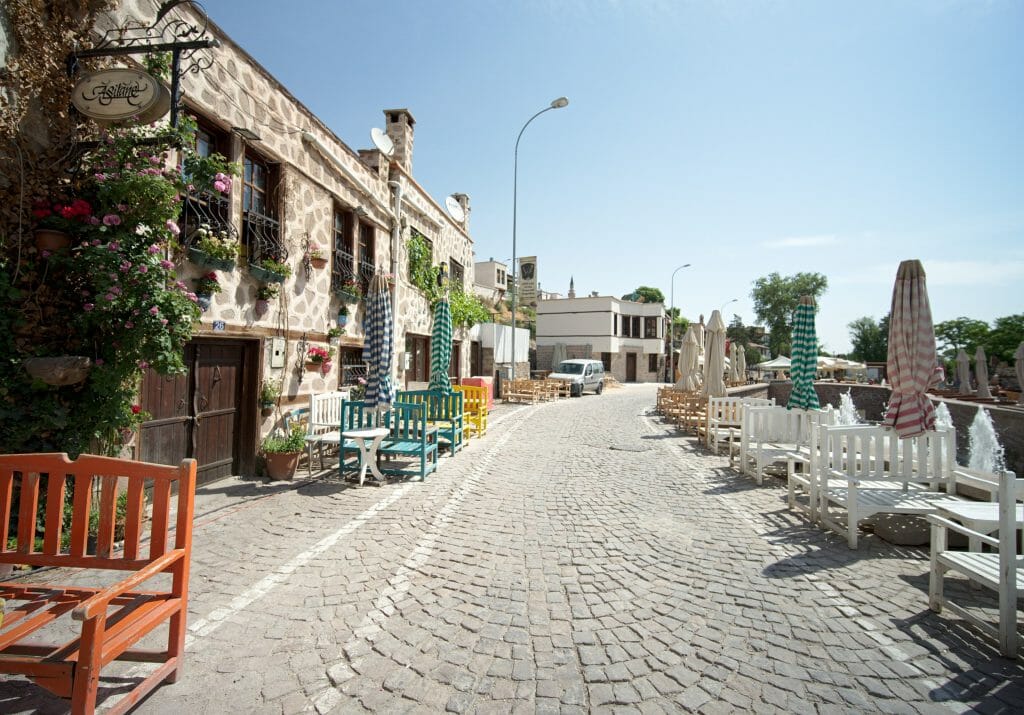
4) The village? The kingdom of Kitsch! Shops everywhere, an artificial concrete canal and lots of small cafés (all closed). We were literally the only ones in this village and it was really a bit gloomy…
Do you want our opinion? This village, which has nearly 2000 years of history, seems to have been totally destroyed by a government determined to make it a major tourist destination… the problem? it doesn’t seem tourists got ther (yet)… There are Parking spaces where we could park 2000 cars, cafés and restaurants to serve water and food to thousands of people, but strangely enough: absolutely nobody!
Was it because it was Ramadan? Maybe… But if we didn’t like Sille it wasn’t because of the lack of people… but because of the total excess of concrete and “tourist” constructions on this historic site.
The beautiful museum of Sille
After passing through the village we finally came across the only open café. We had a cup of tea and in front of us was the Sille Museum. A little defeated by this village, we thought that we had nothing to lose by going to see the museum.
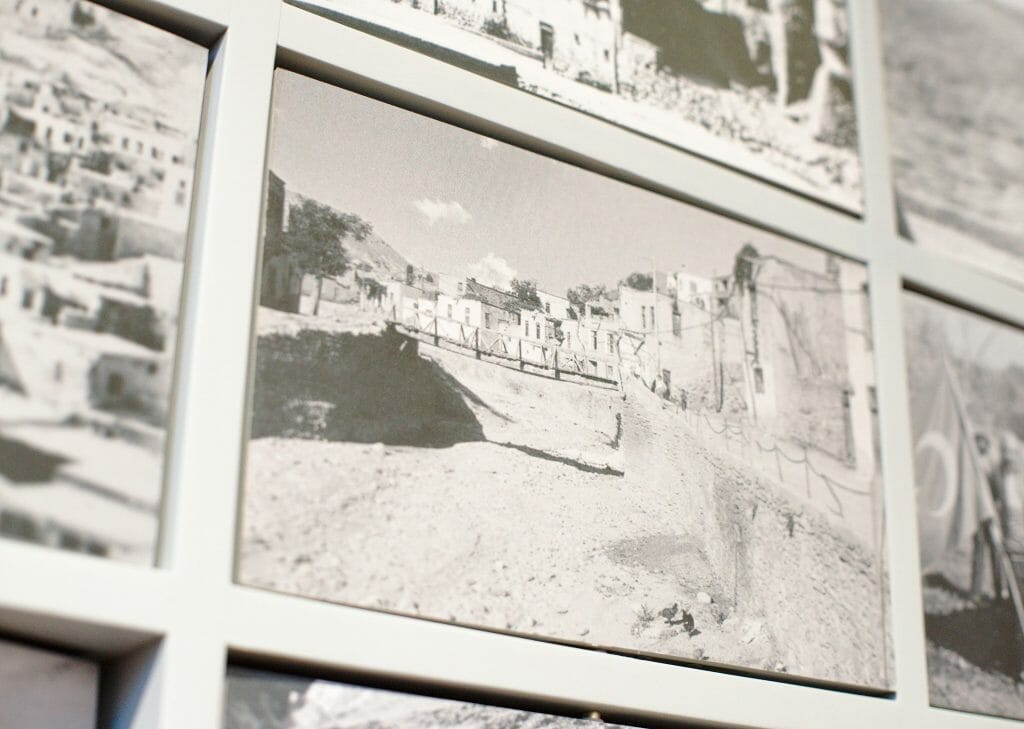
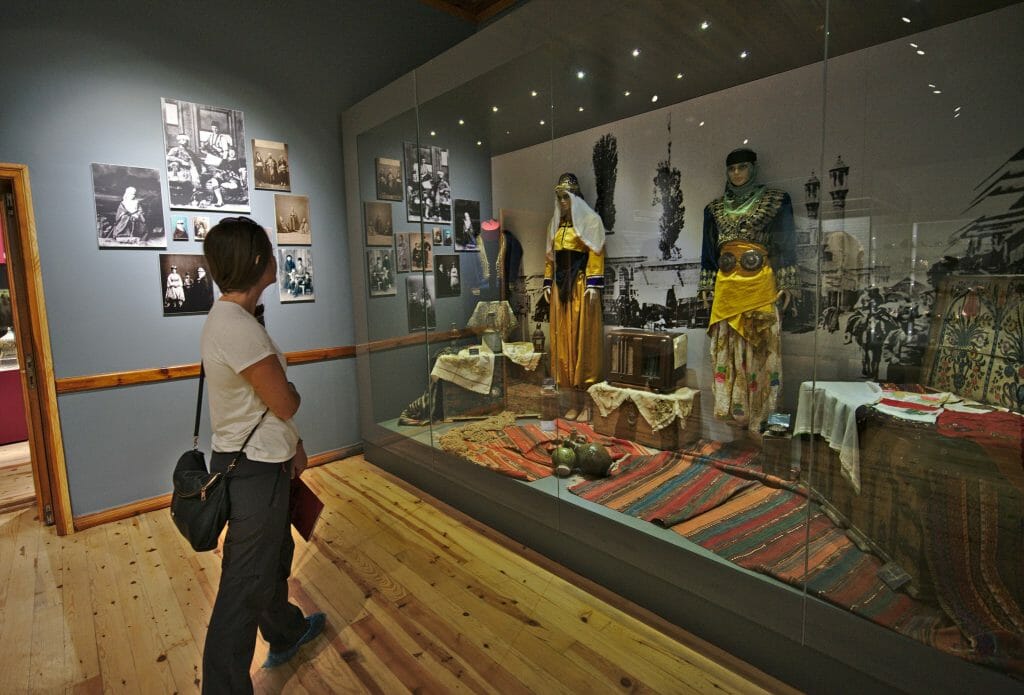
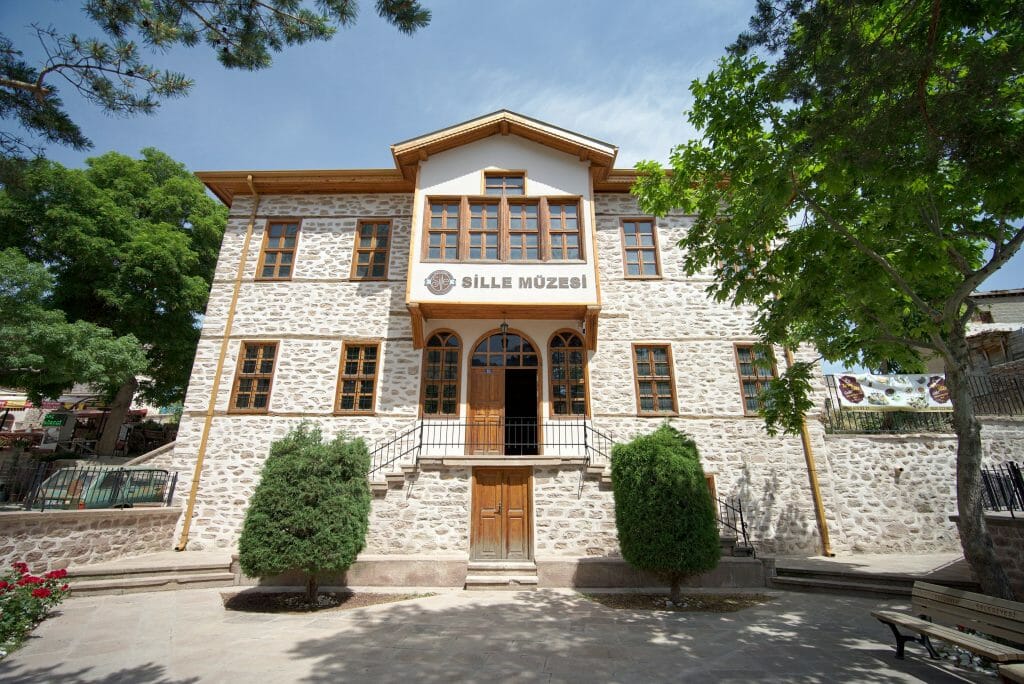
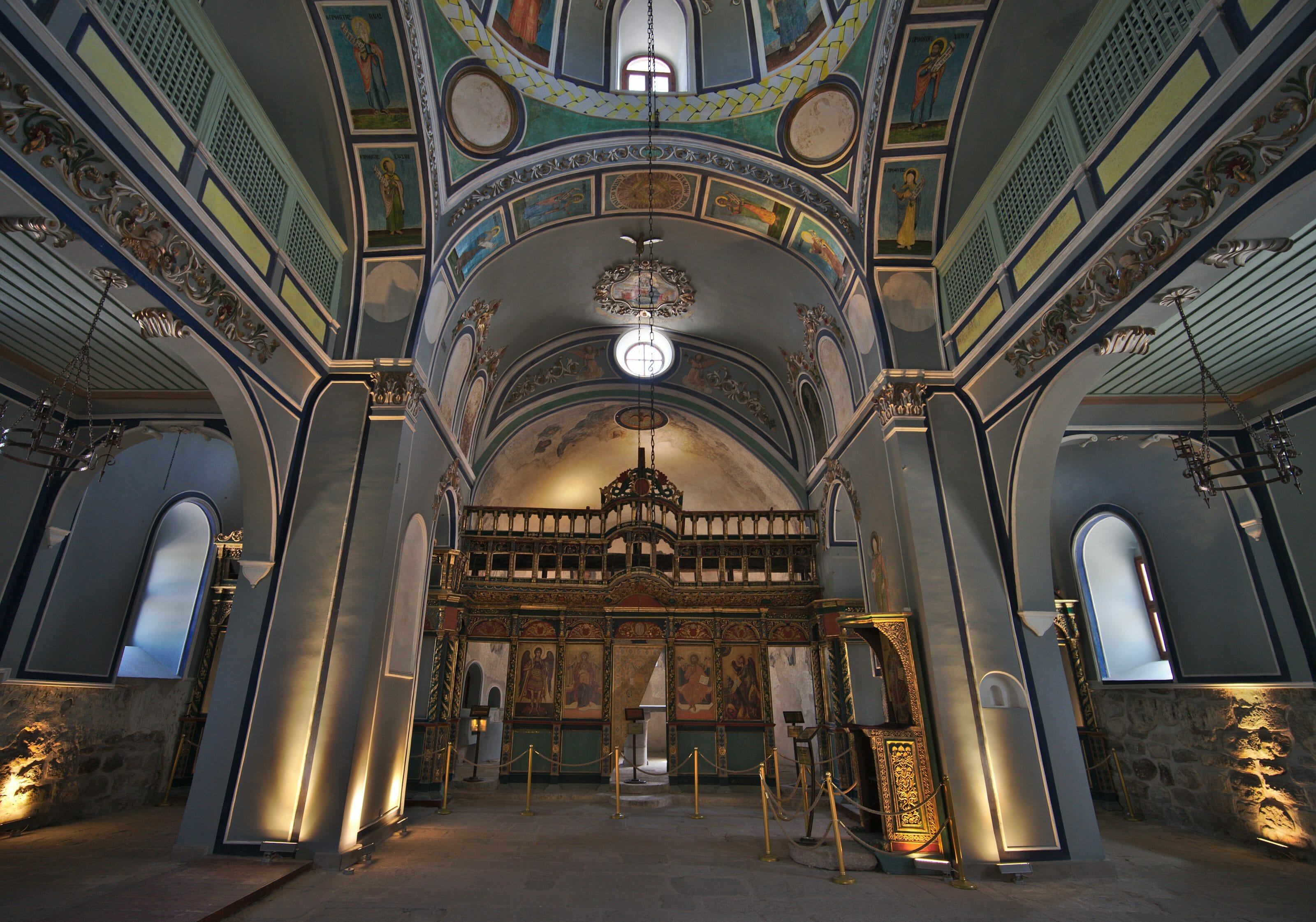
So I’ll tell you one thing: this museum is the only thing which was built for tourism that is intersting in Sille. This museum is simply magnificent! Brand new, it is extremely well made and really presents the history of the region and local craftsmanship. As we leave, we can only regret seeing more of what has been done with this village, because historically speaking it is a beautiful place and the church as well as the landscapes are superb!
Hiking from Sille to Konya
Instead of taking the bus back to Konya we opted for a short hike. So we left the village at the height of the large car parks and picnic areas (it hurts my heart to write these words to describe a mountain hike).
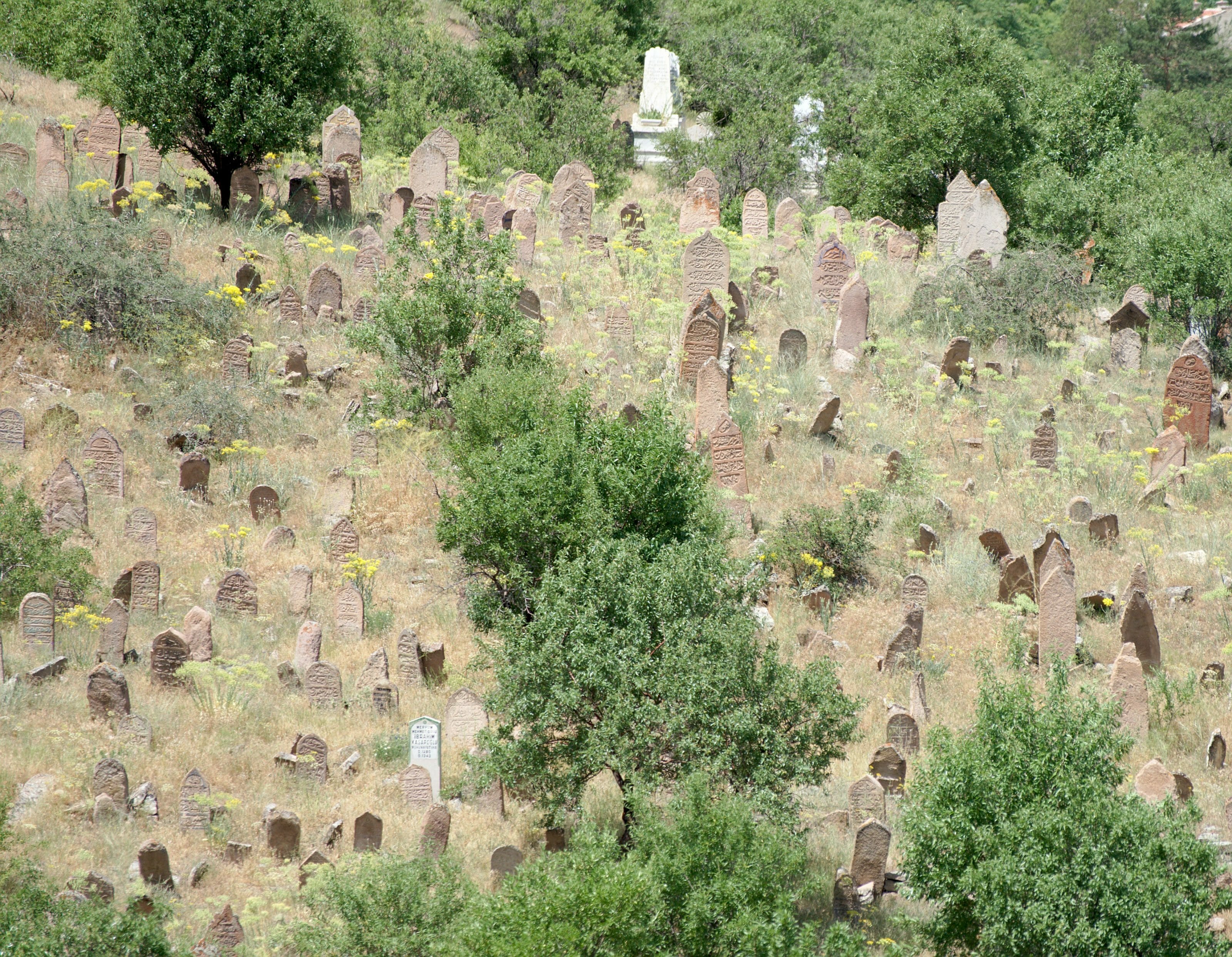
Quickly, we reach the old cemetery of Sille. This place is not mentioned in the guides, but we found that this cemetery was absolutely spectacular. Some Ottoman tombs were extremely old (we are sorry but we did not find any information about the dates…). But it was really nice!
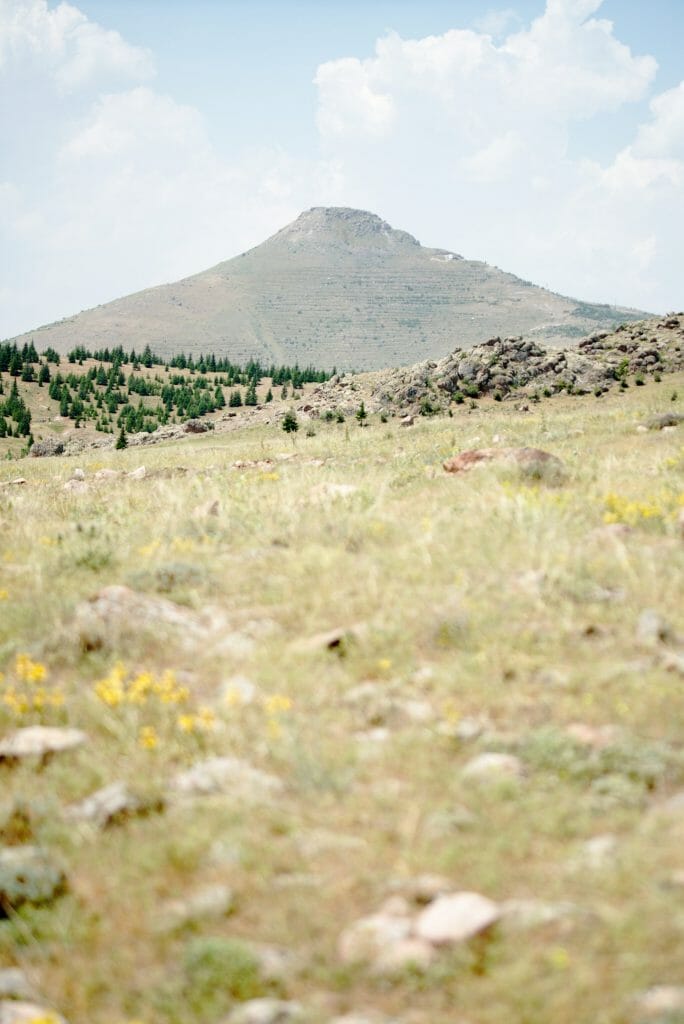
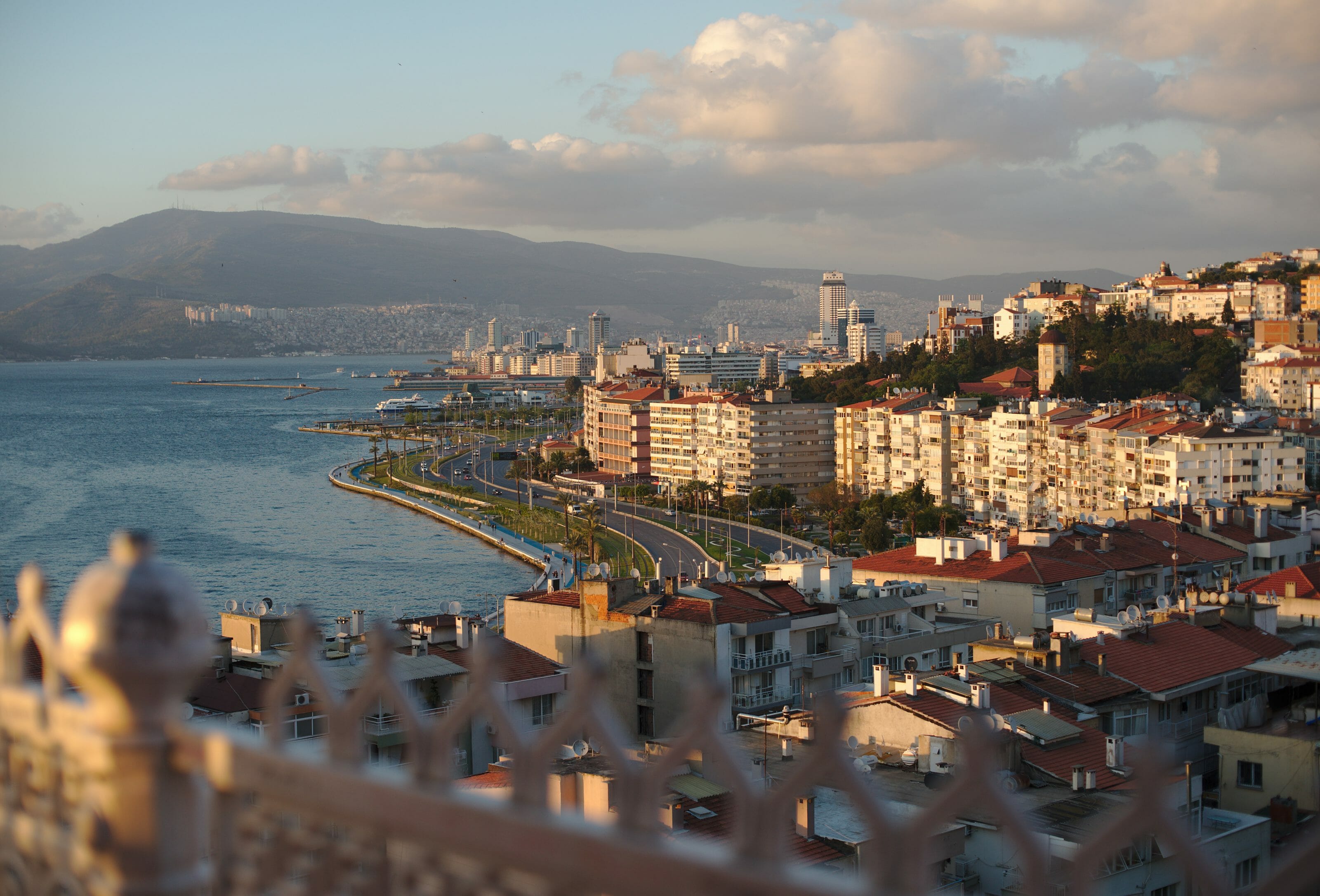
From the cemetery we continued to climb until we had a nice view of Sille. Then we started heading towards Konya and reached a nice viewpoint that allowed us to have a bird’s eye view of the whole city. From there, we just had to follow the track to the west of the city and find a bus to take us back to the city.
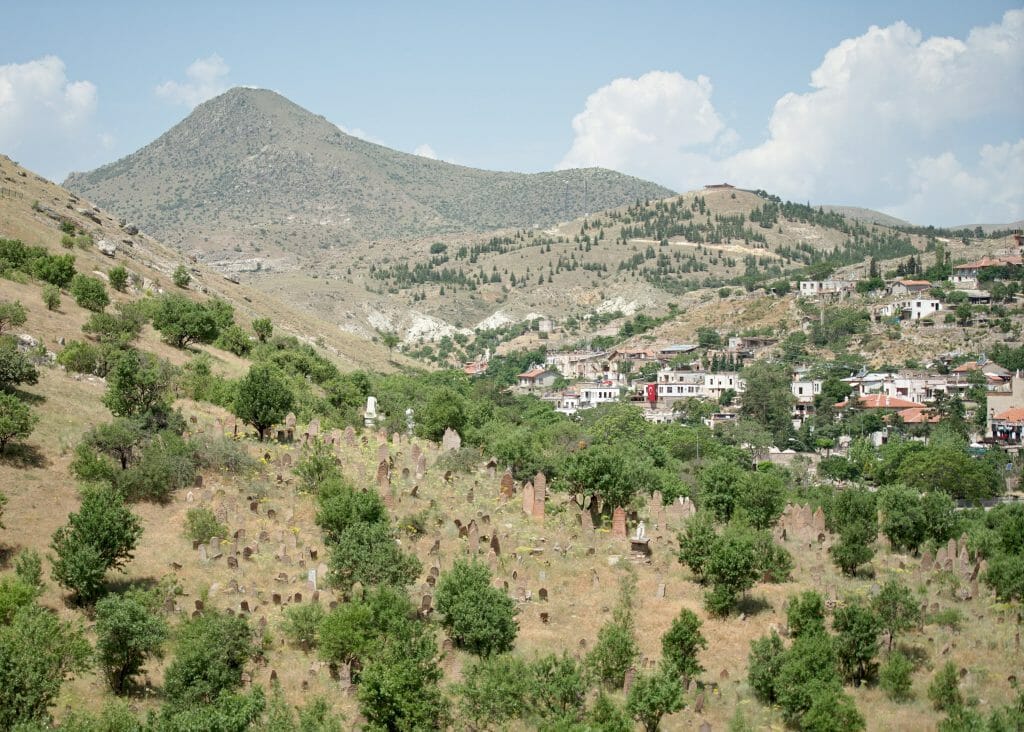
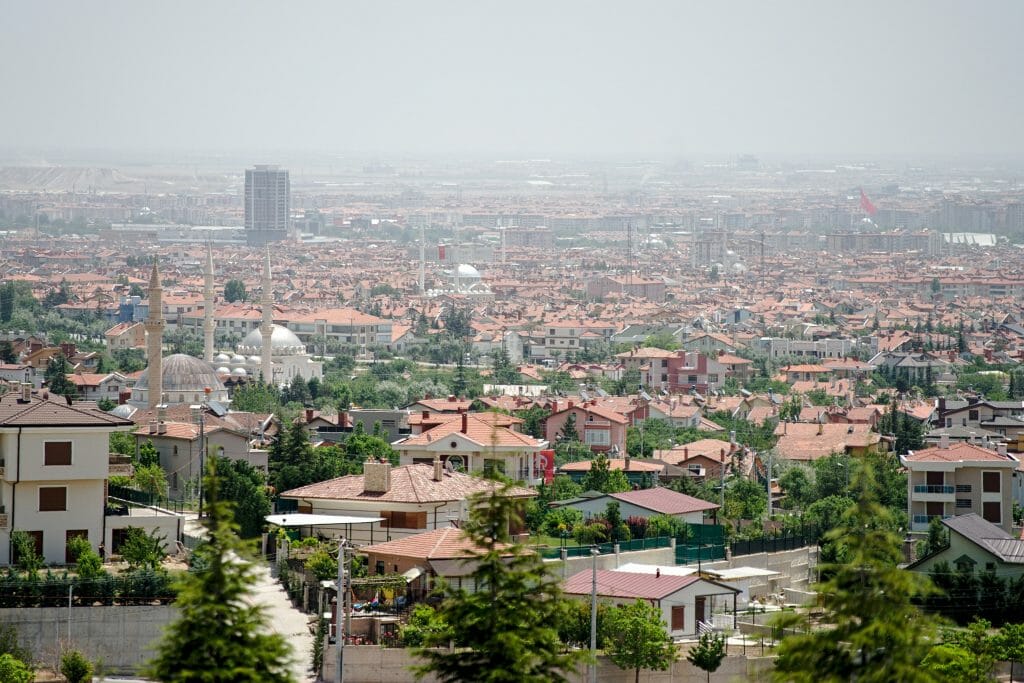
Note: we found a bus on the way to the bus shed indicated on the map below. Then we simply asked the drivers if they were going to Alaaddin and went up with the first one who said yes.
Hike from Sille to Konya: The Map
Konya: things to do around the city
During our visit to Konya we limited ourselves to the city and Sille. But apparently there are 2 excursions that are not too far away that are worth a visit:
- The Tüz lake: located two hours away, this lake is known for its colour, which can sometimes turn bright pink because of the algae found there. In spring there are also many pink flamingos that live there.
- The Meke lake: this place just looks totally sick! A lake in a crater with crazy landscapes!
The problem with these visits? Off season we have not found any tours to go there and no public transport goes there…. If you have a car, don’t hesitate for a second! These 2 excursions would have been really tempting for us but unfortunately we didn’t have enough time (and motivation to start renting a car and especially driving in the city of Konya… it’s chaotic we warn you!)
Visit Konya during Ramadan
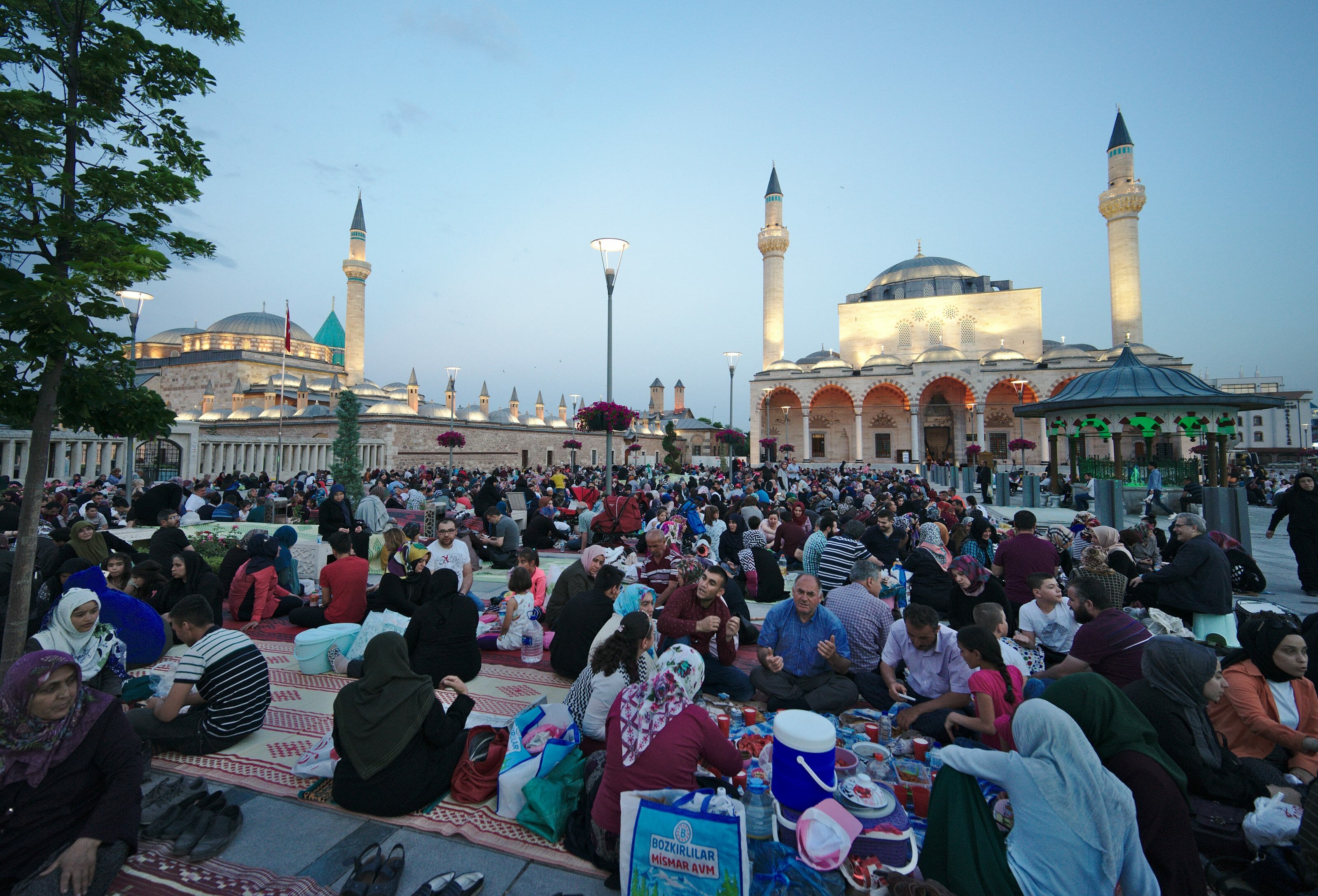
When we were researching Konya before our visit, all opinions seemed unanimous: Konya is to be avoided during Ramadan… Known to be one of the most traditional cities in Turkey, the guidbooks advise against going there because everything would be closed during the day.
So we’ll tell you right away, Ramadan may not be the “best” time to go there, but it’s still largely feasible. Museums and visits remain open. But it is true that in Konya it is the only place in Turkey where we had a hard time finding something to drink or eat during the day. Not doing Ramadan we had nothing against eating a little something, but often our best option was to go to the supermarket to buy bread.
During Ramadan it is also important to note that it is really better to abstain from drinking or eating in public. For our part, we usually tried to return to our hotel and enjoy being in our room for drinks and picnics.
Regarding clothing, Konya is, once again, traditional. So, in terms of clothing, the ideal is to wear long trousers and at least a T-shirt covering the shoulders and without décollté (women generally have all the arms covered but personally I have never felt the slightest problem with a “normal” T-shirt).
Note: the pants are also valid for men… we have not seen any men wearing shorts!
To visit mosques it is also useful to bring a scarf in your handbag to cover your head. Outside mosques I didn’t wear a veil and that wasn’t a problem.
Our encounters made in Konya
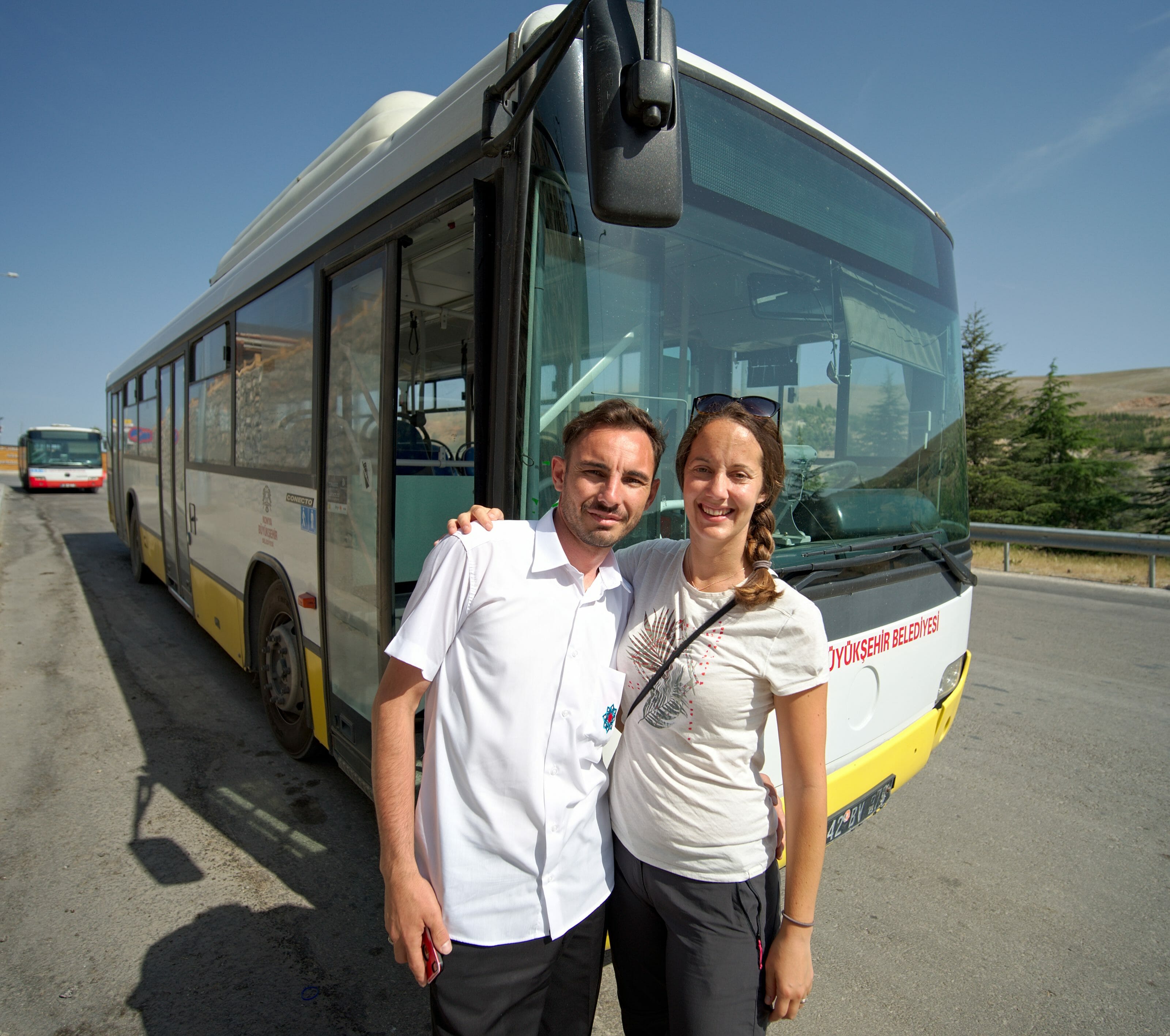
Afterwards, if you are in Turkey during Ramadan don’t really refrain from coming and taking a look at Konya! It is most probably the city where we have met the most beautiful people…. From the tourism student who helped us take the tramway on the first day and with whom we ended up talking for almost an hour, to the adorable bus driver with whom we chatted all the way to Sille and who asked us to take pictures in front of his bus or this absolutely magical family.
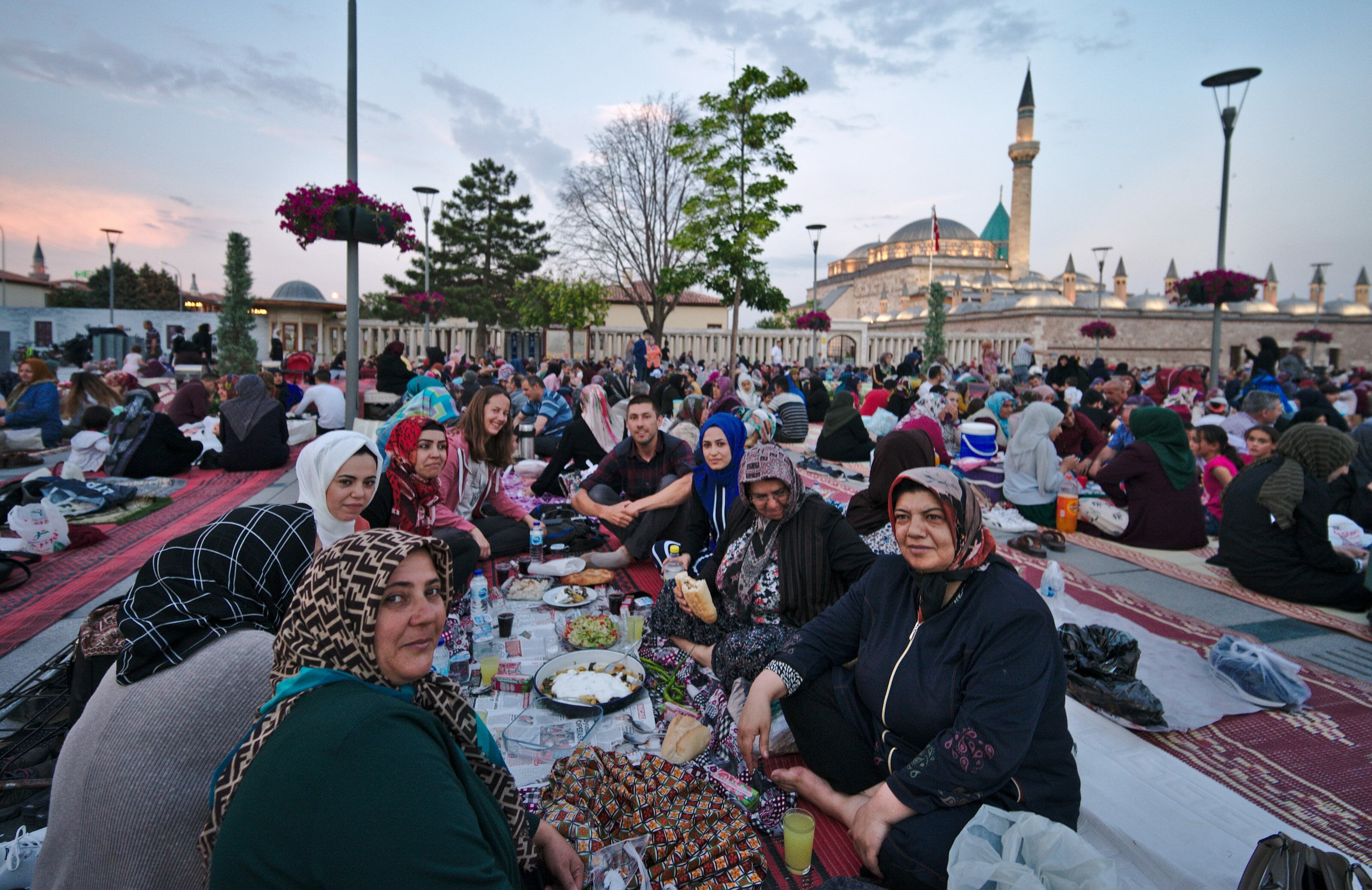
On Friday evening, while we were walking around waiting for the sunset (and therefore the opening time of the restaurants) we arrived on Mevlana Square. There, thousands of people had gathered to wait for the break of the fast. Everyone was sitting on large mats on the floor with large picnic baskets. While we were watching the scene and there were still 45 minutes to go until Iftar time, a family started to wave at us. Seeing that we were tourists, they spontaneously offered us to come and join them to share the meal. We are far from having understood everything they were telling us, but the evening was wonderful! And incidentally, the homemade meal made by the women of the family will most probably have been our best Turkish meal to date… 🙂
We hope you enjoyed this (long) article about Konya and we look forward to seeing you soon for a series of articles about Cappadocia!
Pin it

my hometown is konya and i learn something it from this blog! amazing!
Hello/bonjour travellers, nice photos, well laid out.
I will permit myself to add a couple of comments.
The village of Sille ( unofficially classified ) is a look back in time, into a past that is part of a very painful and confusing past..
That is something that I will not go into here, do look up the period between
1912 till after the second world war.
Comments about a cemetery not being listed on a tourist map ???
Many cultures honour their dead in a way that seems too far out for us.
A lake that only opens in the afternoon ???
There is a reason for this, but as you mention you did not even know where
Konya was before you packed your bags.
Whether it is here or other countries, try to ask questions before making,
what I feel, an entitled judgement.
I am a seasoned traveller and have learned that what seems one way to us
is often not how the local population looks at their history.
Having a bucket list is good, opening your eyes and letting your heart feel
the vibe is another. Enjoy your travels.