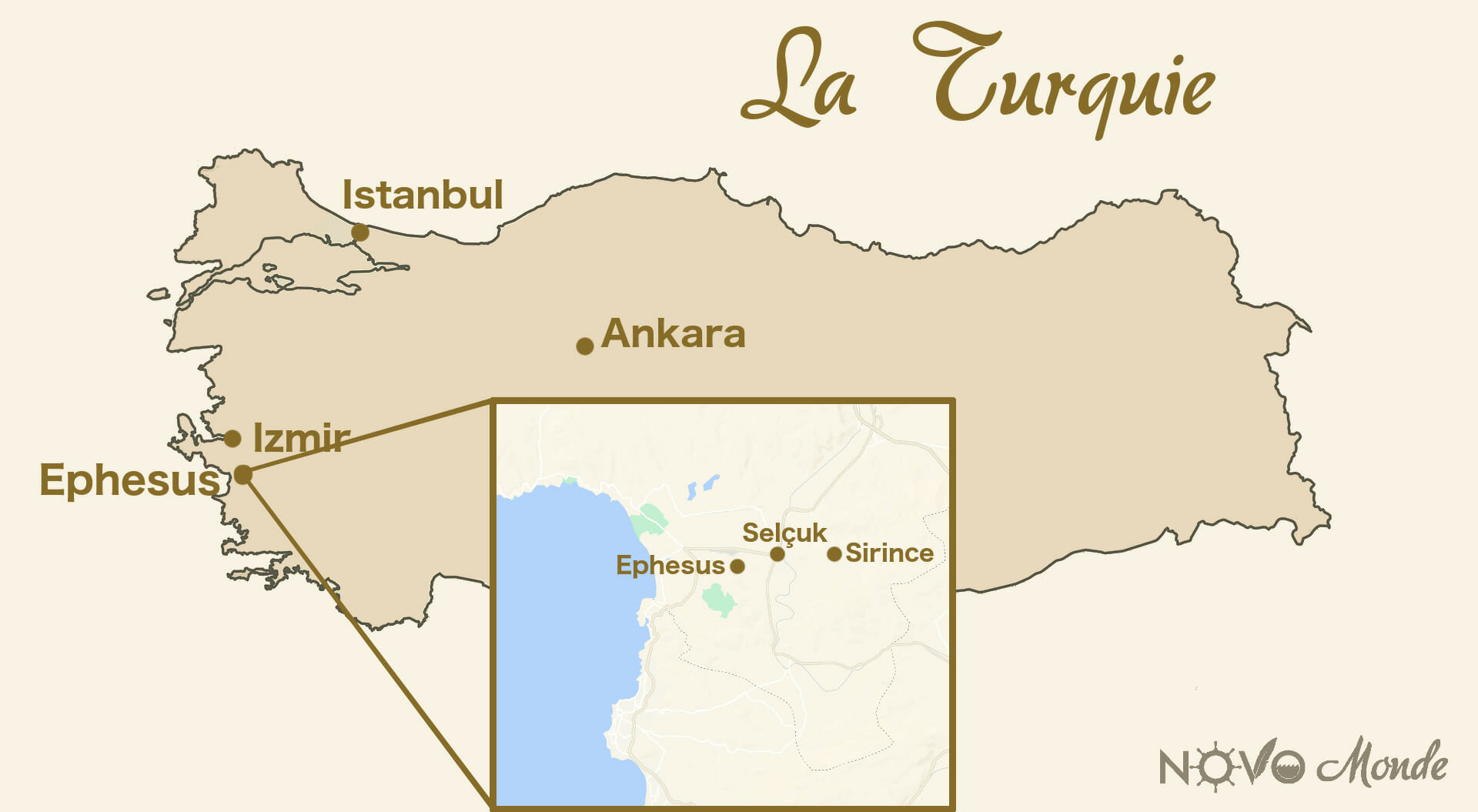
After a pretty relaxed week in Izmir, we hit the road again with a clearer idea of what we want to see in Turkey. Our goal is to hike part of the Lycian Way, so we head south of Izmir. But before we pull out the tent and hiking boots, we want to discover several sites along the way, especially the ancient Greco-Roman city of Ephesus, just a 2-hour train ride south of Izmir. Here’s our handy guide for your upcoming visit!
We took this trip in 2015, but we fully revised and updated the article in August 2026. If you notice any price changes or have extra information that might be helpful, feel free to leave us a comment!
The archaeological site of Ephesus
Ephesus was one of the most important cities of antiquity, comparable to Constantinople in the Roman era. In short, it would have been a shame to skip these UNESCO-listed ruins! A guaranteed deep dive into history ;).
The history of Ephesus
Okay, I’m not going to give you a full history lesson on the city of Ephesus, but you should know that it was founded a very long time ago, in the 10th century BC. It reached its peak during the Roman period with around 250,000–300,000 inhabitants. It was one of the most important ports of the era, which unfortunately declined rapidly in the 7th–8th centuries when the sea receded, causing the port to silt up. As a result, the inhabitants moved elsewhere, notably into the mountains, as is the case with the present-day village of Şirince.
Visiting the ruins of Ephesus
The thing to know about visiting the ruins of Ephesus is that the site is actually quite elongated and has two entrances. All told, you’ll walk a good 3–4 km across the site. The ideal approach is to arrive at one end, cross the entire site, and exit on the other side, avoiding an unnecessary trip back.
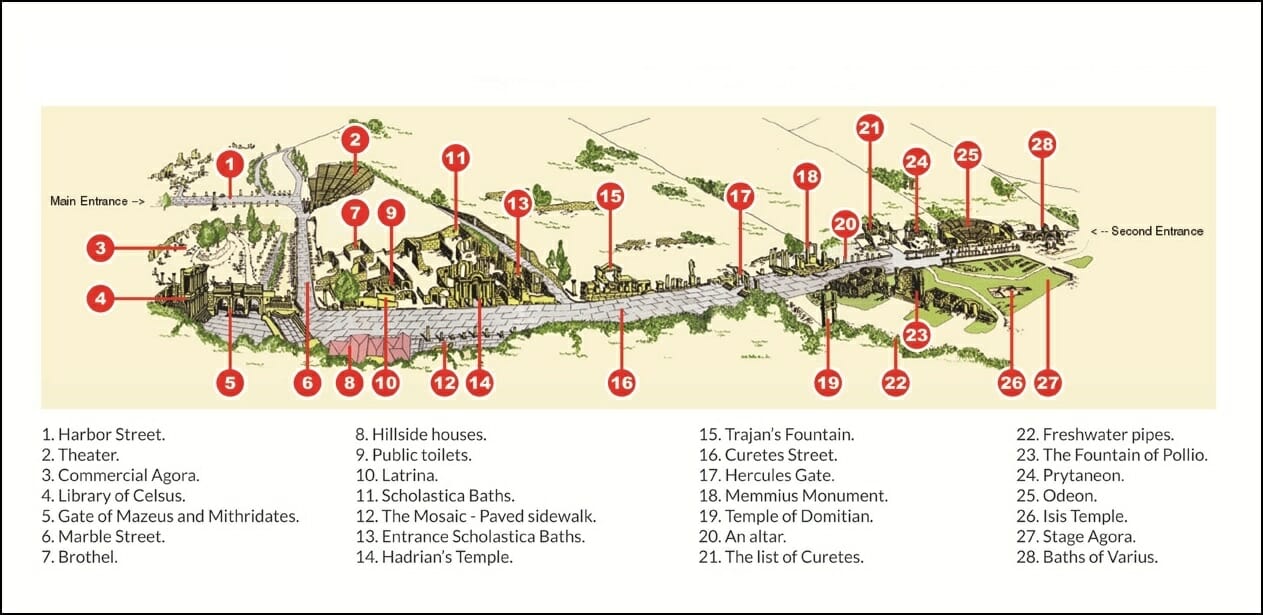
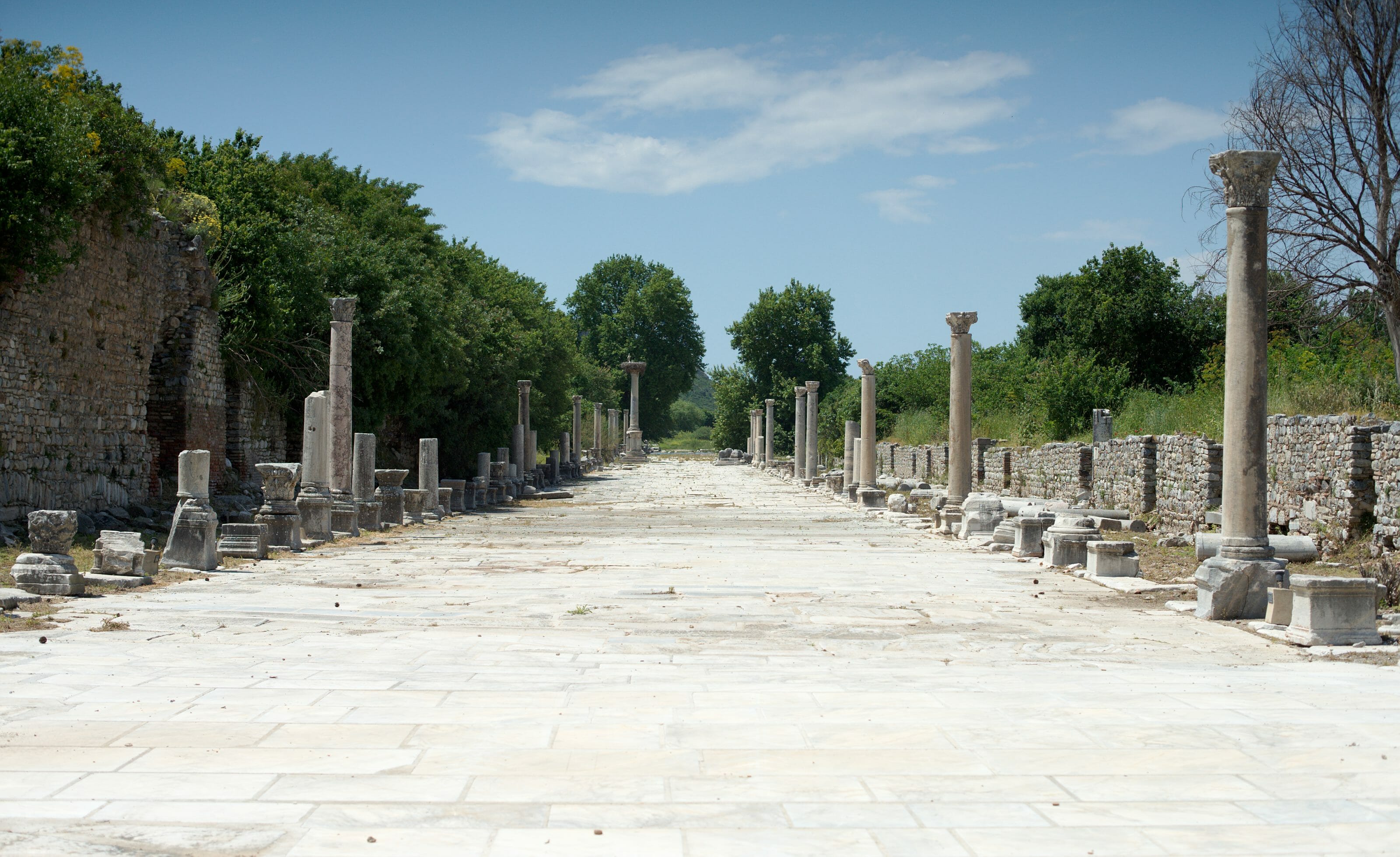
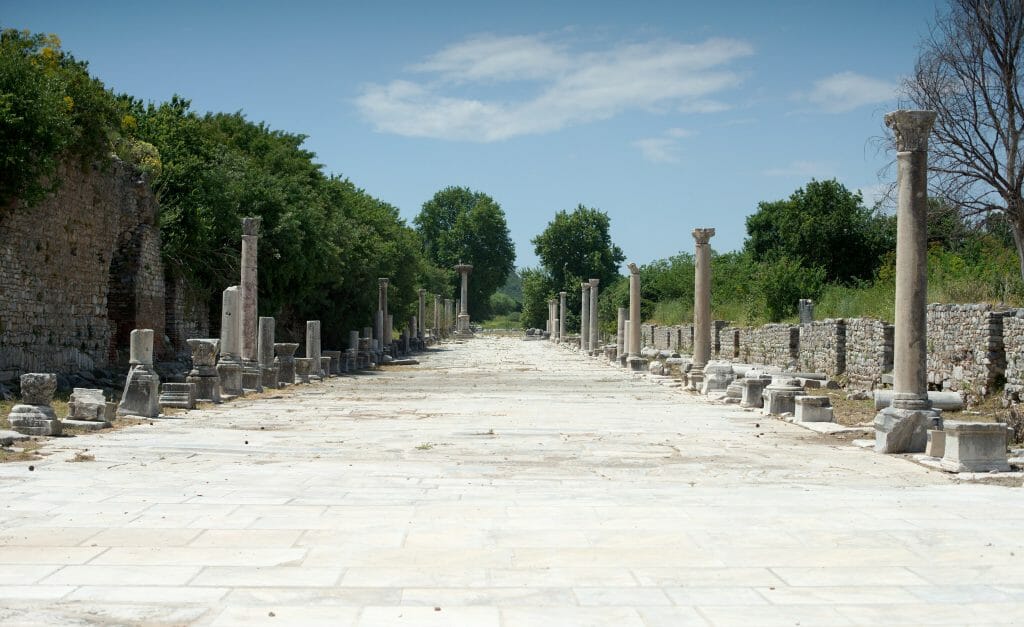
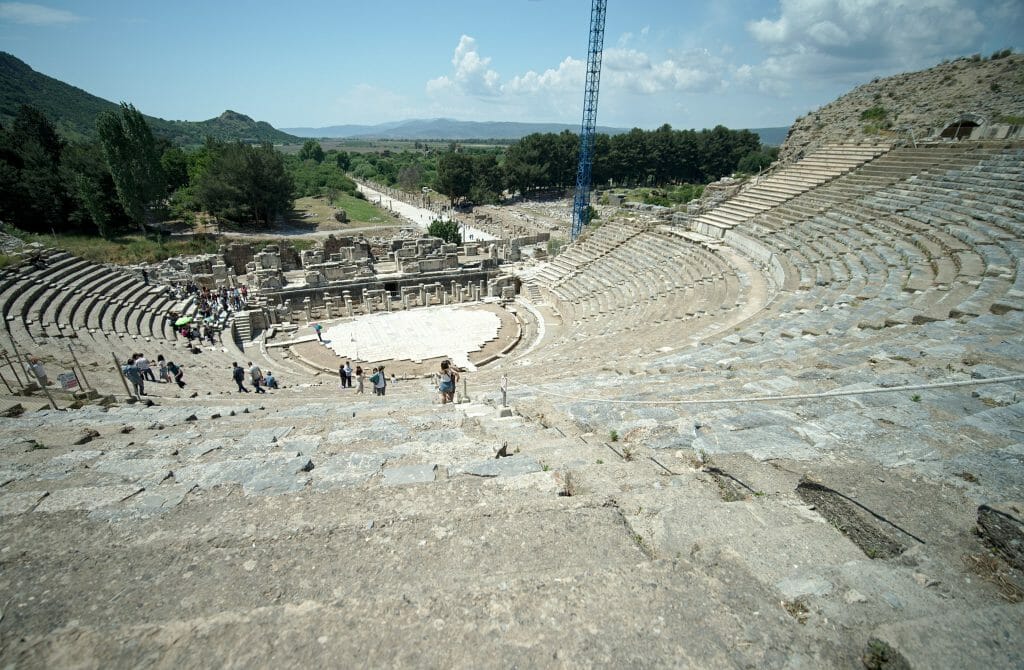
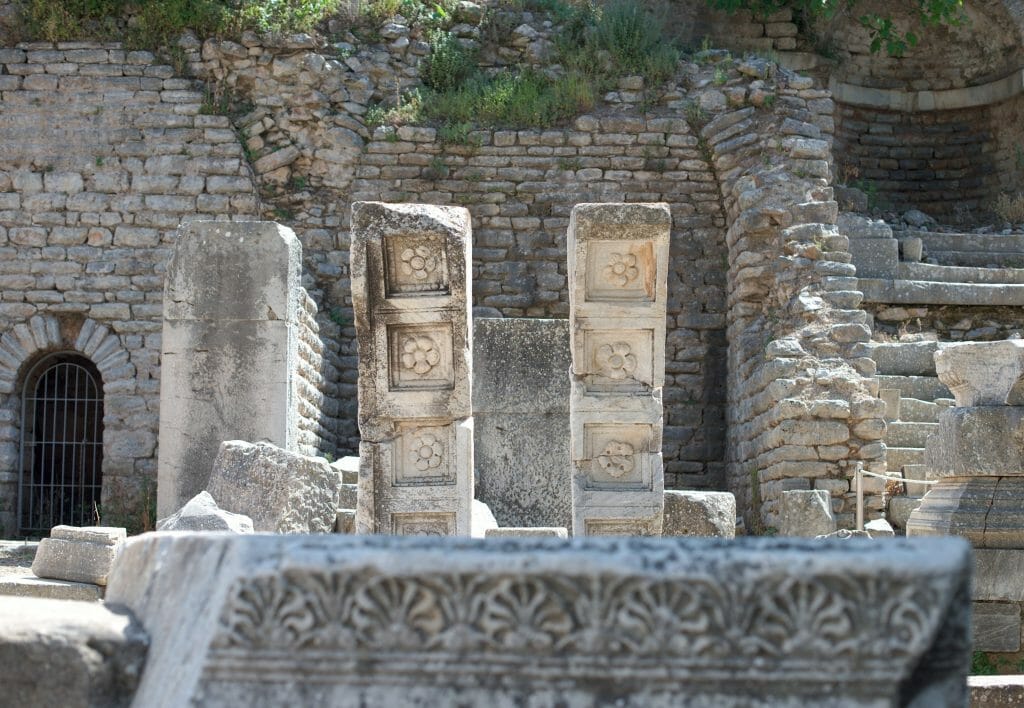
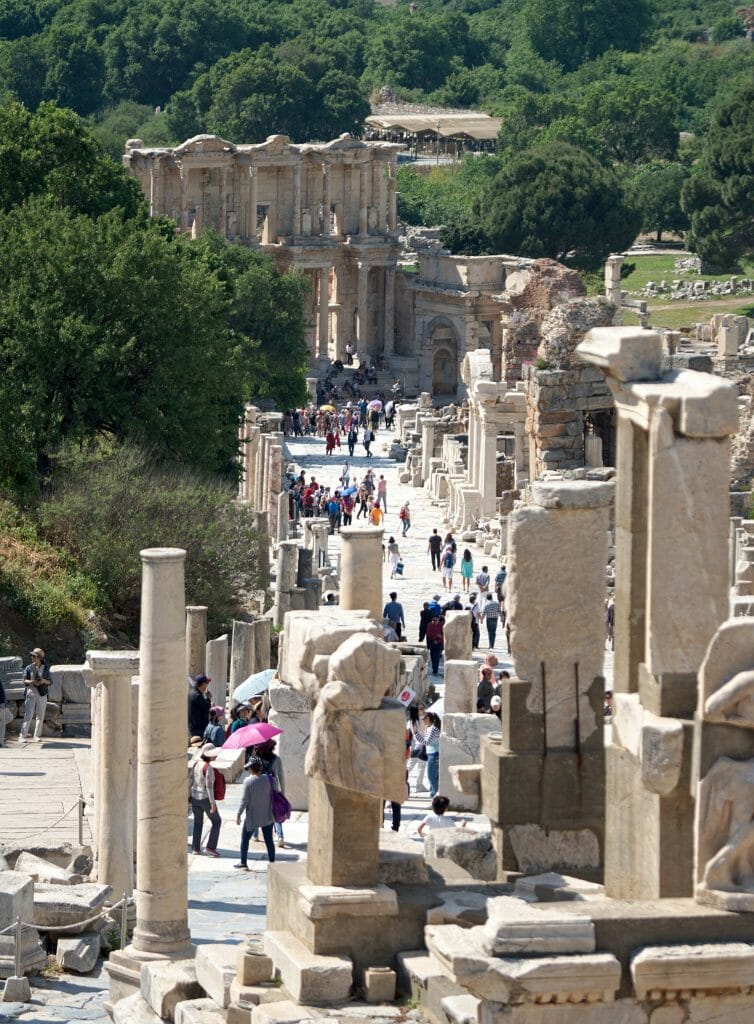
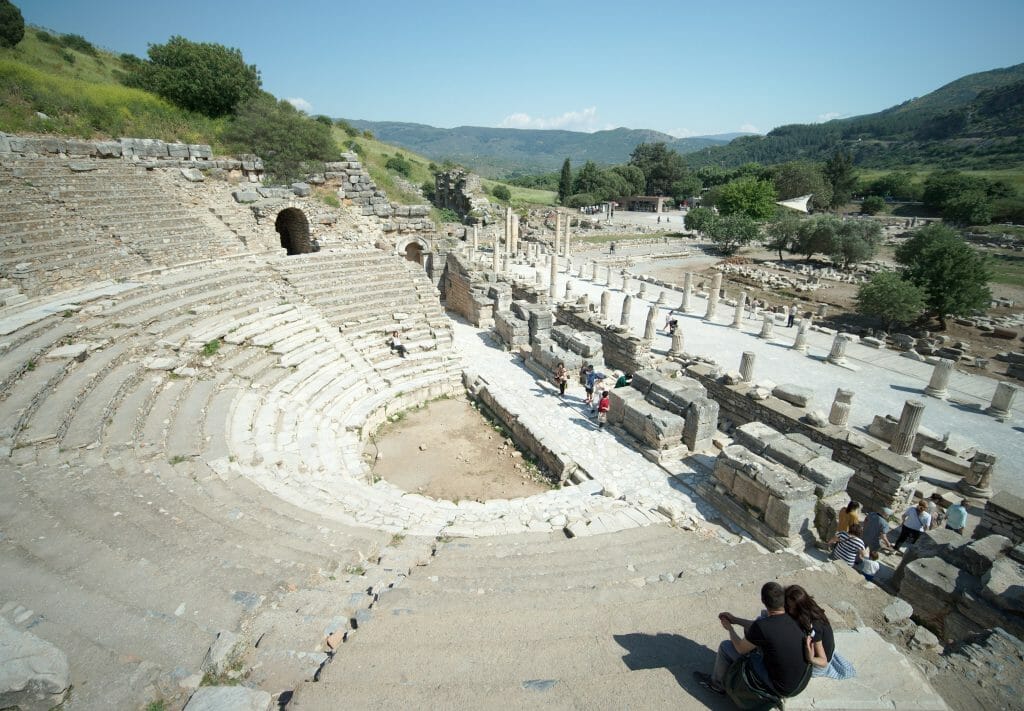
We arrived through the main entrance, on the side of the Great Theatre to the west, and the scenery is immediately impressive. A long marble avenue that once connected the port to the imposing theatre opens up before you. We continued up into the Great Theatre, a beautifully restored amphitheater that could hold more than 20,000 people!
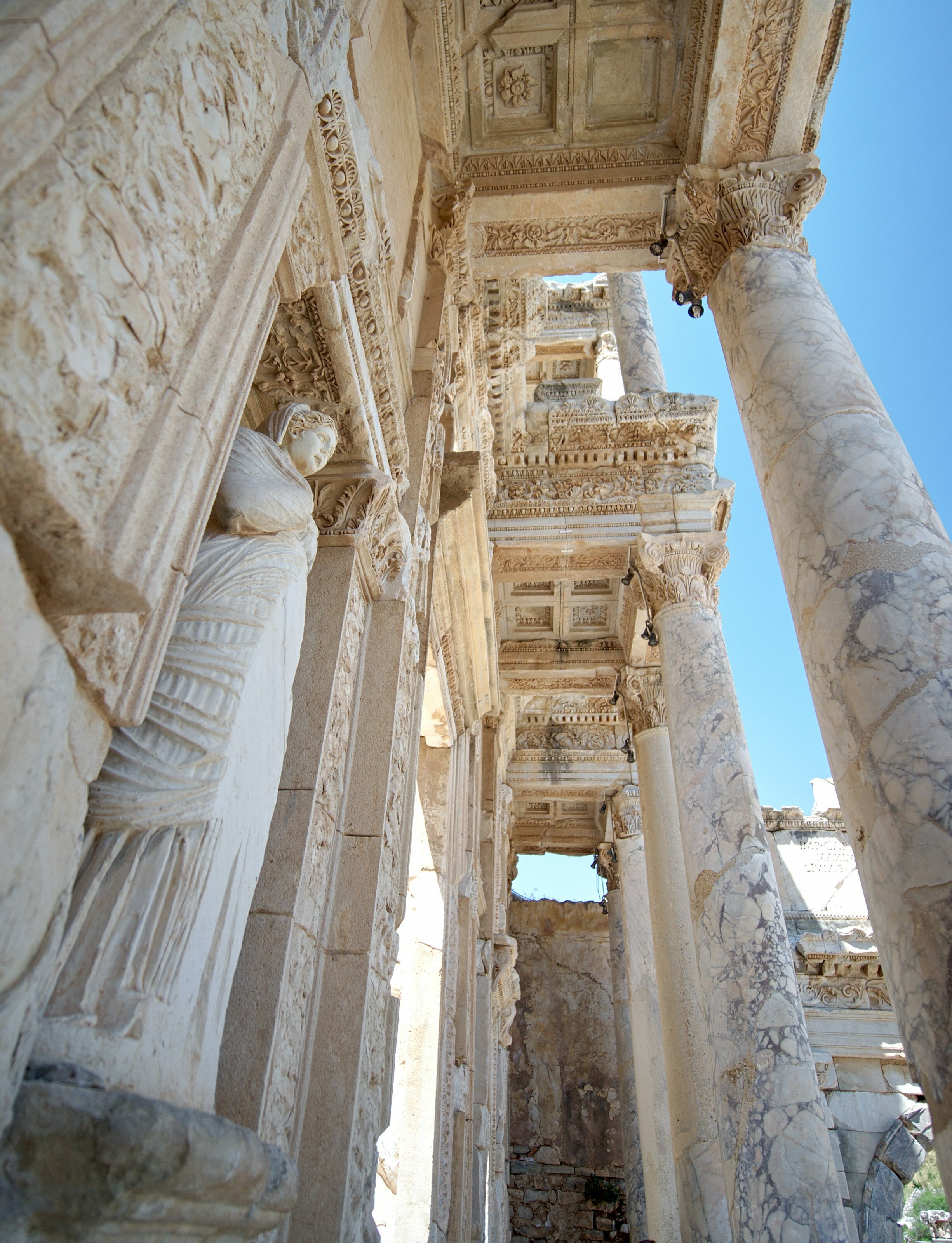
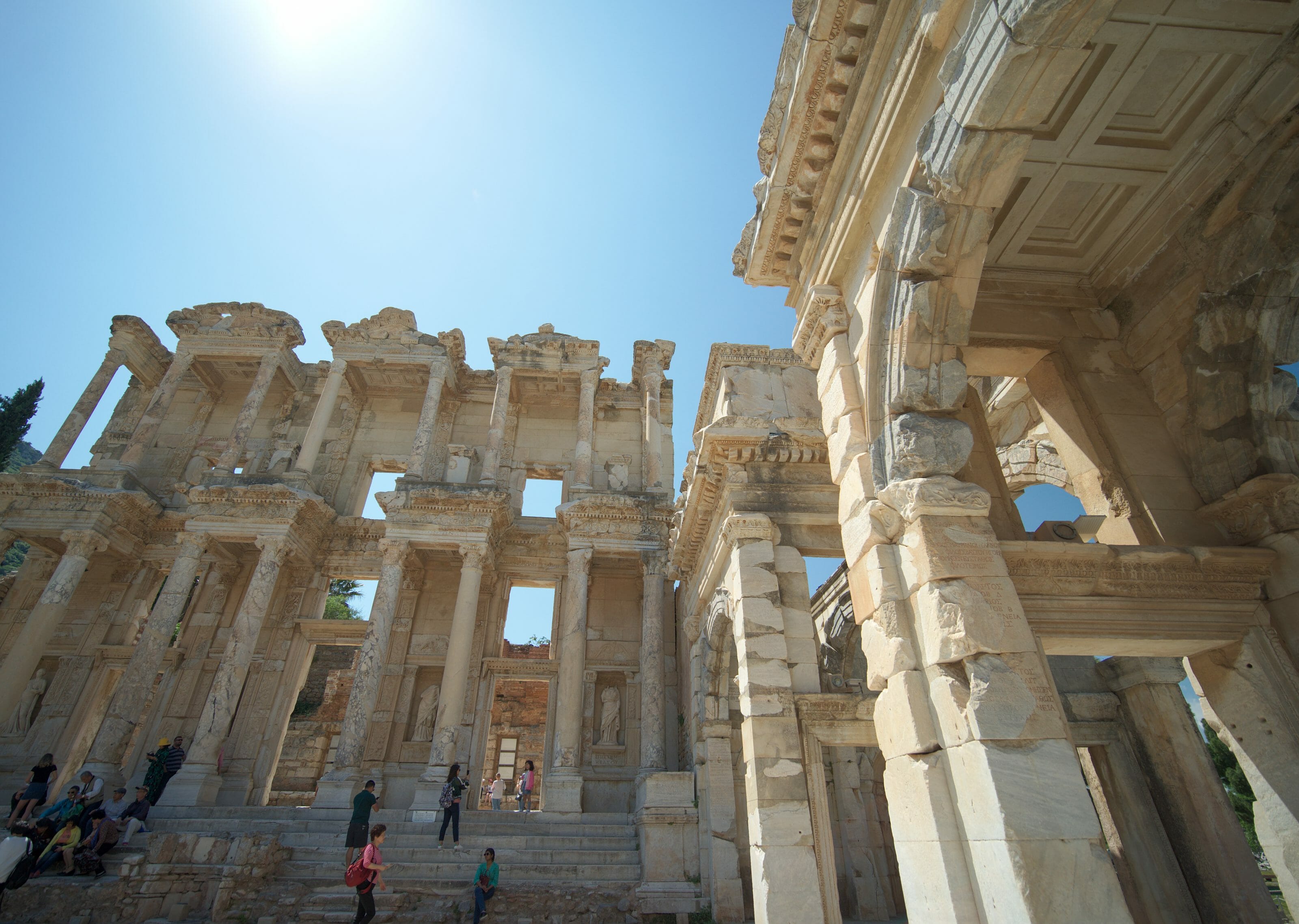
We then reached the famous and magnificent Library of Celsus, a favorite spot for budding Instagrammers. Fabienne and I had a good laugh watching the spectacle and thought to ourselves that it really does take some nerve to visit Ephesus in a little dress and heels just for the photo at the library’s entrance.
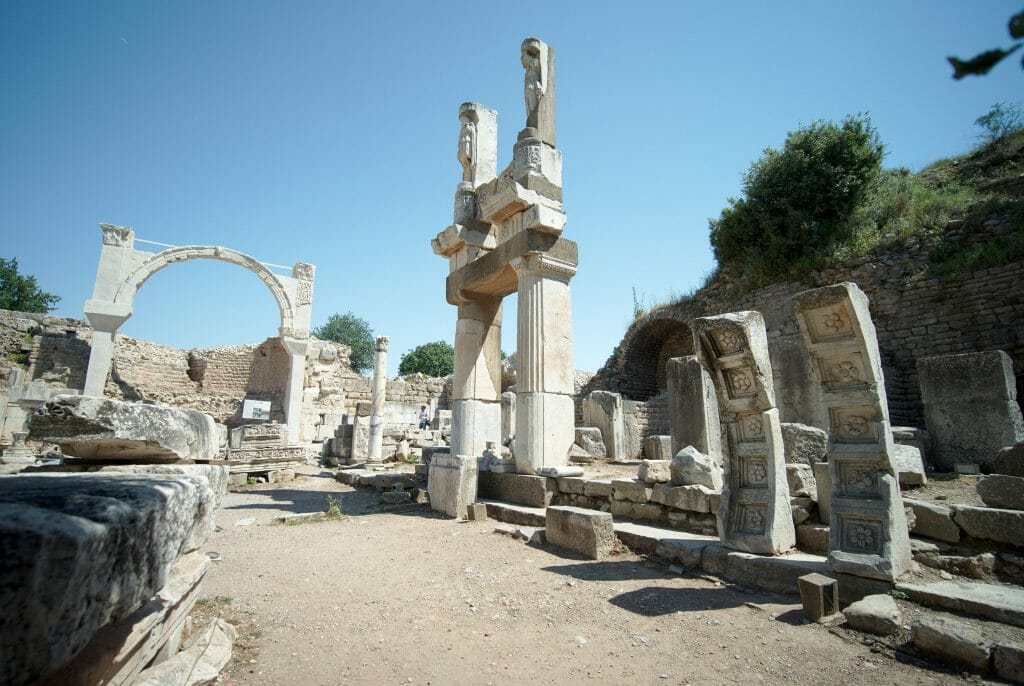
We then walked around the Lower Agora, the old commercial square, and headed up a large pedestrian street made of marble, Curetes Street. On the right is the Terrace Houses site, which we chose not to visit since it requires an extra fee (2026 price: 15 euros each!). At the top, you reach the large Upper Agora, which was once where important matters of the city of Ephesus were discussed. There’s also another amphitheater here, the Odeon, smaller but just as well restored. This is also where the upper entrance to the site is located, which is where we ended our visit.
Opening hours
The archaeological site is open every day from 8 a.m. to 6 p.m., and it reopens in the evening from 7 p.m. to 10 p.m., Wednesday through Saturday. Try to arrive as early as possible and start with the Library of Celsus. If you stay for sunset, note that one of the best spots is probably the library! That said, you’ll be far from alone ;).
How much does a visit to Ephesus cost
Admission to the site is a hefty 40 euros! Even though the price includes access to the Ephesus Museum in Selçuk, it’s still fairly expensive. And you’ll need to pay an extra 15 euros if you want to see the Terrace Houses. (Add 6 euros per person if you’d like to visit the lovely ruins of the Basilica of St. John (Aziz Yohannes Bazilikası), also in Selçuk.)
Note: we wanted to get the audio guide for our visit, but by the time we arrived, unfortunately none were left. There are a good number of explanatory panels throughout the visit, but we found them a bit sparse. We would have clearly preferred the audio guide! Another option is to book a visit directly with a guide.
If you’d like to visit several cultural sites during your trip to Turkey, it might be worth getting the MuseumPass Türkiye E-Card. More than 350 sites are included in the selection. The card costs 165 euros and is valid for 15 days starting from your first visit. It’s worth it if your itinerary takes you through Istanbul, Izmir, Pamukkale, Konya, etc.
Where to stay to visit Ephesus
To visit Ephesus, you need to head to Selçuk, a small town about 70 km south of Izmir. But based on our research, Selçuk didn’t seem to be a particularly exciting place. We know you shouldn’t judge before seeing it, but still ;). So we looked for somewhere nicer near Ephesus to stay, and that’s how we ended up in the village of Şirince. Located just 8 km from Selçuk up in the mountains, it’s also known as “Ephesus in the Mountains”. We’ll explain all that in the second part of this article.
How to get to Ephesus
From Şirince
There are, of course, several ways to get to Ephesus from Şirince. You can:
- take a taxi, which will drop you at either the upper or lower entrance for about 20 TL;
- take a minibus from the Selçuk bus station for about 5 TL a ticket. Note that it will only take you to the lower entrance of Ephesus;
- simply walk there. It takes about half an hour on foot from the Selçuk bus station to one of the two entrances. That’s the option we chose. Weird, right? 😉 We first walked to the lower entrance along a pedestrian path beside a big road (not very interesting), then came back across the fields to Selçuk from the upper entrance (much nicer). If you’d like to do the same, we’ve included a map of our hike plus the visit to Ephesus below. 8 km of walking isn’t going to kill you ;).
From Izmir
Want to do it as a day trip from Izmir? Totally doable, since it’s less than a 2-hour drive. Civitatis and GetYourGuide both offer guided tours that include transport, a guide for the day, and even entrance tickets (for the former). You can find all the details for this tour here.
The best time to visit Ephesus
We visited Ephesus in early May and were pleasantly surprised by the number of tourists. To give you an idea, the archaeological site still gets around 2.5 million visitors a year! We expected to be swimming in crowds, but we were nowhere close. There were certainly plenty of Asian and Turkish visitors, but very few Europeans… Who knows why! In any case, we’d recommend avoiding the peak summer season.
Şirince, or Ephesus in the Mountains
The history of Ephesus in the mountains
A bit of history is in order. I’ll try not to put you to sleep, but since we knew nothing about Turkish history, we did a bit of digging, haha. Basically, the decline of the city of Ephesus dates back to the 7th–8th century, when the sea receded. This, in turn, caused the silting up of what had been one of the largest ports of the time.
That’s how the Greeks gradually abandoned the coast to settle in the mountains, hence the name “Ephesus in the Mountains”. They didn’t look very far; we can agree! That’s also why it was originally a Greek village.
These Greeks lived peacefully there until the end of the First World War (lol, I’m simplifying a bit!). To put it simply again, the Ottoman Empire ended up among the big losers of that war. Part of present-day Turkey was then divided up among the Allied powers: Britain, France, Italy, and Greece. The Izmir region became a Greek-controlled zone. But the Turks, led by their leader and the founder of modern Turkey, Atatürk (an enormously popular figure you see everywhere in Turkey), fought back to reclaim their territory.
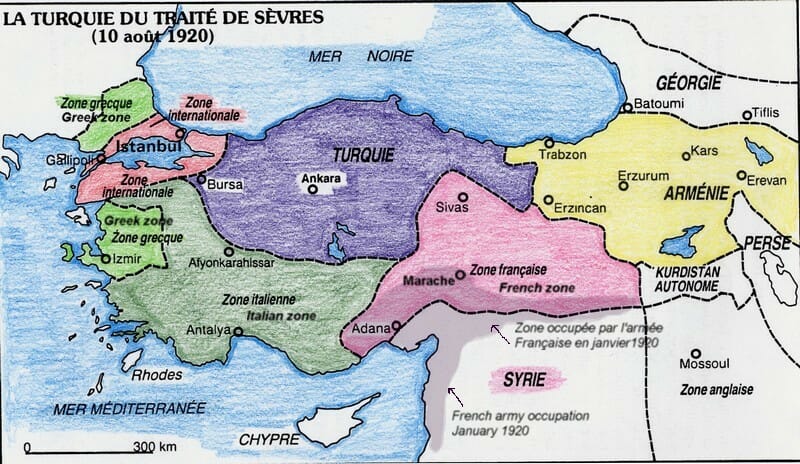
The result was a large-scale population exchange between Turkey and Greece. All Orthodox Greeks in Turkey were forced to leave the country, and vice versa for Muslims in Greece. That’s how the village of Ephesus-in-the-Mountains, once populated by Greeks, became Şirince, a Turkish village.
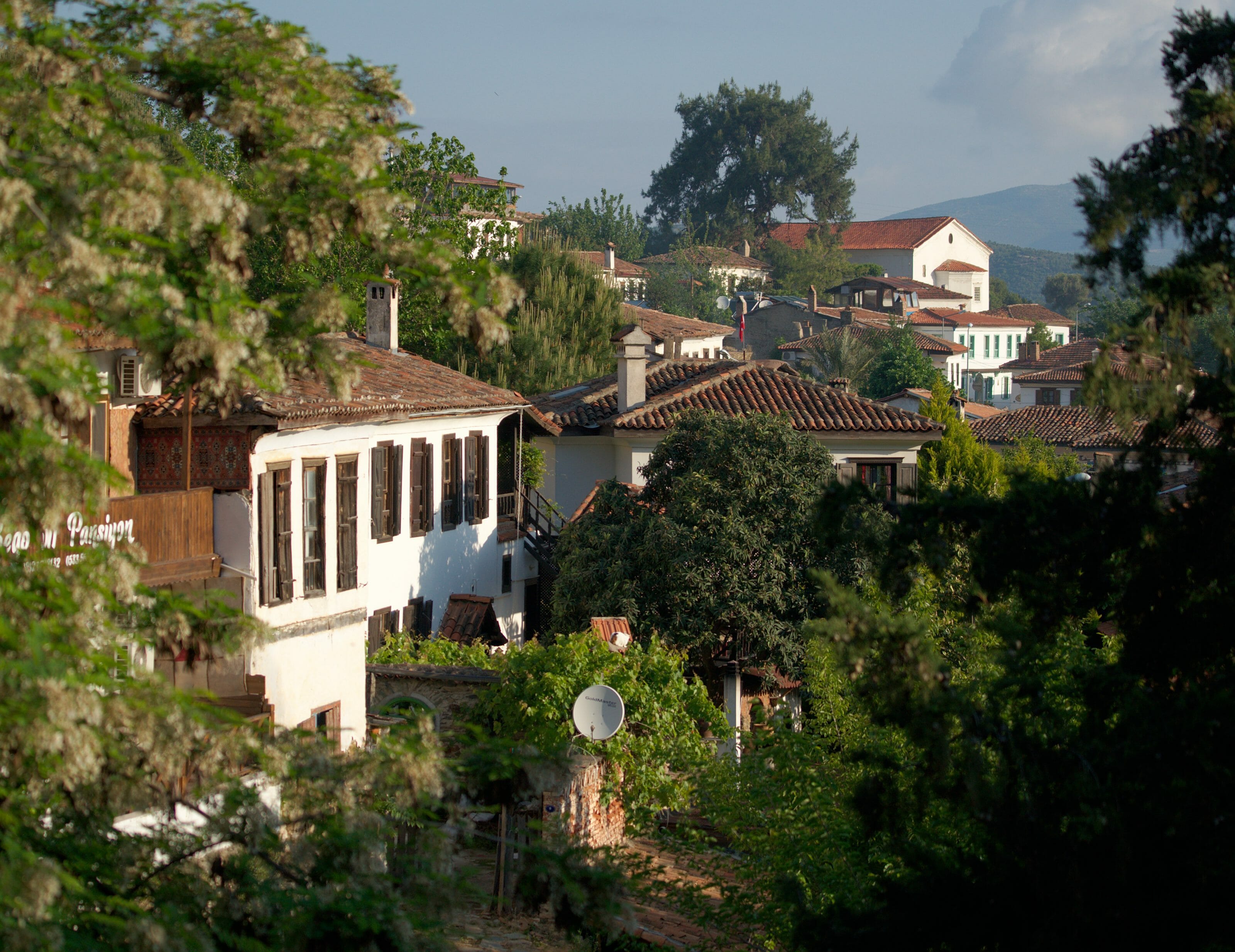
Phew, quite a story for such a small village! But if Şirince is quite popular today, it’s more for its charming traditional houses and its wine (all kinds of fruit wines as well as regular wine). So it didn’t take much convincing for us to choose Şirince over Selçuk as our base for exploring Ephesus. Say the word “wine”, and we come running ;).
Visiting Şirince
As is our habit, the first thing we did upon arriving in Şirince, once we’d found somewhere to stay, was to explore the surroundings on foot. The countryside around the village is really lovely, and we wandered among olive trees, fruit trees (cherry, peach…) and vineyards. It’s easy to see where the village’s reputation comes from, given everything sold in its little streets. We did a nice 6 km loop that we’d recommend, and we’ve included an approximate map below. It’s marked with red and white trail markers.
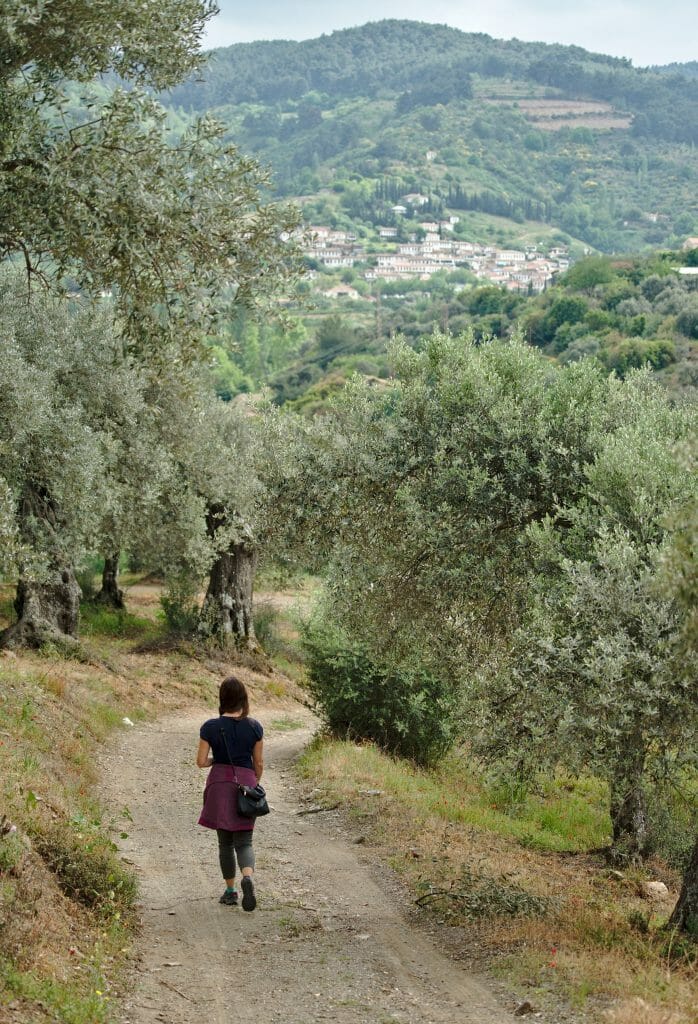
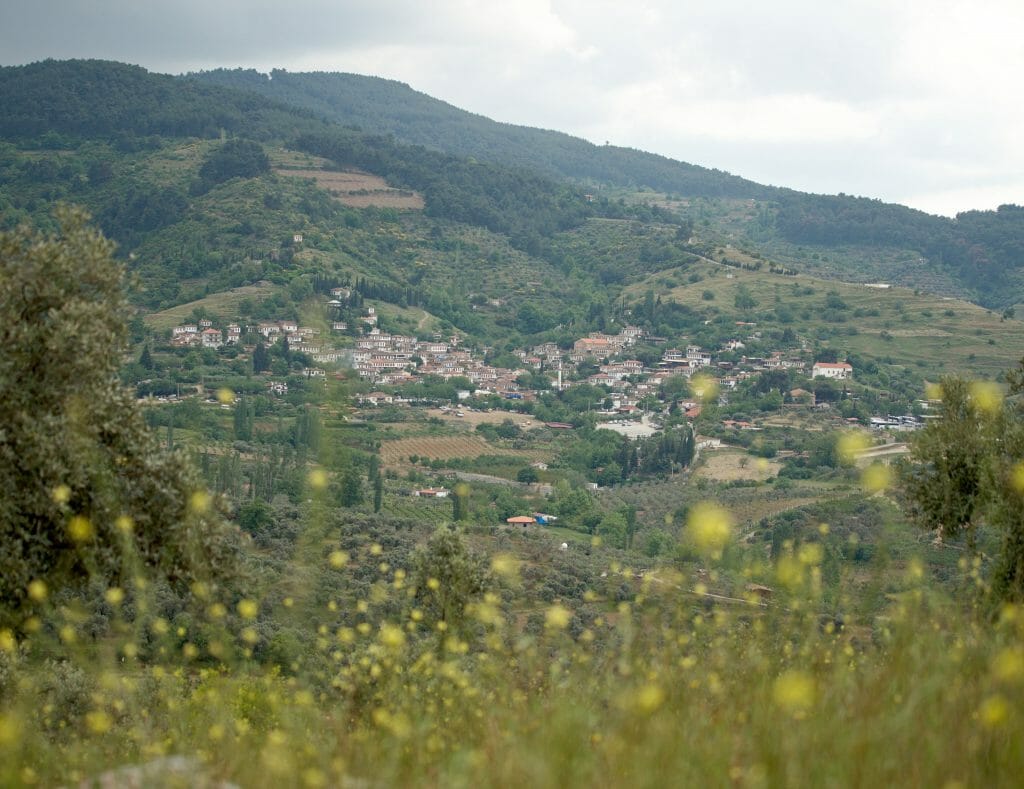
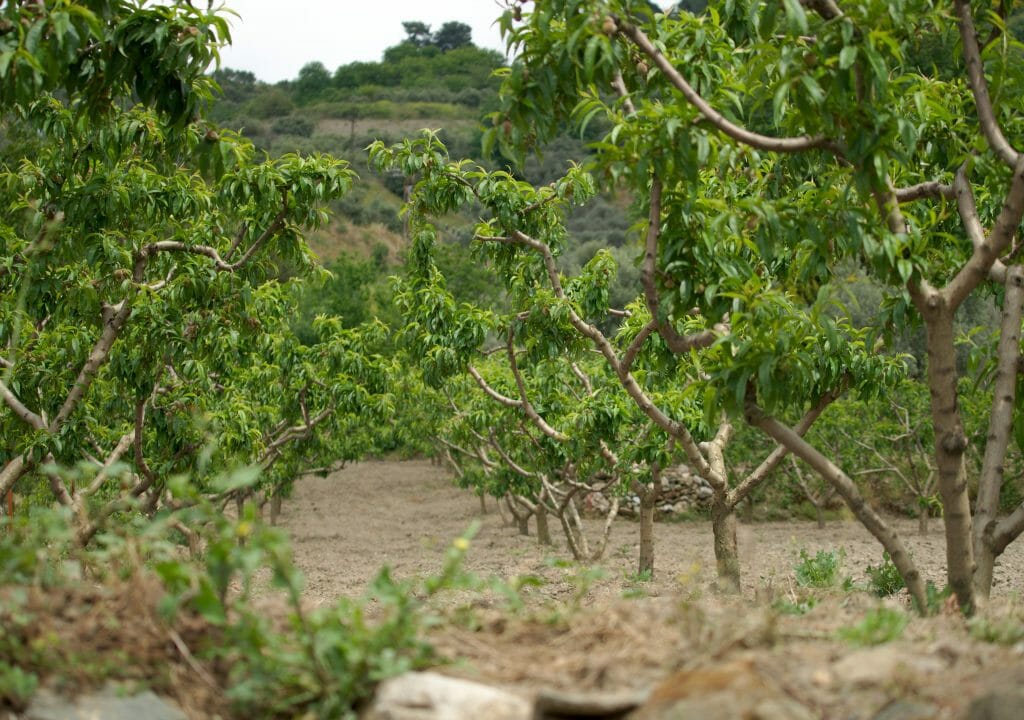
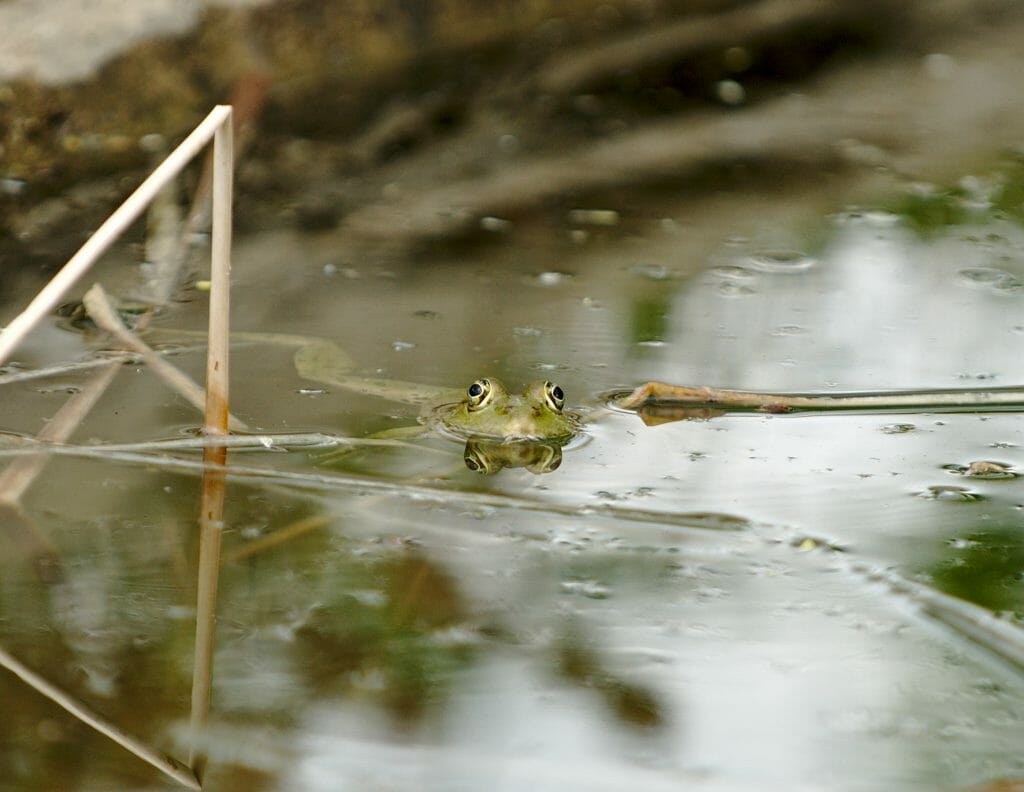
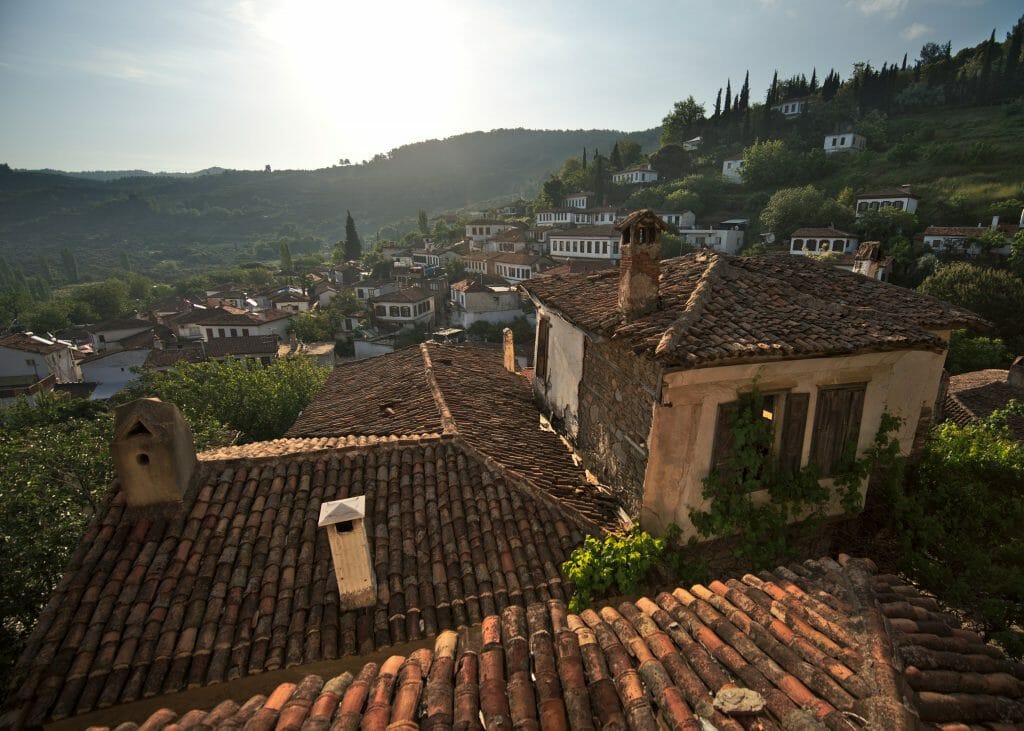
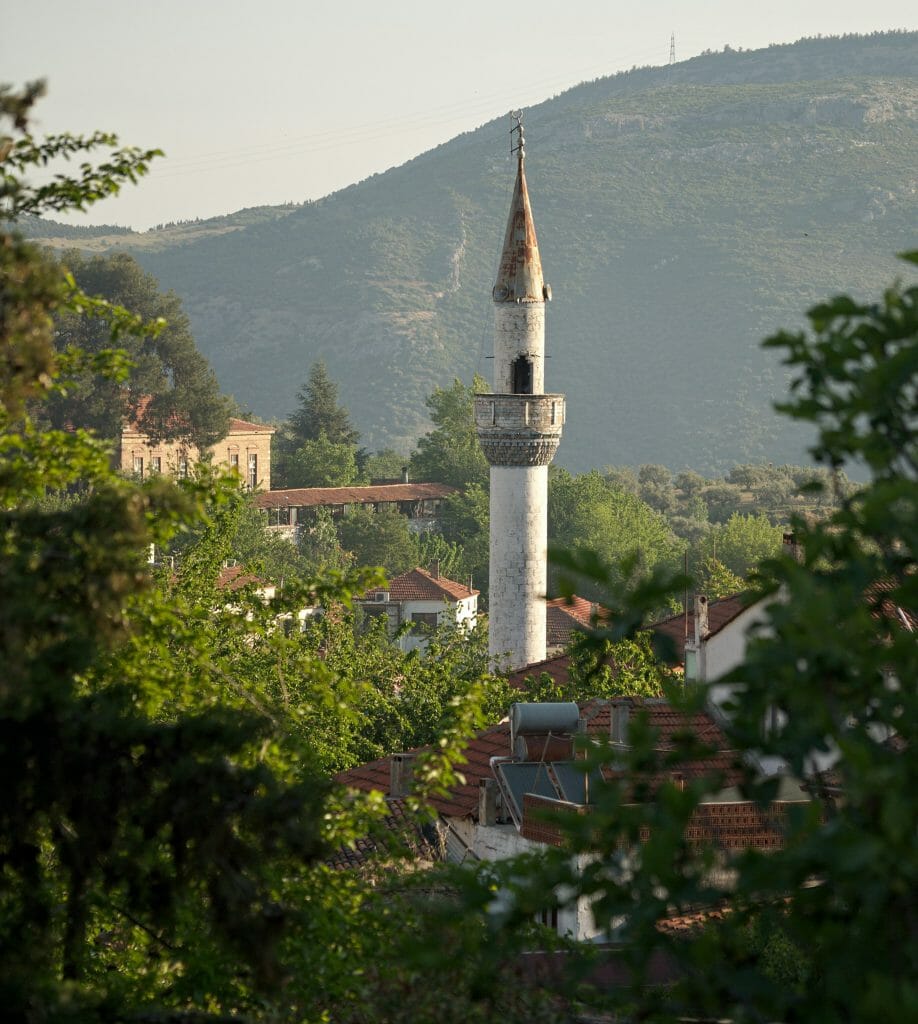
That said, the village of Şirince is quite touristy, especially during the day, when plenty of big buses arrive straight from Kuşadası and Selçuk for a few hours. But in the evening (or early morning), the village settles back into calm, and it’s lovely to wander its little streets and enjoy the beautiful light. That’s actually why we’d recommend staying overnight in Şirince rather than just visiting for the day. Here are a few photos taken in the morning that should hopefully convince you ;).
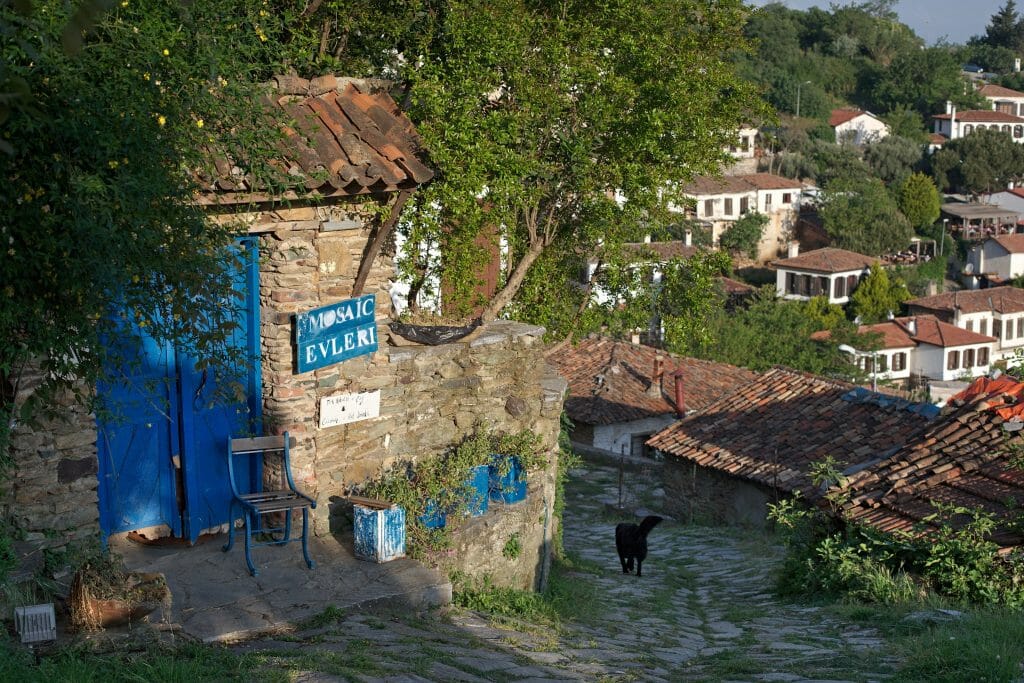
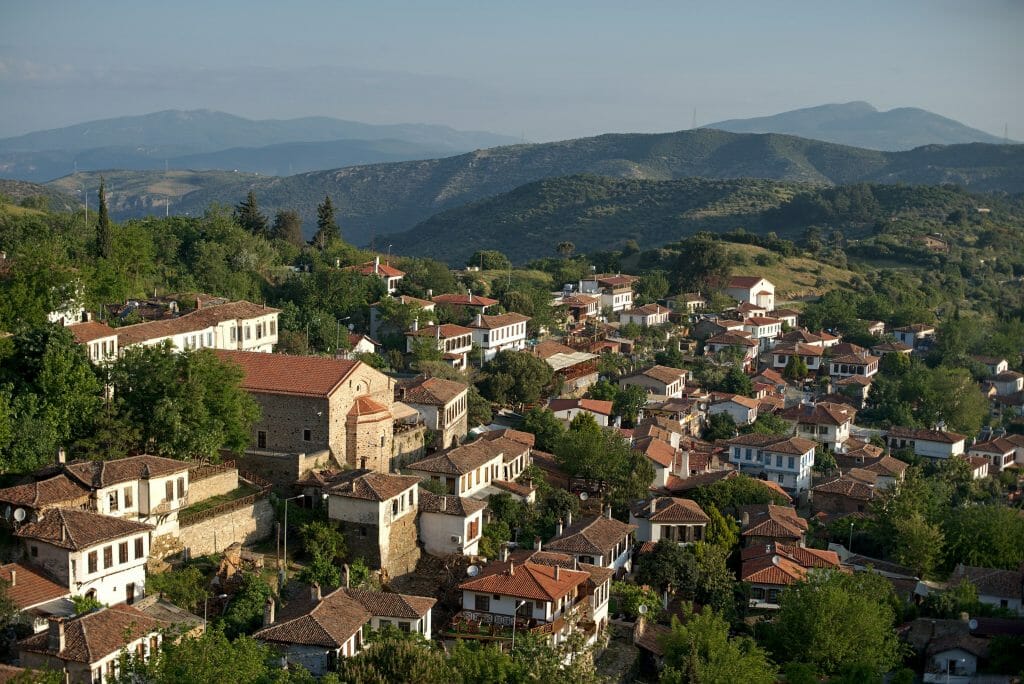
Wine tasting in Şirince
Okay, walks are all well and good, but how about we get down to serious business with a little wine tasting from the area? Just five minutes’ walk through the streets of Şirince, you’ll easily find at least 2–3 bars/shops offering wine tastings.
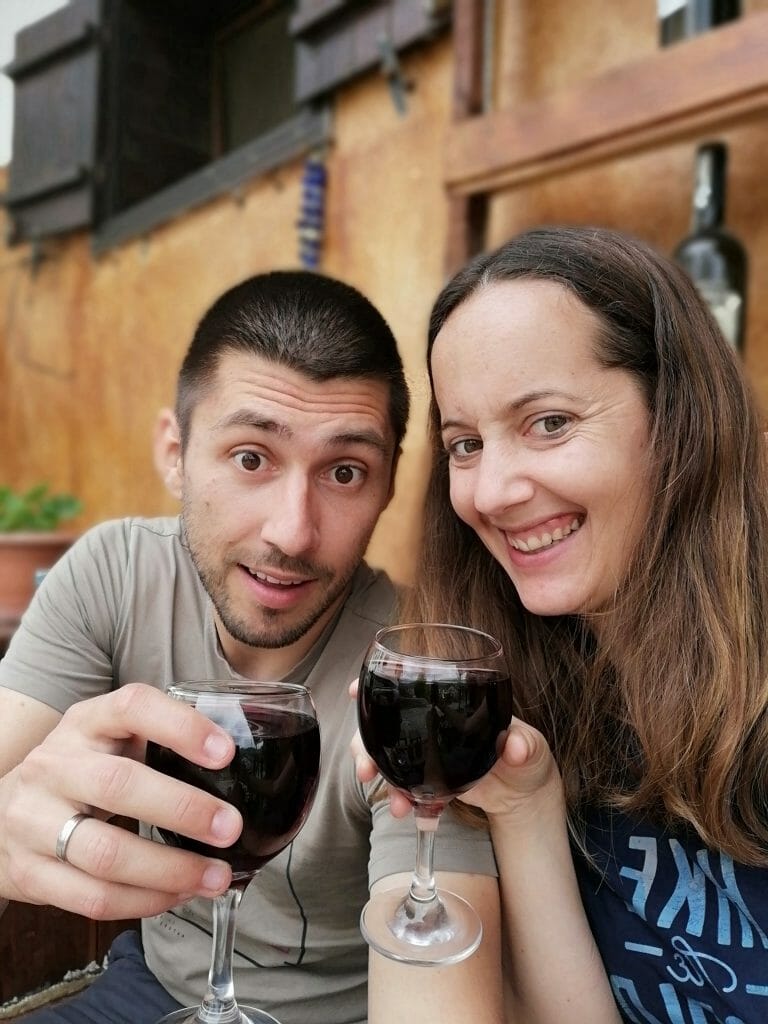
We stopped at Kıvırcık Şarap Evi (recommended online), run by a charming couple who’ve been selling their wine in the village for more than 20 years! We tried several fruit wines (cherry, melon, quince) and 1–2 red wines. Honestly, the wine wasn’t amazing, though the fruit wines were fairly sweet and went down well, nice and chilled. But the couple was lovely and spoke a bit of English and French, which let us chat with them for a while. Among other things, they shared their thoughts on the current policies of a certain Mister E. ;). He’s not exactly popular in the Izmir region, by the way… which, honestly, we understand.
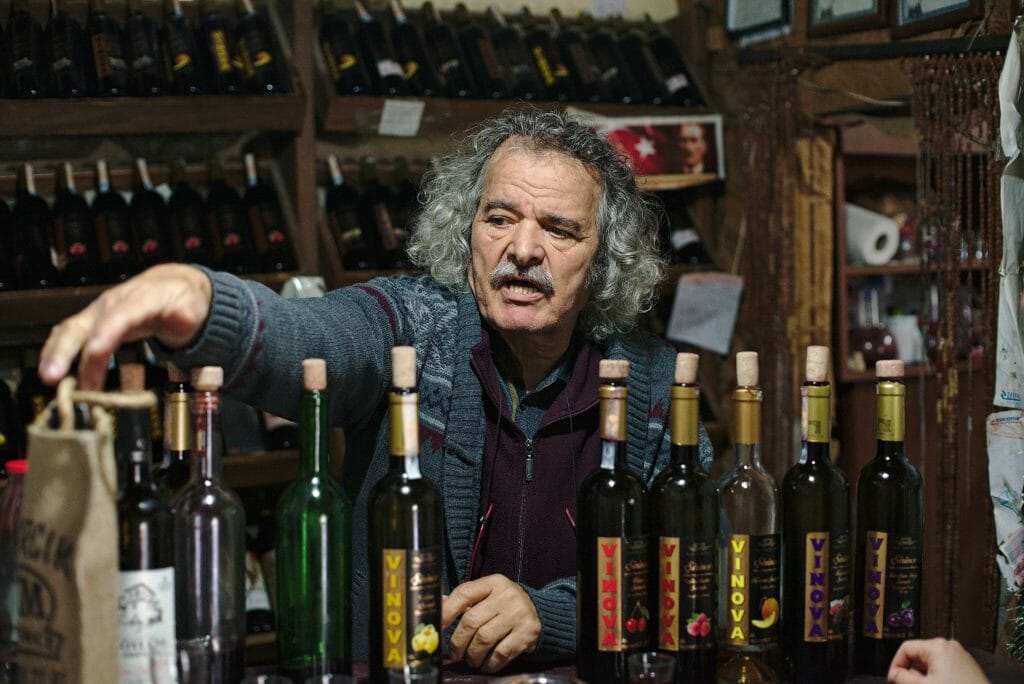
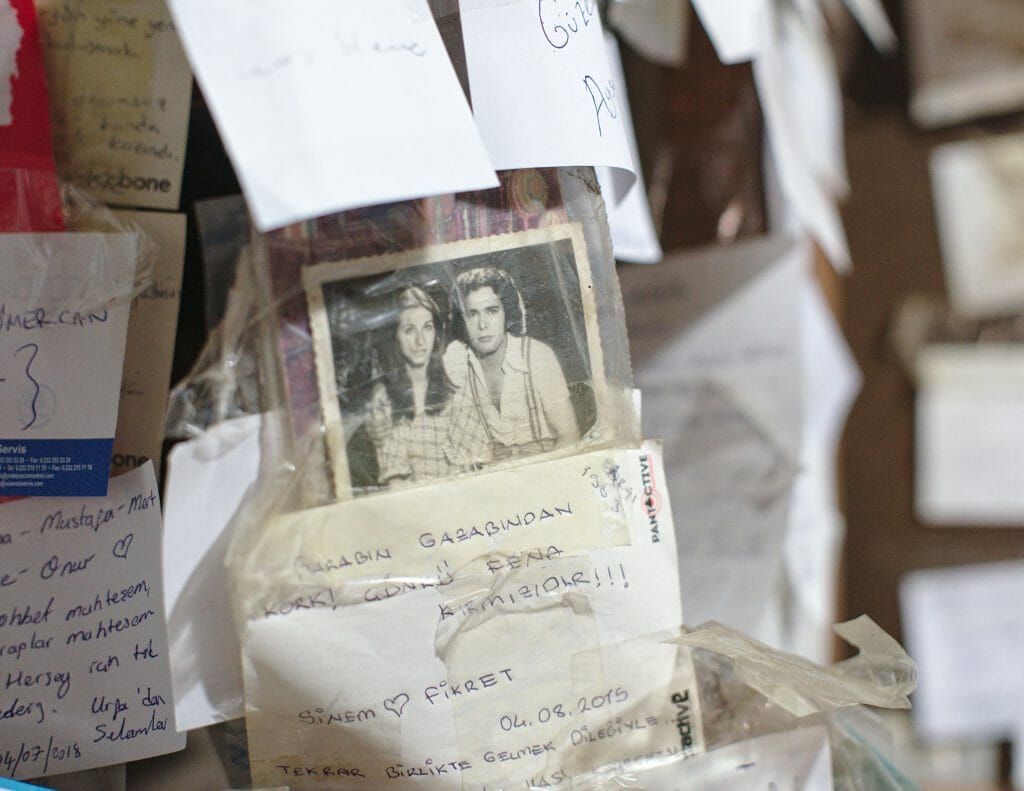
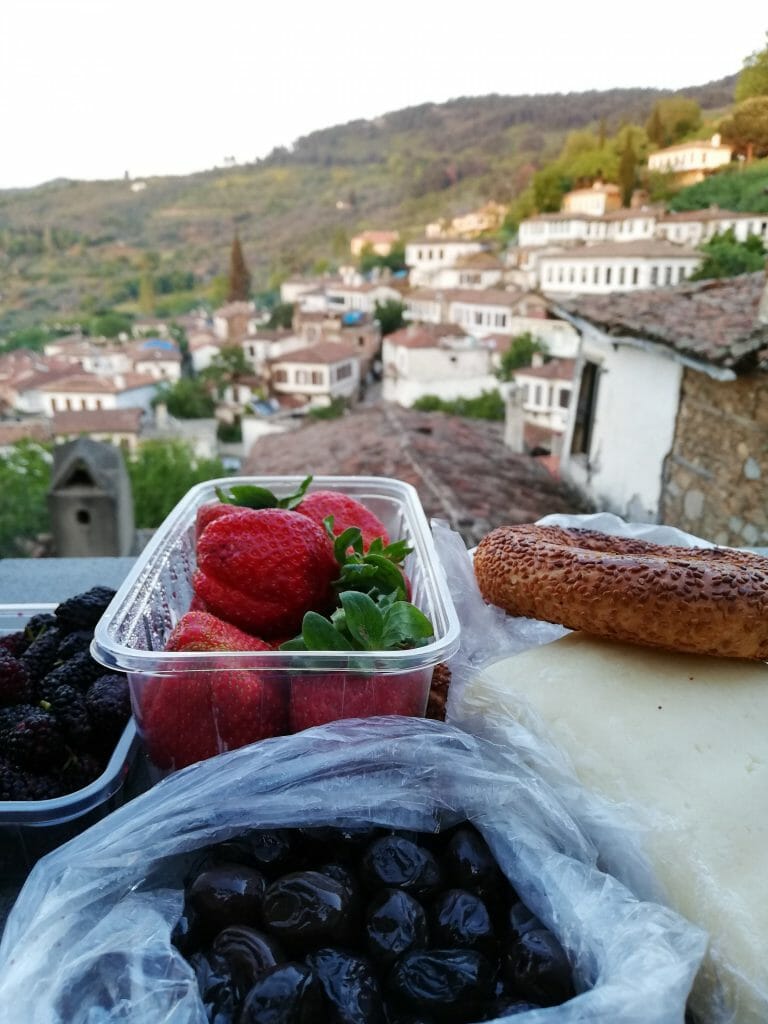
Anyway, we left after a good chat and, more importantly, with two bottles of wine in hand. So we went looking for a nice little spot with a good view over the village for an impromptu picnic. We found the perfect place right next to St. John’s Church at the top of the village. Judge for yourselves!
How to get to Şirince
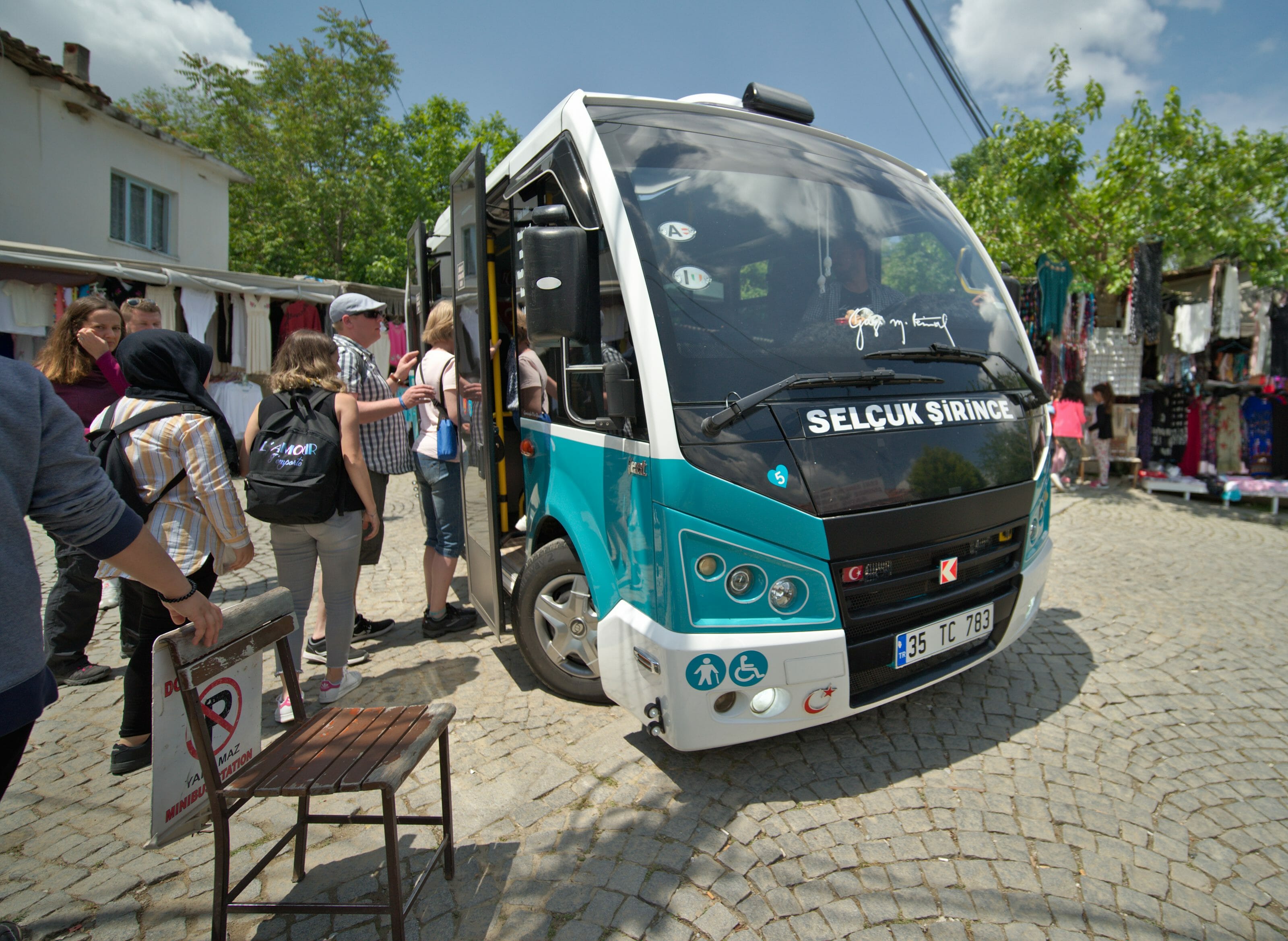 Getting to Şirince couldn’t be easier!
From Izmir, just take a train from Basmane station to Selçuk. Count on about 130 TL per person, and check the schedules online. You can also take a bus, but it’s more expensive and less comfortable than the train, so don’t bother!
Once in Selçuk, you’ll need to walk to the bus station, which takes about 15 minutes at most. Then hop on one of the minibuses heading to Şirince. They leave every 20 minutes until 8 p.m., and the fare is just 4 TL per person.
Where to stay in Şirince
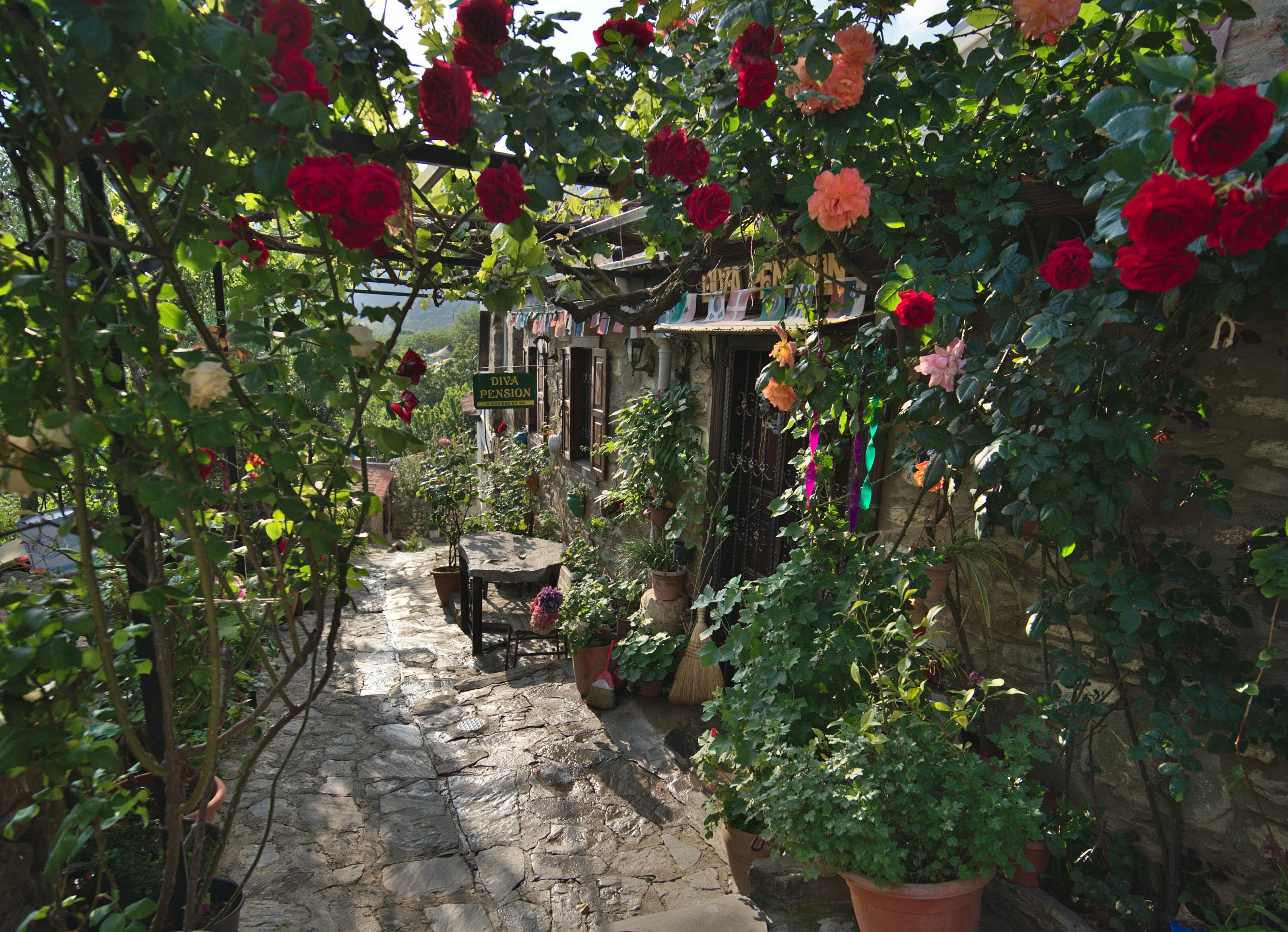
As for accommodation, we were a bit worried since the prices we’d seen online were fairly high. But we arrived without booking anything and, honestly, had no trouble finding something within our budget! There are dozens of charming little guesthouses in the village, and we didn’t have to haggle much to get a room for 2 nights. Honestly, we were very warmly welcomed at the Siricem Pension, and we can only recommend this place!
Note: there isn’t really a shop in the village. If you want to buy groceries, it’s better to do so in Selçuk, where you’ll have more options.
There you have it, now you know all about our little stay discovering the city of Ephesus and the village of Şirince. Any other tips for the area?
Next stop for us: another crowd bath at the site of Pamukkale, before slowly getting ready for our hike along part of the Lycian Way.
P.S.: We’ve put together all our tips for planning your trip to Turkey. Happy reading!
This article contains affiliate links to partner sites. When you use our links to book accommodation, a car, or an activity, you don’t pay anything extra, but we get a small commission. This helps us to offer you free, independent, and ad-free content. Thank you for your support!



Great! That helped me prepare my trip to Ephesus. Thanks:)
Your guide has been pretty accurate ! I just visited Ephesus in March 2025 and the entrance fee already went up to ca. €30 visits. It was already quite warm out there (not scorching hot yet) and a big crowd was present. Still it is a place worth visit. The well-preserved ruins justify the price. I wish I had read your blog before my trip to Ephesus commenced. I didn’t know Dolmuses operate to Ephesus’s lower entrance and Sirince (but I ended up only going to Ephesus as I spent a lot of time on the hotel bed near Ephesus due to my food poisoning). Next time I will visit them with the full health