Is Hong Kong a backpacker's paradise? We answer this question in this practical guide to help you plan your trip!

China was the first country we visited on our round-the-world trip, and it remains an absolute favorite. This country truly touched our hearts and left a lasting impression—we'll definitely be back! Beyond being the place where Ben proposed, China is a country that genuinely got under our skin. On this page, you'll find all the practical information you need to plan your future trip. At the end, you'll discover all the articles we wrote during our 2.5-month journey. Happy reading!

In total, we traveled for nearly 10 weeks. That might sound like a lot, but when you consider the size of the country, we barely scratched the surface! In fact, if you do the math based on land area, spending 2.5 months in China is equivalent to a Chinese tourist spending just 7 hours in Switzerland!
To see all the articles we wrote about this massive country, click the button below to display the China map with all posts organized geographically.
If there's one period to absolutely avoid, it's Golden Week—the week-long holiday following China's National Day on October 1st! To be completely honest, we stayed locked in our hostel because there were crowds everywhere. Accommodation is fully booked weeks in advance, public transport and streets are packed, and prices are inflated... In short, don't plan to travel in early October if you can help it! Otherwise, the rest of the year is great for all activities. Keep in mind that July and August see the peak of tourist season.

Climate-wise, China is divided into roughly 4 regions:





China is an incredibly diverse country, rich in landscapes and with fantastic cities to discover! We spent 2.5 months there in total—here's the itinerary we followed and our suggestions for improvement.

Note: Please excuse the sometimes slightly random placement of certain regions on the map—we did our best! ;)













As you can see, we only covered a tiny part of the country. So we still have plenty to see for a future trip!



Do you have 3 weeks to travel through China? Then we really recommend focusing on 1 or 2 regions for your stay. The distances are truly significant, and even taking domestic flights, fitting our itinerary into less than a month seems too optimistic.
Regions like Yunnan and Sichuan combine very well for a circuit and are truly superb regions!
To the 2 itineraries below, add at least 4 days in Beijing, including 2 dedicated to visiting the Great Wall, and 2 days in Xi'an. You can take a flight from Beijing to Xi'an or take an express train or an overnight train to optimize travel time.











We organized our entire trip ourselves, but China can sometimes be a bit intimidating, especially if it's your first major trip. We're familiar with the Evaneos travel agency, and if you're looking for a trustworthy agency, we recommend them wholeheartedly! They work exclusively with local guides and guarantee that the price you pay through them is the same as going directly through the guide.
 We actually met one of the guides Evaneos works with during our visit to Kunming without even knowing it. We wanted information about Yunnan and had emailed him. Rather than responding virtually, Yan suggested we go out for dinner together. You have to admit that's really nice!
He speaks excellent French and wanted to practice a bit. It was a great meeting, and Yan gave us very good advice about Yunnan.
Honestly, if you're looking for a guide, we highly recommend him.
This article contains affiliate links to partner sites. When you use our links to book accommodation, a car, or an activity, you don’t pay anything extra, but we get a small commission. This helps us to offer you free, independent, and ad-free content. Thank you for your support!
With over 40 international airports, it's easy to reach any region of China from anywhere! While Beijing seems like a logical first stop on an itinerary, other major Chinese cities are just as feasible given the minimal price variations between flights. A Paris-Beijing or Paris-Chengdu flight costs €500, while a Paris-Xi'an flight costs €515. In short, if you want to skip Beijing, it's totally possible and won't impact your budget!

By land, there's only one place to cross the border between Laos and China—at Boten, and you'll arrive in the village of Mohan. However, you'll easily find trains and buses between major cities, like Luang Prabang and Kunming, for example.
From Sapa in Vietnam, it's very easy to cross the Chinese border by going to Lao Cai to arrive at Hekou. If you're in the Hanoi area, the nearest border post is in the northeast, at Dong Dang, to arrive at Youyi Guan in China.
Budget-wise, China is probably slightly more expensive than Southeast Asian countries, though... But it's also a country with significant differences between regions!

For our part, our itinerary took us to cities like Beijing, Xi'an, Canton, Chengdu, and Guilin—touristy places but quite affordable. On the other hand, we didn't visit Shanghai or Shenzhen, known to be more expensive. In short, your budget will depend heavily on the region, your activities, and your accommodation.
In China, the official currency is the renminbi (RMB), better known as the yuan (CNY). The current exchange rate is €1 = 8.3 RMB. The currency has been fairly stable over the past 10 years—check the current rate before your trip!
Withdrawing yuan is quite easy. You can withdraw up to 3,000 yuan per withdrawal (€361), and Bank of China ATMs are probably the safest for foreign cards. Also, don't trust the Visa and Mastercard logos plastered on ATMs—your cards might be refused like ours were!
Tip: When withdrawing money, you'll probably be offered the option to apply the bank's exchange rate or process the transaction in euros: this is dynamic conversion. In all cases, refuse because it will always be disadvantageous for you.
Finally, to limit banking fees, make sure you don't have fees with your bank, or subscribe to an online bank like N26.

To give you an idea, we spent an average of €22 per day per person.
| Expense category | Daily budget |
|---|---|
| Accommodation | €8,5 |
| Transportation | €11 |
| Food & Drinks | €15,8 |
| Extras | €4,4 |
| Visits | €4,6 |
A few remarks, however:

Since China is a very touristy country, you'll have no trouble finding mid-range and high-end hotels designed to attract wealthy Chinese and foreign visitors. Nevertheless, youth hostels are booming, and you'll easily find more than decent accommodation that won't break your budget. Here we are talking about mainland China; the cost of accommodation in Hong Kong is much higher!
Due to high tourism, we recommend booking all your accommodation. Depending on the period (especially during Golden Week in early October), accommodations fill up weeks in advance! We had reserved everything before our visit to avoid unpleasant surprises upon arrival. For youth hostels (dorm beds and double rooms), we recommend Hostelworld. Otherwise, for hotels, Booking offers the best prices online.
To find accommodation even more easily, use the map below, which compares hotels, hostels, and apartments in one place. Simply zoom in on the city of your choice and use filters to refine your search.



Want to go to China? Then you'll absolutely need a visa! And I'm sorry to tell you, but getting a Chinese visa isn't completely straightforward... Nothing dramatic, I assure you, but between online agencies charging a fortune and embassy and consulate websites being as old as Methuselah, it's not a walk in the park...
For several years, consular visa services have been replaced by visa centers. It's a private company recognized by the embassy that manages all applications, and the embassy simply validates or rejects visas.
From 2024 until December 31, 2026, over 70 nationalities are exempt from visa requirements for stays under 30 days. Europe, Asia, and South America benefit the most from this policy. However, citizens of the United States, United Kingdom, Canada, Czech Republic, Lithuania, Sweden, Ukraine, Indonesia, and Mexico only have an exemption for transits under 10 days (G visa). So, if you're planning to spend more than 10 days in mainland China, you'll need to apply for a tourist visa (L visa).
Mainland China refers to all Chinese territory excluding Hong Kong and Macau, which don't require a visa (visa exemption for up to 90 days).


Note: To enter China, your passport must be valid for at least 6 months after your departure date from Chinese territory. The L visa is renewable up to 2 times maximum.
The process varies depending on your country. Are you American or Lithuanian? Then head to the COVA website (Chinese Visa Online Application Form), the official Chinese site for visa applications. For everyone else, the process is the same: you'll need to go to this official website to complete an online pre-verification to obtain your visa application form. After that, you'll need to visit the nearest visa center to submit your documents. Let us walk you through all the steps!

Note: You can use agencies that handle all the paperwork for you, but it's more expensive. For example, if you see a price over $140 USD (or €111), you know you're dealing with a third-party agency.

To validate your visa application, you'll need to provide certain items depending on your nationality. Generally speaking, you'll need to gather:

What if I don't have an exit ticket?
If you don't yet know how you'll leave the country (especially if traveling overland), there are several solutions. People often talk about renting plane tickets. We've heard good things but have honestly never tried it. In any case, it's a safe and 100% legal solution to continue your round-the-world trip! Onward Ticket offers you the option to book a flight, providing you with a real nominative plane ticket. Confirmation is immediate, and you receive your ticket by email in less than a minute! The ticket cancellation happens automatically after 48 hours. The price? From $16 per ticket.
In China's case, another solution (not necessarily more expensive) is simply to buy a low-cost one-way flight! From southern China, you can find €20 flights to Thailand, Singapore... In short, buy a flight around your theoretical departure date and see if you take it or miss it ;). To find a cheap flight, simply go to Skyscanner and enter "China" as the departure point (you can put the entire country), then enter "Everywhere" as the destination. All you'll have to do is choose the cheapest combination! :)

If you plan to travel to Tibet, you must have special authorization (Tibet Travel Permit) in addition to the visa. It's issued by travel or tourism agencies holding a government license. Plan your Tibet stay at least 15 days before the expected date, giving the agency time to complete administrative procedures and for your permit to arrive at your hotel.
No vaccinations are mandatory before traveling to China. However, the following vaccines are recommended:
For the latest health information, visit the website of the Centers for Disease Control and Prevention.
Note: China requires yellow fever vaccination if you're coming from an endemic area or if you've transited for more than 12 hours in an airport from one of the countries on this list.
To learn everything about different means of transportation, we wrote a complete article on how to get around by plane, bus, and train across China. We wrote it at the end of our stay and gave all our best advice there.

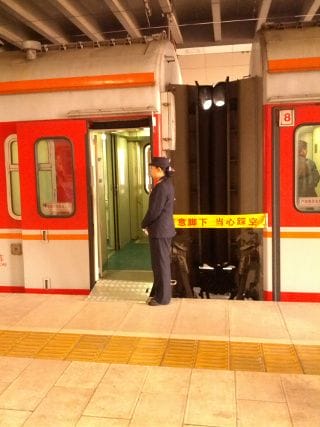
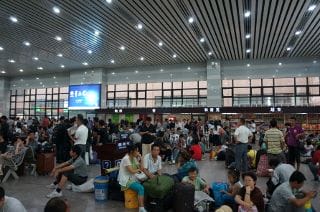
Internet access in China is an important issue. Internet censorship is still very present in China today, with over 18,000 blocked sites. These include gaming and pornographic sites, of course, but also less expected content like the New York Times or Spotify.
Planning to use Instagram, Facebook, Google/Gmail, YouTube, or WhatsApp during your stay? If you want to surf freely on the internet in China, we recommend using a VPN. ExpressVPN is the service we've subscribed to for many years. We continued using it outside China, especially to secure our connections when on public wifi.
Note: Since VPN sites are blocked there, the VPN must be installed before entering Chinese territory!
No matter what country you visit, it's always appreciated to know a few words in the local language. Here are the absolute basics of Mandarin for asking basic everyday things.
| English | Mandarin | English | Mandarin |
|---|---|---|---|
| Hello | Ni hao (pronounced "Ni rhao") | Water | Shui ("Shoué") |
| Thank you | Xiè xie ("Ssièssié") | Goodbye | Zàijiàn ("Tsétienne") |
| Please | Qǐng ("Tsin") | Yes/No | Shì de ("Shi da")/Fēi ("Féyi") |
| My name is... | Wǒ jiào + first name ("Wo jiao + first name") | Chicken | Jī ("Tsi") |
| Not spicy | Bù là ("Bhou la") | Cheers! | Gānbēi ("Kanpeï") |
Given China's large population, keep the dates of public holidays and national festivals in mind when planning your itinerary to avoid unpleasant surprises, especially regarding transportation and accommodation bookings.





Chinese cuisine is very probably the most "exported" in the world. No matter where we live, we all have at least one Chinese restaurant near us! Although Chinese restaurants are common in France or Switzerland, I'll let you in on a secret: Chinese cuisine in China has little to do with what we find back home :)!
Overall, we ate extremely well during our trip, even if we often didn't understand what we had on our plate haha. In fact, we wrote the 10 commandments of Chinese cuisine so you're prepared for what awaits you!

But do they really eat dog?
Yes, you can find it... But rest assured, dog is a delicacy, so there's little chance it'll be served to you without your knowledge. This meat costs much more than pork or beef!
Otherwise, Chinese gastronomy consists of lots of vegetables, quite a bit of fried food, but especially animal parts we're not necessarily used to eating. In China, when they slice chicken, they don't just take the breast like we do! The cut is much more radical, and bones are part of the service. Nothing is wasted, and everything is eaten! :)
The other most surprising thing about Chinese dishes? It's SPICY!!! Mamma mia, for some dishes (especially in Sichuan and Yunnan) we were in tears throughout the meal! And a small note, when it's (very) spicy, it tends to sting twice... #JustSaying :)




The first thing to know about the internet in China is that to access your favorite sites while traveling, you'll need a VPN. We already mentioned it above, but censorship (the Great Firewall) blocks many sites, and only by subscribing to a VPN can you use the internet as you please, using public Wifis (airport, hotels, shopping centers...).
Buying a local SIM card or an eSIM is rather a good idea—connecting to public Wifi often requires SMS confirmation. Moreover, having a Chinese number and 5G access will help you use local apps (DiDi or Uber's equivalent, WeChat...), navigate streets, translate visually or vocally, etc. Also, the vast majority of services use phone numbers as identifiers.

Is Hong Kong a backpacker's paradise? We answer this question in this practical guide to help you plan your trip!
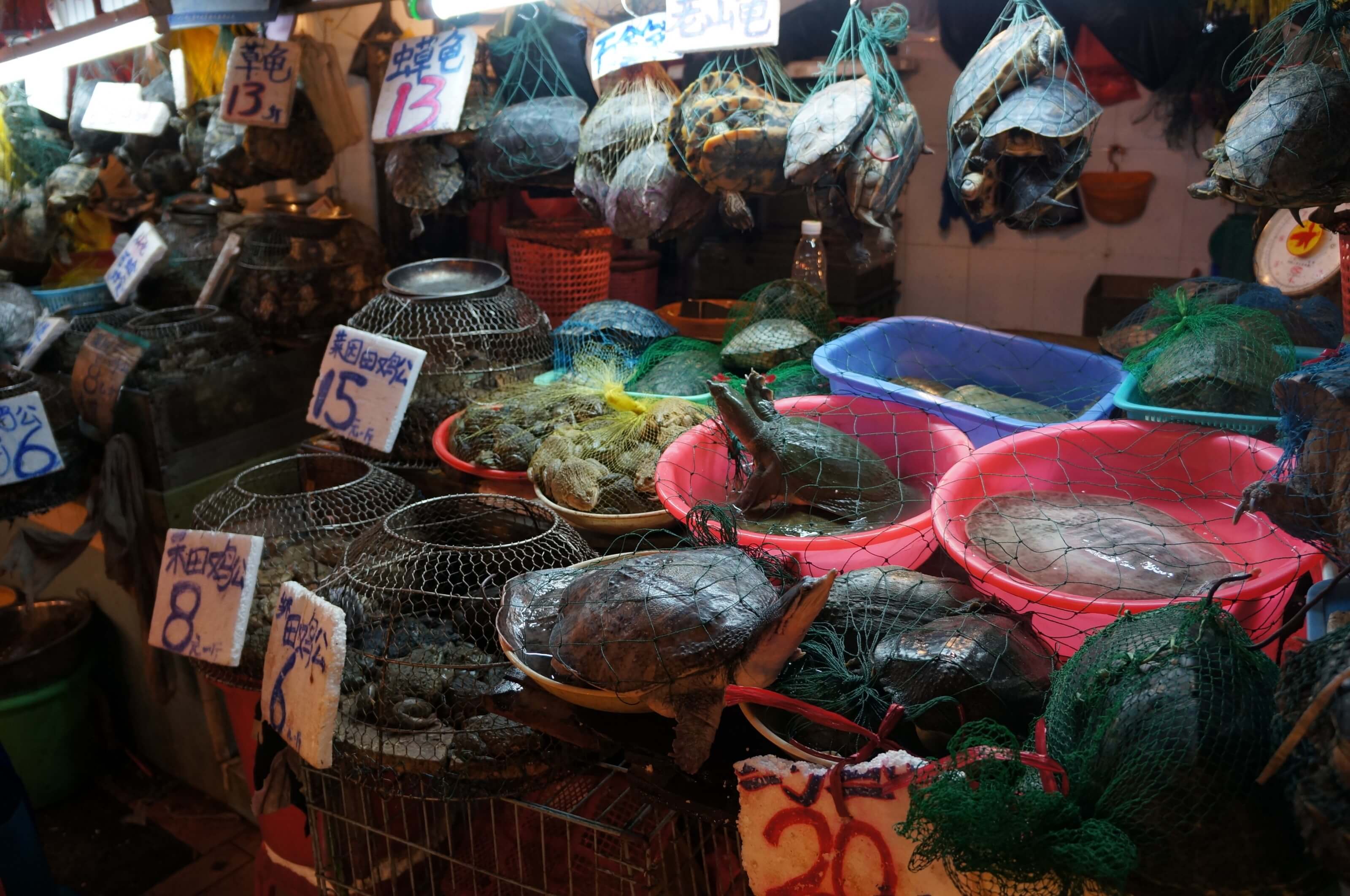
two months of travel in China, discovery of Chinese cuisine. You will discover this food under the frome of ten small commandments.

After 2 months in China we reveal you our conclusions about the destination and budget / Our impressions but also the price of our trip to China.

Between breathtaking landscapes and a mishap during a walk, we take you to Guilin and Xingping, a small village on the banks of the Li River that is as good as Yangshuo.

Yuanyang is undoubtedly one of the most beautiful rice fields in the world! Here is our practical guide to visiting this gem of Yunnan.

During the Chinese Golden Week we went to Yunnan province, a little with the idea of hiding from the crows... not our best idea so far :)

Sport in China is often free and it happens everywhere... in parks, on the street, in front of a shop. We're showing you this in video

China is a country in which it is easy to travel by local means of transport, here are our tips and tricks to make your travel easier.

We'll give you all the practical advice you need to trek through Tiger Leaping Gorge! On the agenda: steep cliffs, waterfalls, and incredible views!

Love for wide open spaces and mountains? Discover Western Sichuan with its towering peaks and Tibetan plains!

We have been in China for 6 weeks now, and we are learning about chinese culture every day. A brief overview of the best of the worst of Chinese habits

Welcome to Chengdu, capital of Sichuan Province! We'll take you to meet giant pandas and discover this city full of surprises!

On the program for the visit to Mount Emei: lush vegetation, rivers, waterfalls, temples, and LOTS of stairs!

We take you to discover Mount Hua, one of China's 5 sacred mountains. Watch out, it's climbing fast!
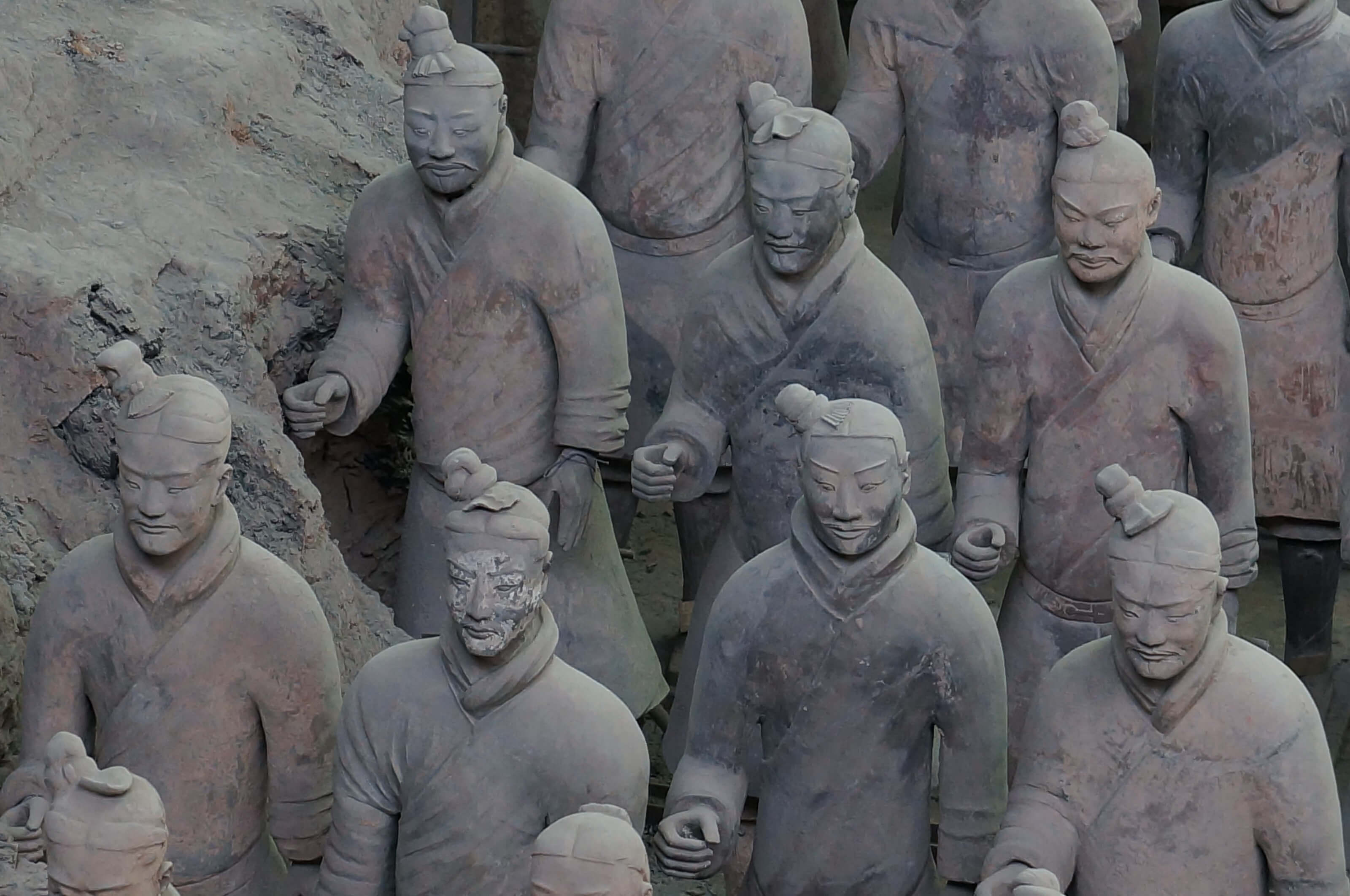
Our second Chinese stopover took us to the city of Xi'an. The opportunity to discover a little better this multicultural city of China

Taking the metro in the Chinese capital isn't exactly the same as in Europe. Here are 2-3 tips to help you get around better than we did if you're going to Beijing.

After 6 days spent visiting Beijing, here's a handy guide to some ideas and tips for preparing your trip to the Chinese capital.

Visit the Chinese Wall off the beaten tourist track for a memorable stay on the world's most famous fortifications!

Here are our first impressions of China. A confusing country, not necessarily easy to access but with so much to offer.

How do you bypass Internet censorship when you're traveling in China and around the world? Here's an overview of existing legal means of securing your connection!